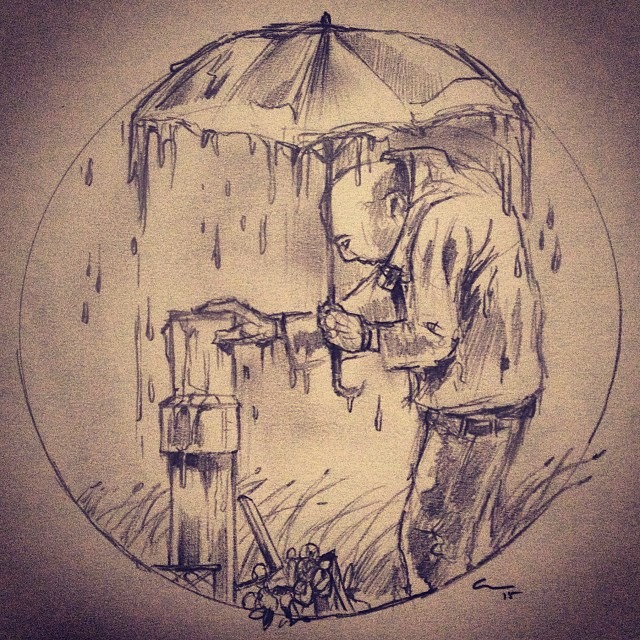
“Stand still and see the salvation of the Lord” (Exodus 14:13-15)

Open Exodus 14:13-15.

A friend was preparing to preach on this text: “Stand still and see the salvation of the Lord!” He planned to say that salvation is the work of God. I can’t earn it. I can’t contribute to it. Regeneration is a work of the Holy Spirit.

Great ideas, but is that what this verse is saying? I cringed, knowing I’d misused this text too. Quietists love it: all we need do is stand still and let God act, “let go and let God.”

But the context won’t allow us to use the verse this way.

Who spoke these words? They’re not a promise from God. They’re from Moses’ mouth. In a difficult situation, Moses contradicted what God told the Israelites to do. That’s why he received this mild rebuke: Continue reading ““Stand still and see the salvation of the Lord” (Exodus 14:13-15)”
When it feels like a dead end (Exodus 14:1-9)

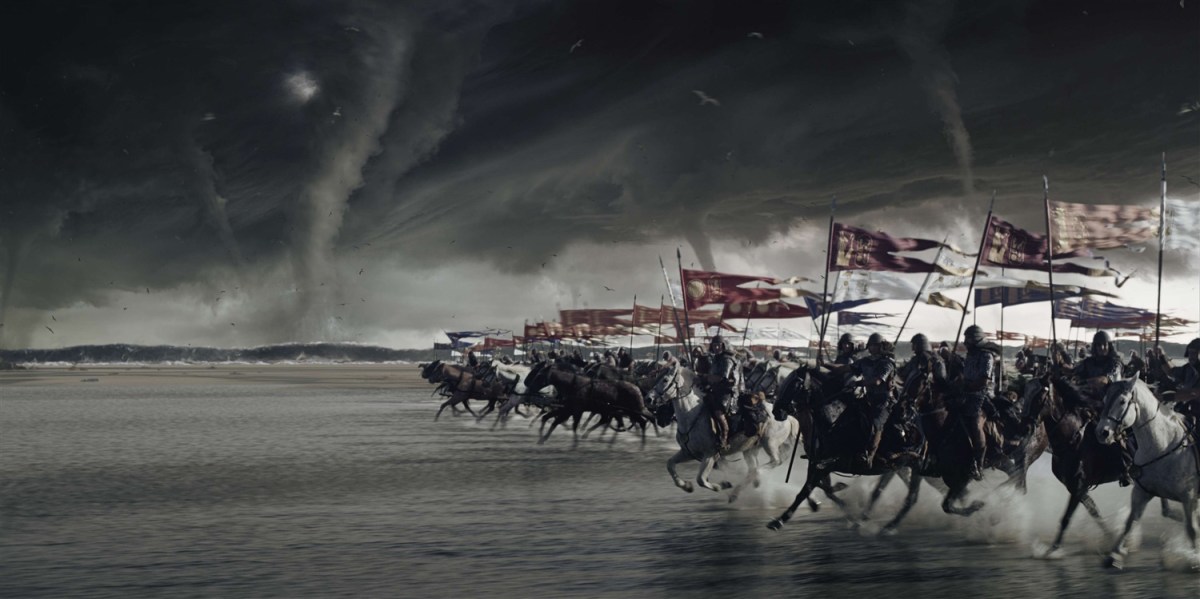
Pharaoh’s pursuing army

Open Exodus 14:1-9.

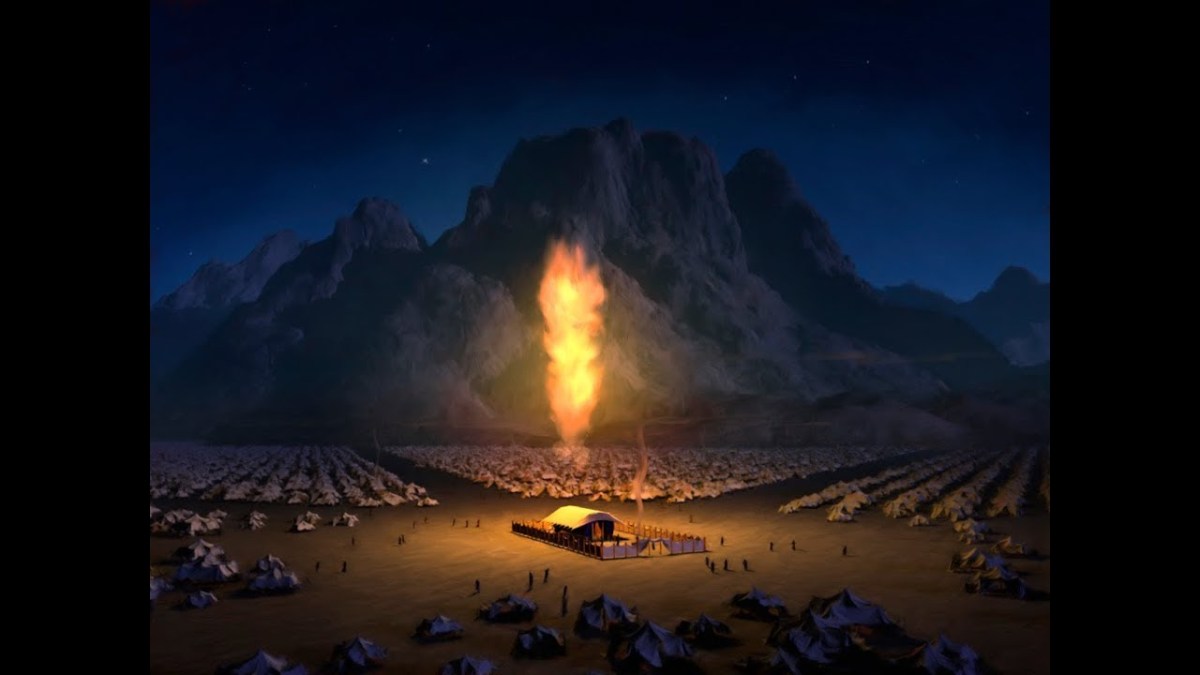
Freedom! The Israelites are no longer Pharaoh’s slaves. They’re marching out of Egypt with a new identity: the people of YHWH! Their king is present in cloud and fire. He leads them south towards the Sinai Peninsula. There they will discover his character, and covenant with him to be his people.

But … there’s a problem. See that dust rising into the northern sky? It’s gaining on them. At chariot speed. The Middle East’s most powerful army is coming to take them captive again. Continue reading “When it feels like a dead end (Exodus 14:1-9)”

The king in the cloud (Exodus 13:17-22)

You can’t see God, but you can see the effect of his presence.

Open Exodus 13:17-22.

National leaders love to be seen out in front of their nation, leading their people. But what if your king is invisible? Released from Pharaoh, Israel has a king who cannot be seen and cannot be represented by any visible carved image. How on earth do you follow a ruler like that? Continue reading “The king in the cloud (Exodus 13:17-22)”

Significance of Passover (Exodus 12–13)

Open Exodus 12–13.

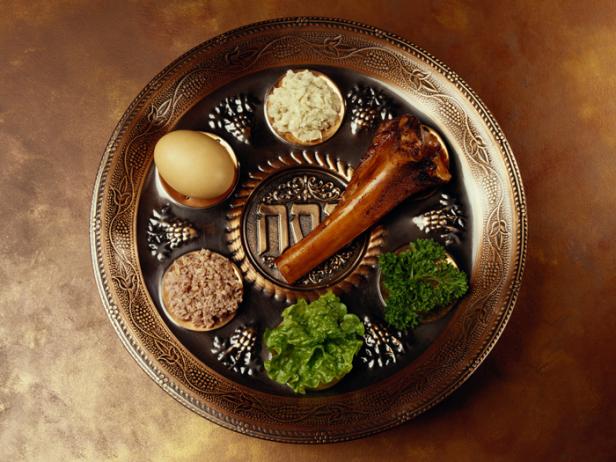
What’s the message of the Passover story? What comes to mind for you? Do you picture a lamb being sacrificed for the people of God to be forgiven their sins?

Would it surprise you to know the Book of Exodus never says anything like that? We can’t understand what Scripture says if we smuggle in assumptions about sacrificial theology that aren’t there.

This matters because Passover is so significant. Even today, it’s still one of the most significant weeks in the Jewish calendar, celebrating the birth of their nation. More than 3,200 years ago, God released them from serving Pharaoh, to be something new and privileged: a nation directly serving the divine sovereign, a kingdom of God.

So what does Exodus say? Continue reading “Significance of Passover (Exodus 12–13)”

When Egypt lost its heirs (Exodus 11–12)

What does the final plague reveal about God?

Open Exodus 11 – 12.

Nine times, Pharaoh has been shown to be just another stubborn human, not the person who rules the world. His own advisors no longer find him credible (10:7). The Egyptians now have more respect for Moses than for Pharaoh (11:3).

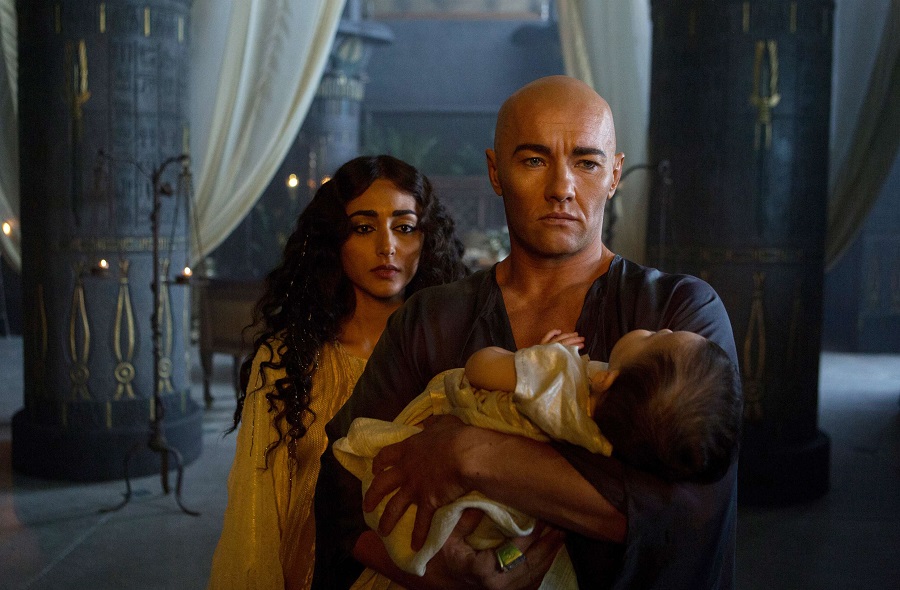
That makes Moses’ final announcement even more devastating: every family in Egypt will lose its heir (11:5). The Egyptians will rise up to demand their king release God’s people (11:8).

But how do you feel about God killing thousands of Egyptians? Can we get God off the hook? Could we blame the angel of death instead? Continue reading “When Egypt lost its heirs (Exodus 11–12)”

When everything’s gone and the lights go out (Exodus 10)

Open Exodus 10.

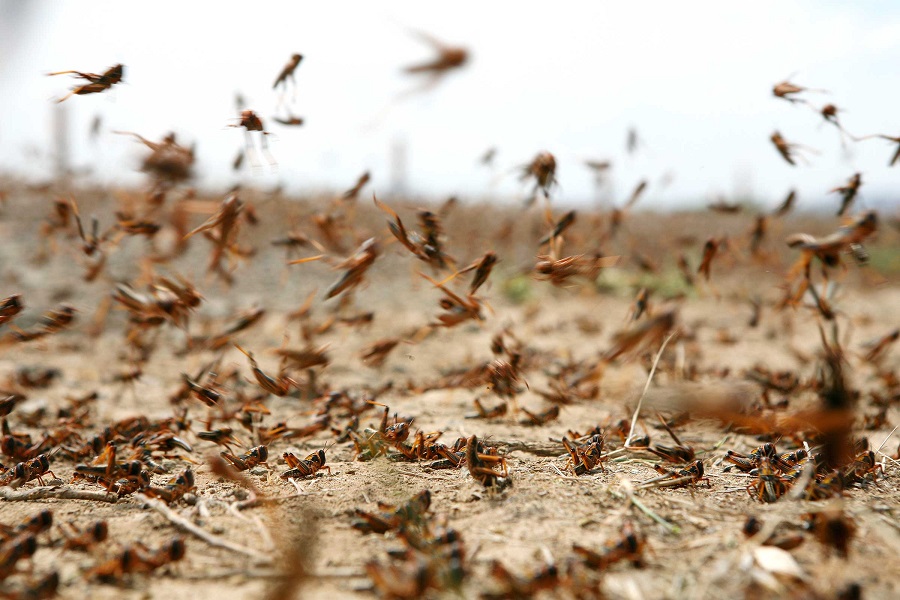
It may be Egypt’s darkest hour. Hail has destroyed the crops. Now a swarm of locusts invade, devouring any remaining stalks. Crops are stripped bare. Trees denuded. Everything is ruined. Despair creeps over the land. There is no reason to get up in the morning.

But morning doesn’t come. Night doesn’t end. Ra doesn’t rise. Egypt is hostage to the dark, cloaked in a shroud. Fear takes over when you can’t see what’s there. It’s palpable: a darkness that can be felt (10:21). Continue reading “When everything’s gone and the lights go out (Exodus 10)”

Humility (Exodus 10:3)

What is it, and why does it matter?

What is humility? C. S. Lewis said it’s not thinking less of yourself, but thinking of yourself less. But what does the Bible say about humility? How would you find out?

You could use a concordance, or run a search at BibleGateway. You’d find 60 – 100 verses (depending on your version). But there’s more to it than sticking all those verses together as a collage of humility. There’s a development in the theme as the Bible’s story unfolds. When Jesus arrives on the scene as God’s anointed Messiah, King of the kingdom, he’s such a contrast to earth’s power-grabbing rulers. God-in-a-manger is humility we’d never known. Continue reading “Humility (Exodus 10:3)”

Pharaoh’s hard heart (Exodus 10:1-2)

Is Pharaoh to blame if God hardened his heart?

Open Exodus 10:1-2.

In the modern world, knowledge is acutely focused on causation. Other cultures have not always shared this preoccupation.

Many ancient peoples attributed anything that happened to God. For example, we say, “It rained.” And if someone asks why, we explain that evaporated moisture fell when it hit a region of low atmospheric pressure. That’s not how they viewed things in Old Testament times. They never said, “It rained.” They said, “God sent rain” or “God withheld rain.” We say, “She’s pregnant.” They said, “God opened her womb” or “God closed her womb.” Whatever happened — good or bad — God was the cause. Continue reading “Pharaoh’s hard heart (Exodus 10:1-2)”

Seventh plague: God’s big purpose (Exodus 9:13-35)

Open Exodus 9:13-35.

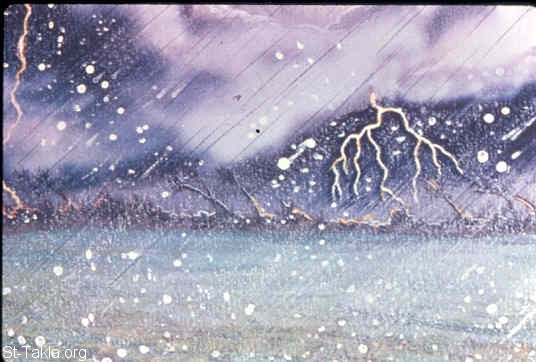
Hail falls from the heavens. Egypt’s proud rulers run for cover like everyone else. With lightening striking all around them, Egypt’s rulers are powerless before the one who reigns from heaven.

But God’s aim is not to strike Pharaoh dead: Continue reading “Seventh plague: God’s big purpose (Exodus 9:13-35)”

Six demonstrations of divine kingship (Exodus 7–9)

Open Exodus 7.

Whether it’s missiles parades in China or F35 fighters thundering over our heads in the west, our rulers love demonstrating their power. And according to the exodus story, rulers do have power to make people miserable (1:11-14; 2:23; 3:7; 4:31; 5:15; 6:6-9).

But the truth is, human rulers do not control the natural world. God alone controls the earth. That’s what the ten plagues showed. Despite all his claims, Pharaoh was not in control.

God demanded Pharaoh to release the people who weren’t his to rule. Pharaoh refused. The battle for the Hebrews begins. But God doesn’t fight with earthly weapons. With ten mighty acts, he demonstrates his kingship over the natural world. Continue reading “Six demonstrations of divine kingship (Exodus 7–9)”

Salvation is bigger than you think

It won’t do to imagine salvation as a personal experience, unconnected to the woes of the world. In the Bible’s story, salvation is not relief from personal guilt. Salvation is God  saving his people from enslavement to evil, from the crushing affliction we experience under rulers like Pharaoh. Salvation is God rescuing his creation from evil, into his reign. Continue reading “Salvation is bigger than you think”

When faith fades (Exodus 6:8-9)

Open Exodus 6:8-9.

Know anyone who used to go to church? What happened? Disappointed with God? Hurt by people?

What happens when life doesn’t work out as you expected, when pain erodes hope?

There’s an apparent contradiction in the Exodus story:

  • Exodus 4:31 says the people believed Moses’ message.
  • Exodus 6:9 says they were unresponsive to Moses’ message.

What happened in between to destroy their faith? Continue reading “When faith fades (Exodus 6:8-9)”

The Saviour revealed (Exodus 6:2-7)

Open Exodus 6:2-7.

Who governs the affairs of the world? That depends who you trust. Fox News would give you a different answer to China Press, Aljazeera, BBC, or Spiegel.

Truth is, none of the world’s leaders have the kind of control they’d like us to believe. There’s another hand behind history, beyond the best laid plans of mice and men.

Pharaoh was the biggest name in Moses’s world. At least, that’s what Moses thought. Until he learned the name:

Continue reading “The Saviour revealed (Exodus 6:2-7)”

When it feels worse (Exodus 5:14 – 6:1)

What do you do when evil won’t let go?

Open Exodus 5:14 – 6:1.

Remember the time you tried to sort things out, only to make it worse? Moses knew that feeling.

He delivered God’s message to Pharaoh: “Hands off my people! Release them to celebrate with me in the wilderness.”

Pharaoh reacts like any self-serving tyrant: he comes down like a ton of bricks on those who dare to imagine themselves outside his control.

To stop them dreaming about freedom under YHWH, Pharaoh tightens his control over them. They won’t have time to dream of holidays and festivals: Continue reading “When it feels worse (Exodus 5:14 – 6:1)”

The party God (Exodus 5:1-13)

The God of the Bible is not a hard task-master; he calls his people to celebrate.

Open Exodus 5:1-13.

Who is God? What’s he like? What authority does he have in a world where there’s so much injustice?

The God of the Bible turns out to be very different from what many imagine.

Continue reading “The party God (Exodus 5:1-13)”

What does it mean to believe? (Exodus 4:27-31)

Open Exodus 4:27-31.

Did you notice this key moment in the exodus narrative?

Exodus 4:31 (my translation)
The people believed when they heard YHWH’s response to Israel’s descendants, seeing their oppression. They knelt and honoured him.

Jacob’s descendants could not be free from their slavery to Pharaoh until they begin to trust God to be their new sovereign. To believe the promise God gave to Abraham, Isaac, and Jacob — the promise that they would be his nation — they give their allegiance to YHWH instead of Pharaoh.

That’s why they knelt before YHWH and honoured him. That’s a declaration of their new loyalty, their change of allegiance.

Faith is much more than mental assent to a creedal statement. It is recognizing God for who he is: the rightful authority over humanity. Faith is fealty — allegiance to our sovereign, our Lord. Continue reading “What does it mean to believe? (Exodus 4:27-31)”

Why did God try to kill Moses? (Exodus 4:24-26)

Open Exodus 4:24-26 and 6:13-30.

What do you make of this?

Exodus 4:24 (ESV)
At a lodging place on the way the Lord met him and sought to put him to death.

By this time, Moses was no longer arguing with God. He has accepted his appointment as ambassador for the kingdom of heaven, with a message for the king of Egypt. He has said his goodbyes to Jethro and the Midianite community. His family is obeying God and heading back to Egypt (4:18-20).

On the journey, as Moses obeys, YHWH confronts him and tries to kill him? Why? Continue reading “Why did God try to kill Moses? (Exodus 4:24-26)”

God’s firstborn son (Exodus 4:21-23)

Open Exodus 4:21-23.

Moses sets out for Egypt to confront Pharaoh with YHWH’s claim of sovereignty over the Hebrew people:

Exodus 4:22–23 (ESV)
22 Then you shall say to Pharaoh, ‘Thus says the Lord, Israel is my firstborn son, 23 and I say to you, “Let my son go that he may serve me.”

The descendants of Jacob are God’s family. God has promised to restore the blessing of his governance to the nations through them. So God “fathers” the nation of Israel: they are born through the exodus.

What a joyful contrast: serving YHWH rather than Pharaoh. Liberated from oppressive human rule, they’re the first nation to be a kingdom of God.

Continue reading “God’s firstborn son (Exodus 4:21-23)”

Does God get angry? (Exodus 4:14)

Open Exodus 4:14.

What do you do with texts like this?

Exodus 4:14 (NIV)
Then the Lord’s anger burned against Moses …

The wrath of God gets people running one way or the other:

  • God’s anger is a core doctrine for some people. They believe God’s anger is the problem that the gospel solves (Romans 1:18).
  • God’s anger is something shameful for many Christians. They fear the image of an angry God drives people away from faith.

So what do we do with texts that talk about God’s anger? Continue reading “Does God get angry? (Exodus 4:14)”