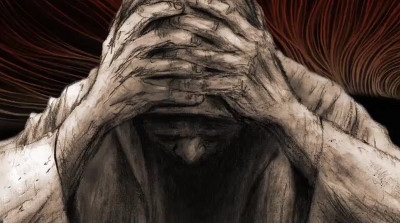
Job and the justice of God

Divine justice and human justice are different. This free course follows Job and his friends as they discuss the disconnect between what God is doing and what we expect. What can we learn from this ancient wisdom?

UPDATE 2026-10-29: Added podcasts for Week 2, and notes for Week 3.

How can what happened to Job be just? From the start, the heavenly court ruled he was “blameless and upright” (Job 1:8), so how is this book about justice?

We expect God to reward those who do right, and punish those who do evil. God seems to be doing something else. The Book of Job explores the disconnect between our view of justice and God’s.

Job says God has denied him justice (27:1). His friends say that’s unthinkable (8:3; 34:12). God says, “You say you don’t understand how I’m running the world? You’re right: you don’t understand how I’m running the world.”

So what is God doing if it’s not retribution?

The book ends with God reconciling with Job. Then God and Job reconcile with the others, not treating them according to their folly (42:8). Is divine justice about restoration rather than retribution?

Over six Wednesday evenings in October/November 2026, we’ll read the drama of Job to understand how God’s justice differs from ours. If you live in Perth (Western Australia), register and we’ll save you a seat. If not, you’re welcome to download the notes (provided ahead of time) and podcasts (provided after each event). Either way, there’s no charge.


Continue reading “Job and the justice of God”

Divine sovereignty and human suffering (Zechariah 14:1-5)

Puzzled over how to understand God’s sovereignty? It’s the hope of a suffering world.

Zechariah’s final chapter extends astounding hope in a puzzling framework.

Continue reading “Divine sovereignty and human suffering (Zechariah 14:1-5)”

Is God a good Shepherd if we have bad shepherds? (Zechariah 11)

Why are we living under leaders who fight each other (wars) and crush their people (injustice) if God is on the throne?

Open Zechariah 11.

The Lord will be king over the whole earth (Zechariah 14:9). That’s the theme of Zechariah 10–14, and what an astounding promise! This is the gospel Jesus proclaimed, the good news we believe.

But some find it hard to believe there’s a God taking care of us when there is so much injustice, so much evil in the world. Zechariah 11 faces that issue. God asks the prophet to role-play what our human shepherds do: acting out of self-interest rather for the justice of the eternal Shepherd.

We explained how the shepherd metaphor was used for gods and kings in the Ancient Near East. That makes it the perfect term for addressing the inconsistency between what the Shepherd wants versus what the shepherds are doing. All the wars of history — including the suffering of God’s people at the hands of the nations — it all arises from the disconnect between the Shepherd and the shepherds.

Continue reading “Is God a good Shepherd if we have bad shepherds? (Zechariah 11)”

The powerful God who reigns in weakness

What does it look like when Jesus unites humanity under his leadership as the kingdom of God? For the church today, that might be the most important question, because that’s our identity, and it defines our mission.

Firstly, this is a radically different kind of politics. We’re accustomed to the world of party politics. The Liberal Party seeks power from and for the business owners. The Labor Party seeks power for the workers. The Nationals seek power for the landowners, and so on. Within each party are factions (left, centre, right), each seeking to gain more control of the party, in the hope of their party controlling the country.

Then there’s the division of countries, with different political systems: democracy, socialism, monarchy, republic, and so on. On the world stage, countries fight for self-interest. Looking back, history looks like struggle of the species, a political “survival of the fittest.” The strongest beasts survive to rule the world, and the winners write history (compare Daniel 7).

The Bible describes an alternative story of politics. Earth’s true sovereign — the king we sideline when we grasp for power, fight wars, and subjugate each other — takes the side of the suffering, not those who cause their pain:

Continue reading “The powerful God who reigns in weakness”

Pharaoh’s hard heart (Exodus 10:1-2)

Is Pharaoh to blame if God hardened his heart?

Open Exodus 10:1-2.

In the modern world, knowledge is acutely focused on causation. Other cultures have not always shared this preoccupation.

Many ancient peoples attributed anything that happened to God. For example, we say, “It rained.” And if someone asks why, we explain that evaporated moisture fell when it hit a region of low atmospheric pressure. That’s not how they viewed things in Old Testament times. They never said, “It rained.” They said, “God sent rain” or “God withheld rain.” We say, “She’s pregnant.” They said, “God opened her womb” or “God closed her womb.” Whatever happened — good or bad — God was the cause. Continue reading “Pharaoh’s hard heart (Exodus 10:1-2)”

Why doesn’t God sort it out? (Matthew 13:47-50)

If God is all-powerful and all-loving, why doesn’t he sort out injustice now?

Open Matthew 13:47-50.

Why is the world such a mess if it’s God’s kingdom? How can so much evil and injustice exist in the kingdom of God?

Why doesn’t our heavenly king sort out his earthly realm? Is this really the best God can do?

That’s no theoretical question. Ask the people in pain. Ask the parents of the 17 killed at Marjory Stoneman Douglas High School in Parkland, Florida in February. Why doesn’t God act? Philip Yancey calls it, “the question that never goes away.”

Megaphones blare, “What do we want? Justice! When do we want it? Now!” Continue reading “Why doesn’t God sort it out? (Matthew 13:47-50)”