Who’s in charge? (Matthew 21:23-27)

Jesus’ authority is at the heart of the gospel.

If Jesus intended to confront Jerusalem’s leaders by overturning the temple, he succeeded. Priests claimed to be God’s representatives. Elders claimed authority over the people. They pushed back against God’s Anointed:

Matthew 21 (my translation, compare NIV)
23 Since he’d entered the temple complex and was teaching, the chief priests and elders of the people asked, “By what kind of authority are you doing these things? Who gave you this authority?”

In Israel, God’s authority was present in three main roles:

Continue reading “Who’s in charge? (Matthew 21:23-27)”

The end of unfruitfulness (Matthew 21 :17-22)

Why did Jesus curse the fig tree? What did he mean by casting mountains into the sea?

WWJD (what would Jesus do)? Disciples do what the Master does, so do we curse fig trees and cast mountains? Why would Jesus do things like that? The meaning is in the context.

Continue reading “The end of unfruitfulness (Matthew 21 :17-22)”

Jesus in the Psalms? (Psalm 8)

Should we find Christ in the Psalms, or read them as Israel’s story?

Should we see Jesus in the Psalms?

The church fathers saw Jesus everywhere, but modern commentators focus on authorial intent — the meaning the author intended to convey. The Psalms were written to celebrate the reign of Israel’s God and to lament their struggles as his people. The authors didn’t intend to write about Jesus, so can the Psalms be about Jesus?

And yet, the New Testament writers do apply the Psalms to Jesus. Psalm 8 is applied to Jesus in 1 Corinthians 15:27 and Hebrews 2:6-8, and even by Jesus himself in Matthew 21:16. Authorial intent matters, but it’s too limited a view. There’s a bigger story playing out across the canon of Scripture.

Continue reading “Jesus in the Psalms? (Psalm 8)”

How majestic! (Psalm 8)

Little voices make a world of difference.

O Lord, our Lord, how majestic is your name in all the earth! (Psalm 8:1 ESV)

The Psalms proclaim heaven’s sovereignty over the earth. In effusive joy and struggling lament, they declare the reality of God’s reign over us all.

The more we recognize God’s regal authority, the more it develops us. Witness the word of praise expanding as ripples on a pond:

Continue reading “How majestic! (Psalm 8)”

Defective and immature people in God’s house? (Matthew 21:14-16)

Jesus’ answer for what’s wrong is not exclusion: it’s the radical inclusion that comes from restoring our brokenness to wholeness.

What does the son of David do for his people as he enters the capital? Matthew alone reports this:

Matthew 21:14-16 (my translation, compare NIV)
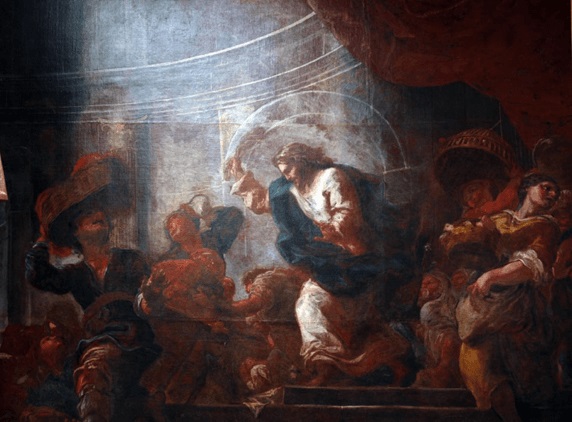
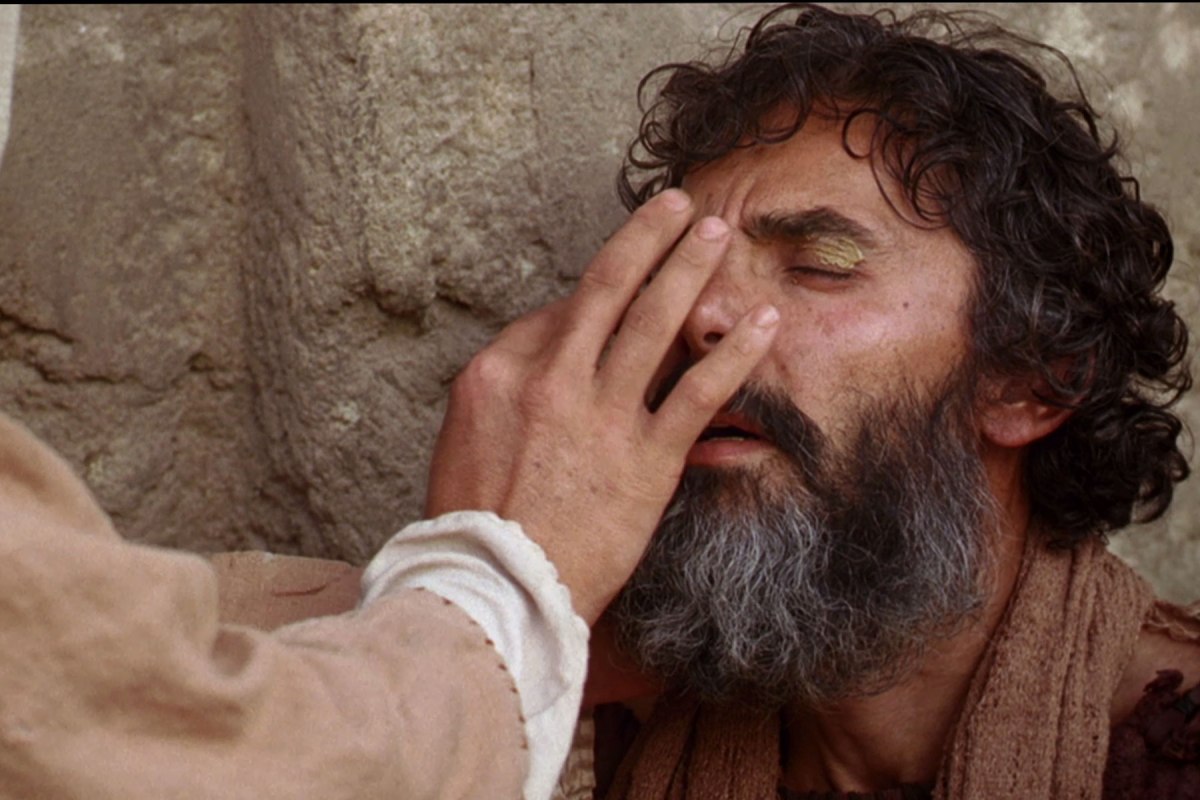
14 Blind and lame people came up to him in the temple complex, and he healed them. 15 But as the chief priests and Bible scholars saw the marvellous things he did, and the children calling out in the temple, “Hosanna to the son of David,” they were outraged 16 and they said to him, “Do you hear what they’re saying?”
Jesus replies, “Oh, yes. Have you never read, ‘Out of the mouth of tiny tots and babies you orchestrated acclamation?’”

Jesus had healed the lame, the blind, the crippled, the mute, and many others in Galilee, where the crowds recognized the God of Israel working through him (15:30-31). The reaction in Jerusalem is polarized.

The crowds ascribe salvation (Hosanna) to the Davidic descendant who saves his people, but those who hold the reigns of the city are put out. They feel threatened, just as Saul did when God’s anointing had moved to David and the people sang his praises as the one who would save them (1 Samuel 18:7-8; 21:11; 29:5).

This descendant of David is the saviour/king in the story of his regal ancestor.

Continue reading “Defective and immature people in God’s house? (Matthew 21:14-16)”

Why did Jesus overturn the temple? (Matthew 21:12-13)

Why was Jesus angry with the temple?

Why did Jesus overthrow the temple? Was he angry to find traders in the courtyard? Did he expect to find people in quiet meditation and prayer instead? What was the temple, and what was Jesus doing there?

Continue reading “Why did Jesus overturn the temple? (Matthew 21:12-13)”

Who’s this? (Matthew 21:10-11)

Jesus’ kingship doesn’t match how people understand power.

The crowd certainly stirred up Jerusalem with their proclamation of Jesus as anointed king: Hosanna! The Son of David. Arriving in the name of the Lord, they proclaimed (21:9).

But these proclaimers were not residents of the city. They were country people who’d followed Jesus down the Jordan from Galilee to Jericho (20:29). There’s a twist.

The capital does not recognize her king. They ask, Who is this? (21:10).

A king? Seriously? He doesn’t look regal. It doesn’t help when they hear he’s a prophet from a place of no significance in Judah’s history, a town that wasn’t even part of Judah:

Continue reading “Who’s this? (Matthew 21:10-11)”

Hosanna: the king who saves his realm (Matthew 21:6-9)

The Palm Sunday crowd declared the gospel: heaven and earth reconciled in “the one who comes in the name of the Lord.”

Jesus’ triumphal entry was the greatest recognition Jerusalem ever gave its king.

Matthew has been proclaiming Jesus’ kingship since the beginning: the son of David (1:1), born into their captivity (1:17), to save his people from their disobedience (1:21). Jesus has been announcing the good news of the kingdom and using his authority to release his people from their sufferings. Eventually his followers realized who was king (16:16), and others began to recognize him as the son of David (20:30-31).

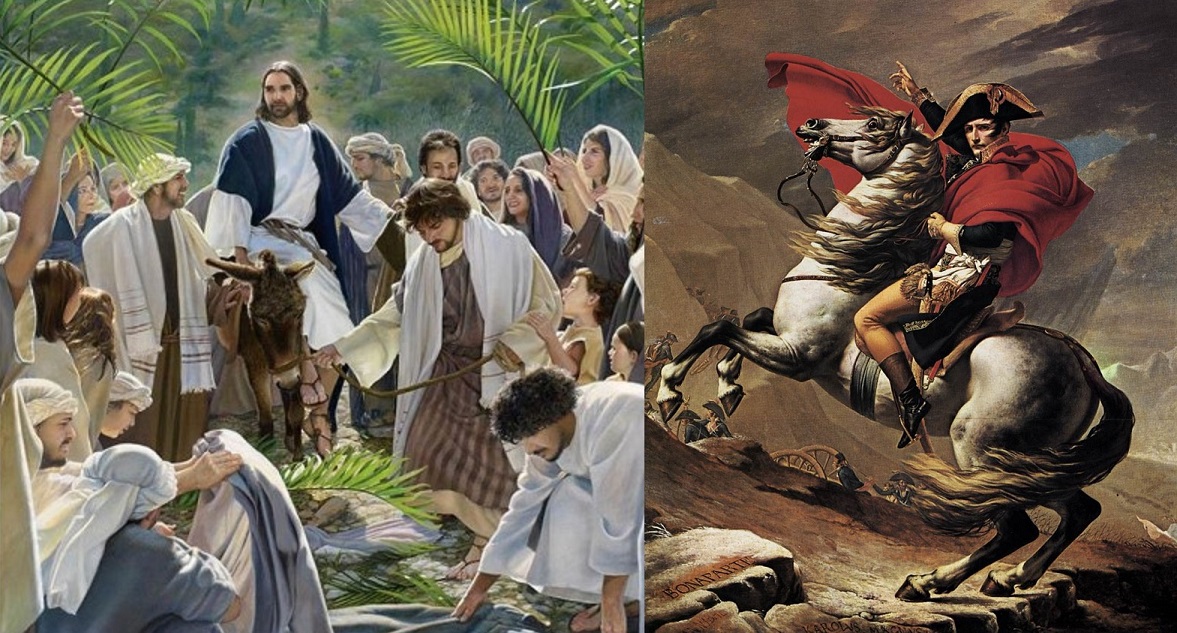
A growing crowd streams into the capital from the east, accompanying the one they proclaim as the son of David, returning to reign in Jerusalem. They lay their garments on the road to honour their king, cutting branches to mark the festal celebration.

What they say is the most astounding declaration of the gospel. Matthew summarizes their joyful shouts with three statements that declare the reconciliation of heaven and earth in him:

Continue reading “Hosanna: the king who saves his realm (Matthew 21:6-9)”

The king who comes in peace (Matthew 21:1-9)

God’s king has a different authority to what we’ve known.

The king of peace is so different. When the disciples first recognized Jesus as God’s anointed, he told them to keep it quiet (16:16-20). Now others have had their eyes opened to the son of David, and they cannot be silenced (20:30-34). This growing crowd forms a festal procession, celebrating the return of the son of David to the capital in the name of the Lord (21:9).

Yet, this son of David does not look like the kings who came before him. Solomon had 12,000 horses and 1,400 chariots to defend his kingdom (2 Chronicles 1:14). Jesus doesn’t even have a donkey. If he’s to be carried into Jerusalem, he must borrow a pack-animal for this occasion — the return of the king to Jerusalem after 600 years.

Continue reading “The king who comes in peace (Matthew 21:1-9)”

Regaining the good news of Jesus’ kingship

Why did the early church de-emphasize the message of the kingdom of God, and how do we recover it?

As we saw, even blind people could see Jesus was the son of David (Matthew 20:30-31) as he made his way to the capital where people would recognize him as the Son of David … arriving in the name of the Lord (21:9, 15). He challenged Jerusalem’s rulers to recognize the son of David as their Lord (22:42-45). It’s blindingly obvious that Matthew presents Jesus as the restoration of the Davidic kingship, the ruler God has anointed (Christ).

When Paul wanted to summarize the gospel at the start of his letter to Rome, he described Jesus as the physical descendant of King David, raised up as the reigning Son of God by his resurrection. “Jesus Christ the Lord” names Jesus as God’s anointed and our ruler. This gospel transforms the world by bringing the nations to trust his leadership (faith) in obedience to his governance (Romans 1:3-5).

Yet the church moved away from this good news of Jesus’ kingship. The early fathers focused on Jesus’ divinity (Son of God) rather than his descendancy (Son of David). We are unbalanced and the gospel is diminished when we emphasize one truth at the expense of the other.

By the early 200s, Origen thought the crowd was right to silence the blind men who called Jesus such a contemptible name:

Continue reading “Regaining the good news of Jesus’ kingship”

See, Son of David! (Matthew 20:29-34)

What’s the significance of declaring Jesus as the son of David?

I guess blind people see the world differently. Matthew tells of two non-seeing people who saw Jesus as king. Son of David, they cried (20:30). Their declaration was significant enough for Matthew to repeat: Son of David (20:31).

Continue reading “See, Son of David! (Matthew 20:29-34)”

How serving can ransom many (Matthew 20:28)

A king giving his life to serve many? The strategy redeems his kingdom, forming the life of the redeemed.

How do you understand this statement from Jesus?

Matthew 20:28 (NIV, || Mark 10:45):
… just as the Son of Man did not come to be served, but to serve, and to give his life as a ransom for many.

Many of my friends hear this text saying that, even though I’m a sinner, Jesus paid the price for me. It’s about my salvation. Many theologians agree: in the Gospels, it’s a crucial text on atonement. There’s even been speculation over how the transaction worked: if the devil had us kidnapped, did God pay the ransom (Jesus’ life?) to the devil?

Read the verse in context, and you’ll see Jesus was speaking of his kingship. The previous four chapters (two in Mark) focused on his royal identity: Son of the heavenly sovereign, God’s anointed ruler (the Christ), the Son of Man to whom God gives the kingship (starting from 16:13-28). The immediate context contrasts Jesus’ kingship with how the rulers of the nations exercise their authority by lording it over people (20:24). Jesus’ statement is about the nature of his kingship, and the kind of kingdom he runs.

Continue reading “How serving can ransom many (Matthew 20:28)”

Jesus compared to other kings (Matthew 20:24-28)

What’s the same and what’s different between King Jesus and the rulers of this world?

To declare Jesus as “the Christ” is to declare he is God’s anointed ruler for all the peoples of the earth. His kingship restores earth to heaven’s governance. That’s the whole point of the kingdom of God.

So, how does Jesus’ kingship compare to other rulers, like the president of the United States or the Chairman of the People’s Republic of China? What’s the same, and what’s different?

Continue reading “Jesus compared to other kings (Matthew 20:24-28)”

How Jesus explained the cross (Matthew 20:17-19)

Could we explain the gospel as Jesus did?

Why did Jesus die on the cross?

Many of my friends would say he needed to die for me, in my place, for my sins. That’s called substitutionary atonement, and it’s one of the explanations of the cross found in Scripture. But it’s not the primary way Jesus understood his crucifixion.

Here’s how Jesus described the cross:

Continue reading “How Jesus explained the cross (Matthew 20:17-19)”

Working in God’s vineyard (Matthew 20:1-16)

Why did all workers get the same wage?

Many of Jesus’ stories are about our relationship with God. As humans, we have such a privileged vocation — working with and for our heavenly sovereign in his earthly realm.

That’s the background for this parable:
Matthew 20:1 For the kingdom of heaven is like a landowner who went out early in the morning to hire workers for his vineyard. (NIV)

Earth is a kingdom of heaven, for “the earth is the Lord’s and everything in it” (Exodus 9:29; Psalm 24:1). Since the nations were no longer serving their true sovereign, God planted Israel as his vineyard, but they had not produced the harvest God intended either (Isaiah 5:1-7; Psalm 80:8-16).

In Jesus’ story, the property owner never gave up on his original goal. The emphasis falls on his effort seeking people who would work for him: early morning (20:1), mid-morning (20:3), midday (20:5), mid-afternoon (20:5), and late in the day (20:6). That’s keen insight into what it’s been like for God to have earth as his kingdom.

Continue reading “Working in God’s vineyard (Matthew 20:1-16)”

Son of man enthroned (Matthew 19:27-30)

What was Jesus seeing when he envisaged thrones for himself and his disciples?

We recognize the kingdom of God by recognizing Jesus as king. That may not be obvious, because Jesus constantly proclaimed God’s kingship without overtly claiming to be king. Only when heaven had revealed his kingship did Jesus begin to reveal his plan to build the community around his kingship (16:16-19).

In fact, he doesn’t mention his throne until his disciples start to question whether Jesus can deliver what he promised. He floored them by declaring that the powerful would kill him (16:20-22; 17:22-23). He devastated them by describing the wealthy as a humanly impossible problem for his kingdom agenda (19:23-26). They start to wonder if pinning their hopes on Jesus to lead them into the regenerated world was worth it.

Continue reading “Son of man enthroned (Matthew 19:27-30)”

The camel that won’t go through (Matthew 19:23-26)

How do you get a camel to go through the eye of a needle?

This is one of Jesus’ most puzzling statements: It is easier to get a camel through the eye of a needle than to get a wealthy person to go into the kingdom of God. (Matthew 16:24).

When you understand how Jesus saw the kingdom, you see what crucial insight he had. Without that understanding, people contort the camel and the text in ways that would be comic if they weren’t serious.

Continue reading “The camel that won’t go through (Matthew 19:23-26)”

When ‘good’ leads you to ‘great’ (Matthew 19:16-22)

Conditions apply.

A millennial entrepreneur comes to you, bank details ready, asking “What good thing could I do so I could have eternal life?” How do you respond?

You’re probably looking for a seeker-friendly way to respond, “Goodness! It doesn’t work like that. You can’t earn God’s favour by doing something good.” You probably don’t say, “Live like God says; he’s good.”

Apart from the obvious problem of suggesting anyone could earn eternal life by obeying commands, a vague answer like “Do what God says” is unsatisfying for a project manager used to SMART goals. Their next question will be, “Like what?”

They will be really frustrated, insulted even, if you go on to explain the basics of being a good person: “Don’t kill anyone. Don’t sleep with someone else’s spouse. Don’t defraud your business. Don’t commit perjury in court. Take care of your parents, and your neighbours.”

Okay, this story probably isn’t working for you. You can’t even imagine having this conversation. You would not give the answers Jesus did:

Continue reading “When ‘good’ leads you to ‘great’ (Matthew 19:16-22)”

Original kingdom, or original sin? (Matthew 19:14)

What do you see when you look at people?

When you look at people, what do you see? Original sin, or original kingdom?

Since at least the fourth century, theologians have described the essential human state as original sin. Adam and Eve lost their pure identity and become corrupt, so the children they produced received their corrupted nature. Their children passed on this corrupted nature, so every human is already corrupted at birth. On this view, the whole of humanity is corrupt: conceived in sin, sinful by nature at birth, forever doomed, unless God does a work of grace to change an individual’s status.

But that doesn’t match what Jesus saw in people. The disciples thought people were pestering Jesus, so they stepped in to triage and divert the less significant ones: the children. Jesus said they were seeing the children the wrong way. Literally translated, Jesus described the children like this: The kingdom of heaven is such (Matthew 19:14).

That’s a very different view of what it means to be human.

Continue reading “Original kingdom, or original sin? (Matthew 19:14)”

How Jesus saw children (Matthew 19:13-15)

Jesus genuinely enjoyed children with their wide-eyed wonder. Do you see as Jesus saw?

In church, people often worry about how to get our children saved. Some who baptize babies fear the infant will die in original sin if they don’t. Others who think faith means making a personal decision wrestle with how old a child must be to recognize her lostness and ask for salvation so she doesn’t die unsaved.

Jesus didn’t see children like that. He wasn’t anxious about whether they’d go to heaven when they died. He saw heaven coming to earth in them, the kingdom of heaven in the children:

Continue reading “How Jesus saw children (Matthew 19:13-15)”