Refugees

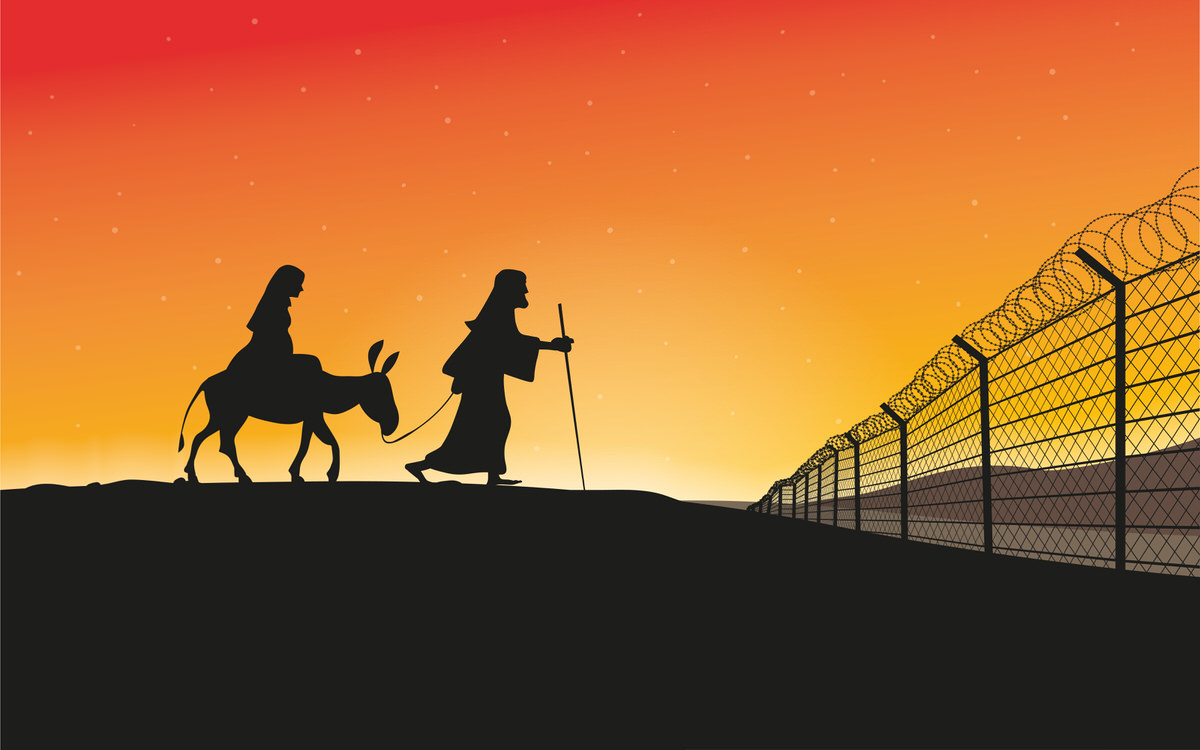
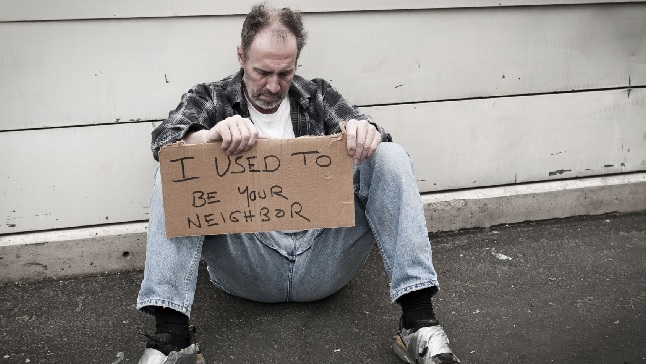
Border protection is a big deal for both sides of politics in Australia. Stop the boats. Turn back the people-smugglers who put lives at risk with their leaky boats. Block the undesirables who don’t share our values. Don’t let the queue-jumpers in.

For more than a decade, we’ve heard these mantras from our rulers. Their polling assures them that the hard-line approach wins votes.

At times we’ve been shocked to see images of the off-shore detention centres. We wonder if we’re justified to lock people up for years as a deterrent. We’re concerned when they’re reduced to self-harm.

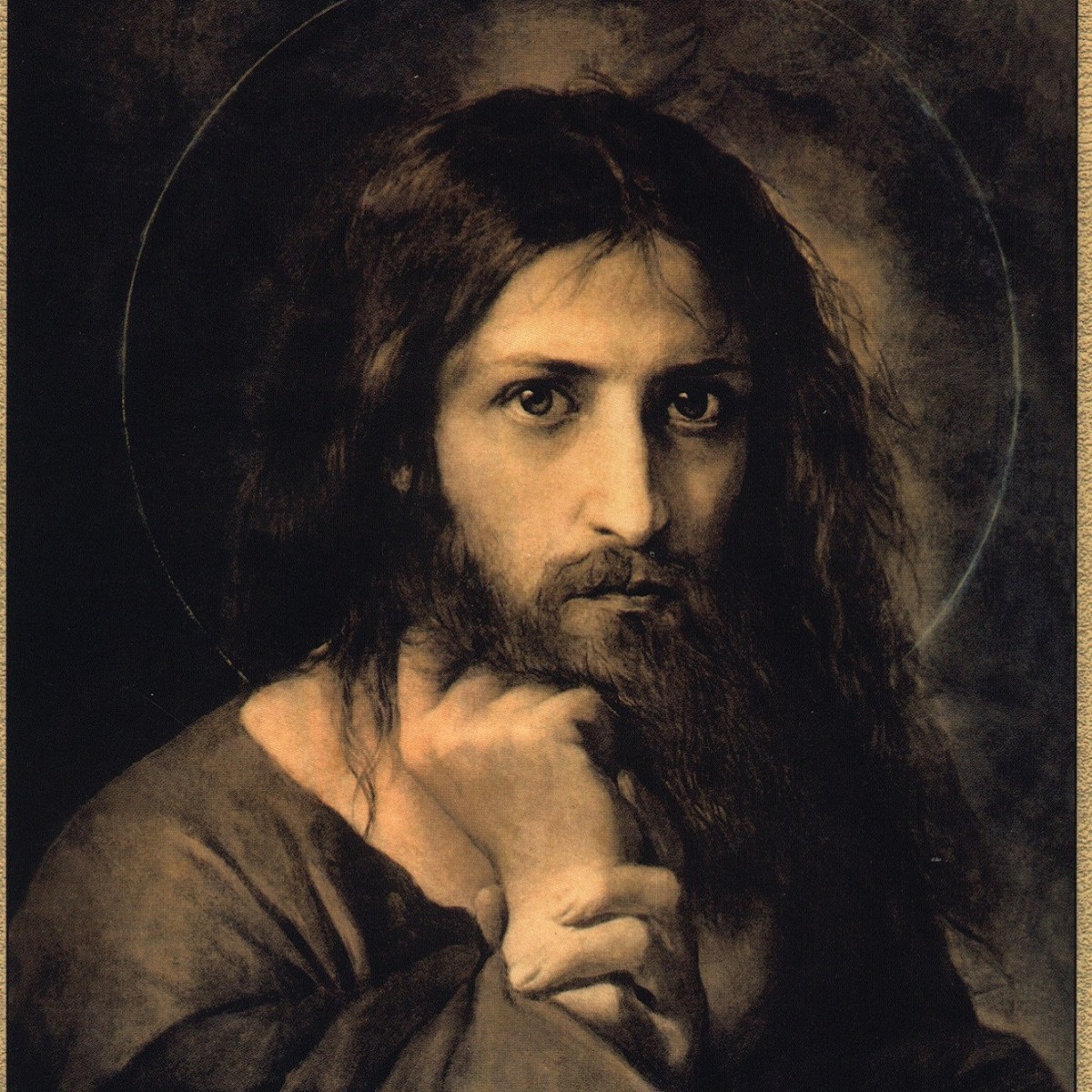
Now, don’t get scared about where this is going. I’m not suggesting we all march on Canberra to demand a change of policy. I’m not writing to Canberra. I’m writing to you, a follower of Jesus. I want you to consider how Jesus sees these issues. Surely that’s what defines how we respond.

Continue reading “Refugees”

Activism: confronting the powers

What kind of activism are we called to? Confronting the powers of evil, or being the community of a different king?

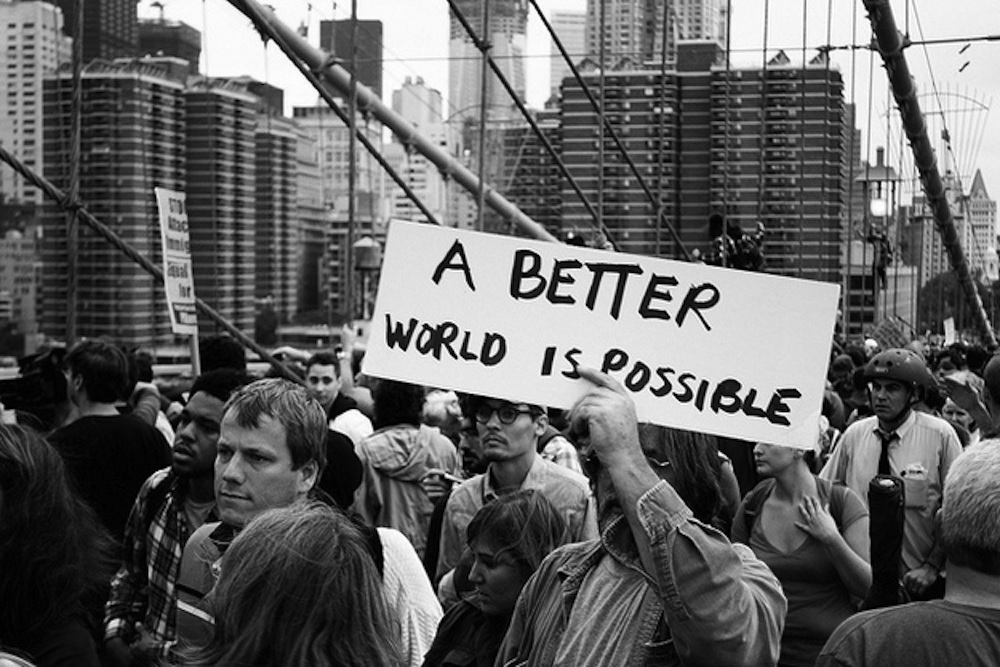
Christian activists have usually raised a voice for peaceful protest. Fifty years after Martin Luther King called for nonviolent resistance against systemic injustice, we still hear his voice.

Walter Wink called Christians to expose the evil that is endemic in the power systems of this world. He called us to name evil for what it is, to unmask its insidious nature, to engage it through non-violent confrontation. Even in the titles of his books, you can hear him calling the church to stand against corruption: Naming the Powers (1984), Unmasking the Powers (1986), Engaging the Powers (1992), When the Powers Fall (1998), The Powers that Be (1999). A choir of other of voices also call us to non-violent resistance: John Howard Yoder, Stanley Hauerwas, Shane Claiborne, Jarrod McKenna, and so on.

Are they right? Is power the problem we must address? Is that our task, to stand against the injustice that’s systemic in the way the world is run? To those questions, I want to answer Yes and No. Their diagnosis of the problem is spot on, but their response doesn’t resolve the problem.

Continue reading “Activism: confronting the powers”

Activism: is it kingdom work?

Should Christians be activists?

Good news! Jesus is the Christ. That means he’s chosen by heaven and anointed with power to rule the earth. He is restoring heaven’s government to a world that has been terrorized by competing claims and civil war ever since humans tried to take God’s power into their own hands.

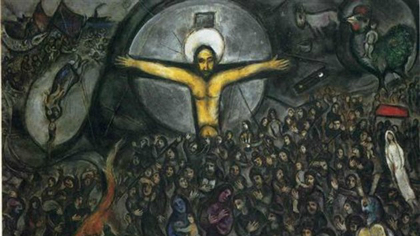
This is good news for the world because it’s how the violent hostilities are replaced by divine peace. Peace can never be achieved through force. The cross is the ultimate paradox for solving violence. The all-powerful God placed himself at the centre of the battle for power, giving himself for his people, reconciling us to himself and to one another.

This is how hostilities end. The cross is God confronting human power claims. It’s how God restores peace, by uniting us under his governance (Ephesians 2:14-17).

What does that mean for earthly kingdoms?

Continue reading “Activism: is it kingdom work?”

Kingdom work: the last 150 years

If I made the kingdom of God the centre of my thought and activity as Jesus did, where does it lead me? As I began this journey seven years ago, I wondered out loud, “Would seeking the kingdom make me an activist?”

For some, the gospel is personal salvation (John 3:16). For others, the gospel calls for action: caring for the poor, seeking justice the powerless, protecting the environment. What does Jesus’ gospel — the gospel of the kingdom — call us to say or do?

Continue reading “Kingdom work: the last 150 years”

How Jesus overcomes the world’s power problem

What’s wrong with the world? What must God resolve to establish his kingdom with Jesus as ruler?

Remember the jubilation when World War II ended? Turns out Hitler’s defeat didn’t resolve our problems. SBS is running a documentary titled After Hitler, and episode 2 says:

In the five years that separated the end of the Second World War from the start of the Cold War, the world had hoped for a lasting peace, but instead found itself on the brink of apocalypse. Five years of chaos and hope for the people of a shattered Europe, who became pawns in the games of the major powers.

History keeps repeating. When people rise up against an oppressive ruler, the person who comes to power can turn out to be even more monstrous. How can we ever be delivered? Continue reading “How Jesus overcomes the world’s power problem”

Pharaoh’s hard heart (Exodus 10:1-2)

Is Pharaoh to blame if God hardened his heart?

Open Exodus 10:1-2.

In the modern world, knowledge is acutely focused on causation. Other cultures have not always shared this preoccupation.

Many ancient peoples attributed anything that happened to God. For example, we say, “It rained.” And if someone asks why, we explain that evaporated moisture fell when it hit a region of low atmospheric pressure. That’s not how they viewed things in Old Testament times. They never said, “It rained.” They said, “God sent rain” or “God withheld rain.” We say, “She’s pregnant.” They said, “God opened her womb” or “God closed her womb.” Whatever happened — good or bad — God was the cause. Continue reading “Pharaoh’s hard heart (Exodus 10:1-2)”

Does God authorize governments? (Romans 13:1-7)

We can’t talk about the kingdom of God without considering how the power of the church relates to the power of the state.

Open Romans 13:1-7.

Does Romans 13 decree the divine right of kings? It has been used that way for centuries. Even today, the royal coat of arms of the UK rests on such a claim: Dieu et mon droit, literally God and my right!

Does Romans 13 authorize war? Many interpreters have claimed that it does, so we’ll address this question in our next post.

Good exegesis starts with Paul’s context, not ours. The power claims in Romans 13 do not originate with Paul. He knew that Roman emperors laid claim to divine right to rule. This tradition dates way back to previous pagan empires, and is found all over the world.

But Paul was a Jew, writing from a Hebrew worldview. In that framework, Paul’s words in Romans 13 are not strange at all. In Romans 9:17, he quotes the Hebrew claim that God raised up even the Pharaoh of the exodus for his purposes.

In fact, a case can be made that Romans is a new Exodus story — a story of God liberating the earth from its oppressive rulers: Continue reading “Does God authorize governments? (Romans 13:1-7)”

Fighting violence with violence (Exodus 2:11-14)

Open Exodus 2:11-14.

Moses grows up in Pharaoh’s house. He sees how human government operates. The Hebrew slaves weighed down with burdens (2:11, the same word as 1:11).

He identifies with them: the Hebrews are his brothers. Moses feels a responsibility to act against the injustice. He sees an Egyptian striking a Hebrew, so Moses strikes the Egyptian. The same Hebrew word (nā·ḵāh) is used to describe both actions. Moses has fallen into the trap of trying to resolve violence through violence. We have already seen how destructive this approach is (compare Genesis 4:23; 6:11).

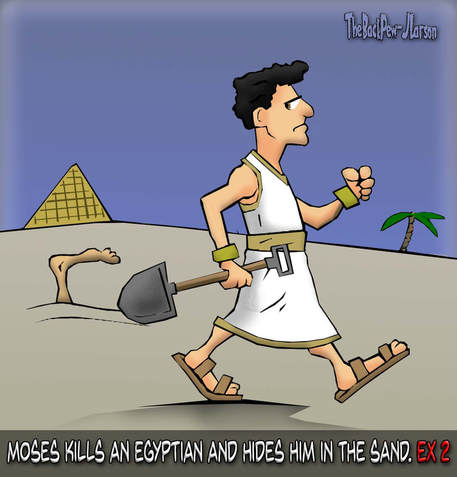
This temptation will dog God’s people throughout their history. It still does. By responding to oppression with oppression, Moses has become the agent of death rather than the agent of YHWH. He is using his power the way Pharaoh uses it. Killing is not the path to saving. Moses knows his actions are wrong: furtively checking that no one is watching, and hiding the body in the sand (2:12). Continue reading “Fighting violence with violence (Exodus 2:11-14)”

Feeding the multitude (Matthew 14:13-21)

What are we to learn from unusual miracles like the feeding of the 5000?

Open Matthew 14:13-21.

Feeding the 5000, or walking on water. They’re favourites that capture our imagination, but why did Jesus do these things? If they were signs, what were they pointing to? Was he showing off? Was he telling the crowds he was God? What was Jesus doing? Continue reading “Feeding the multitude (Matthew 14:13-21)”

What power do the rulers of this world have over God’s people? (Matthew 14:1-12)

Are we safe from harm? Or can God’s people be hurt by the evil in the world?

Open Matthew 14:1-12.

As you read the Bible, do you notice how the stories fit together? Why would Matthew stop talking about Jesus and tell a story about Herod instead? What’s his point?

Continue reading “What power do the rulers of this world have over God’s people? (Matthew 14:1-12)”

How does justice come?

How can justice ever come to our communities? Did Jesus have anything ideas?

Imagine you’re in a class on Training and Assessment. Everyone makes a presentation, and you choose your topic. What’s your passion?

Students chose everything from surfing to swords. I wanted something related to the kingdom of God that could be relevant, appropriate for a non-religious setting, and doable in 15 minutes.

You can read what I said below, and I’d be interested in your feedback. The group responded well, and the experience helped me think through this issue further.

Clearly this isn’t the whole story. But is this an approach that could help us present the good news in a way Aussies see as relevant and important?

Here’s the script: Continue reading “How does justice come?”

Why doesn’t God sort it out? (Matthew 13:47-50)

If God is all-powerful and all-loving, why doesn’t he sort out injustice now?

Open Matthew 13:47-50.

Why is the world such a mess if it’s God’s kingdom? How can so much evil and injustice exist in the kingdom of God?

Why doesn’t our heavenly king sort out his earthly realm? Is this really the best God can do?

That’s no theoretical question. Ask the people in pain. Ask the parents of the 17 killed at Marjory Stoneman Douglas High School in Parkland, Florida in February. Why doesn’t God act? Philip Yancey calls it, “the question that never goes away.”

Megaphones blare, “What do we want? Justice! When do we want it? Now!Continue reading “Why doesn’t God sort it out? (Matthew 13:47-50)”

Face or flee? What Jesus did with conflict (Matthew 12:14-21)

What can we learn from Jesus about how to handle conflict?

Open Matthew 12:14-21 and Isaiah 42:1–4.

How do you handle conflict? Fight? Or flight?

Some of us are fighters. We stand our ground. We’re warriors for justice, for ourselves and for others. We’ll never stand by and let evil take the reins.

Some of us avoid conflict. We keep the peace at all costs. We take the way of the cross: it’s more godly to suffer wrong than to demand rights.

Funny thing is that both groups conscript Jesus. Justice warriors look up to a Jesus as a leader who stood up for the poor, the outcasts, the unacceptable “sinners.” He trained his followers to handle confrontation, bringing not peace but a sword (10:14-39). He announced woes on the Galilean towns that rebuffed his kingship (11:20-24). He confronted the Pharisees so vehemently and persistently that they wanted to destroy him (12:1-14).

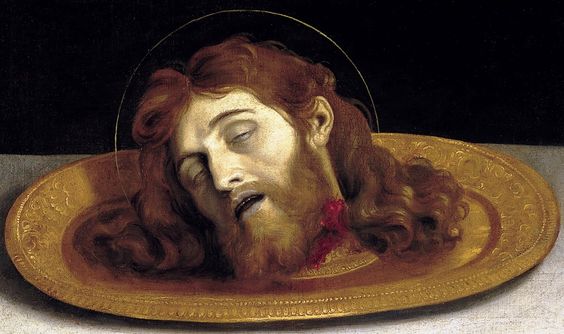
Then, suddenly, Jesus suddenly quits the confrontation and withdraws (12:15). And this isn’t the first time. When John the Baptist was arrested, Jesus withdrew into Galilee (4:12). This non-confrontational Jesus was not what John expected the Messiah to be (11:3). Jesus didn’t rescue John. John was beheaded, and Jesus withdrew again (14:13).

So what’s all this withdrawing? Is this another side to Jesus? Is this the “gentle Jesus, meek and mild” of children’s lullabies? Continue reading “Face or flee? What Jesus did with conflict (Matthew 12:14-21)”

God’s kingdom and social justice

Social justice isn’t an angry fist; it’s a cross, bearing the injustice away.

Imagine a world without gender conflict, where males and females value each other as persons. Imagine a world where no one no one dies of preventable diseases, where no one starves while others horde wealth. Imagine a world without racism or slavery or war, a world where no leader forces themselves on people. Imagine a world where people shun violence and retribution, calling on God to bring justice instead.

Lofty ideals? It’s our future. This is the world we will know when it runs as our heavenly sovereign intends — as the kingdom of God. The big question is how do we get there?

Continue reading “God’s kingdom and social justice”

The kingdom and prophetic engagement: speaking truth to power?

Does being the kingdom of God mean speaking out against abuses of power in the current political system?

Quick: give me a Bible verse on social justice. What comes to mind?

Continue reading “The kingdom and prophetic engagement: speaking truth to power?”

Where’s God’s justice in an unjust world? (Matthew 10:26-31)

Your heavenly Father knows when even a sparrow falls.

Open Matthew 10:26-31.

We all have filters that shape what we hear. That’s true of how we understand our closest friends. It’s even more significant when we want to understand what Jesus said 2000 years ago in a very different setting.

For example, we in the western church tend to think of souls as immortal. After your body dies, your soul lives on, either in heaven or hell. It would make no sense to us to talk about bodies going to hell. Yet that’s precisely what Jesus did to: he said it’s better to lose an eye than to lose your whole body in hell (Matthew 5:29-30, 22). Something that doesn’t make sense is a hint that we’re not hearing it right, that we need to reframe the way we think. Continue reading “Where’s God’s justice in an unjust world? (Matthew 10:26-31)”

The homeless king (Matthew 8:20)

When his people are homeless, the Saviour is homeless too.

Open Matthew 8:19-20.

Matthew tells us that people had begun to recognize Jesus’ authority (7:29; 8:9). The king walked among his people, freeing them from their oppression (8:16). He bore their weakness, their dis-ease (8:17).

He was a homeless king (8:20). Ever heard of such a thing? He chose to be homeless as he moved among his people, identifying with them. In a sense, his people were homeless too. They had lost their homeland to foreign powers long ago. When Babylon invaded, so many died trying to defend Jerusalem they couldn’t bury them all, so their dead bodies became food for the birds of the air and the beasts of the earth (Jeremiah 7:33; 19:7). The birds and the beasts had homes, while God’s people did not. Continue reading “The homeless king (Matthew 8:20)”

A generous kingdom (Matthew 6:1-4)

How did Jesus imagine the world would be set right? You may be surprised.

Open Matthew 6:1-4.

In the Sermon on the Mount, Jesus taught the Galileans not to follow their communal rulers. He believed the people who ran the synagogues and towns were incapable of bringing the people back under God’s kingship as his nation — of restoring the kingdom of God. Continue reading “A generous kingdom (Matthew 6:1-4)”

Retribution versus justice (Matthew 5:38-42)

If there will ever be justice in this world, how on earth will we get it? Jesus takes a radical approach.

Open Matthew 5:38-42.

Audiences love it with the hero gives the villain what he deserves. The villain has walked all over people in his quest for power. The hero fights for those who’ve been hurt, and brings the villain to justice. It’s the stuff of movies, novels, and comic books. It’s not the stuff of history.

Sometimes an Adolf Hitler is brought down. Other times a Joseph Stalin slaughters tens of millions and no one stops him. History often feels like the law of the jungle, where the most powerful beasts win.

That was Israel’s problem in the Bible’s story. God had established them as a nation under his reign, but the beasts invaded and crushed them. Jesus proclaimed the restoration of God’s reign, but how could the rulers be defeated? How would God give his people justice and restore his government? Continue reading “Retribution versus justice (Matthew 5:38-42)”