Approaching Easter

Meditations for Holy Week, from Matthew’s Gospel.

As we approach Easter, you may appreciate some readings on Jesus’ final week: Palm Sunday to Resurrection Sunday.

If you can only do one, try the first one, Two Powers. It surveys Matthew 21–28 from a fresh angle: the conflict between temple and king.

These two powers, both anointed by God, were often in conflict in ancient Israel. After the exile, God restored the temple but not the kingship. This disparity was the main theme of the prophet Zechariah: two olive branches (Joshua and Zerubbabel), with the high priest wearing the crown until the king finally rides in on a donkey. Then the shepherd is struck down, before God’s reign is restored to all the earth. Several times Jesus quotes Zechariah to explain what’s happening to him. Holy week makes brilliant sense from this perspective: it’s all about people rejecting God’s authority, and how he rescues the world in the Son he raises up.

If you want more, choose what’s relevant for you from these posts on Jesus’ final week according to Matthew’s Gospel:

Continue reading “Approaching Easter”

Formed in God’s story (Genesis – Esther)

[Updated: Notes and podcasts added.]

How well could you explain the big arc of the Bible’s narrative? Could you piece together the Old Testament story from its creative beginning in Genesis to the postexilic Persian pressure of Esther’s time?

I’m preparing a sweeping 6-week overview of the Torah and historical books, and you’re invited. If you’re in Perth Western Australia, let’s get together. If not, you can still download the notes each week to catch the wind of what God is doing.

Formed in God’s Story: Genesis to Esther covers the 17 foundational books that provide context for the Psalms and Prophets. This is the backstory for Jesus’ mission (Matthew – John), our mission (Acts – Jude), and the restoration of all things (Revelation).

This is God’s story, but we’re not merely binge watching it. We’re living in it. We’re being formed in God’s story.

Continue reading “Formed in God’s story (Genesis – Esther)”

Finding faith

It helps to know what we’re looking for.

Our friends’ dog went missing a few weeks ago. They searched all the places near their home, checked with neighbours, phoned friends, and posted pictures on social media. Several days later, one of their friends saw a ‘found dog’ notice at a shop and recognized the dog from the Facebook photo.

If you’re searching for faith, it helps if you know what you’re looking for. Would you like to know what kind of faith Jesus is looking for?

Continue reading “Finding faith”

How faith has changed

When Luther said we’re saved by faith alone, he did not mean we’d be alone in our faith.

No, it’s not just nostalgia; faith really has changed.

Long ago, people believed what their community did. If your culture was animist, Buddhist, or Christendom, that was your faith.

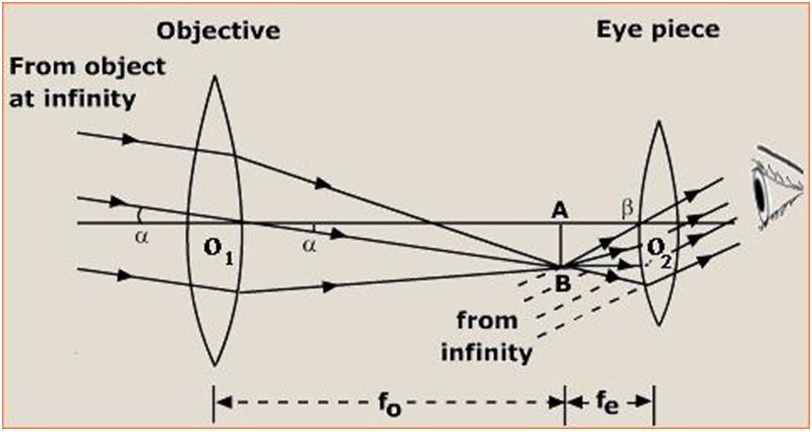
All that began to change when an Italian pointed his telescope to the planets and told his community he no longer believed we were the centre of the universe. The keepers of the faith told Galileo he wasn’t allowed to believe that. Their attempt to control him undermined the credibility of the Church’s faith. Galileo became a kind of unofficial saint of independent belief.

Continue reading “How faith has changed”

Losing faith

Losing faith is heart-breaking. Relationships rely on faith. When trust dissolves, relationship does too. That leaves us feeling isolated, and it’s hard to trust again.

That’s just as true of our relationship with God. Aussies are facing a crisis of faith. Most of us no longer identify as Christian. Many say they have “no faith.”

Crisis might not be the right word. This is no sudden disaster, like a bushfire or a flood. It’s more like a climate change: rising sea-levels of unbelief gradually eroding our faith. Europe experienced this last century. America has yet to feel the full impact.

Perhaps we don’t lose faith, so much as misplace it. “Believe it enough, and all your dreams will come true,” Disney sings. And then we grow up to discover that I am not the centre of the universe, and it wasn’t designed to fulfil my dreams. Disillusioned I feel when my illusions evaporate.

Continue reading “Losing faith”

The oldest Bible fragment in existence

2600+ years old.

The Lord bless you and keep you;
the Lord make his face shine on you and be gracious to you;
the Lord turn his face toward you and give you peace.

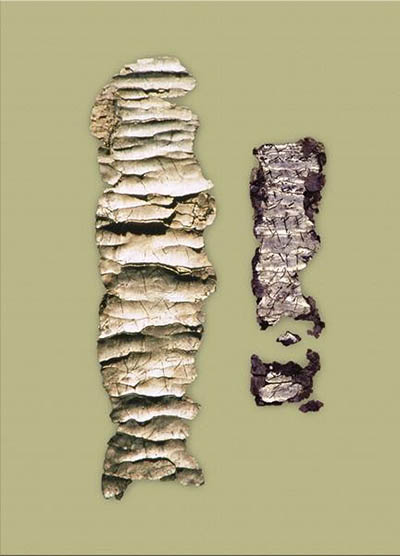
This priestly blessing (from Numbers 6:24–26) is the oldest fragment of Bible text ever discovered.

It was inscribed on a silver plaque or amulet, rolled up like a scroll, and buried more than 2,600 years ago. That’s almost 700 years before the Dead Sea Scrolls were hidden!

Israeli archaeologist Gabriel Barkay found the two silver objects in 1979 while excavating a tomb in Ketef Hinnom, less than a kilometre southwest of the Temple Mount in Jerusalem.

Continue reading “The oldest Bible fragment in existence”

What makes Christian prayer distinctive?

Across cultures and religions, people pray. How is Christian prayer different? The question helps us clarify our faith.

Christian prayer has its roots in Judaism: one God, no idols, covenant relationship between the heavenly sovereign and his people on earth. We saw how the distinctive basis for prayer in Judaism is this reliance on God’s revelation of himself and his faithfulness towards the people who are called by his Name.

That’s the background for our Lord’s Prayer. In synagogues across Galilee, Jesus would have joined in this Aramaic prayer:

Continue reading “What makes Christian prayer distinctive?”

What made Israel’s prayers distinctive?

People of many religions pray. What makes Judeo-Christian prayer different?

Most people pray, whatever their religion. Prayer is a request to a deity. It may be a request to bring blessing and prosperity, or to remove anguish and struggle. It may be accompanied by a sacrifice or vow to demonstrate sincerity or convince the gods to act.

The practice of prayer predates Abraham. So, what is distinctive about prayer in the Judeo-Christian faith?

Let’s start with Judaism.

Continue reading “What made Israel’s prayers distinctive?”

The kingdom as Father’s gift (Luke 12:32)

Do not be afraid, little flock, for your Father has been pleased to give you the kingdom (Luke 12:32).

That’s a promise that’s worth exploring. How does our Father give us his kingdom? Who is the little flock? Why might it be scary?

The entire story of Scripture is held in these words. Continue reading “The kingdom as Father’s gift (Luke 12:32)”

Spiritual warfare (podcast) (Ephesians 6:10–17)

The conflict we’re involved in is a rescue mission.

What is spiritual warfare? What are we fighting? How does God fight evil?

What is God’s armour? When did God use armour? How does that train us to use God’s armour?

This podcast (29 minutes) was recorded at Riverview Church (Burswood, Western Australia) 2023-02-12.  It’s also on Youtube.

Continue reading “Spiritual warfare (podcast) (Ephesians 6:10–17)”

Participating in the counter-cultural kingdom

Disadvantaged or blessed?

You’re probably noticed the disconnect between what God intends and life as we know it. If not, ask a Ukrainian. Fighting and killing are not the Life-giver’s intentions. Stockpiling resources while others starve is not life as Providence intends.

So, how do we close the gap?

Continue reading “Participating in the counter-cultural kingdom”

Meet the author of life (John 1:1–14)

How do you find the meaning to life? Meet the Author.


What’s life about? Its architect knows.

1 It all started with what the Author said.
What he wrote reflects the Author.
2 The Author was present in what he wrote.

3 The whole story came out of his being.
Not a single thing came from elsewhere.

Continue reading “Meet the author of life (John 1:1–14)”

Power without shame (Romans 1:16)

A crucified king introduces a different kind of power to the world.

“I am not ashamed of the gospel,” Paul told the Romans. Was he struggling as a Christian? Did he fear they’d find his faith embarrassing? Let me take you back to their world.

Continue reading “Power without shame (Romans 1:16)”

Why the gospel calls for faith (Romans 1:17)

We live because God does right out of his faithfulness to us. So, faithfulness to God leads us to do right as we live.

The opening verses of Paul’s letter to Rome contain the message the whole letter unpacks. By verse 17, the key theme comes into view:

Romans 1:17 (ESV)
For in it the righteousness of God is revealed from faith for faith, as it is written, “The righteous shall live by faith.”

Questions? What is the righteousness of God? How is it revealed in the gospel? What does from faith for faith mean? And why include a quotation when he’s packing the message so densely?

Continue reading “Why the gospel calls for faith (Romans 1:17)”

Crusader, or living by faith? (Habakkuk 2:4)

The Crusades were one of the most damaging misrepresentations of God in church history. How can we avoid making the same mistake?

Good interpretation matters, because God’s word is life-giving. When we don’t receive Scripture well, we don’t live well. We make choices that seem right to us without the wisdom of God.

The Crusades are a stark reminder of how we can misrepresent God. In 1095, Pope Urban II called European Christians to take up arms and fight for the Byzantine Emperor to retake Jerusalem, particularly the site of Jesus’ temporary grave (Holy Sepulchre). “God wills it,” cried the conference he addressed.

Continue reading “Crusader, or living by faith? (Habakkuk 2:4)”

How Jesus lived by faith (Habakkuk 2:4)

Jesus’ whole life is testimony to Habakkuk’s message, “The righteous one will live by faith(fulness).”


Jesus never mentioned Habakkuk 2:4, but his life embodied its message: the righteous one will live by faith(fulness). Faced with enemies who wanted to destroy the king of the Jews, Jesus did the right thing because he was trusting his Father to set everything right, to re-establish God’s kingdom.

Continue reading “How Jesus lived by faith (Habakkuk 2:4)”

Should the faithful fight evil? (Habakkuk 2:4)

How does God fulfil his promise that the righteous will live by faith?

Should good people stand up against the forces of evil in our world, so the whole thing doesn’t go down the drain? You’ve heard the proverb: All that is necessary for the triumph of evil is for good men to do nothing.

If we were looking to good men to save us, that approach might make sense. Habakkuk wasn’t. He was looking for God to save. But he didn’t see God intervening. We could summarize his complaint as: All that is necessary for the triumph of evil is for a good God to do nothing.

God gave Habakkuk a lifeline. God does not act as we expect, but he is in charge of history and this is his promise: those who do right [even in the face of all the evil] will not die out; they will live by their faith(fulness).

The New Testament relates this promise to the gospel. In Romans and Galatians, Paul quotes Habakkuk 2:4 to support his teaching that God’s goodness saves those who trust him. Before we discuss faith from a Christian perspective (a future post), we need to hear Habakkuk’s message in his context.

Habakkuk’s book is a two-sided conversation: the prophet’s concern, and God’s response.

Open Habakkuk.

Continue reading “Should the faithful fight evil? (Habakkuk 2:4)”

David’s final Psalm: keywords for theology (145:17-21)

The righteousness of God, calling on the name of the Lord, salvation and judgement — we hear all these words on the messiah’s lips in Psalm 145.

New Testament theology begins in the Old, where God is revealed as the heavenly sovereign who faithfully loves his people and his earthly realm. So when the OT uses phrases that are crucial to Christian theology, they’re the seeds of what God was planting. The OT provides another dimension of insight into what those phrases mean for us.

Four of those phrases turn up on the lips of the messiah in Psalm 145. We’ve seen how the Davidic king announced the kingdom of God (145:1–8) and extended it beyond Israel to all people (145:9–16). Then he makes four statements about the character of God, statements that brilliantly illuminate the theology (words about God) in the Gospels and apostolic letters:

This Psalm is not quoted in the NT, but the messianic voice provides background for the hope these keywords hold as we read them in the NT.

Continue reading “David’s final Psalm: keywords for theology (145:17-21)”