Should Christians use the divine name?

The most frequent name for God in the OT is YHWH. Should Christians use that name?

Should Christians pray to YHWH?

Exodus 3:15 (ESV)
God also said to Moses, “Say this to the people of Israel: ‘The Lord (YHWH), the God of your fathers, the God of Abraham, the God of Isaac, and the God of Jacob, has sent me to you.’ This is my name forever, and thus I am to be remembered throughout all generations.

The word Lord in small caps translates the Hebrew letters YHWH (the tetragrammaton). The name is probably connected to the verb to be, the unchanging I AM who was and is and is to come. It’s the name by which God revealed himself to Moses at Mount Sinai. In ancient Hebrew there were no vowels: cn y rd txt wtht vwls? Vowels were added later, but no vowels were added to the divine name. They did not want others pronouncing it. The name was so holy that even today when Rabbis read the text aloud they substitute ha shem (literally, “the name”). Israel was warned not to take the name of YHWH in vain (Exodus 20:7).

So should Christians use this name?

Continue reading “Should Christians use the divine name?”

Righteous people? (Matthew 10:40-42)

How can Matthew talk about righteous people? I thought there weren’t any.

Open Matthew 10:40-42.

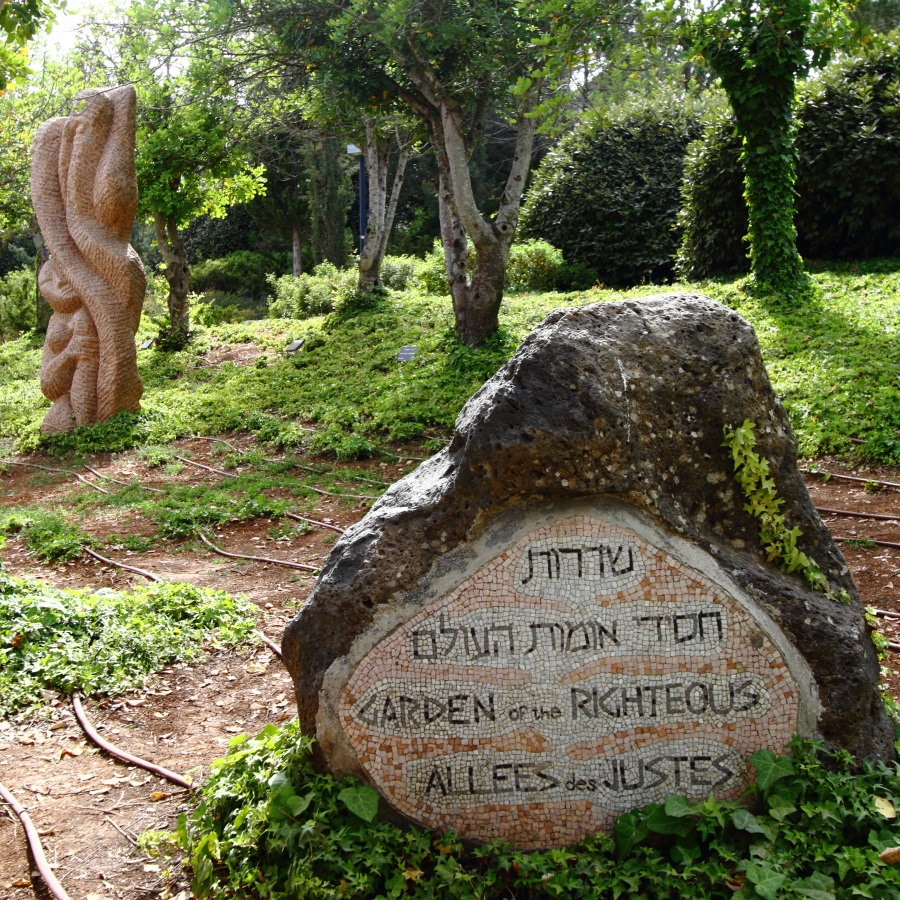
In the grounds of the Holocaust Museum in Jerusalem is the Garden of the Righteous. It honours gentiles who protected Jews under Nazi threat, people like Shindler or Corrie Ten Boom. They’re considered righteous because they did the right thing by the people of God, even though they themselves were not descendants of Jacob. The way you treat God’s people is the way you treat God.

That’s how the word righteous (ṣǎd·dîq in Hebrew) functions in Jewish thought, but Christians tend to be horrified by this word. For the last 500 years, protestants have emphasized texts like Romans 3:10: “No one is righteous, not even one.”

Then we’re thoroughly confused when other texts talk about righteous people. The Gospels label several as righteous (dikaios in Greek):

  • Joseph (Matthew 1:19)
  • Abel (Matthew 23:35)
  • John the Baptist (Mark 6:20)
  • Elizabeth and Zechariah (Luke 1:6)
  • Simeon (Luke 2:25)

Jesus taught that God sends rain on the righteous and unrighteous (Matthew 5:45). He spoke of many righteous people (Matthew 13:17). He even expected Galileans to recognize his disciples as righteous people (Matthew 10:41).

What do you do when one part of the Bible doesn’t match other parts? Continue reading “Righteous people? (Matthew 10:40-42)”

How do you know God exists?

Where do you look to find God?

The world has changed. In just ten generations, we’ve moved from not even knowing many places existed to using a GPS with Google Street view. We’ve moved from hand-copied books to the Internet, from camels to Qantas, from saddles to satellites, from superstition to science.

Where does God fit in a world explained by cause and effect? Christians have failed to provide clear, consistent answers to this crucial question:

Continue reading “How do you know God exists?”

Where’s your allegiance? (Matthew 10:32-33)

What country do you belong to? It depends on who’s your leader.

Open Matthew 10:32-33.

If John Clarke was still with us, he’d be having a field day. How do you bring down a democratic government? Demonstrate that many sitting members weren’t eligible to stand.

Now, politics is a serious business. Our leaders must have unquestionable allegiance to our nation. If war broke out, which side would a dual citizen support?

I mean, you couldn’t trust Barnaby Joyce as deputy prime minister if he’s secretly a Kiwi. If New Zealand invaded us, the haka alone would probably see him siding with the enemy. Well, that’s what the high court ruled anyway: they declared him unfit to be a sitting member, so he has to stand again. Continue reading “Where’s your allegiance? (Matthew 10:32-33)”

The kingdom is God with his creatures (Matthew 10:29-31)

If a little bird falls in the forest, does anybody hear?

Open Matthew 10:29-31.

What was your first pet? A puppy? A kitten? A budgie? Remember its name? What did it mean to you?

How deeply we feel responsibility for a creature in our care! It’s beyond commercial value: even if you paid for it with pocket money, its precious life depends on you. Where does this sense of responsibility come from?

Jesus believed this tenderness is a glimpse of something beyond, an echo of God’s heartbeat for the creatures in his care: Continue reading “The kingdom is God with his creatures (Matthew 10:29-31)”

Where’s God’s justice in an unjust world? (Matthew 10:26-31)

Your heavenly Father knows when even a sparrow falls.

Open Matthew 10:26-31.

We all have filters that shape what we hear. That’s true of how we understand our closest friends. It’s even more significant when we want to understand what Jesus said 2000 years ago in a very different setting.

For example, we in the western church tend to think of souls as immortal. After your body dies, your soul lives on, either in heaven or hell. It would make no sense to us to talk about bodies going to hell. Yet that’s precisely what Jesus did to: he said it’s better to lose an eye than to lose your whole body in hell (Matthew 5:29-30, 22). Something that doesn’t make sense is a hint that we’re not hearing it right, that we need to reframe the way we think. Continue reading “Where’s God’s justice in an unjust world? (Matthew 10:26-31)”

What about Halloween?

How will you respond to children asking for a trick or treat?

Tomorrow is 31 October. Children from your neighbourhood may dress up as ghouls or superheros and knock on your door. How will you respond?

Some church-goers fear the demonic realm and worry that Halloween leads children into the occult through its focus on all things spooky. Horror, zombies, the undead, witches and ghosts — it all revolves around fear.

Some Australians object to Halloween as a foreign festival that doesn’t belong in our calendar or culture. They want to leave the pumpkins where they belong.

Or perhaps you’re more worried about what those sugar sweets are doing to the children.

So is Halloween evil? What do you make of it?

It may surprise you to know that Halloween was once a Christian festival. It’s the eve of All Saints’ Day. The “saints” literally means the holy ones, the people devoted to God. Some of those have already died, so they’re awaiting resurrection (according to 1 Corinthians 15:23). The church honoured particular saints on particular days (e.g. St Patrick’s Day), and they set aside 1 November to honour all the saints. The name Hallow’een means the eve of Saints’ Day.

As so often happens, popular culture corrupted this Christian festival. Imaginations ran riot on the evening before Saints’ Day as people pictured the ghostly forms of the dead saints they were to honour the next day. Pagan ideas were mixed with Christian beliefs.

How should Christians respond now? If you have children whose friends are into Halloween, take the opportunity to discuss what it means and how it’s so easy for something good to be corrupted. Ask them if they have noticed the commercialization and corruption of other Christian festivals too. (Hint: Santa Claus, Easter bunny.)  If it’s appropriate to your children’s age, talk about the authority of Christ over evil in all of its forms.

Whether you have children or not, what do you do when those little ones approach you for a trick or treat? Before you turn them away with your self-righteous indignation against all things evil, ask yourself this: how often do the people of your neighbourhood come to your door? Is opportunity knocking here?

A few years ago, we started stocking up for Halloween by buying two things: individually wrapped sweets, and pencils with “Jesus loves you” on the side. Okay, that’s pretty corny: you can probably think of something better. Each child who knocked on our door was offered something from the sweets bag and something from the stationery box. We asked their names, and spoke to their parents if they were watching from the road.

We wanted them to know Christians as people who cared for their precious lives. Is that better than rejecting them because of their ignorance or our fear?


What others are saying

Ben Witherington III: The Origins of Halloween (3 minute video on YouTube).

John S. Leonard, Get Real: Sharing Your Everyday Faith Every Day electronic edition (Greensboro, NC: New Growth Press, 2013):

In my opinion, if you’re interested in reaching your neighbors, one of the most important holidays to participate in, for Christ’s sake, is Halloween. One reason is that it’s the one night of the year that you can go and knock on all your neighbors’ doors, and they will be happy to see you!

A disarmed kingdom (Matthew 10:34-39)

How can Jesus establish his kingdom with an unarmed army?

Open Matthew 10:34-39.

A military career in the ancient world meant heading off with your regiment in search of fame and glory. Unworthy of the empire was any milksop who couldn’t leave his father and mother. A soldier marched where the army needed him, even if it meant his children grew up without him. Real soldiers didn’t run for cover to save themselves! They grasped their swords and gave their lives for the sake of the empire.

What about the kingdom of God? Do its people face struggles like the kingdoms of the world? Or is it an idyllic life of shalom: no life-threatening situations, no dilemmas of family versus kingdom, no conflicting priorities, no need to run to save your own life? Continue reading “A disarmed kingdom (Matthew 10:34-39)”

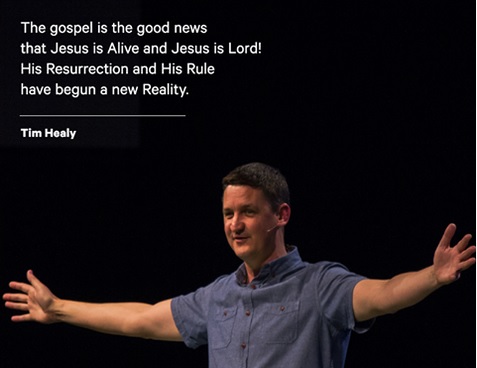
Tim Healy, “What is the gospel?” (reprise)

What is the gospel? Tim Healy explains.

Tim Healy has just been appointed Senior Minister of Riverview Church in Perth, Western Australia.

Almost twelve months ago, Tim preached a rich message on What is the Gospel? We tend to focus on one little aspect. As Tim explained, it’s so much more than we think.

Check it out.

Like our teacher (Matthew 10:24-25)

Becoming like our teacher is every disciple’s joy. Does it mean we suffer too?

Open Matthew 10:24-25.

It’s the hope that motivates every disciple: as we follow Jesus we become like him. Wow!

Does being like Jesus mean suffering too? Which statement represents what you believe

  1. Jesus suffered so we don’t have to.
  2. Jesus suffered because we suffer.
  3. Jesus suffered, so we must suffer too.

Perhaps we should listen to Jesus’ promise in context: Continue reading “Like our teacher (Matthew 10:24-25)”

Clash of kingdoms (Matthew 10:17-23)

The kingdom of God doesn’t leave unjust kingdoms in place.

Open Matthew 10:17-23.

For too long, the church has spiritualized Jesus as if he was just a personal saviour and not the king of the kingdom. Our purpose on this blog is to swing the pendulum back by focusing on the sovereign authority of Jesus as Lord, as Messiah, as king of the kingdom. Continue reading “Clash of kingdoms (Matthew 10:17-23)”

Sheep among wolves (Matthew 10:16)

Wise as serpents and innocent as doves? How?

Open Matthew 10:16.

Jesus the shepherd, appointed twelve Jewish males to symbolize the restoration of Israel under his reign. This is dangerous work: others claim to be in control. If history teaches us anything, those in power will do anything to keep it. God’s people are his sheep, but the world is run by wolves: Continue reading “Sheep among wolves (Matthew 10:16)”

A grassroots kingdom (Matthew 10:9-15)

Working with the people who want the best for their community — that’s how Jesus’ kingdom vision works.

Open Matthew 10:9-15.

How did Jesus expect to run a kingdom? They’re expensive! Government in Australia costs us $450 billion dollars a year — $50 for every man, woman, and child, every day.

It’s always been like that. When Israel first asked for a king, Samuel warned them how taxing human rulers would be:

1 Samuel 8:11–17 (ESV)
11 These will be the ways of the king who will reign over you: he will take your sons …  13 He will take your daughters … 14 He will take15 He will take16 He will take17 He will take … and you shall be his slaves.

David’s son Solomon charged taxes and required his citizens to work to build the temple in Jerusalem. He built stables and garrisons and public works, and a harem and wealth for himself. After 7 years of temple construction, he required the work teams to build him a palace — for the next 13 years! So heavy was Solomon’s yoke that it split the kingdom when he died (1 Kings 12:4, 11).

If Jesus was restoring the kingdom, how could he fund it? He’s just appointed his first government officials — twelve kingdom emissaries — but how could he fund them? You’re not going to believe what he did: he sent them out with no money, to fend for themselves!

Put yourself in their shoes: Continue reading “A grassroots kingdom (Matthew 10:9-15)”

Good News for God’s World (course)

You’re invited to a free training course in Perth, over the next six weeks.

Update 2021-02-07: old links removed.

If you’re in Perth, Western Australia, come and bathe in the good news of who Jesus is and the astounding difference he’s making to set everything right in his world.

We’ll talk about how we share his good news with people, by being good news people. When you have genuinely good news, it’s hard not to share it! Continue reading “Good News for God’s World (course)”

How the Shepherd gathers his sheep (Matthew 10:5-8)

Our Shepherd empowers us to care for his people.

Open Matthew 10:5-8.

“Sheep without a shepherd” — it’s a disturbing image for a ruler who cares for his people (9:36). One man cannot round up the scattered sheep (9:37-38), so Jesus commissions twelve undershepherds (10:1-4), sending them to the lost sheep to announce his kingship (10:5-8).

Continue reading “How the Shepherd gathers his sheep (Matthew 10:5-8)”

“Shepherds After My Own Heart”

What does it mean to be a leader in God’s kingdom? God desires “Shepherds After My Own Heart.”

The best study on Christian leadership I’ve ever read is Timothy Laniak’s book, Shepherds after My Own Heart: Pastoral Traditions and Leadership in the Bible (IVP, 2006). Where many leadership books derive principles from business or bureaucratic settings, Laniak derives his from the heart of God, as expressed in the Biblical narrative. Continue reading ““Shepherds After My Own Heart””

Mentoring is ministry (Matthew 10:2-4)

Overwhelmed? Focus on the few.

Open Matthew 10:2-4.

I was dying to try out all the things I’d learned in 5 years of Bible College. My first church was well-established, a mature-aged congregation willing to wait for me to get over my youthful excitement. I couldn’t move them, so in my second year I focused outside the church on reaching needy people in the wider community. In my third year, I realized there were some of the congregation who really did want to grow, so I prayerfully selected people to pour my life into. I’d stumbled on what Jesus knew — that discipling a few people was the most fruitful form of ministry.

Continue reading “Mentoring is ministry (Matthew 10:2-4)”

Why no women among Jesus’ apostles? (Matthew 10:1-4)

Should women be leading churches if Jesus appointed no women among his apostles?

Open Matthew 10:1-4.

Fact: All twelve apostles appointed by Jesus were male.

Question: Is that a pattern for the leadership of the church? Should the church follow Jesus in appointing only males to positions of authority? Continue reading “Why no women among Jesus’ apostles? (Matthew 10:1-4)”

Why did Jesus appoint 12 apostles? (Matthew 10:1)

The appointment of 12 apostles to Jesus’ government marks a significant step towards the restoration of God’s kingship over the earth.

Open Matthew 10:1.

Appointing twelve leaders would have had special significance in Jesus’ culture. Israel found their identity in the twelve tribes descended from Jacob. But Israel had been scattered all over the ancient world “like sheep without a shepherd” (9:36). The king felt an urgency to gather such a great harvest. He instructed his followers to entreat the harvest owner to appoint workers (9:38). Then he commissioned them: twelve Jewish men entrusted with the authority of the king, foundation stones for re-forming Israel. Continue reading “Why did Jesus appoint 12 apostles? (Matthew 10:1)”