A grassroots kingdom (Matthew 10:9-15)

Working with the people who want the best for their community — that’s how Jesus’ kingdom vision works.

Open Matthew 10:9-15.

How did Jesus expect to run a kingdom? They’re expensive! Government in Australia costs us $450 billion dollars a year — $50 for every man, woman, and child, every day.

It’s always been like that. When Israel first asked for a king, Samuel warned them how taxing human rulers would be:

1 Samuel 8:11–17 (ESV)
11 These will be the ways of the king who will reign over you: he will take your sons …  13 He will take your daughters … 14 He will take15 He will take16 He will take17 He will take … and you shall be his slaves.

David’s son Solomon charged taxes and required his citizens to work to build the temple in Jerusalem. He built stables and garrisons and public works, and a harem and wealth for himself. After 7 years of temple construction, he required the work teams to build him a palace — for the next 13 years! So heavy was Solomon’s yoke that it split the kingdom when he died (1 Kings 12:4, 11).

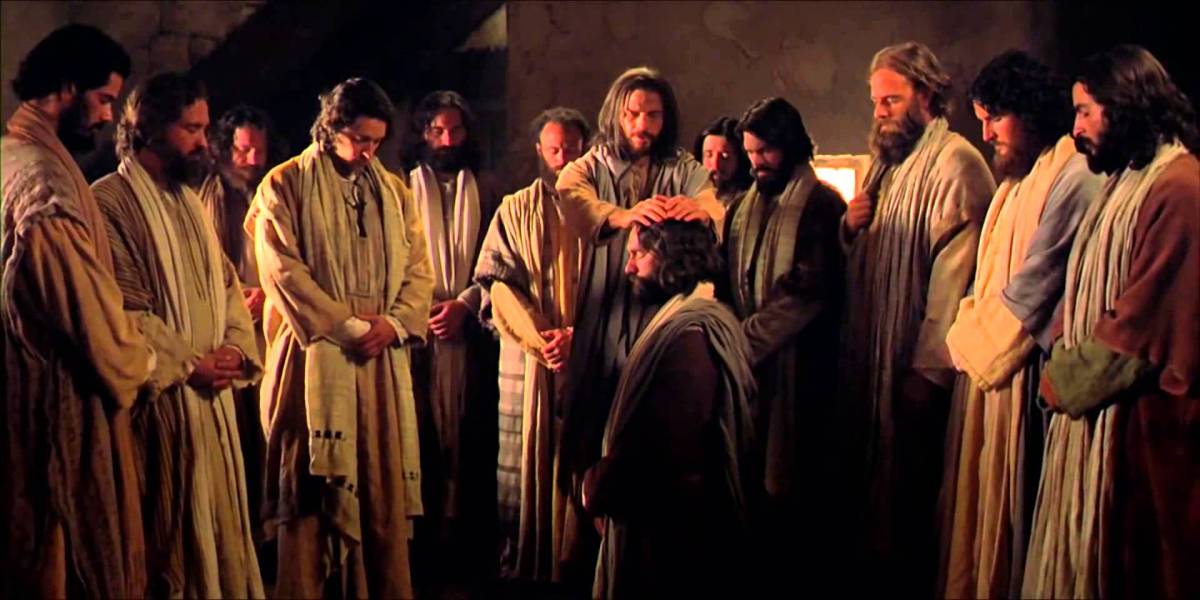
If Jesus was restoring the kingdom, how could he fund it? He’s just appointed his first government officials — twelve kingdom emissaries — but how could he fund them? You’re not going to believe what he did: he sent them out with no money, to fend for themselves!

Put yourself in their shoes: Continue reading “A grassroots kingdom (Matthew 10:9-15)”

Good News for God’s World (course)

You’re invited to a free training course in Perth, over the next six weeks.

Update 2021-02-07: old links removed.

If you’re in Perth, Western Australia, come and bathe in the good news of who Jesus is and the astounding difference he’s making to set everything right in his world.

We’ll talk about how we share his good news with people, by being good news people. When you have genuinely good news, it’s hard not to share it! Continue reading “Good News for God’s World (course)”

How the Shepherd gathers his sheep (Matthew 10:5-8)

Our Shepherd empowers us to care for his people.

Open Matthew 10:5-8.

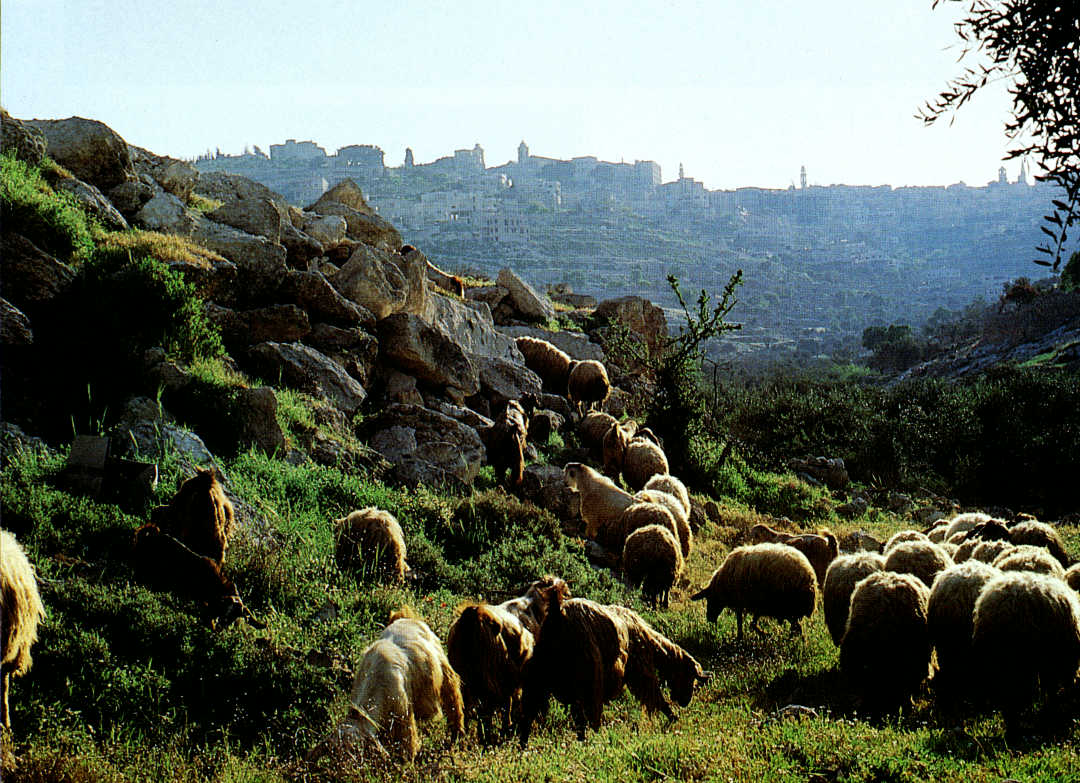
“Sheep without a shepherd” — it’s a disturbing image for a ruler who cares for his people (9:36). One man cannot round up the scattered sheep (9:37-38), so Jesus commissions twelve undershepherds (10:1-4), sending them to the lost sheep to announce his kingship (10:5-8).

Continue reading “How the Shepherd gathers his sheep (Matthew 10:5-8)”

“Shepherds After My Own Heart”

What does it mean to be a leader in God’s kingdom? God desires “Shepherds After My Own Heart.”

The best study on Christian leadership I’ve ever read is Timothy Laniak’s book, Shepherds after My Own Heart: Pastoral Traditions and Leadership in the Bible (IVP, 2006). Where many leadership books derive principles from business or bureaucratic settings, Laniak derives his from the heart of God, as expressed in the Biblical narrative. Continue reading ““Shepherds After My Own Heart””

Mentoring is ministry (Matthew 10:2-4)

Overwhelmed? Focus on the few.

Open Matthew 10:2-4.

I was dying to try out all the things I’d learned in 5 years of Bible College. My first church was well-established, a mature-aged congregation willing to wait for me to get over my youthful excitement. I couldn’t move them, so in my second year I focused outside the church on reaching needy people in the wider community. In my third year, I realized there were some of the congregation who really did want to grow, so I prayerfully selected people to pour my life into. I’d stumbled on what Jesus knew — that discipling a few people was the most fruitful form of ministry.

Continue reading “Mentoring is ministry (Matthew 10:2-4)”

Why no women among Jesus’ apostles? (Matthew 10:1-4)

Should women be leading churches if Jesus appointed no women among his apostles?

Open Matthew 10:1-4.

Fact: All twelve apostles appointed by Jesus were male.

Question: Is that a pattern for the leadership of the church? Should the church follow Jesus in appointing only males to positions of authority? Continue reading “Why no women among Jesus’ apostles? (Matthew 10:1-4)”

Why did Jesus appoint 12 apostles? (Matthew 10:1)

The appointment of 12 apostles to Jesus’ government marks a significant step towards the restoration of God’s kingship over the earth.

Open Matthew 10:1.

Appointing twelve leaders would have had special significance in Jesus’ culture. Israel found their identity in the twelve tribes descended from Jacob. But Israel had been scattered all over the ancient world “like sheep without a shepherd” (9:36). The king felt an urgency to gather such a great harvest. He instructed his followers to entreat the harvest owner to appoint workers (9:38). Then he commissioned them: twelve Jewish men entrusted with the authority of the king, foundation stones for re-forming Israel. Continue reading “Why did Jesus appoint 12 apostles? (Matthew 10:1)”

Jesus our shepherd (Matthew 9:35-38)

We have a shepherd, so you have a place to belong.

Open Matthew 9:35-38.

Matthew 9:36 (my translation)
Seeing the crowds, he had compassion for them, because they were harassed and thrown down like sheep with no shepherd.

What do we mean when we call Jesus our shepherd? Do you imagine yourself as a fuzzy little lamb being stroked by the shepherd? If so, you’ve missed the powerful metaphor.

For Israel, shepherd was a metaphor for a ruler, a leader of the nation. Occasionally a priest or prophet could be called a shepherd, but it was usually the king. David literally was a shepherd until God chose him to shepherd Israel: “You will shepherd my people Israel, and you will become their ruler” (2 Samuel 5:2).

Sheep without a shepherd is therefore a picture of a nation that’s lost its ruler. As Moses reached the end of his life, he asked God to appoint a successor “so the Lord’s people will not be like sheep without a shepherd” (Numbers 27:17). When the prophet Micaiah saw a vision of Ahab dying in battle, he said, “I saw all Israel scattered on the hills like sheep without a shepherd” (1 Kings 22:17).

The last king of Judah was Zedekiah. The Babylonian invaders slaughtered his sons in front of him and then gouged out his eyes. From that moment in 586 BC, Israel had been sheep without a shepherd.

Among the scattered sheep in exile, Ezekiel explained that God had to remove the bad kings; yet he also promised that God would raise up a son of David to rule over them again: Continue reading “Jesus our shepherd (Matthew 9:35-38)”

Do you recognize the king’s authority? (Matthew 9:32-34)

Don’t miss the authority of the servant king.

Open Matthew 9:32-34.

Jesus is doing something unique. He’s demonstrating his kingship before his people even acknowledge him as king. That’s not how it’s usually done.

Politicians work the other way around. “Put us in power,” they say, “and we’ll fix everything.” It’s an ancient technique. 3000 years ago, David’s son Absalom wanted to be king, and this is how he went about it:

2 Samuel 15:3–4 (ESV)
3 Absalom would say to him, “See, your claims are good and right, but there is no man designated by the king to hear you.” 4 Then Absalom would say, “Oh that I were judge in the land! Then every man with a dispute or cause might come to me, and I would give him justice.”

Jesus isn’t seeking people’s approval so he can become their king. He sees himself as the divinely appointed king, so he uses his regal authority to remove every form of oppression from his people. Just look at his track record:

Continue reading “Do you recognize the king’s authority? (Matthew 9:32-34)”

Why do the apostles rarely mention the kingdom?

Are there other ways to talk about the kingdom that will communicate better in our time and culture? Here’s a lead to get us started thinking that way.

Jesus chose particular language to describe his identity (son of man) and his mission (kingdom of God). Yet his followers don’t use these terms as frequently as Jesus did. Why?

The first step is to analyse the distribution of the word kingdom in the New Testament.  Todd Scacewater posted that survey on Logos Academic. Check it out: Why the Apostles Rarely Mention the Kingdom.

Armed with that information, we can then proceed to uncover the language Paul and Peter and the others do use to proclaim the kingship of Messiah Jesus is gentile territory. Understanding what they did could prove invaluable for us as we seek relevant and appropriate ways to communicate Jesus’ kingship in our time and in our culture where “kingdom” language can sound archaic. Continue reading “Why do the apostles rarely mention the kingdom?”

Q & A — end of the world

How do you think the story will end?

Update 2021-02-07: old links removed.

Riverview Church runs a few Hot Topic nights each year, evenings when people can text in questions on a topic that churches tend to avoid as controversial of difficult. His Kingdom Come: Preparing for the End of the World was the topic — appropriate for the date (9/11).

Graham Irvine and I (Allen Browne) began by providing some background (15–20 minutes each), while the audience texted in their questions. You can listen to the audio: Continue reading “Q & A — end of the world”

Personal Saviour or Son of David? (Matthew 9:27-31)

Do you think of Jesus primarily as your personal saviour or our global sovereign?

Open Matthew 9:27-31.

Guide dogs are amazing: a constant companion, willing to take a blind person where they want to go. The dog is trained for you personally, so it’s expensive to train one, and it really does become your own personal guide.

We make a huge mistake when we apply the same language to Jesus — calling him “my personal Saviour.” That’s a term Scripture never uses, because it could suggest that we think Jesus belongs to us, and he will take us where we want to go. That’s a completely corrupt way to understand Jesus, as if he was our personal servant and guide. And yet that attitude is widespread in the church today. We’re proclaiming that selfish arrogance each time we tell people, “Invite Jesus into your life; he’ll make it so much better for you.”

If you ever meet Queen Elizabeth, please do not invite her to be your personal queen. You’d be insulting her, as if she did not have that authority already. Please don’t invite her to sit on the throne of your heart! She already has the throne! What you must do is to acknowledge her authority, bow before her in recognition of her regal status, and follow her commands.

Continue reading “Personal Saviour or Son of David? (Matthew 9:27-31)”

The king understands his people (Matthew 9:18-26)

Jesus knew how to care for people who were socially sensitive and people who didn’t understand the social niceties. Worth following?

Open Matthew 9:18-26.

The Synoptic Gospels intertwine the stories of two very different people. One is an influential ruler who loses his daughter; the other is a woman whose only influence is making everything she touches ritually unclean due to her menorrhagia. Jesus understood the different responses of powerful and powerless people.

Continue reading “The king understands his people (Matthew 9:18-26)”

Managing criticism (Matthew 9:14-17)

How do you cope with criticism from people who don’t understand where you’re leading them? Could we learn from the Master?

Open Matthew 9:14-17.

What do you do when you’re criticized? It’s easy to get angry and sound off, or to cave in and give up. I’m interested in how Jesus, the king of the kingdom, handled criticism.

He copped it from the scribes (9:3). He copped it from the Pharisees (9:11). Now he cops it from friends: John the Baptist’s disciples:

Mathew 9:14 (my translation) Then John’s students came to him saying, “How come we and the Pharisees fast often, but your students don’t fast?” Continue reading “Managing criticism (Matthew 9:14-17)”

Free commentary on Mark’s Gospel

Download a good commentary on the Gospel of Mark, free.

Free book of the month from Logos for September 2017 is David Garland’s commentary on Mark. It’s an Application Commentary on the NIV translation (NIVAC). For each passage, it gives you the original meaning, the bridging context to our time, and the contemporary significance. At over 600 pages, it’s worth around $30 as an ebook or $44 as a hard back. If you’ll ever study the Gospel of Mark, grab it now. Continue reading “Free commentary on Mark’s Gospel”

Where did Jesus learn mercy? (Matthew 9:13)

Why did Jesus accept people when other leaders of his day wanted to cut them off?

Open Matthew 9:13.

One evening after work, a bunch of disreputable people were laughing and drinking shamelessly over their evening meal. It was exactly the kind of influence Israel didn’t need, so some Pharisees approached to name and shame them. Normally that would have broken up their unholy dinner party and send them slinking off into the darkness, but tonight one of these “disreputables” rises to his feet to defend his friends. It’s Jesus!

Continue reading “Where did Jesus learn mercy? (Matthew 9:13)”

Meditating on mercy (Matthew 9:13)

“I want mercy…” What does that mean?

Open Matthew 9:13 and Hosea 6:1-6.

“Go and learn,” Jesus said.
Perhaps we should:

Matthew 9:13 (my translation)
Go and learn what this is:
“I want mercy, not sacrifice.”
I didn’t come to call those in the right,
but sinners.
Continue reading “Meditating on mercy (Matthew 9:13)”

On gospel and guilt

Do we need to make people feel guilty to proclaim the gospel?

Guilt was an important message of the Medieval church. The church declared people’s guilt. You had to confess your sins to the church, and the church had the power to give absolution. The church would determine the penance you needed to perform as an expression of your repentance. The church decided your eternal destiny (heaven or hell) because it held the keys to kingdom. Paying money to the church may even shorten the after-life purification needed before a relative could be accepted into heaven (via purgatory). A cynic could describe the church was a large corporate entity that traded in guilt.

In October 1517, a priest named Martin Luther challenged the authority to the church to determine people’s guilt. That was central to his 95 Theses, e.g.: Continue reading “On gospel and guilt”

When did Jesus label people “sinners”?

Christians are far too quick to label people as “sinners.” Do you know how Jesus applied this label?

When we label people as sinners, they feel insulted. We’re calling them a dirty name. Why do we do it? Typically it’s because we want them to feel guilty, so we can offer them forgiveness. Is that good news? Or is it trading in guilt? What did Jesus do?

Let’s find out. There are only 7 or 8 occasions where Jesus used the word sinner. A survey of when and how he used this label is very revealing. Continue reading “When did Jesus label people “sinners”?”

What’s with tax collectors? (Matthew 9:9-12)

Why did the poor old tax collectors get such a bad rap in the New Testament?

Open Matthew 9:9-12.

Remember when you faced that tax bill? How did you feel? It wasn’t like, “Wonderful. Now I can contribute to educating children, providing health services, enabling law enforcement, building roads and infrastructure and a bunch of other things to help our community.” Not likely.

Now imagine taxes are being levied by an occupying force. Your taxes are paying the army that killed some of your family and is crushing your people. How would the Dutch have felt under Nazi occupation during World War II? How do Iraqis feel under American occupation today? How would Jewish people have felt under Roman occupation in Jesus’ time? Continue reading “What’s with tax collectors? (Matthew 9:9-12)”