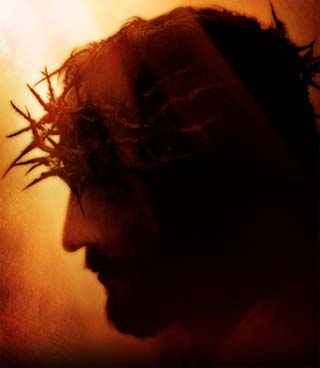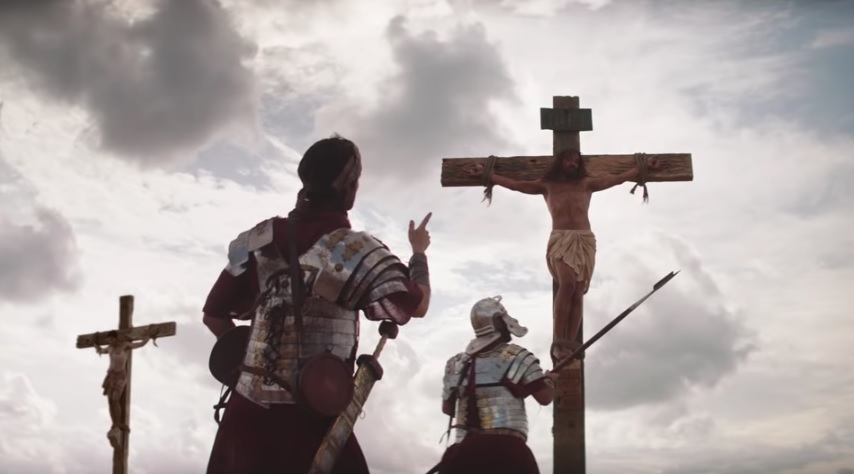
There are so many ways to talk about the cross, the centre of our faith. So, why does Matthew tell the story of the cross the way he does? Does he have a consistent message? What is it?
Continue reading “The meaning of the cross (Matthew 27:32–44)”
Why does Matthew tell the story of the cross as he does? Should we have the same emphasis when we talk about the cross?
There are so many ways to talk about the cross, the centre of our faith. So, why does Matthew tell the story of the cross the way he does? Does he have a consistent message? What is it?
Continue reading “The meaning of the cross (Matthew 27:32–44)”
Generous people have a vision bigger than themselves.
Want a bigger vision? The generosity of the Father towards his human family inspires us to live well.
Where do you see such generosity?
Is the future of the church online?
Church attendance was already declining in the West when COVID prevented many of us meeting. Online church became a way to stay in touch, express our faith, and hear encouragement from God’s word. So, is the future of the church online?
People were experimenting with online church before COVID. You could join a church in the virtual world, and even be baptized through your avatar (>1 million views).
What about online church? Could it be the salvation of the church in a world where people don’t want to or can’t attend?
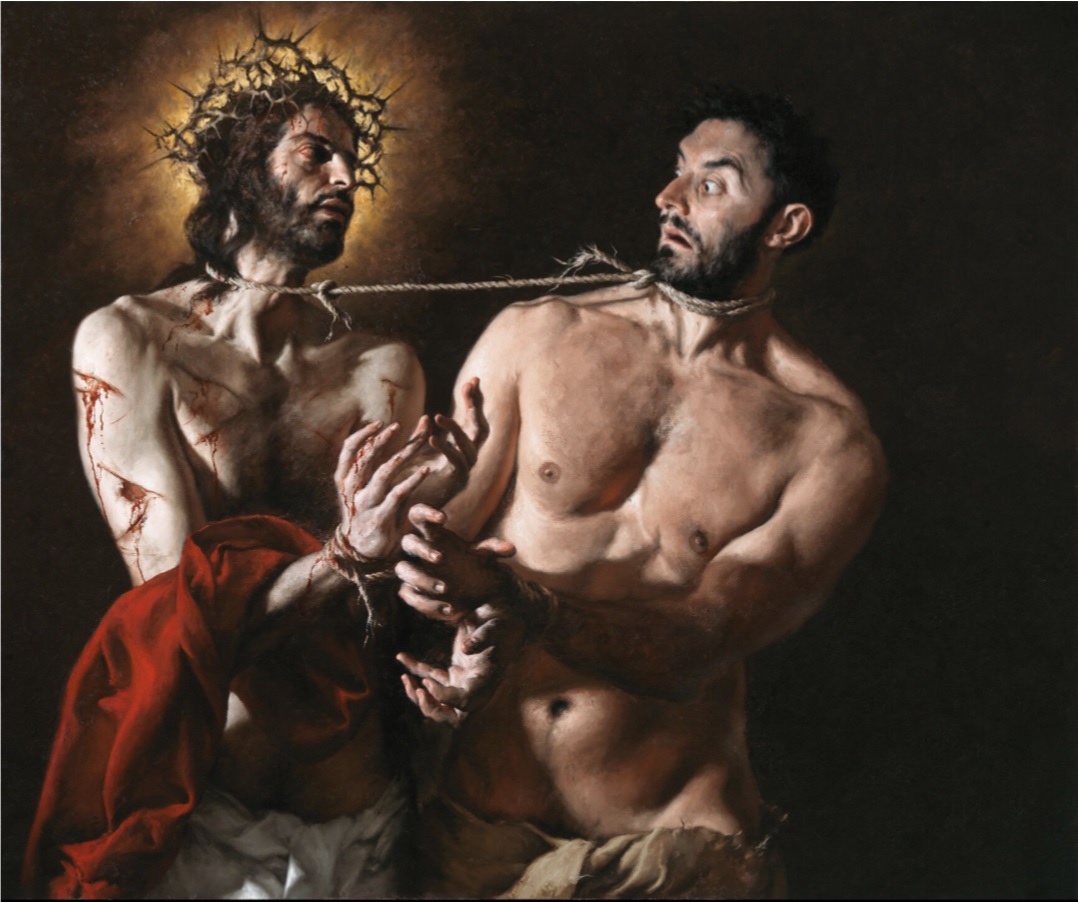
Why do the Gospel writers describe the mockery of Jesus if their aim is to promote him?
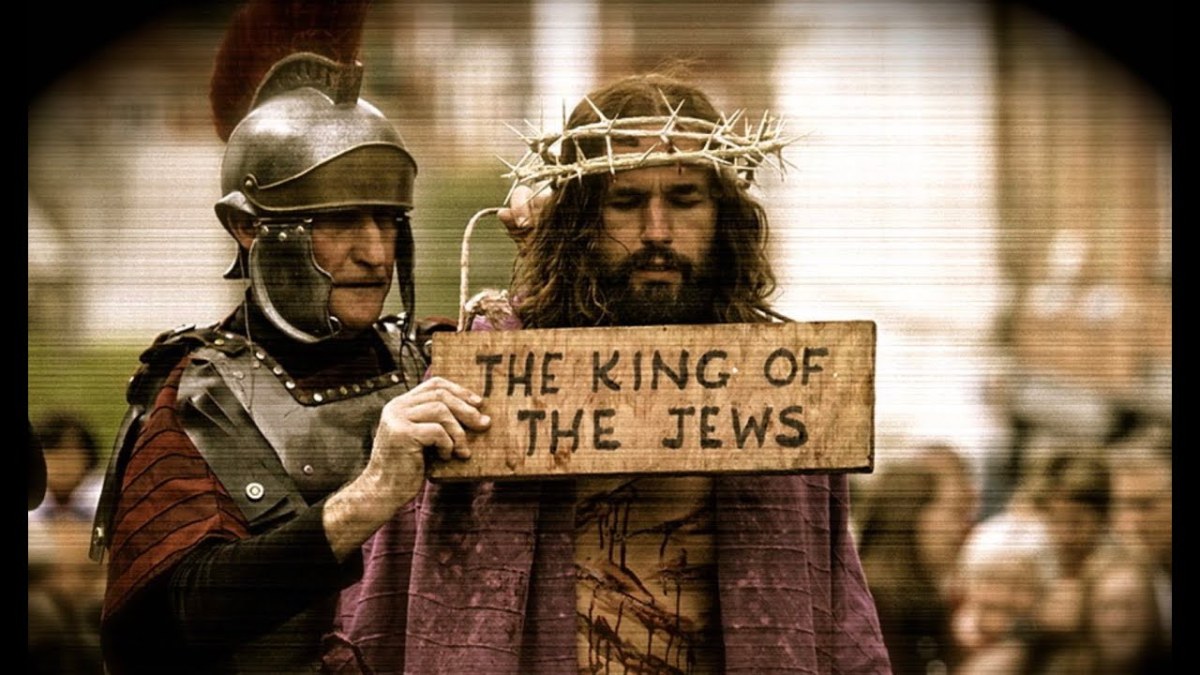
What makes a king? Is it the coronation event, that special day when people lead you to the palace, dress you in regal robes, place a crown on your head and a sceptre in your hand, and perform the formal speech act of declaring you to be king?
Matthew describes a mock enthronement where Roman soldiers crown a condemned man to parody the powerlessness of his people. What I want to know is why the evangelists include this scornful humiliation, this parody of worship, if they’re seeking to promote Jesus.
Is there something in this story that reframes how we view power?
Continue reading “What the mocking reveals (Matthew 27:27–31)”
2 Timothy 3 tracks the transformation that takes place through Christ, turning us inside out, from living for my own self-focused story to participating in God’s astounding story.
Continue reading “The way of transformation (podcast) (2 Timothy 3)”
“Jesus Barabbas? Or Jesus called Christ?” What’s your response to Pilate’s question?
The governor was not convinced Jesus had done anything deserving death (27:23). He knew it was out of self-interest that the leaders had handed him over (27:18). He moved to pacify the crowd by offering a prisoner release, giving them the choice.
It seems both men were named Jesus (though this detail is omitted from some ancient manuscripts of Matthew). Pilate offered the people this choice (27:17):
Who do you want me to release to you?
– Jesus son of Abba (Bar-Abbas), or
– Jesus called anointed leader (Christ)?
Jesus was a relatively common name, meaning The Lord saves (compare Matthew 1:21). It’s the Hebrew name Joshua. But these two Jesuses have radically different views on how to save God’s people.
Continue reading “Which Jesus do you want? (Matthew 27:15–26)”
How did Jesus respond as Pilate asked the ultimate question?
Pilate’s question goes to the heart of the gospel: Are you the king of the Jews?
From the very start, Matthew described Jesus as the anointed leader descended from King David (1:1). But Jesus has been less direct in claiming the regal title. Not until his crowning statement at the end do we hear the Christ claiming all authority in heaven and on earth (28:18).
Matthew treats this question as the focus of the investigation. The Jewish trial demands, Tell us if you are the anointed ruler (26:63). The gentile trial begins, Are you the king of the Jews? (27:11)
Jesus’ authority is the issue at stake. Seven times Matthew underscores Pilate’s official status as the governor (27:2, 11, 14, 15, 21, 27).
So how are we to understand the governor’s question and Jesus’ reply?
Matthew 27:11 (my translation, compare NIV)
Jesus was placed before the governor and the governor questioned him, “You are the king of the Jews?”
Jesus responded, “Your words.”
Continue reading “Are you the king of the Jews? (Matthew 27:11–14)”
Not just what to think but how to think on a controversial topic.
My first degree (B Th) was from a Bible college in the American Mid-West. One of the things I wasn’t prepared for was how many church people owned guns and said they would use them to protect themselves.
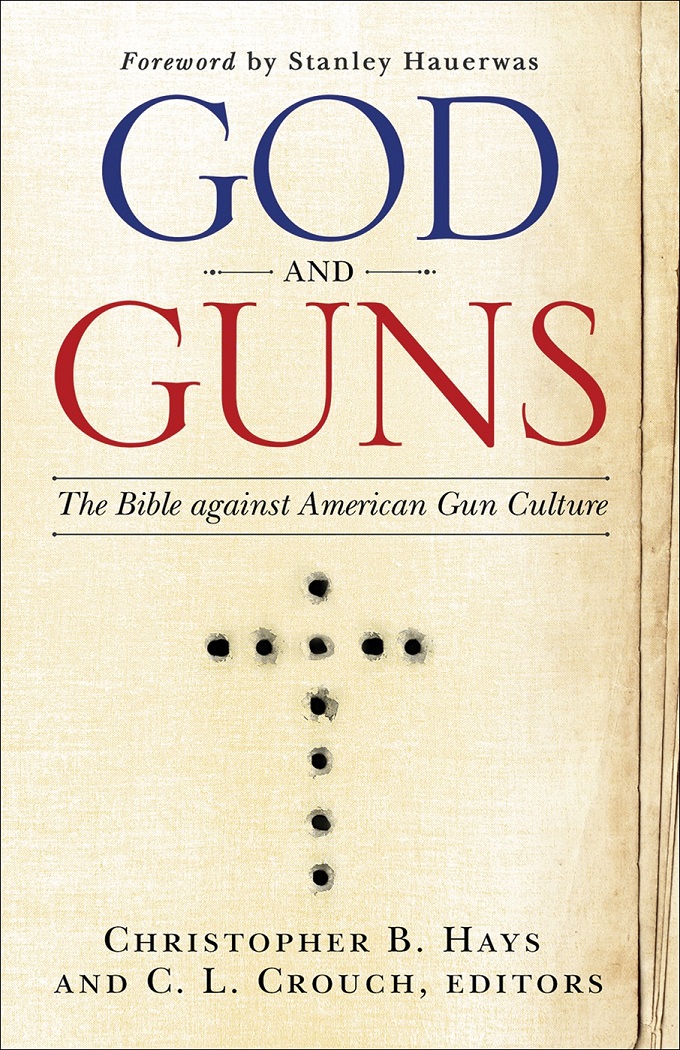
Guns are a big topic in the US, so it’s refreshing to see some good scholars engaging this debate. Two professors from Fuller Theological Seminary have collated the work of seven others in a new book called God and Guns: The Bible Against American Gun Culture published by Westminster John Knox Press in November 2021.
Now another NT scholar is blogging his responses. Ben Witherington III is someone I consult regularly (most recently 2 days ago). His understanding of how rhetoric functioned in the social setting of the New Testament is second to none. That’s why it was such a thrill to tour Israel with him back in 2014.
So, if you’re interested in how some good American Bible scholars think about this topic, Ben’s blog posts are your way in:
The gospel will transform the world. The good news that God’s anointed (Christ) is our leader (Lord) changes everything.
So how do we live in a world that is not fully transformed yet? What’s our role? How do we participate in this big story? That’s what Paul discusses in his final letter to Timothy.
Continue reading “Gospel encouragement (podcast) (2 Timothy 1)”
The tragedy of Judas was how he valued Jesus. Whatever his reason, he chose to hand Jesus over to the temple leaders, accepting whatever they offered (Mark 14:11 || Luke 22:5).
The chief priests set the price (Matthew 26:15). Thirty silver coins was a small price to be rid of the prophetic voice that exposed them as mere actors (23:13-29), rulers relying on death (23:27-32), leaders leading the city to destruction (23:33-39).
Jesus was heaven’s life-giving leader for the earth, and Judas was the leading example of trading Life for something less:
Continue reading “How do you value Christ? (Matthew 27:1-10)”
Did you miss any of these?
So much is beyond our control, “the best laid schemes o’ mice an’ men.” It shatters our illusions of being in control, triggering mistrust of our leaders. Turns out neither they nor we know where we’re going, let alone get there.
I’m finding encouragement from a guy whose life was ebbing away in isolation, yet kept his vision on the one who has our destiny sorted: I know whom I have believed, and I am convinced that he is able … (2 Timothy 1:12).
There’s only one King of Kings. Serving as his agents in a suffering world is the meaning of our lives.
If you’d like something full of hope about where he’s leading us, these were our most-read posts in 2021:
Considered Christmas from God’s perspective?
Santa hanging out of an inflatable caravan? Our neighbours in the next street had a sense of humour. At least, I hope they did, because the next morning Santa and his caravan were lying on the grass looking very deflated.
Maybe that happens to our childhood dreams too. My Dad would cut branches from the Athol trees and bring them inside for Christmas. Grandma’s house was filled with relatives, festive food, songs around the piano, presents under the tree. But it never feels quite the same when you grow up to find yourself making the preparations, cooking the food, and cleaning up the wrappings. Santa got lost in the transition from what you might get to what you might give.
Have you considered Christmas from the Giver’s perspective? What was it like for the Father of humanity? For unto us a son is given (Isaiah 9:6).
Why did the wonderful counsellor begin with the place that went dark first? Can his mediation resolve the violence and oppression to restore peace to God’s world?
From cards to cantatas, Isaiah 9:6 is part of Christmas. The child who is born, the son who is given is recognized with throne-names like Wonderful Counsellor.
What did wonderful counsellor mean in Isaiah’s time? How does it relate to Jesus?
Continue reading “Wonderful Counsellor (podcast) (Isaiah 9:6)”
Why were the Corinthians “doing more harm than good” when they met?
Why do churches meet? If we’re not clear what we’re meeting for, we may do more harm than good:
1 Corinthians 11:17-21 (NIV)
17 Your meetings do more harm than good. 18 In the first place, I hear that when you come together as a church, there are divisions among you …
20 When you come together, it is not the Lord’s Supper you eat, 21 for when you are eating, some of you go ahead with your own private suppers. As a result, one person remains hungry and another gets drunk.
The heart of what’s wrong here is competition instead of community.
This isn’t unique to the church. From the Parents and Citizen’s committee of the local school to the political parties that want to run the country, competing groups are always after the best outcome for their faction. It’s how the politics of power works.
But the church embodies the culture of a different kingdom. We’re doing more harm than good if our gatherings reinforce existing culture instead of the king whose authority comes from the cross.
Continue reading “The Lord’s Supper challenges culture (1 Corinthians 11:17–34)”
How will you respond when friends ask, “What are you doing for Christmas?”
This brief podcast (12 minutes) helps you navigate conversations about family gatherings, gift-giving, and why we do this at Christmas.
A new covenant? How did Jesus’ bloodshed establish a new covenant? Who are the parties? Why a new covenant? Could a previous covenant shed light on this one?
In the Ancient Near East, a national covenant defined who was in power. That’s what the Sinai covenant achieved: a people rescued from slavery became the first nation on earth to live under God’s reign, and the covenant that was celebrated with a meal (Exodus 24:7-11).
How did the new covenant establish God’s reign in Christ? What is it we’re proclaiming in this meal?
Continue reading “The new covenant meal (podcast) (1 Corinthians 11:23–26)”
Communion is a new-covenant feast. How does the body and blood of the Christ create a covenant between heaven and earth?
If your church celebrates the Lord’s Supper, you’ll be familiar with this:
1 Corinthians 11:23–26 (NIV)
23 For I received from the Lord what I also passed on to you: The Lord Jesus, on the night he was betrayed, took bread, 24 and when he had given thanks, he broke it and said, “This is my body, which is for you; do this in remembrance of me.”
25 In the same way, after supper he took the cup, saying, “This cup is the new covenant in my blood; do this, whenever you drink it, in remembrance of me.” 26 For whenever you eat this bread and drink this cup, you proclaim the Lord’s death until he comes.
We hear this so often we may not see how counter-cultural it is. When we celebrate our Lord, we’re proclaiming the king who gave his life to re-establish the covenant relationship between heaven and earth.
Those verses begin and end by proclaiming Jesus as kyrios — Lord. A kyrios in Greek culture was a master or a ruler. The head of a business was the kyrios: the master, the lord of the business. The head of the Empire was a kyrios: Caesar expected you to call him your lord.
But if you saw a convicted criminal hanging on a cross beside the road, you would not normally call him kyrios. The crowd would be more likely to call him Loser than Lord.
In what sense is Jesus our kyrios, the Lord?
Continue reading “The covenant meal (1 Corinthians 11:23–26)”
Seeing no alternative, Peter disowned his king. Jesus never gave up on him.
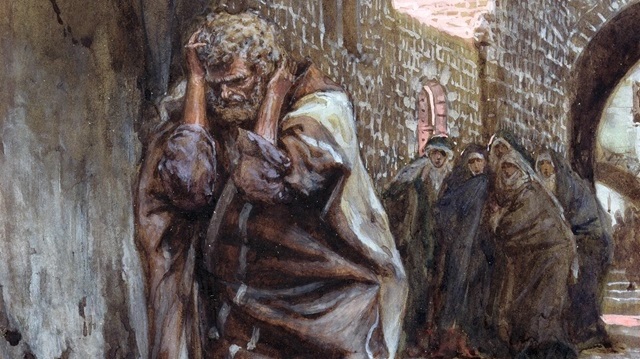
Why did Peter deny Jesus? Was he just sitting at the wrong fire, in a crowd where he didn’t have the gumption to admit he was Jesus’ follower? That isn’t how this story works in Matthew’s Gospel.
Peter was the first to acknowledge Jesus as the Christ, God’s anointed leader (16:16). Jesus blessed him, but realized Peter had no idea of the conflict ahead. Peter’s denial began when he said, No Lord! This will never happen to you! Denying that Jesus would die at the hands of the Jerusalem leaders placed Peter on the enemy’s side (16:21-23). Peter could understand taking up his sword and kill to save his king (26:51-52), but he could not understand taking up his cross to follow the king into death to save his realm (16:24-28).
Once Jesus removed fight from the agenda, flight was the only option his followers could see. That’s why, All the disciples deserted him and fled (26:56).
Peter could make no sense of what was happening, but he couldn’t stay away either. Peter followed him from a distance … to see how it would end (26:58). That’s the reason Peter was there, trying to blend in with Jesus’ antagonists. That was never going to work, of course. A lumbering fisherman sprouting Galilean phrases was as inconspicuous as an Aston Martin in a spy movie.
Continue reading “When the last man falls (Matthew 26:69-75)”
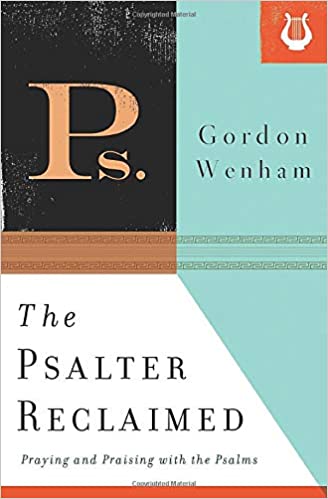
Gordon Wenham’s excellent book “The Psalter Reclaimed: Praying and Praising with the Psalms” is free this month (Nov 2021).
Gordon Wenham’s ebook, The Psalter Reclaimed: Praying and Praising with the Psalms is free this month (November 2021).
I’ve learned heaps from Wenham about understanding the Old Testament in context. Particularly, his commentaries on Genesis (2 volumes, WBC) and Leviticus (NICOT) and Numbers (TCOT) are so insightful, and Story as Torah: Reading Old Testament Narrative Ethically (T&T Clark, 2000) makes sense of difficult passages.
In this book, he guides us to the Psalms, showing us how to:
He then pulls it all together with a specific example from Psalm 103, before the final chapter on how the other nations fit with the Psalms.
Do you treat the Psalms as stand-alone songs? Or were they assembled in a meaningful way, so that one Psalm relates to the others around it? How do you read them in context?
Chapter 7 shows how. From Psalm 103: The Song of Steadfast Love:
Continue reading “Wenham shows us how to approach the Psalms (free book)”
How could Jesus be tried and condemned for the sin of blasphemy?
“Speak against me, and you speak against God!” That kind of manipulation is common from cults to Catholicism, from micromanagers to megachurches. That’s what motivated Caiaphas to tear his garments at Jesus’ trial with the accusation, He blasphemed! (26:65)
Continue reading “Why was Jesus accused of blasphemy? (Matthew 26:59–66)”