Where did Jesus learn mercy? (Matthew 9:13)

Why did Jesus accept people when other leaders of his day wanted to cut them off?

Open Matthew 9:13.

One evening after work, a bunch of disreputable people were laughing and drinking shamelessly over their evening meal. It was exactly the kind of influence Israel didn’t need, so some Pharisees approached to name and shame them. Normally that would have broken up their unholy dinner party and send them slinking off into the darkness, but tonight one of these “disreputables” rises to his feet to defend his friends. It’s Jesus!

Continue reading “Where did Jesus learn mercy? (Matthew 9:13)”

Meditating on mercy (Matthew 9:13)

“I want mercy…” What does that mean?

Open Matthew 9:13 and Hosea 6:1-6.

“Go and learn,” Jesus said.
Perhaps we should:

Matthew 9:13 (my translation)
Go and learn what this is:
“I want mercy, not sacrifice.”
I didn’t come to call those in the right,
but sinners.
Continue reading “Meditating on mercy (Matthew 9:13)”

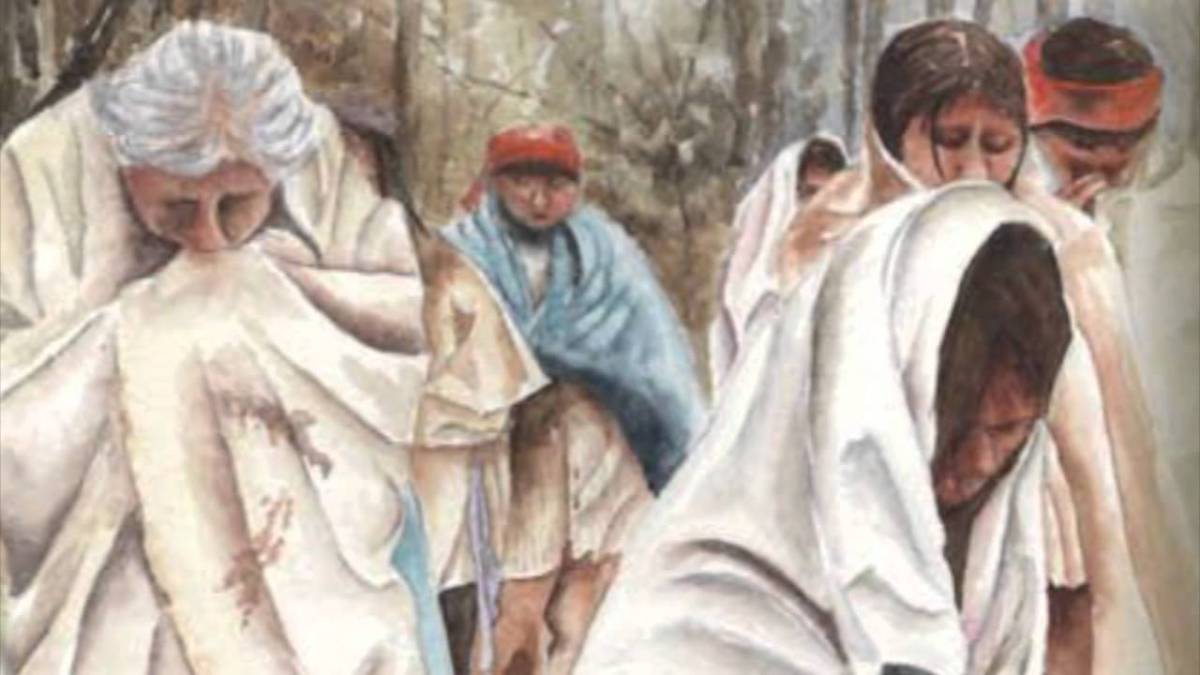
When did Jesus label people “sinners”?

Christians are far too quick to label people as “sinners.” Do you know how Jesus applied this label?

When we label people as sinners, they feel insulted. We’re calling them a dirty name. Why do we do it? Typically it’s because we want them to feel guilty, so we can offer them forgiveness. Is that good news? Or is it trading in guilt? What did Jesus do?

Let’s find out. There are only 7 or 8 occasions where Jesus used the word sinner. A survey of when and how he used this label is very revealing. Continue reading “When did Jesus label people “sinners”?”

What’s with tax collectors? (Matthew 9:9-12)

Why did the poor old tax collectors get such a bad rap in the New Testament?

Open Matthew 9:9-12.

Remember when you faced that tax bill? How did you feel? It wasn’t like, “Wonderful. Now I can contribute to educating children, providing health services, enabling law enforcement, building roads and infrastructure and a bunch of other things to help our community.” Not likely.

Now imagine taxes are being levied by an occupying force. Your taxes are paying the army that killed some of your family and is crushing your people. How would the Dutch have felt under Nazi occupation during World War II? How do Iraqis feel under American occupation today? How would Jewish people have felt under Roman occupation in Jesus’ time? Continue reading “What’s with tax collectors? (Matthew 9:9-12)”

Jesus’ authority on earth (Matthew 9:2-8)

When Jesus healed and forgave sins, was he showing his deity or his human authority?

Open Matthew 9:2-8.

Matthew 9:2-8 (my translation)
2 Look, they presented him with a paralysed person restricted to a stretcher. Having seen their trust, Jesus said to the paraplegic, “Be encouraged, child, your sins are revoked.” 3 Look, some of the Bible scholars said among themselves, “He’s blaspheming!”
4 Seeing how they were thinking, he said, “Why are you thinking evil in your hearts? 5 What’s easier? To say, ‘Your sins are revoked’ or to say ‘Get up and walk’? 6 So you can know that the son of man has authority on the earth to revoke sins,” he says to the paralysed person, “Get up, pick up your stretcher, and head off home.” 7 Having been raised up, he went off home. 8 When the crowds saw it, they were overawed and honoured the God who gave such authority to people.

When Jesus finally mentions someone’s sin in the New Testament, it’s to revoke it. The Bible scholars (scribes) weren’t happy. Jesus revoking sins? They can’t let him do that! They need to drag him down into the morass of human sin too. He’s a sinner, they say, a blasphemer.

Blasphemy isn’t just saying a naughty word against God; it’s demeaning our sovereign’s authority, often by making a claim to that authority. When Assyria attacked Jerusalem in King Hezekiah’s day, the Assyrian general claimed to be more powerful than Israel’s God. He claimed God had given him authority to take Jerusalem (2 Kings 18:25, 35). Isaiah denounced his claim as blasphemy (2 Kings 19:6, 22 NIV). When the scribes label Jesus as a blasphemer, they reject his claim to speak and act on earth on behalf of Israel’s sovereign God. Continue reading “Jesus’ authority on earth (Matthew 9:2-8)”

What is forgiveness? (Matthew 9:5-6)

If you think of forgiveness as dealing with your personal guilt, you’ve only got part of the story.

Open Matthew 9:5-6.

Jubilee. What a joyful word! It’s the Hebrew word yôbēl carried over into English.

The way God designed it, Israel’s economy was to be reset every 50 years. Slaves would be freed. Debts would be forgiven. Property sold in tragedy would be returned. Obligations would be released.

A couple of centuries before Jesus, the Hebrew Bible was translated into Greek, and they chose an interesting word for yôbēl. It’s Greek word ἄφεσις (AH-fe-sis), meaning forgiveness. That’s right: in the Septuagint, the Jubilee year was known as the Forgiveness year. Continue reading “What is forgiveness? (Matthew 9:5-6)”

What about sin? (Matthew 9:2)

Why did Jesus talk about sin much less than we do? Is there something we should learn from him?

Open Matthew 9:2.

As you read the Gospels, are you learning from Jesus? To be a disciple is to become like the Master. Watch what he did that’s different from what we do. Close the gap where our understanding and practice doesn’t match his.

That’s especially important when it comes to the gospel. When people today present the gospel, we tend to start with the problem, identified as sin. We present Jesus as the antidote for sin, and then we ask people to sign up so they can have the benefit — the forgiveness of their sins. Sound familiar? Trouble is: that’s not how Jesus did it. Continue reading “What about sin? (Matthew 9:2)”

What if people don’t want Jesus as king? (Matthew 8:28-34)

Can the Jewish Messiah save the world? What if people won’t submit to him?

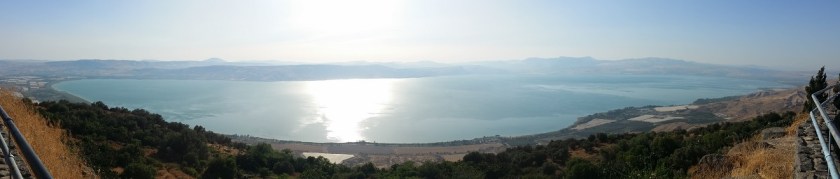
GalileeFromGolanHeights_20170513_171959
Looking across the Sea of Galilee from the Golan Heights

Open Matthew 8:28-34.

Matthew is proclaiming Jesus’ kingship. His people are surprised at his authority (7:21-29). His authority extends to outcasts (8:1-4), officers of their oppressor’s army (8:5-13), even beyond the borders of the land to the turbulent sea (8:23-27).

What about the land across the sea ruled by non-Jews? Does Jesus authority extend there? What if they don’t want him as their king?

Continue reading “What if people don’t want Jesus as king? (Matthew 8:28-34)”

When your life is threatened (Matthew 8:23-27)

When so much is out of control, can Jesus restore this unruly world?

Open Matthew 8:23-27.

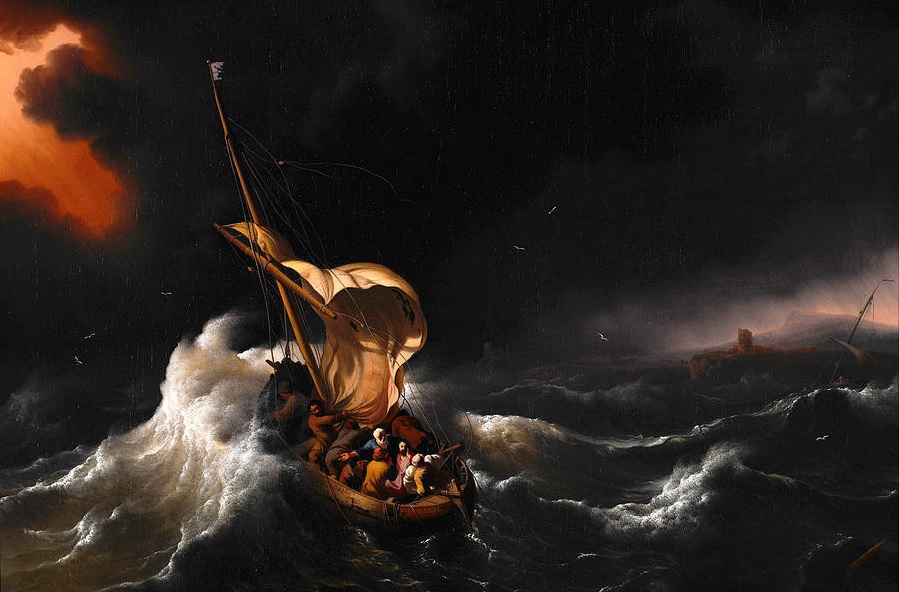
Matthew 8:23-27 (my translation)
23 As he boarded the boat, his students followed him. 24 And look! The sea became severely agitated so the boat dipped into the waves, but he was sleeping. 25 They came and roused him saying, “Lord, save us! We’re perishing.” 26 He says to them, “Why are you fearful, trusting so little?” Then, rising up, he told off the winds and the sea. It settled to a great calm. 27 The people were astonished saying, “What kind of person is this, that even the winds and the sea obey him?”

What kind of person indeed! In the ancient world, the sea was outside the boundaries of the nations, beyond human control. Matthew’s point is that Jesus has authority over the natural world, even the parts that are unruly and unruled. Continue reading “When your life is threatened (Matthew 8:23-27)”

The homeless king (Matthew 8:20)

When his people are homeless, the Saviour is homeless too.

Open Matthew 8:19-20.

Matthew tells us that people had begun to recognize Jesus’ authority (7:29; 8:9). The king walked among his people, freeing them from their oppression (8:16). He bore their weakness, their dis-ease (8:17).

He was a homeless king (8:20). Ever heard of such a thing? He chose to be homeless as he moved among his people, identifying with them. In a sense, his people were homeless too. They had lost their homeland to foreign powers long ago. When Babylon invaded, so many died trying to defend Jerusalem they couldn’t bury them all, so their dead bodies became food for the birds of the air and the beasts of the earth (Jeremiah 7:33; 19:7). The birds and the beasts had homes, while God’s people did not. Continue reading “The homeless king (Matthew 8:20)”

Jesus, the son of man (Matthew 8:20)

In calling himself “the son of man” Jesus contrasts his vocation with what’s inhumane.

Open Matthew 8:19-20.

So why did Jesus call himself the son of man more than eighty times in the New Testament? Here’s the first one:

Matthew 8:19 – 20 (my translation)
19
One of the scribes approached and said to him, “Teacher, I will follow you wherever go. 20 Jesus says to him, “The foxes have dens, and the birds of the heavens have roosts, but the son of man has nowhere he could rest his head.”

In Ezekiel, son of man meant the human servant of Lord YHWH, after Israel had fallen. In Daniel, the Ancient Ruler promised to take the kingdom from the beasts and give it to someone like a son of man. The beasts were still ruling when Jesus was born, so he received the commission given to Adam: to subdue the earth and rule over it as the representative of the divine sovereign. Jesus was to be a son of man in the face of the beasts. Continue reading “Jesus, the son of man (Matthew 8:20)”

Jesus the healer (Matthew 8:14-17)

What kind of ruler rectifies evil by curing his people?

Open Matthew 8:14-17.

We’ve seen how factions of the church respond differently to the healing stories in the Gospels, and we raised the question of whether the gospel of the kingdom can bring us together. Let’s read this through the kingdom lens: Continue reading “Jesus the healer (Matthew 8:14-17)”

Jesus’ kingdom hope (Matthew 8:10-13)

Why do the Gospels depict Jesus as the saviour for non-Jewish people?

Open Matthew 8:10-13.

Some of Jesus’ kingdom pictures sound odd to us. He spoke of people from the east and the west coming to take their places with Israel’s long-dead patriarchs (8:11). Some readers imagine they’re all dead and gone to heaven, but that doesn’t do justice the way Israel’s kingdom story worked or to the role of the patriarchs in that story. Continue reading “Jesus’ kingdom hope (Matthew 8:10-13)”

A secret Messiah? (Matthew 8:4)

How do we announce Jesus’ kingship in a world where power is always oppressive?

Open Matthew 8:4.

Matthew 8:4 (my translation)
Jesus says to him, “See you tell no one, but head off to show yourself to the priest and offer the gift that Moses commanded, as a testimony to them.”

Why was the leper to tell no one about his healing? And if he was already cleansed, why send him off to offer a sacrifice for purification? Continue reading “A secret Messiah? (Matthew 8:4)”

The leper and the king (Matthew 8:2-3)

When God gets his hands dirty.

Open Matthew 8:2-3.

A leper was unusual company for a king. The skin disease was bad enough, but a leper was a defiled person, excluded from the community. Even kings feared the disease that could drive them from their family home and from God’s house (2 Chronicles 26:19-21).

But this leper heard that Jesus announced good news for the people who’d missed out. He knew what it was to be driven out of the community, and he wanted in. He didn’t just want to be healed of his medical problem; he wanted to be purified from the defilement that excluded him from the community.

The trouble was that anything the leper touched became unclean. He was expected to tell everyone that he was a defiler, that if they touched him they would also be unclean. Continue reading “The leper and the king (Matthew 8:2-3)”

Why kneel?

Christians in evangelical traditions kneel much less than we used to. Have we lost something?

Open Matthew 8:2.

As Jesus stepped down from this inaugural address on the kingdom, an outcast with a disease that prevented him being part of the community came and knelt before Jesus with a request. Why did he kneel? Should we kneel? What does it mean? Why do we rarely kneel anymore? Continue reading “Why kneel?”

Asking good questions (Matthew 8:1-4)

The questions you ask shape what you become.

Want good answers? Ask good questions.

We all bring own questions and interests and beliefs to Scripture when we read. To understand its message well, set your agenda aside for a while, bathe in the text, and let it raise questions for you.

Try it with this short story: Continue reading “Asking good questions (Matthew 8:1-4)”

Hearing the king (Matthew 7:28-29)

What kind of authority do you find in Jesus’ teaching?

Open Matthew 7:28-29.

Matthew 7:28-29 (my translation)
28 When Jesus finished his message, the crowds were astounded at how he taught. 29 He was instructing them authoritatively, not as their scribes.

“We need to teach with authority. Be like Jesus, not like the Jewish scribes,” the preacher said. I was only a college student at the time, but it sounded good to my young ears. What could be wrong with encouraging us to follow Jesus’ example?

That preacher missed the whole point. The crowd’s reaction raised the question who Jesus thought he was. What authority did he think he had? He wasn’t exegeting Scripture as Bible scholars do. He was redefining God’s decrees: “You’ve heard it said …, but I say to you …” Jesus acted as king. He set the laws of the kingdom. That’s a whole different level of authority to any preacher or teacher. Continue reading “Hearing the king (Matthew 7:28-29)”

A rock worth building on (Matthew 7:24-27)

Life is precious. How do you decide how to spend it?

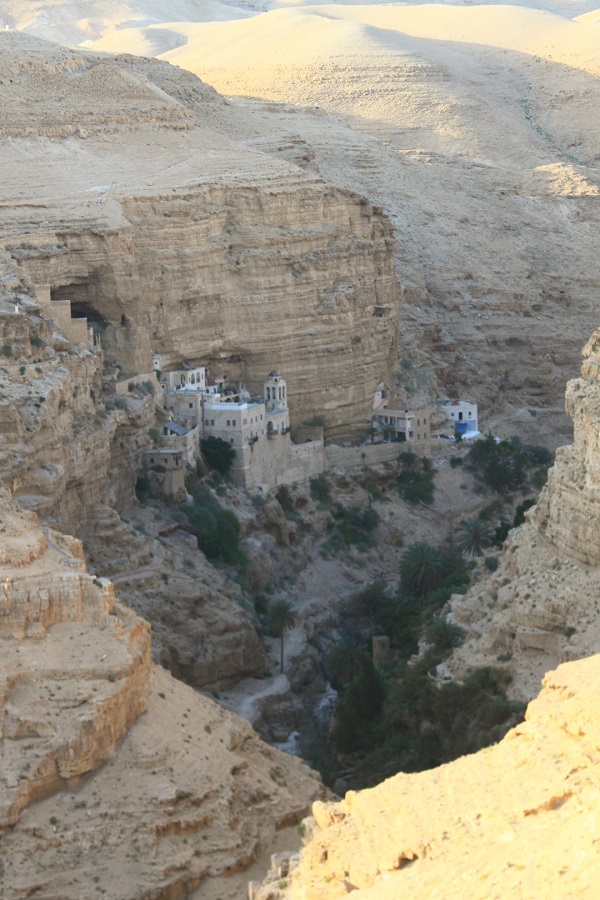
StGeorgeMonastery
St George’s Monastery in the wilderness of Judea. Built into the rock in the fourth century.

Open Matthew 7:24-27.

A friend has some health challenges. “Got me thinking,” he told me over the weekend. “If I only had 5 years left, would I be satisfied with how I’ve spent my life?” He’s a clever bloke who has lots of things on the go. He’s decided to simplify, to get rid of most of his activities and concentrate on what matters. Continue reading “A rock worth building on (Matthew 7:24-27)”