

This podcast (32 min) covers the blog post on Genesis 7: Ruined.
Category: Judgement
Ruined (Genesis 7)

God’s partnership with humans broke down. Cain went out from God’s presence (4:16) to build a city that trusted violence for justice (4:23). The rest of Adam’s family (Genesis 5) exchanged God’s values for what seemed “good” to them (6:2), lauding the strong fighters, the heroes of old, the men of renown (6:4). They only thought about doing evil to each other (6:5). God grieved he had made humans (6:7), for the earth God entrusted to us was now corrupt, filled with violence (6:11).
For God’s partnership with us to work requires at least one person. In Noah, God finds a way to rescue the earth. God saves Noah by teaching him to build a preservation box (ark), and Noah saves the creatures entrusted to human care (6:19) because Noah did everything just as God commanded him (6:22).
Genesis 7 then recounts the destruction of the world that God’s partners had already destroyed, and Genesis 8 describes the rescue of the earth.
Podcast – Genesis 6

This podcast (43 min) covers the topics blogged from Genesis 6:
Judging and saving a corrupted creation (Genesis 6:9-22)
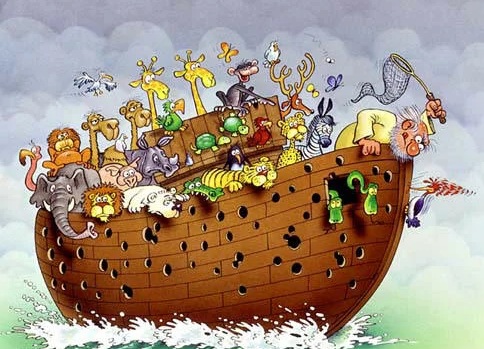
Here’s the start of a new family story:
Genesis 6:9-10 (NIV)
9 This is the account [tôlēḏôṯ] of Noah and his family. Noah was a righteous man, blameless among the people of his time, and he walked faithfully with God. 10 Noah had three sons: Shem, Ham and Japheth.
Christian readers have problems here. How can Noah be a righteous man? We know the verses that say no one is righteous (Psalm 143:2), and all our righteousness is as filthy rags (Isaiah 64:6). How can Noah be a righteous man? Was Noah blameless (without fault)?
More problematically, what kind of God kills all those people? If we think this is a children’s story, we haven’t understood the horror. This should be R-rated.
Continue reading “Judging and saving a corrupted creation (Genesis 6:9-22)”
The question of justice (Genesis 3:8-21)

The agents God trusted with caring for creation attempted a coup, to become gods, to define good and evil for themselves. How does God respond? God takes responsibility, but how God handles justice is not like what human rulers do when someone threatens their authority.
God doesn’t react swiftly or violently. God doesn’t drop everything and rush to apprehend the rebels who betrayed the trust he placed in them. God waits. God invites them to discuss their relationship with them. God explains the implications of what they have done.
Joseph’s greatest test (Genesis 42:1–20)
How did Joseph handle the most difficult temptation of his life?

When we idealize our heroes, we diminish their struggles. Joseph’s temptations were real, but Mrs Potiphar wasn’t the big one. His greatest test was his brothers — what he’d do to them once he had the power to give them what they deserve.
Who are “my brothers?” (Matthew 25:40)
Who was Jesus expecting us to help when he said, “Whatever you did for one of the least of these brothers and sisters of mine, you did for me”?

Who are Jesus’ brothers/sisters in this statement?
The King will reply, ‘Truly I tell you, whatever you did for one of the least of these brothers and sisters of mine, you did for me.’ (Matthew 25:40 NIV)
The context is where he’s sorting sheep from goats, based on how they took care of his needs. The sheep ask, “When did we ever see you in need and help you?” And that was the king’s response.
So, was Jesus thinking only of Christians as his brothers and sisters? Or did he have the whole human family in view? It matters, because the church needs to be clear about its mission. The answer you give reveals how you understand the scope of Jesus’ kingship.
Continue reading “Who are “my brothers?” (Matthew 25:40)”How the king evaluates his people (Matthew 25:34-46)
Our criteria don’t match his.
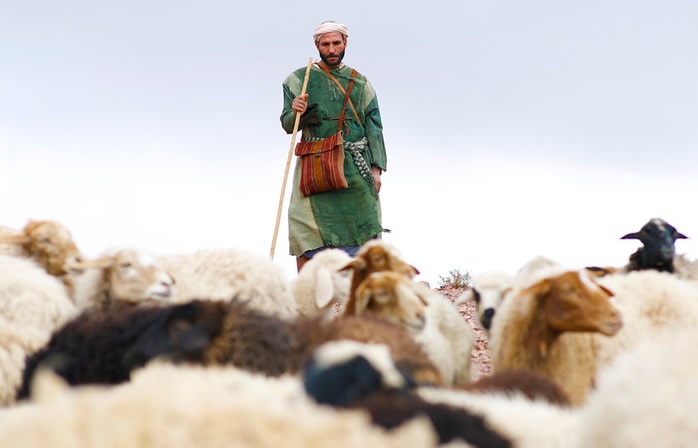
We’ve been celebrating how the world will be when Christ’s kingship extends to all the people of the world, when all the nations are under his reign. This is what finally brings peace, resolving every conflict.
How does he achieve that goal? His Father, our eternal sovereign, gives the kingship to the son of man, so he has the responsibility to sort out all the people of the earth. Like a shepherd, he separates sheep from goats (25:32).
So how does he know the difference? What criteria does the king use to evaluate his subjects and decide who are his?
Continue reading “How the king evaluates his people (Matthew 25:34-46)”One taken; one left (Matthew 24:37-41)
All people should be treated equally. That’s basic ethics. So, is the world unjust if two people doing the same thing are treated differently?

One is taken, and one left. Which is which? Jesus has been speaking about Rome invading, advising the people of Judea to head for the hills (24:16). Is he speaking of soldiers capturing one, and letting the other go?
Or is God doing the taking/releasing? The immediate context says Noah’s flood took them all away (24:39). That didn’t leave many. Is this about God taking some people in judgement, and leaving others? Or is God taking some to save them, leaving the others to be damned?
If you’ve never considered these possible meanings, you may be surprised to know that Bible commentators seriously weigh these options. The commentaries I checked were quite divided over who’s who in this brief story. Jesus didn’t spell it out for us.
That left me wondering if we’re missing the point. We’ve assumed that it must be about the godly being saved and the ungodly being lost, but Jesus’ story doesn’t have those categories. It wasn’t about a bandit and a sheriff. He drew no distinction between them:
Continue reading “One taken; one left (Matthew 24:37-41)”Woe there: how did Jesus treat his enemies? (Matthew 23)
Warnings of a dangerous path, not wishes for disaster. That’s what Jesus meant by “Woe.”
If you think Jesus deserves a Nobel Peace Prize, you might be shocked by the way he addressed his enemies. Should we follow his example? This post helps you put his declarations of woe (Matthew 23) in context.
Jesus was approaching the capital to be recognized as king. That’s how the people called it: the son of David, coming in the name of the Lord to save his people (see on 21:9). But their joyful news sent shock waves through the powerful people of the city.
Continue reading “Woe there: how did Jesus treat his enemies? (Matthew 23)”What does the Bible say about hell?
Hope this helps you understand this controversial topic.

For 14 years, I’ve been seeking to understand what the Bible says about hell, the Jewish background, and the church’s understanding. Here are the results.
You may be surprised how few references there are. The main word (Gehenna) occurs just 12 times. Another word (hadēs) describes the dead, and some versions have mistranslated this word as hell (e.g. Matthew 16:21 ESV; Revelation 1:18 KJV). And there’s a mythical synonym once (tartaroō in 2 Peter 2:4).
All the references to Gehenna are from Jesus, with one from his brother (James 3:6). What Jesus said is therefore the definitive teaching on hell.
Here are the passages where Jesus mentioned the word:
Continue reading “What does the Bible say about hell?”Are we worse off if we live unselfishly? (Matthew 18:7-10)
Enacting legislation doesn’t stop evil; enacting love does.

If you enjoy renovation projects, you’ll love the big one our king is working on. A complete global make-over, restoring the world to the glory of what it was designed to be: a kingdom of heaven. What will be different when he succeeds?
At its heart, it’s a change in how people use power. People do whatever it takes to eliminate their competition. Jesus experienced it (16:21; 17:22). He calls us to use our strength to support each other as we do for children, instead of taking advantage of each other and trying to trip each other up (18:3-6). But how?
Continue reading “Are we worse off if we live unselfishly? (Matthew 18:7-10)”Good mysteries have a reveal (Ephesians 3:2-6)

A surprise birthday party? A campaign shrouded in mystery until the launch? The joy of good secrets is in the reveal.
But we struggle when we don’t know. We fill the vacuum with stories or fears of what might happen. Even theologians fear the worst when we don’t know. Like what will happen to people who never heard about Jesus? Maybe we need to trust God instead of letting our imagination run amok. Continue reading “Good mysteries have a reveal (Ephesians 3:2-6)”
When Egypt lost its heirs (Exodus 11–12)
What does the final plague reveal about God?
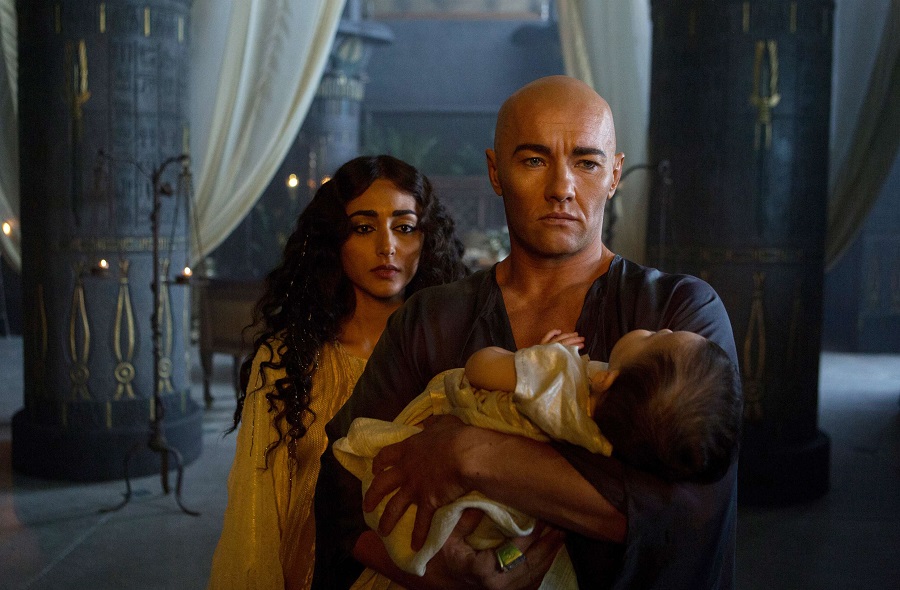
Open Exodus 11 – 12.
Nine times, Pharaoh has been shown to be just another stubborn human, not the person who rules the world. His own advisors no longer find him credible (10:7). The Egyptians now have more respect for Moses than for Pharaoh (11:3).
That makes Moses’ final announcement even more devastating: every family in Egypt will lose its heir (11:5). The Egyptians will rise up to demand their king release God’s people (11:8).
But how do you feel about God killing thousands of Egyptians? Can we get God off the hook? Could we blame the angel of death instead? Continue reading “When Egypt lost its heirs (Exodus 11–12)”
When everything’s gone and the lights go out (Exodus 10)

Open Exodus 10.
It may be Egypt’s darkest hour. Hail has destroyed the crops. Now a swarm of locusts invade, devouring any remaining stalks. Crops are stripped bare. Trees denuded. Everything is ruined. Despair creeps over the land. There is no reason to get up in the morning.
But morning doesn’t come. Night doesn’t end. Ra doesn’t rise. Egypt is hostage to the dark, cloaked in a shroud. Fear takes over when you can’t see what’s there. It’s palpable: a darkness that can be felt (10:21). Continue reading “When everything’s gone and the lights go out (Exodus 10)”
Seventh plague: God’s big purpose (Exodus 9:13-35)

Open Exodus 9:13-35.
Hail falls from the heavens. Egypt’s proud rulers run for cover like everyone else. With lightening striking all around them, Egypt’s rulers are powerless before the one who reigns from heaven.
But God’s aim is not to strike Pharaoh dead: Continue reading “Seventh plague: God’s big purpose (Exodus 9:13-35)”
Six demonstrations of divine kingship (Exodus 7–9)
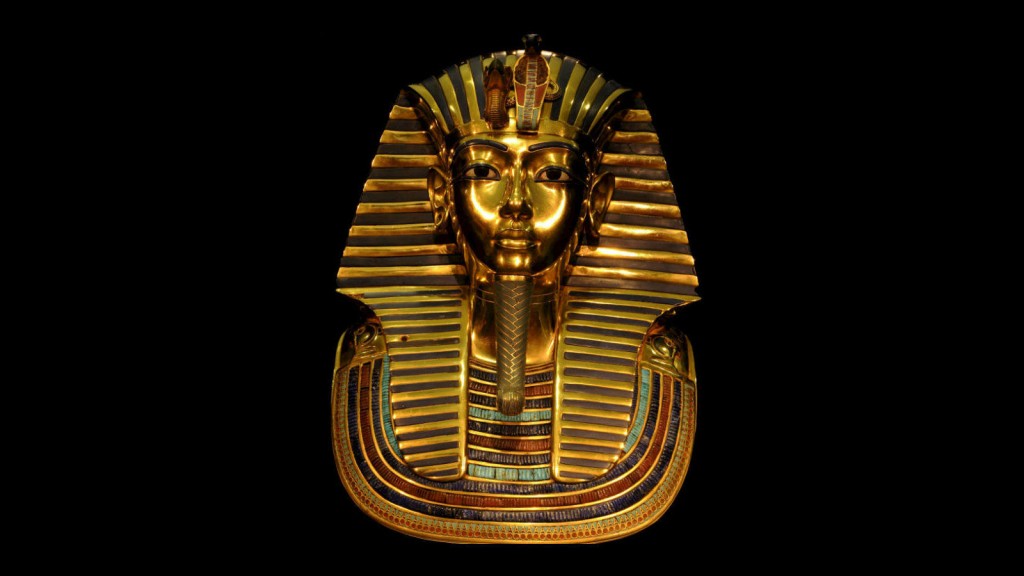
Open Exodus 7.
Whether it’s missiles parades in China or F35 fighters thundering over our heads in the west, our rulers love demonstrating their power. And according to the exodus story, rulers do have power to make people miserable (1:11-14; 2:23; 3:7; 4:31; 5:15; 6:6-9).
But the truth is, human rulers do not control the natural world. God alone controls the earth. That’s what the ten plagues showed. Despite all his claims, Pharaoh was not in control.
God demanded Pharaoh to release the people who weren’t his to rule. Pharaoh refused. The battle for the Hebrews begins. But God doesn’t fight with earthly weapons. With ten mighty acts, he demonstrates his kingship over the natural world. Continue reading “Six demonstrations of divine kingship (Exodus 7–9)”
Purpose of the plagues (Exodus 7 – 13)

Open Exodus 7.
Why did God do plagues in Egypt? Doesn’t God just do nice stuff? Continue reading “Purpose of the plagues (Exodus 7 – 13)”
Why woe? (Matthew 11:20-24)
Why did Jesus announce woes on towns like Capernaum?

Open Matthew 11:20-24.
Many of us skip over the bits where Jesus announces woes. We prefer the blessings. But please don’t play ostrich here. It’s important. The bits we don’t understand are friends that can open our eyes to fresh ways of seeing. Continue reading “Why woe? (Matthew 11:20-24)”
Where’s God’s justice in an unjust world? (Matthew 10:26-31)
Your heavenly Father knows when even a sparrow falls.

Open Matthew 10:26-31.
We all have filters that shape what we hear. That’s true of how we understand our closest friends. It’s even more significant when we want to understand what Jesus said 2000 years ago in a very different setting.
For example, we in the western church tend to think of souls as immortal. After your body dies, your soul lives on, either in heaven or hell. It would make no sense to us to talk about bodies going to hell. Yet that’s precisely what Jesus did to: he said it’s better to lose an eye than to lose your whole body in hell (Matthew 5:29-30, 22). Something that doesn’t make sense is a hint that we’re not hearing it right, that we need to reframe the way we think. Continue reading “Where’s God’s justice in an unjust world? (Matthew 10:26-31)”
 Seeking the kingdom