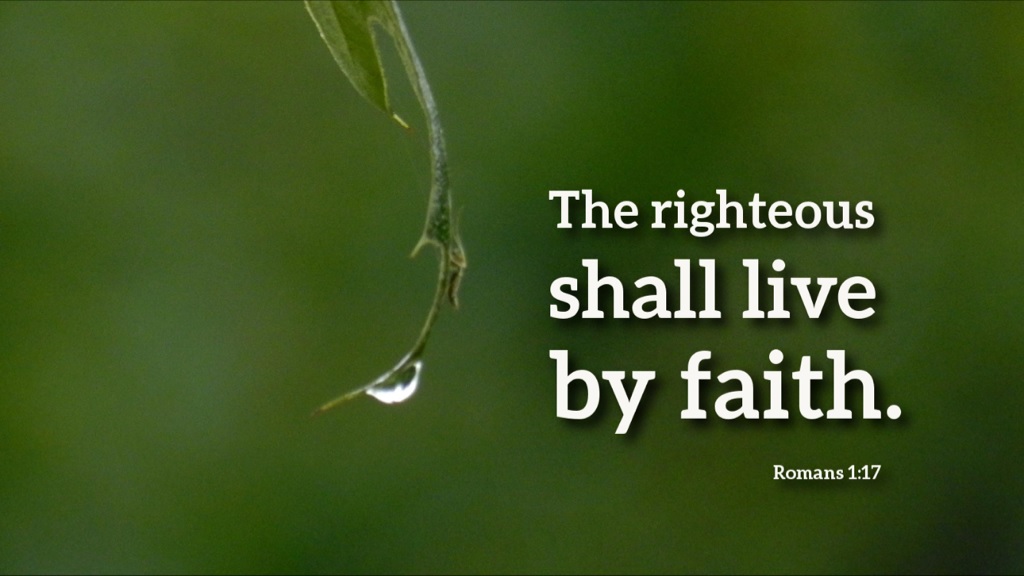
Jesus’ whole life is testimony to Habakkuk’s message, “The righteous one will live by faith(fulness).”
Jesus never mentioned Habakkuk 2:4, but his life embodied its message: the righteous one will live by faith(fulness). Faced with enemies who wanted to destroy the king of the Jews, Jesus did the right thing because he was trusting his Father to set everything right, to re-establish God’s kingdom.
How does God fulfil his promise that the righteous will live by faith?
Should good people stand up against the forces of evil in our world, so the whole thing doesn’t go down the drain? You’ve heard the proverb: All that is necessary for the triumph of evil is for good men to do nothing.
If we were looking to good men to save us, that approach might make sense. Habakkuk wasn’t. He was looking for God to save. But he didn’t see God intervening. We could summarize his complaint as: All that is necessary for the triumph of evil is for a good God to do nothing.
God gave Habakkuk a lifeline. God does not act as we expect, but he is in charge of history and this is his promise: those who do right [even in the face of all the evil] will not die out; they will live by their faith(fulness).
The New Testament relates this promise to the gospel. In Romans and Galatians, Paul quotes Habakkuk 2:4 to support his teaching that God’s goodness saves those who trust him. Before we discuss faith from a Christian perspective (a future post), we need to hear Habakkuk’s message in his context.
Habakkuk’s book is a two-sided conversation: the prophet’s concern, and God’s response.
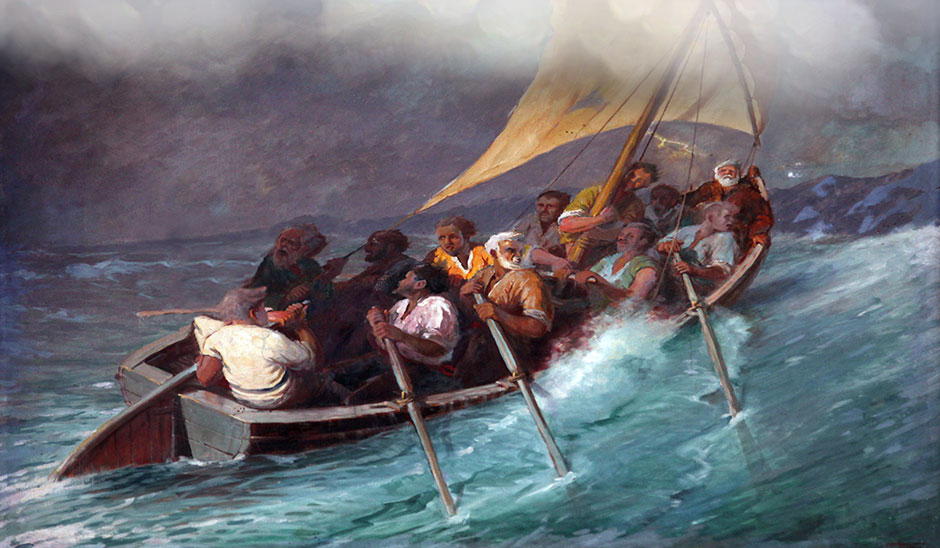
As a young pastor, I preached this text calling for an expectant faith that moves mountains. God does amazing things. But with the benefit of a few more years, I can also identify with the disciples who, on this occasion, failed to give the boy his healing.
I still have much to learn, so I’ll comment from just one angle — the kingdom perspective.
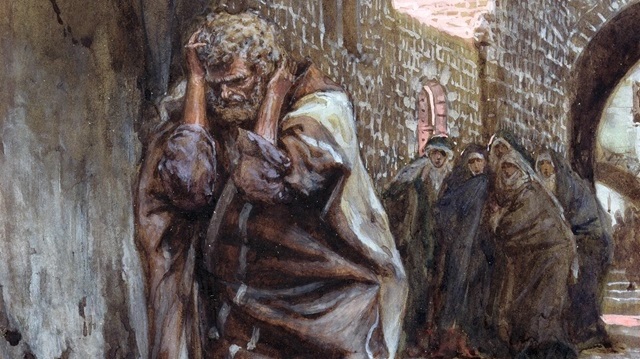
Seeing no alternative, Peter disowned his king. Jesus never gave up on him.
Why did Peter deny Jesus? Was he just sitting at the wrong fire, in a crowd where he didn’t have the gumption to admit he was Jesus’ follower? That isn’t how this story works in Matthew’s Gospel.
Peter was the first to acknowledge Jesus as the Christ, God’s anointed leader (16:16). Jesus blessed him, but realized Peter had no idea of the conflict ahead. Peter’s denial began when he said, No Lord! This will never happen to you! Denying that Jesus would die at the hands of the Jerusalem leaders placed Peter on the enemy’s side (16:21-23). Peter could understand taking up his sword and kill to save his king (26:51-52), but he could not understand taking up his cross to follow the king into death to save his realm (16:24-28).
Once Jesus removed fight from the agenda, flight was the only option his followers could see. That’s why, All the disciples deserted him and fled (26:56).
Peter could make no sense of what was happening, but he couldn’t stay away either. Peter followed him from a distance … to see how it would end (26:58). That’s the reason Peter was there, trying to blend in with Jesus’ antagonists. That was never going to work, of course. A lumbering fisherman sprouting Galilean phrases was as inconspicuous as an Aston Martin in a spy movie.
Why did Jesus curse the fig tree? What did he mean by casting mountains into the sea?
WWJD (what would Jesus do)? Disciples do what the Master does, so do we curse fig trees and cast mountains? Why would Jesus do things like that? The meaning is in the context.
Matthew 8:5–13 (NIV) 5 When Jesus had entered Capernaum, a centurion came to him, asking for help. 6 “Lord,” he said, “my servant lies at home paralyzed, suffering terribly.”
7 Jesus said to him, “Shall I come and heal him?”
8 The centurion replied, “Lord, I do not deserve to have you come under my roof. But just say the word, and my servant will be healed. 9 For I myself am a man under authority, with soldiers under me. I tell this one, ‘Go,’ and he goes; and that one, ‘Come,’ and he comes. I say to my servant, ‘Do this,’ and he does it.”
10 When Jesus heard this, he was amazed and said to those following him, “Truly I tell you, I have not found anyone in Israel with such great faith. 11 I say to you that many will come from the east and the west, and will take their places at the feast with Abraham, Isaac and Jacob in the kingdom of heaven. 12 But the subjects of the kingdom will be thrown outside, into the darkness, where there will be weeping and gnashing of teeth.”
13 Then Jesus said to the centurion, “Go! Let it be done just as you believed it would.” And his servant was healed at that moment.
Some disasters are manmade. We hurt each other in our families, businesses, and communities. We’re harmed by war, racism, the injustices of power. We also face disasters beyond human control: cyclones, earthquakes, pandemics. Which kind does Jesus save us from?
Our survey of the apostle’s gospel in Acts summarized the good news like this: God has installed his anointed (Christ) as our leader (Lord) by raising him from the dead (resurrection), so the earth is under his governance (the kingdom of God).
What response does God expect to this good news?
God expects our allegiance to his Christ, reorienting our lives as the community that implements his leadership. This kingdom perspective provides a rich understanding of the terms that describe our response, words like faith and repentance. Continue reading “Responding to the good news”
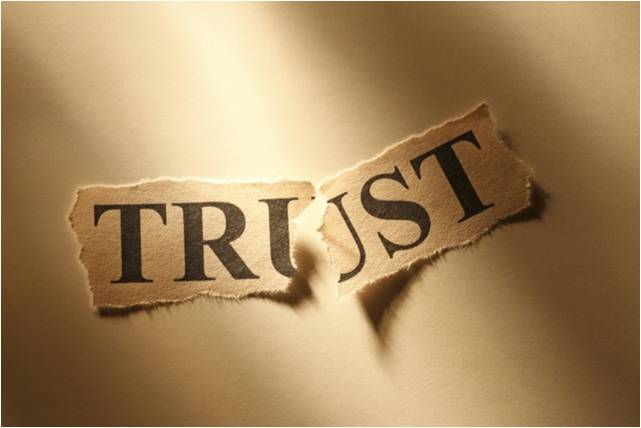
Who do Aussies trust? The ABC asked us, and our answers are revealing:
We trust: doctors/nurses (97%), scientists (93%), police (84%), judges (80%).
We mistrust: celebrities (8%), politicians (19%), corporate executives (20%), religious leaders (29%).
Celebrities are fake, of course. Actors are somebody they’re not. When Jesus spoke of hypocrites, his word literally meant an actor, someone playing a role in a Greek play. He called the religious leaders actors. Aussies agree.
But if the church’s message is faith (trust), while our leaders are not credible (not to be trusted), will the church disintegrate? Will people vote with their feet? Continue reading “How credible is faith now?”
Forty-three years ago, a bulk ore carrier struck the pylons of a bridge in Hobart, and the central sections of the bridge fell into the Derwent. Some Tasmanians still refuse to drive over that bridge. You can show them the bridge is safe and they’ll believe you, but they can’t trust it with their lives. They want to believe, but after the trauma it’s not so easy. Continue reading “Finding it hard to believe? (John 3:16)”
The Red Sea event proclaimed a definitive message: God made a way where there was no way — literally through the sea (14:21-23).
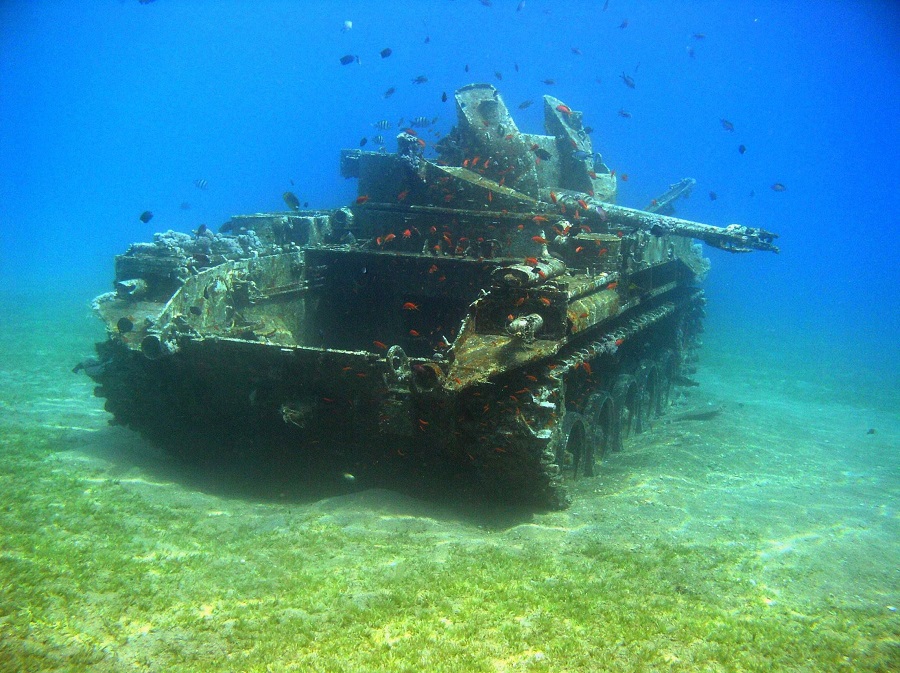
Even there, Egypt’s military power pursued them: “all Pharaoh’s horses and chariots and horsemen” (14:23). In ancient warfare, chariots were the equivalent of tanks: a protective, fast moving vehicle, able to outrun an enemy.
But the pathway God provided did not support chariots. They bogged down in the sandy sea floor. That’s when the Egyptians realized they were up against a foe they could not defeat: “Let’s get away from the Israelites! The Lord is fighting for them against Egypt.” (14:25).
When God’s people had passed through, Moses stretched out his hand again and the way through the sea closed. In this moment, the powerful chariots of Egypt’s mighty army become became junk on the sea floor.
Earth’s true ruler does have a way to release his world from the reign of evil and death. All the treacherous rulers and deadly weapons on earth cannot obstruct the purpose of the true sovereign, and his people.
The Red Sea event addresses the big justice question, “Can love defeat violence?” In YHWH versus Pharaoh, the power of love triumphs over the love of power.
The true ruler doesn’t need the power of an army to enforce his will. Nature itself responds to its true king. Even the sea. Even the uncontrolled places beyond human rule.
Last Sunday I was at a church where the speaker actually said, “I’m not trying to manipulate you.” Afterwards someone asked, “Why did he need to say that? Was he trying to manipulate us?” She was probably right: it was during “the invitation” where the speaker is after a response from the audience.
We live in a culture of mistrust. We don’t trust our politicians, and they don’t trust each other. We don’t trust banks. We don’t trust churches.
Did you notice this key moment in the exodus narrative?
Exodus 4:31 (my translation) The people believed when they heard YHWH’s response to Israel’s descendants, seeing their oppression. They knelt and honoured him.
Jacob’s descendants could not be free from their slavery to Pharaoh until they begin to trust God to be their new sovereign. To believe the promise God gave to Abraham, Isaac, and Jacob — the promise that they would be his nation — they give their allegiance to YHWH instead of Pharaoh.
That’s why they knelt before YHWH and honoured him. That’s a declaration of their new loyalty, their change of allegiance.
Genesis 15:6 (ESV) And he believed the Lord, and he counted it to him as righteousness.
This verse is quoted in Romans 4, Galatians 3:6, and James 2:23. If you’re familiar with how the NT uses it, you may find it difficult to see how the verse functions in its original setting. Continue reading “Faith as righteousness (Genesis 15:6)”





 Seeking the kingdom