Living in grace and disgrace (Genesis 40)

Joseph’s story shows us how God deals with injustice.

You’re in good company if you’ve noticed that life isn’t fair. Joseph had every reason to be bitter over how his brothers sold him out, and his boss falsely accused him. Prison walls offer no choices. Every morning Joseph wakes to this meaningless existence.

Others feel the same in this prison. Joseph finds meaning in caring for them. But one morning they’re more glum than usual, troubled by dreams.

Continue reading “Living in grace and disgrace (Genesis 40)”

God’s call and the human response (Isaiah 6:1-13)

How do kingdom servants handle the dissonance between God’s authority and people’s unresponsiveness? They’re both real, as God showed Isaiah.

“Why speak in parables instead of explaining the kingdom clearly?” Jesus realized people want autonomy rather than authority. It’s why, “they close their eyes, block their ears, and obstruct their hearts so they won’t see, hear, and respond” (Matthew 13:10-17).

In mediating the heavenly king’s message to his earthly kingdom, prophets struggled with the same frustration. Calling Isaiah as his spokesman, God revealed to him both sides of the kingdom relationship:

  • the heavenly king, devoted to his people (Isaiah 6:1-8);
  • the earthly kingdom, with closed eyes, blocked ears, and obstructed hearts (Isaiah 6:9-13).

The second part only makes sense in the context of the first. Only if God is sovereign does it make sense to keep calling people to live as his kingdom. When Jesus quotes Isaiah 6:9-10 in response to a question about the kingdom, the context of seeing God on his throne is assumed.

Jesus and Isaiah were kingdom proclaimers in different contexts. To handle this quotation well, I’d like to devote this post to Isaiah’s proclamation of the kingdom of God established by the Sinai covenant. Then we’ll do a follow up post on Jesus’ proclamation of the kingdom of God as a new covenant that includes Israel and the nations under God’s throne, and how we as kingdom proclaimers handle the same frustration that Jesus and Isaiah faced.

Continue reading “God’s call and the human response (Isaiah 6:1-13)”

Signs of the times (Matthew 16:1–4)

It’s easier to predict the weather and to see the climate change.

Just once we find the phrase, signs of the times. As fascinating as it sounds, it’s not a priority in Scripture. In fact, it occurs in a critique:

Matthew 16:1-4 (my translation, compare NIV)
1 Pharisees and Sadducees approached to put him under pressure, asking him to show them a sign from heaven.
2 In reply he said, “At dusk you say, ‘It will be calm, for the heavens are red.’ 3 And in the morning, ‘Today will be stormy, for the heavens are red and threatening.’ You do know how to discern the face of the heavens, but you are unable to discern the signs of the times. 4 An evil and adulterous generation seeks a sign, and no sign will be given to it except the sign of Jonah.” Leaving them behind, he moved away.

Continue reading “Signs of the times (Matthew 16:1–4)”

Olivet Discourse: temple and king (Matthew 24)

Whatever your views about end times, here’s a way to hear Jesus’ teaching in Matthew 24 within the temple-versus-kingship conflict that is its context.

Open Matthew 24.

“Signs of the end” is the heading in many versions of Matthew 24, and there are almost as many interpretations as there are interpreters. That’s the irony of eschatology: we tend to divide over something God intends to bring us together in Christ.

So, I’m writing cautiously, not wanting to contribute to the division. I’m not about to fit the Olivet Discourse onto world events of our day. Can we agree together that the starting point for understanding Matthew 24 must be its context in Matthew’s Gospel?

Matthew’s message is that Jesus is the Messiah. The temple leaders didn’t see it that way. The conflict of kingship and temple escalates with Jesus’ final trip to Jerusalem, culminating in his crucifixion and resurrection. As our previous post showed, the temple/kingship conflict forms the framework of Matthew 21–28, including Chapter 24.

Listening from this position, we hear the Olivet Discourse with a clarity any audiophile would love, the counterpoint of temple and kingship.

Continue reading “Olivet Discourse: temple and king (Matthew 24)”

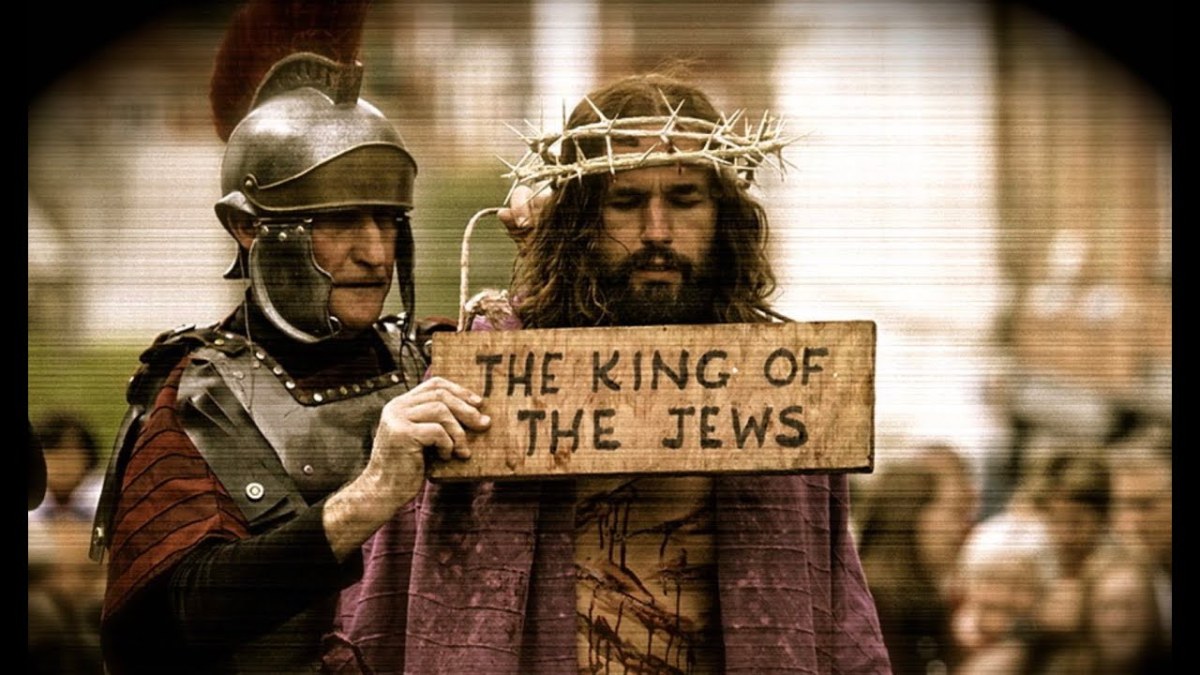
Are you the king of the Jews? (Matthew 27:11–14)

How did Jesus respond as Pilate asked the ultimate question?

Pilate’s question goes to the heart of the gospel: Are you the king of the Jews?

From the very start, Matthew described Jesus as the anointed leader descended from King David (1:1). But Jesus has been less direct in claiming the regal title. Not until his crowning statement at the end do we hear the Christ claiming all authority in heaven and on earth (28:18).

Matthew treats this question as the focus of the investigation. The Jewish trial demands, Tell us if you are the anointed ruler (26:63). The gentile trial begins, Are you the king of the Jews? (27:11)

Jesus’ authority is the issue at stake. Seven times Matthew underscores Pilate’s official status as the governor (27:2, 11, 14, 15, 21, 27).

So how are we to understand the governor’s question and Jesus’ reply?

Matthew 27:11 (my translation, compare NIV)
Jesus was placed before the governor and the governor questioned him, “You are the king of the Jews?”
Jesus responded, “Your words.”

Continue reading “Are you the king of the Jews? (Matthew 27:11–14)”

The new covenant meal (podcast) (1 Corinthians 11:23–26)

A new covenant? How did Jesus’ bloodshed establish a new covenant? Who are the parties? Why a new covenant? Could a previous covenant shed light on this one?

In the Ancient Near East, a national covenant defined who was in power. That’s what the Sinai covenant achieved: a people rescued from slavery became the first nation on earth to live under God’s reign, and the covenant that was celebrated with a meal (Exodus 24:7-11).

How did the new covenant establish God’s reign in Christ? What is it we’re proclaiming in this meal?

Continue reading “The new covenant meal (podcast) (1 Corinthians 11:23–26)”

“Tell us if you are the anointed ruler” (Matthew 26:57–68)

Jesus’ trial before the Sanhedrin was all about whether he claimed to be king.

Why was Jesus called to stand trial before the Jerusalem Council?

It won’t do to say, “Well, Jesus claimed to be the second person of the trinity (Son of God), and the high priest thought that was blasphemous.” The notion of a triune God was not formulated until much later. The high priest was not investigating a Christian dogma when he said, I adjure you by the living God, tell us if you are the Christ, the Son of God. (26:63 ESV).

Peter had used those titles: Christ, Son of God (16:16). We saw that the Gospel writers treat the two phrases as meaning the same thing (epexegetical). The Christ is the anointed ruler who represents on earth the reign of the heavenly sovereign. In that sense, he is the son proclaimed by the eternal sovereign. That’s what son of God meant to the high priest. It was the language of kingship (Psalm 2:2, 7), the language of God’s promises to David (1 Chronicles 17:13).

But the kingship had failed. The final Psalm in Book III laments the disconnect between God’s amazing promises and their experience of the failed kingship:

Continue reading ““Tell us if you are the anointed ruler” (Matthew 26:57–68)”

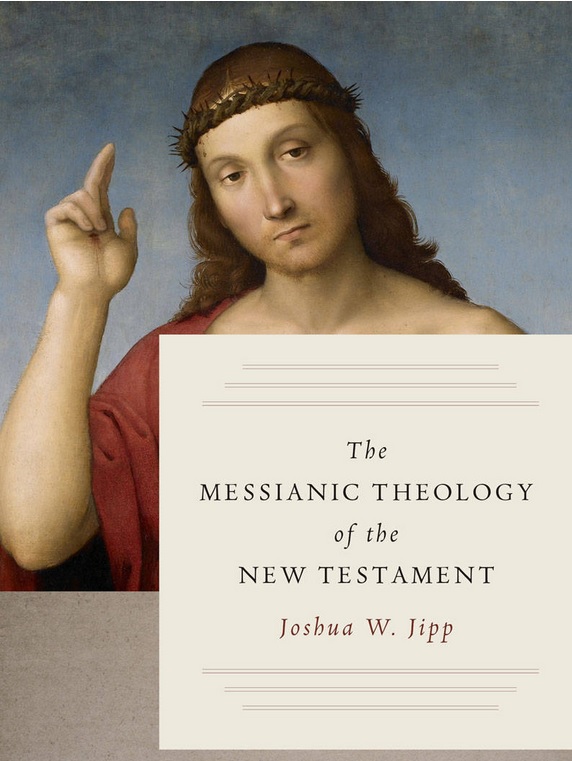
Joshua Jipp’s Messianic Theology

What does the word ‘Christ’ mean? Joshua Jipp shows that the New Testament’s message is that Jesus is the Messiah, the God-appointed king for humanity. That’s good news.

Over 500 times the New Testament refers to Jesus as the Christ. That’s twice a chapter! It must be important.

What are we saying when we call Jesus the Christ? Is it just an alternative name? Or is it making a statement about who he is and the authority he carries? How is the Christ the centre of the whole narrative, the one who reconciles earth to heaven’s authority?

You’d think that after 2000 years we’d have something this basic sorted out, but not everyone understands the Christ as a proclamation that Jesus is the Messiah — the leader anointed by God so heaven’s reign is restored to earth.

Christology is the branch of theology devoted to studying the Christ. Understanding Christ as king is often just a minor point of Christology. That’s being challenged. For example, last year Joshua Jipp wrote The Messianic Theology of the New Testament (Eerdmans, 2020) to show this:

Continue reading “Joshua Jipp’s Messianic Theology”

The good shepherd (podcast) (John 10)

Podcast and mediation on John 10:1-18.

“I am the good shepherd,” Jesus said.

Did he dream up this image? Or was it a widely used metaphor?

Why good shepherd? Were there bad shepherds?

Who were the thieves and robbers, trying to climb in some other way?

What makes Jesus the gate of the sheep?

This podcast (36 minutes, from Riverview Joondalup, 10 October 2021) will transport you from the children’s picture-book image of a little lamb in Jesus’ arms to a more expansive image: humanity’s true shepherd, the gate of the sheep.

Continue reading “The good shepherd (podcast) (John 10)”

Zechariah’s vision of God’s reign (Zechariah 14:4-21)

The Lord will be king over the whole earth (Zechariah 14:9)

A restructure is common when a new leader takes office. Zechariah’s final chapter envisions a restructure of creation as it comes under divine sovereignty. The heart of the chapter is this: The Lord will be king over the whole earth (14:9). And changing the king changes the kingdom.

In an alien world, Star Trek’s Spock would say, “It’s life, Jim, but not as we know it.” Zechariah is not seeing an alien planet; he’s seeing the removal of everything alien to God’s intentions for life on earth, the terraforming of our planet.

With impressionistic brushstrokes, Zechariah paints an image of God’s reign transforming everything:

Continue reading “Zechariah’s vision of God’s reign (Zechariah 14:4-21)”

Divine sovereignty and human suffering (Zechariah 14:1-5)

Puzzled over how to understand God’s sovereignty? It’s the hope of a suffering world.

Zechariah’s final chapter extends astounding hope in a puzzling framework.

Continue reading “Divine sovereignty and human suffering (Zechariah 14:1-5)”

Lord of hosts (Zechariah 8)

Zechariah uses the same name for God 18 times in one chapter. What was he saying? How does this help us understand Christ and our life in him?


What does it mean to call God the Lord of hosts? What are the hosts under his control? Angels? People? Armies? Israelites? Foreigners? How does this relate to Christ? And what is our role in relation to the Lord of hosts?

Continue reading “Lord of hosts (Zechariah 8)”

How Jesus fulfils the prophets (Zechariah 8)

With a chapter never quoted in the NT, we see how Jesus fulfilled what God promised through the Prophets.


The hope Jesus proclaimed was deeply rooted in the promises of the prophets. Matthew keeps telling us that Jesus fulfilled the prophets, using phrases from Zechariah far more than we do today.

Many of us struggle to make sense of how the NT writers used the prophets. Read Zechariah in context, and it may not sound like predictions. For example, the blood of the covenant in Zechariah 9:11 seems to refer back to the Sinai covenant (Exodus 24:8), yet Jesus used the phrase for his Last Supper (Matthew 26:28).

Maybe our understanding of “context” is too narrow. You probably know to check a few verses either side of a quotation, so as not to take it out of context. In a limited sense, that’s true. But for Jesus and the New Testament writers, context was much broader — their place in the story of God.

When Jesus announced the good news of the kingdom, his context was the Jewish world that had not been a kingdom since the exile. Most of them lived in other countries, scattered like sheep without a shepherd. That’s how Zechariah had described them 500 years earlier (Zechariah 10:2; 13:7 etc), and it still described their context in Jesus’ day (Matthew 9:36; 10:6; 15:24).

Jesus fulfilled the prophets not merely by doing some particular thing they predicted. That happened, but it was far more: everything God promised to restore was finally fulfilled in his Anointed. That’s the scope of what Jesus fulfilled: All the promises of God find their Yes in him (2 Corinthians 1:20).

So, let’s take a chapter the NT writers never quoted. How is Zechariah 8 fulfilled in Christ?

Continue reading “How Jesus fulfils the prophets (Zechariah 8)”

My blood of the covenant (Matthew 26:28)

What did Jesus mean by this phrase? The backstory is not to be missed.

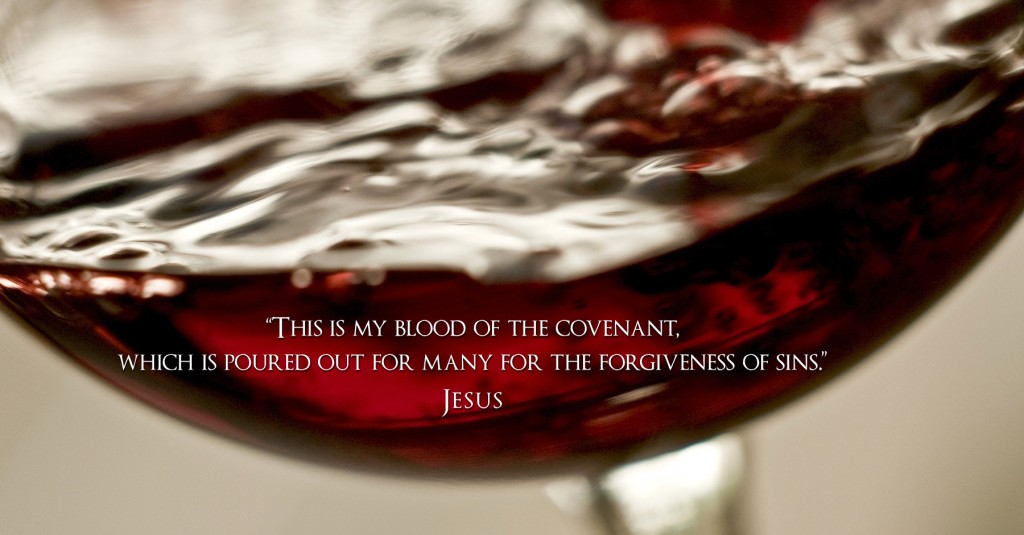
I’m meditating on a phrase Jesus used at his last supper: This is my blood of the covenant (26:28). What did he mean by my blood? How is his blood covenantal?

Since this was a Passover meal, I’ve heard people say that Jesus was the Passover lamb sacrificed for us. You can draw that parallel (as Paul does in 1 Corinthians 5:7, to ask us to live unleavened lives). But I doubt that’s what Jesus was saying.

Continue reading “My blood of the covenant (Matthew 26:28)”

Missing the wedding (Matthew 25:1-13)

Lighting the king’s procession.

Jesus continues with three more stories of his coming to kingship. The first is about a wedding where some of the young guests were looking forward to the bridegroom’s arrival, but missed it because they weren’t prepared.

Continue reading “Missing the wedding (Matthew 25:1-13)”

Serving in God’s house (Matthew 24:45-51)

So, what is the church called to do? A practical answer from the Master of the house.

Okay, so you’re a pragmatic person, and you need to know what practical difference all this stuff about the coming of the son of man makes for how we live our lives now? This post is for you. Jesus answered your question at the end of Matthew 24.

So what does the king want his servants to do now in anticipation of the whole world under his care? Here’s what he does (and does not) want us to do. This is what serving Christ looks like:

Continue reading “Serving in God’s house (Matthew 24:45-51)”

Coming like a thief (Matthew 24:42-47)

Burglars are as unpredictable as they are unwelcome. But a king’s arrival wouldn’t normally be compared to a burglar breaking in to rob the house. What’s going on?

How would you describe Jesus’ role in God’s household? Is he the master of the house, entrusted by the heavenly Father with restoring order to his earthly house? Or is he coming as a thief to take power from those who currently claim to run the world?

A wicked sense of humour probably isn’t the right descriptor for Jesus, but he certainly spun yarns and mixed metaphors in crazy-creative ways. You don’t expect the heaven-anointed king to come like a thief in the dark to rob the householder!

But before you can ask, “Say, what?” he flips the metaphor. Suddenly he’s running the household instead of robbing it:

Continue reading “Coming like a thief (Matthew 24:42-47)”

One taken; one left (Matthew 24:37-41)

All people should be treated equally. That’s basic ethics. So, is the world unjust if two people doing the same thing are treated differently?

One is taken, and one left. Which is which? Jesus has been speaking about Rome invading, advising the people of Judea to head for the hills (24:16). Is he speaking of soldiers capturing one, and letting the other go?

Or is God doing the taking/releasing? The immediate context says Noah’s flood took them all away (24:39). That didn’t leave many. Is this about God taking some people in judgement, and leaving others? Or is God taking some to save them, leaving the others to be damned?

If you’ve never considered these possible meanings, you may be surprised to know that Bible commentators seriously weigh these options. The commentaries I checked were quite divided over who’s who in this brief story. Jesus didn’t spell it out for us.

That left me wondering if we’re missing the point. We’ve assumed that it must be about the godly being saved and the ungodly being lost, but Jesus’ story doesn’t have those categories. It wasn’t about a bandit and a sheriff. He drew no distinction between them:

Continue reading “One taken; one left (Matthew 24:37-41)”

Why we can’t know when (Matthew 24:36)

There’s a good reason our leader couldn’t tell us when everything would finally be under his care. Why didn’t he know?

Matthew 24:36 (my translation, compare NIV)
36 But about the day or hour of that moment, no one has been informed, not the angels of the heavens, not the son, no one except the Father alone.

We don’t have the security clearance to know when the kingdom of God will be fully here. No surprise: crucial plans are often “need-to-know.”

What is surprising is that our Commander-in-chief did not have that information. None of his troops had the envelope either. Why didn’t he know?

It may have to do with how power is transitioned from the existing rulers to God’s appointed ruler.

Continue reading “Why we can’t know when (Matthew 24:36)”

Fig trees and seasonal change (Matthew 24:32-35)

The seasonal change is here, if you know where to look.

If you’ve read Matthew 24 as a chart of events in our future (a 7-year tribulation, then Jesus turning up in the sky with trumpets etc), you’ll be shocked to hear Jesus telling his disciples that all these things would happen in their generation.

Here’s what he said:

Matthew 24:32-35 (my translation, compare NIV)
32 Learn by comparing the fig tree. When its branch is already becoming supple and the leaves are sprouting, you know that summer is close. 33 Similarly, when you see all these things, you know it’s close, arriving at the doors. 34 I tell you the truth, this generation will not pass on until all these things come to pass. 35 Heaven and earth will pass on, but my words will not fail to come to pass.

How do you handle that?

Solutions that don’t work

I’ve heard people make some creative if desperate moves to deal with what Jesus said here, solutions that don’t solve the problem:

Continue reading “Fig trees and seasonal change (Matthew 24:32-35)”