Jesus did refer to himself as a king (Matthew 17:22-27)

If death and taxes are the only certainties, you don’t want to offend those who charge taxes. Taxation was not part of the created order. In the beginning, God only gave humans authority over the other creatures — fish of the sea, birds of the sky, animals and insects of the land (Genesis 1:26-28; Psalm 8 etc).

So, there’s something seriously wrong when representatives from the temple expect tribute from God’s anointed king:

Matthew 17:22-25 (original translation, compare NIV)
22 Travelling back to Galilee, Jesus said to them, “The son of man is about to be handed over to the hands of men. 23 They’ll kill him, and on the third day he will be raised up.” They were deeply grieved.

24 When they reached Capernaum, the collectors of the temple tax approached Peter: “Your teacher pays the temple tax, doesn’t he?”

25 “Yes,” Peter said.

Peter didn’t even stop to think. He’d seen Jesus pay the temple tax each year.

But something is different this year. Peter just declared Jesus to be God’s anointed king (Christ), the Son appointed to rule the earth by his Father in heaven (16:16). And Jesus explained that the temple leaders in Jerusalem will kill him (16:21; 17:23).

Peter needs to stop and think. Why should God’s anointed king pay tribute to the rebels? Continue reading “Jesus did refer to himself as a king (Matthew 17:22-27)”
Son of man: suffering king (Matthew 16:21–17:23)

The true king takes on his people’s suffering.

Why did Jesus call himself son of man? Here’s a clue: in the Synoptic Gospels, the vast majority of occurrences (78%) are after Peter calls him the Christ. Jesus has used the phrase previously in relation to his authority, but mostly he uses it once they recognize him as God’s anointed ruler. I think the phrase son of man contains a paradox he wanted them to understand. Continue reading “Son of man: suffering king (Matthew 16:21–17:23)”

The gospel revelation (Matthew 16:16-18)

The “gospel of the kingdom” expects God to reveal who is king.

The biggest reason we struggle to understand what Jesus meant by “the kingdom of God” was the way he presented it. He kept on about the kingdom, without claiming to be king. And if you don’t see Jesus as the king, you don’t see the kingdom. Continue reading “The gospel revelation (Matthew 16:16-18)”

The gospel of God (Matthew 17:5)

Recognize God’s gospel?

Did God announce the gospel? What does it sound like when he proclaims it? God’s gospel is a thing (Mark 1:14; Romans 1:1; 15:16; 2 Corinthians 11:7; 1 Thessalonians 2:2, 8-9; 1 Peter 4:17).

If you think the gospel is God making a statement about you (“I forgive your personal sins” or “I justify you”), then God didn’t. But if the good news is God’s appointment of Jesus as Lord, this is God proclaiming the gospel:

Matthew 17 5 And a voice from the cloud said, “This is my Son, whom I love; with him I am well pleased. Listen to him!” (NIV)

This is God’s gospel, his joyful announcement of rescuing the world from oppression under sin and death to be his kingdom, formed in the Son he loves, a world reunified in the leader God was pleased to appoint. Continue reading “The gospel of God (Matthew 17:5)”

The Moses connection (Matthew 17:2-8)

Why was Moses present at Jesus’ transfiguration? How would the disciples have understood the conversation between Jesus and Moses?

Moses was Israel’s founder, the servant of the Lord who brought the first kingdom of God to birth among the kingdoms of the world. Continue reading “The Moses connection (Matthew 17:2-8)”

See a glorious king? (Matthew 17:1-8)

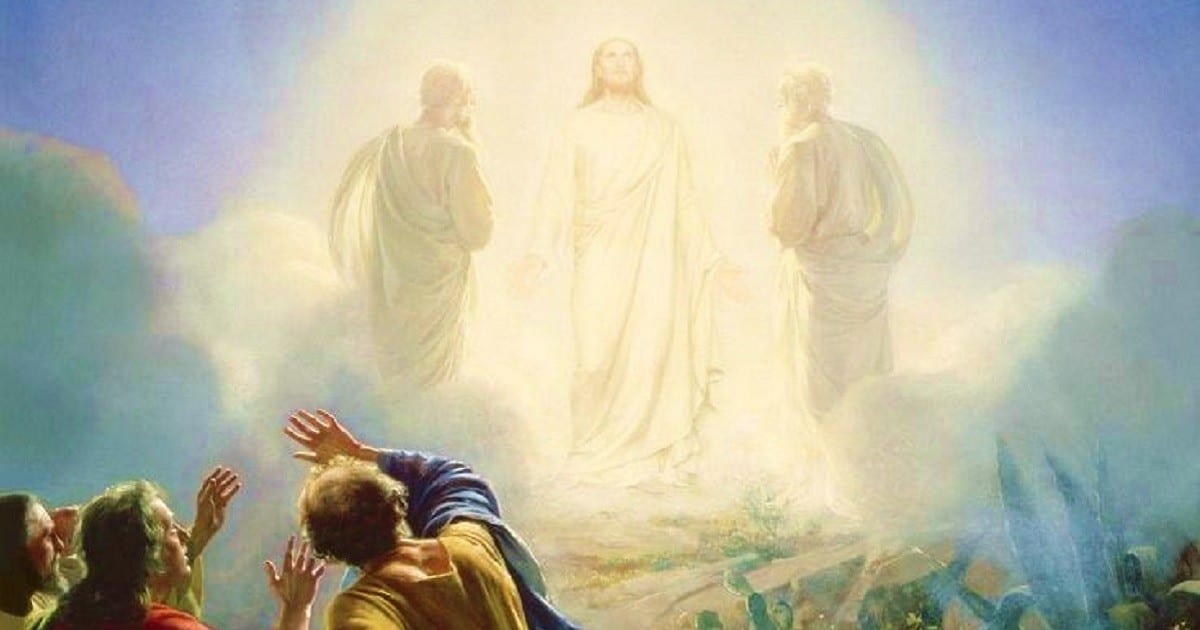
Dress for the job you want, they say. But Jesus didn’t. Except for this one time. Far from the cities of power, three trusted friends glimpsed him dressed in regal glory.

They had just declared him as God’s anointed ruler (16:16), and he said they would see him rise to power in his Father’s glory (16:27-28). For a brief moment they saw it: Continue reading “See a glorious king? (Matthew 17:1-8)”

Hope for the world (John 1:29)

Look, the Lamb of God, who takes away the sin of the world!

Prophets see things. When John the Baptizer saw Jesus approaching, he saw “the Lamb of God who takes away the sin of the world” (John 1:29).

Did you see that? If I hear Scripture as a story about me, I may substitute a message that Jesus takes away my sins. That’s not what John said.

Imagine a world where sin has gone — where the Lamb has taken away the sin of the world. What’s it like? What do you see? Continue reading “Hope for the world (John 1:29)”

Jesus’ paradoxical path to power (Matthew 16:27-28)

“Some standing here will not taste death before they see the Son of Man coming in his kingdom.”

What do you think Jesus meant by this?

Matthew 16:27-28 (my translation, compare NIV)
27 For the son of man is about to “come in the splendour of his Father with his angels”, and then “he will repay each according to their actions.” 28 I tell you the truth: there are some standing here who will not experience death until they see “the son of man coming in his kingdom.”

We’re expecting Jesus to return in glory to judge the world. That sounds like verse 27, but then verse 28 doesn’t make sense: did Jesus really expect to return while some of his disciples were still alive? Whole books have been written to answer that question.

As every photographer knows, what you see depends where you stand. Come with me back to the first century to stand with the disciples and hear what they heard. Continue reading “Jesus’ paradoxical path to power (Matthew 16:27-28)”

What are you living for? (Matthew 16:24-26)

A real win isn’t when you crush everyone; it’s when we all win.

Competition is the core of our culture. From politics to commerce to art and sport, it’s about being hungry enough to win. Katniss portrayed it in The Hunger Games: only those who deserve to win survive. Empires practiced it throughout history: only those who can assert their superiority deserve to be in power.

By that measure, Jesus does not deserve to be our Lord. A “crucified Christ” is a contradiction. The Roman procurator of Judea mocked the “King of the Jews.” Recently I saw a placard, “If Jesus returns, kill him again!” Continue reading “What are you living for? (Matthew 16:24-26)”

Binding and loosing (Matthew 16:19)

What did Jesus mean by giving us keys to bind and loose?

Attend a Pentecostal prayer meeting, and you may hear someone using the language of binding and loosing. They’re talking about believers taking authority over the devil. Some churches have a prayer team on this task when they meet, to bind evil spirits from interfering.

The language comes from Jesus’ statement:
Matthew 16 19 I will give you the keys of the kingdom of heaven; whatever you bind on earth will be bound in heaven, and whatever you loose on earth will be loosed in heaven. (NIV)

Catholics think Jesus meant forgiving sins or excommunicating people. Charismatics think Jesus was talking about binding and loosing demons. The Reformers thought it was the gospel message that looses people or leaves them bound. What do you think?

Continue reading “Binding and loosing (Matthew 16:19)”

What “church” did Jesus expect? (Matthew 16:18)

There was no church at the time, so what did Jesus anticipate we would be? How does church relate to kingdom?

What did Jesus have in mind when he declared he would build his church (Matthew 16:18)?

Catholic hierarchy? Protestant associations? Street-corner buildings with good music? Organizations doing good in the community? A temple to replace the one Rome would destroy in Jerusalem?

Continue reading “What “church” did Jesus expect? (Matthew 16:18)”

Peter as pope? (Matthew 16:18-19)

Did Jesus make Peter pope, with power to justify people?

Matthew 16 18 And I tell you that you are Peter, and on this rock I will build my church, and the gates of Hades will not overcome it. 19 I will give you the keys of the kingdom of heaven; whatever you bind on earth will be bound in heaven, and whatever you loose on earth will be loosed in heaven. (NIV)

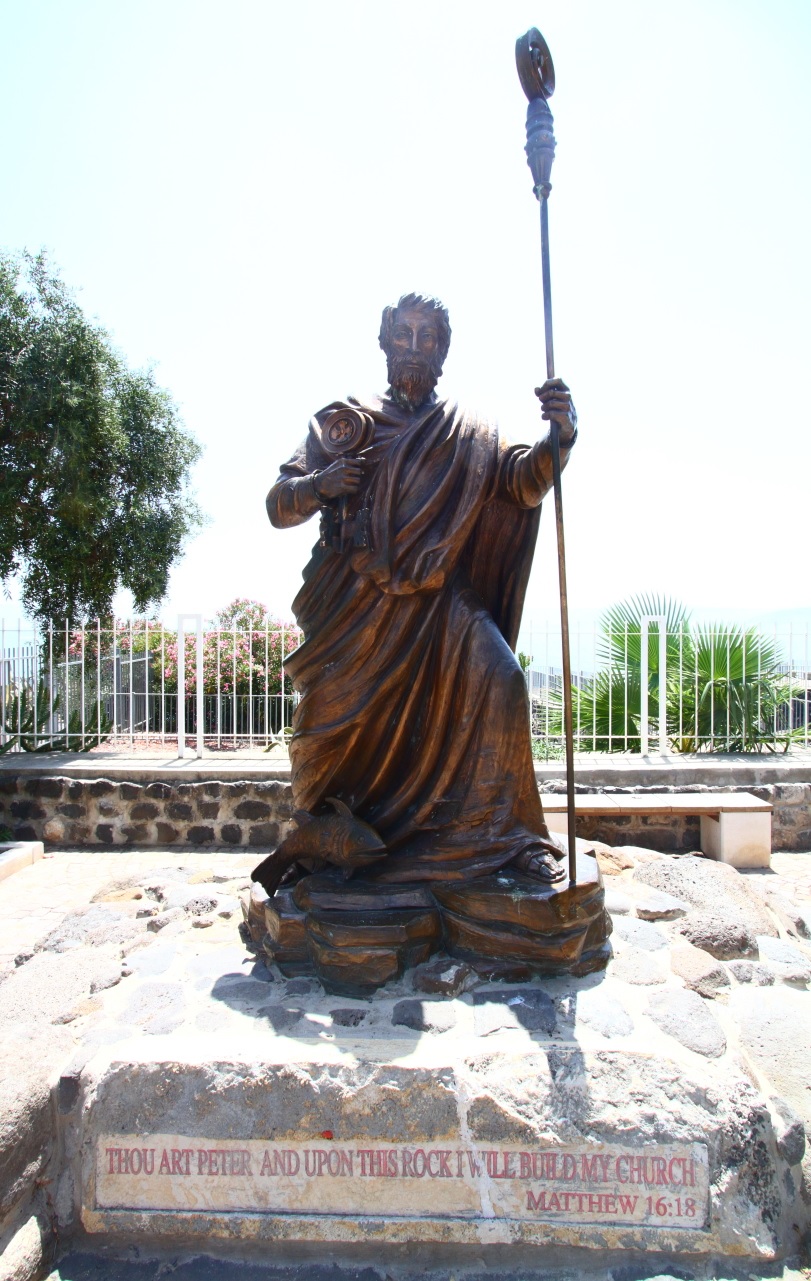
To understand Jesus’ words, we must deal with the elephant in the room, the superstructure Catholics have built on them. These verses are central to Catholicism. Visit Capernaum today and you’ll see a larger-than-life statue of Peter with the keys (above). Visit the Vatican, and it’s a crucial image in the Sistine Chapel. Continue reading “Peter as pope? (Matthew 16:18-19)”

Jesus as global leader (Matthew 16:13-17)

The good news is a person.

“You are the king, the elect heir of the living God!” Is that the declaration you ask people to make when you share the gospel?

We explained this was Peter’s declaration. Understanding what he said will move us from theology about Jesus into his regal mission for global restoration.

Continue reading “Jesus as global leader (Matthew 16:13-17)”

Declaring Jesus king (Matthew 16:13-16)

“You are the Christ, the Son of the living God.” — Apostle Peter, first century

“Do you believe that Jesus is the Christ, the Son of the living God?” It’s the question I often ask when baptizing believers. Our faith is in a person, and Peter nailed it with his declaration. So, what did Peter mean by this great confession?

There’s a temptation to invest Peter’s words with later theological meaning and miss what he said. His phrases have snowballed with significant theological freight:

  • Christology is the study of the person and work of Christ. His person embodied two natures (fully God and fully human), so his work reconciled God and humans (atonement).
  • Son of God is a term we associate with trinitarian theology: the relationship between Father and Son who, with the Spirit, exist eternally as one God (trinity).

All of that is true and important, but this developed theology was not in Peter’s mind. Rather than treat his words anachronistically, let’s hear them in their context.

Continue reading “Declaring Jesus king (Matthew 16:13-16)”

How the kingdom rises (Matthew 16:5-12)

Our role: kneading or feeding?

Matthew 16 6 Jesus told them, “Look out! Be on your guard against the yeast of the Pharisees and Sadducees.”

If you want dough to rise, why punch it down? Who figured out you could aerate a loaf by punching the air out of it? Continue reading “How the kingdom rises (Matthew 16:5-12)”

Israel’s king as cosmic king? (Matthew 15:21-39)

Who can receive from his table?

The intriguing twist in Matthew’s Gospel is watching the king of Israel become king of the world.

Matthew’s opening situates Jesus in Israel’s story. The anointed Davidic ruler (1:1) is born into the derailed story of Israel’s kings (1:16-17), to save his people and fulfil what God decreed (1:21-23).

In Matthew’s closing paragraph, this king has authority to reign over the whole earth with heaven’s power. The nations are learning to live under his command, in his present and enduring reign (28:18-20).

Is this just a surprise ending? Or are there moves in Matthew’s story towards this goal? Continue reading “Israel’s king as cosmic king? (Matthew 15:21-39)”

What is faith? (podcast) (Matthew 8:5-13)

Jesus marvelled at the faith of one person, describing it as “a great faith.” Who was this guy, and what can he teach us about faith?

This podcast (19 minutes) examines the essence of our faith — who we believe, and what we’re believing for.


Related posts


Matthew 8:5–13 (NIV)
When Jesus had entered Capernaum, a centurion came to him, asking for help. “Lord,” he said, “my servant lies at home paralyzed, suffering terribly.”

Jesus said to him, “Shall I come and heal him?”

The centurion replied, “Lord, I do not deserve to have you come under my roof. But just say the word, and my servant will be healed. For I myself am a man under authority, with soldiers under me. I tell this one, ‘Go,’ and he goes; and that one, ‘Come,’ and he comes. I say to my servant, ‘Do this,’ and he does it.”

10 When Jesus heard this, he was amazed and said to those following him, “Truly I tell you, I have not found anyone in Israel with such great faith. 11 I say to you that many will come from the east and the west, and will take their places at the feast with Abraham, Isaac and Jacob in the kingdom of heaven. 12 But the subjects of the kingdom will be thrown outside, into the darkness, where there will be weeping and gnashing of teeth.”

13 Then Jesus said to the centurion, “Go! Let it be done just as you believed it would.” And his servant was healed at that moment.


What the heart speaks (Matthew 15:15-20)

Out of the abundance of the heart, the mouth tweets. (@LPtrckBrwn)

I grew up in a family with rules to keep us safe. To keep us from addictions, we didn’t drink, smoke, or gamble. To keep us from sexual temptation, we didn’t dance or go to movies. We were to read our Bibles and pray every day, with no work or sport on Sundays. To be holy meant to be separate from “the world.”

To be honest, I didn’t feel I was missing out. It was a rural setting, already socially isolated. It was a happy home, with parents who genuinely loved God and lived that love in our family. I wouldn’t trade it for the world.

But as I grew up, I began to understand that, for adults, our rules didn’t live up to what they advertised. The rules tried to shelter us from outside influences, when the problem is within.

This is how Jesus saw it: Continue reading “What the heart speaks (Matthew 15:15-20)”