Disillusioned with Jesus? (Matthew 11:1-6)

When God doesn’t do what you expect.

Open Matthew 11:1-6.

Matthew 11:2-3 (my translation)
2 In prison, John heard what the Messiah was doing and sent his followers 3 to ask him, “Are you the one to come, or do we wait for another?”

Last year I was in a Masters-level class on the kingdom of God. Dr Tidball asked us, “So why did John the Baptist doubt if Jesus was the Messiah?” How could the greatest of all prophets — the one privileged to announce the arrival of the Messiah — doubt if Jesus was the Messiah? Continue reading “Disillusioned with Jesus? (Matthew 11:1-6)”

KINGDOM SUMMARY: Matthew 1–10

How central is the kingdom of God to Matthew’s message?

Open Matthew.

The Good News according to Matthew is that Jesus is restoring heaven’s reign on the earth. His opening sentence is bursting with good news, “Jesus the Messiah, the son of David, the son of Abraham” (1:1). He’s arrived: the divinely appointed ruler (Messiah) from Israel’s royal family (son of David) who restores the blessing of divine rule to the nations (the Abrahamic family commission).

What a revolutionary story! By confronting the powers with self-sacrificial love on behalf of earth’s oppressed people, this king brings God’s two realms back together in himself. Via a staggering trajectory, he receives all authority in heaven and on earth, and commissions his agents to bring all nations under his command, promising his regal presence until it’s done (28:18-20).

Every chapter of Matthew’s Good News tells this story. He wants us to recognize Jesus as our divinely appointed king, the one who implements heaven’s reign (the kingdom of heaven) on earth.

Continue reading “KINGDOM SUMMARY: Matthew 1–10”

Righteous people? (Matthew 10:40-42)

How can Matthew talk about righteous people? I thought there weren’t any.

Open Matthew 10:40-42.

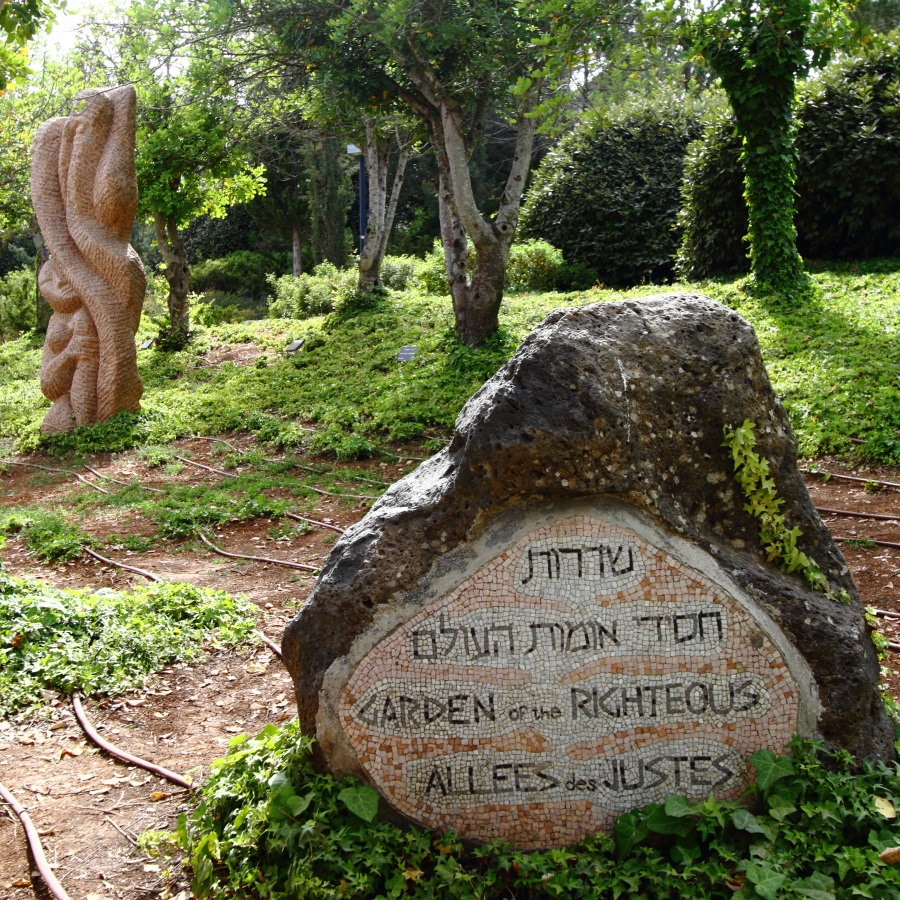
In the grounds of the Holocaust Museum in Jerusalem is the Garden of the Righteous. It honours gentiles who protected Jews under Nazi threat, people like Shindler or Corrie Ten Boom. They’re considered righteous because they did the right thing by the people of God, even though they themselves were not descendants of Jacob. The way you treat God’s people is the way you treat God.

That’s how the word righteous (ṣǎd·dîq in Hebrew) functions in Jewish thought, but Christians tend to be horrified by this word. For the last 500 years, protestants have emphasized texts like Romans 3:10: “No one is righteous, not even one.”

Then we’re thoroughly confused when other texts talk about righteous people. The Gospels label several as righteous (dikaios in Greek):

  • Joseph (Matthew 1:19)
  • Abel (Matthew 23:35)
  • John the Baptist (Mark 6:20)
  • Elizabeth and Zechariah (Luke 1:6)
  • Simeon (Luke 2:25)

Jesus taught that God sends rain on the righteous and unrighteous (Matthew 5:45). He spoke of many righteous people (Matthew 13:17). He even expected Galileans to recognize his disciples as righteous people (Matthew 10:41).

What do you do when one part of the Bible doesn’t match other parts? Continue reading “Righteous people? (Matthew 10:40-42)”

Where’s your allegiance? (Matthew 10:32-33)

What country do you belong to? It depends on who’s your leader.

Open Matthew 10:32-33.

If John Clarke was still with us, he’d be having a field day. How do you bring down a democratic government? Demonstrate that many sitting members weren’t eligible to stand.

Now, politics is a serious business. Our leaders must have unquestionable allegiance to our nation. If war broke out, which side would a dual citizen support?

I mean, you couldn’t trust Barnaby Joyce as deputy prime minister if he’s secretly a Kiwi. If New Zealand invaded us, the haka alone would probably see him siding with the enemy. Well, that’s what the high court ruled anyway: they declared him unfit to be a sitting member, so he has to stand again. Continue reading “Where’s your allegiance? (Matthew 10:32-33)”

The kingdom is God with his creatures (Matthew 10:29-31)

If a little bird falls in the forest, does anybody hear?

Open Matthew 10:29-31.

What was your first pet? A puppy? A kitten? A budgie? Remember its name? What did it mean to you?

How deeply we feel responsibility for a creature in our care! It’s beyond commercial value: even if you paid for it with pocket money, its precious life depends on you. Where does this sense of responsibility come from?

Jesus believed this tenderness is a glimpse of something beyond, an echo of God’s heartbeat for the creatures in his care: Continue reading “The kingdom is God with his creatures (Matthew 10:29-31)”

Where’s God’s justice in an unjust world? (Matthew 10:26-31)

Your heavenly Father knows when even a sparrow falls.

Open Matthew 10:26-31.

We all have filters that shape what we hear. That’s true of how we understand our closest friends. It’s even more significant when we want to understand what Jesus said 2000 years ago in a very different setting.

For example, we in the western church tend to think of souls as immortal. After your body dies, your soul lives on, either in heaven or hell. It would make no sense to us to talk about bodies going to hell. Yet that’s precisely what Jesus did to: he said it’s better to lose an eye than to lose your whole body in hell (Matthew 5:29-30, 22). Something that doesn’t make sense is a hint that we’re not hearing it right, that we need to reframe the way we think. Continue reading “Where’s God’s justice in an unjust world? (Matthew 10:26-31)”

A disarmed kingdom (Matthew 10:34-39)

How can Jesus establish his kingdom with an unarmed army?

Open Matthew 10:34-39.

A military career in the ancient world meant heading off with your regiment in search of fame and glory. Unworthy of the empire was any milksop who couldn’t leave his father and mother. A soldier marched where the army needed him, even if it meant his children grew up without him. Real soldiers didn’t run for cover to save themselves! They grasped their swords and gave their lives for the sake of the empire.

What about the kingdom of God? Do its people face struggles like the kingdoms of the world? Or is it an idyllic life of shalom: no life-threatening situations, no dilemmas of family versus kingdom, no conflicting priorities, no need to run to save your own life? Continue reading “A disarmed kingdom (Matthew 10:34-39)”

Like our teacher (Matthew 10:24-25)

Becoming like our teacher is every disciple’s joy. Does it mean we suffer too?

Open Matthew 10:24-25.

It’s the hope that motivates every disciple: as we follow Jesus we become like him. Wow!

Does being like Jesus mean suffering too? Which statement represents what you believe

  1. Jesus suffered so we don’t have to.
  2. Jesus suffered because we suffer.
  3. Jesus suffered, so we must suffer too.

Perhaps we should listen to Jesus’ promise in context: Continue reading “Like our teacher (Matthew 10:24-25)”

Clash of kingdoms (Matthew 10:17-23)

The kingdom of God doesn’t leave unjust kingdoms in place.

Open Matthew 10:17-23.

For too long, the church has spiritualized Jesus as if he was just a personal saviour and not the king of the kingdom. Our purpose on this blog is to swing the pendulum back by focusing on the sovereign authority of Jesus as Lord, as Messiah, as king of the kingdom. Continue reading “Clash of kingdoms (Matthew 10:17-23)”

Sheep among wolves (Matthew 10:16)

Wise as serpents and innocent as doves? How?

Open Matthew 10:16.

Jesus the shepherd, appointed twelve Jewish males to symbolize the restoration of Israel under his reign. This is dangerous work: others claim to be in control. If history teaches us anything, those in power will do anything to keep it. God’s people are his sheep, but the world is run by wolves: Continue reading “Sheep among wolves (Matthew 10:16)”

A grassroots kingdom (Matthew 10:9-15)

Working with the people who want the best for their community — that’s how Jesus’ kingdom vision works.

Open Matthew 10:9-15.

How did Jesus expect to run a kingdom? They’re expensive! Government in Australia costs us $450 billion dollars a year — $50 for every man, woman, and child, every day.

It’s always been like that. When Israel first asked for a king, Samuel warned them how taxing human rulers would be:

1 Samuel 8:11–17 (ESV)
11 These will be the ways of the king who will reign over you: he will take your sons …  13 He will take your daughters … 14 He will take15 He will take16 He will take17 He will take … and you shall be his slaves.

David’s son Solomon charged taxes and required his citizens to work to build the temple in Jerusalem. He built stables and garrisons and public works, and a harem and wealth for himself. After 7 years of temple construction, he required the work teams to build him a palace — for the next 13 years! So heavy was Solomon’s yoke that it split the kingdom when he died (1 Kings 12:4, 11).

If Jesus was restoring the kingdom, how could he fund it? He’s just appointed his first government officials — twelve kingdom emissaries — but how could he fund them? You’re not going to believe what he did: he sent them out with no money, to fend for themselves!

Put yourself in their shoes: Continue reading “A grassroots kingdom (Matthew 10:9-15)”

How the Shepherd gathers his sheep (Matthew 10:5-8)

Our Shepherd empowers us to care for his people.

Open Matthew 10:5-8.

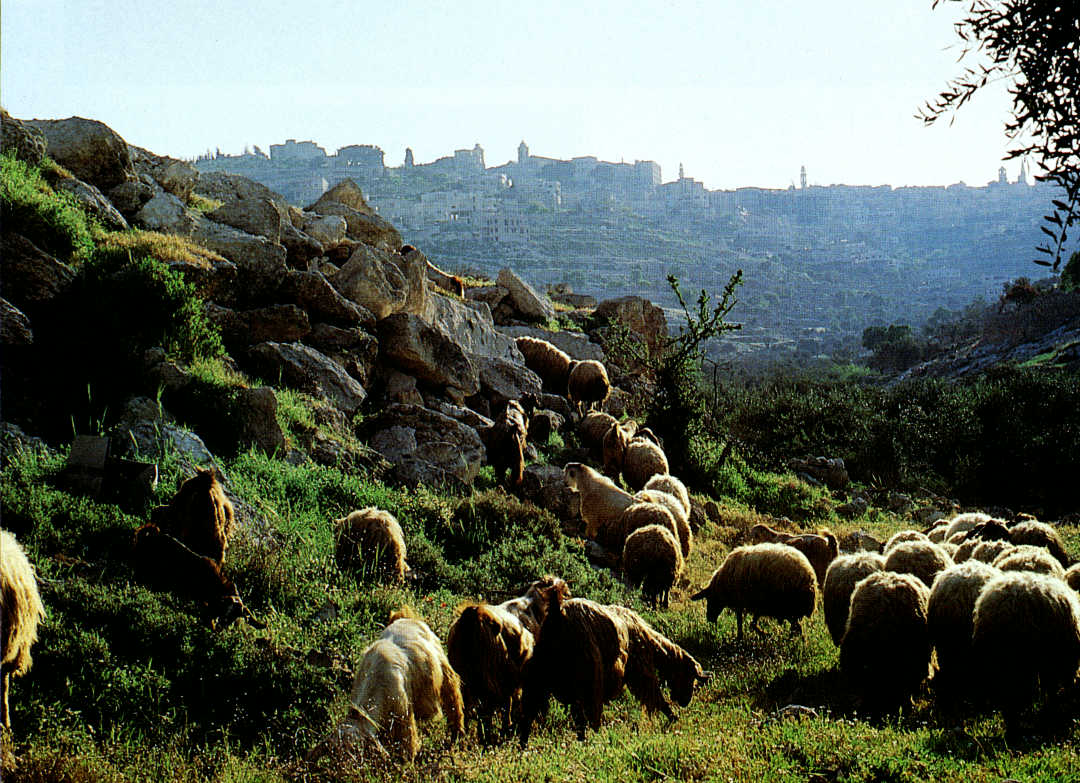
“Sheep without a shepherd” — it’s a disturbing image for a ruler who cares for his people (9:36). One man cannot round up the scattered sheep (9:37-38), so Jesus commissions twelve undershepherds (10:1-4), sending them to the lost sheep to announce his kingship (10:5-8).

Continue reading “How the Shepherd gathers his sheep (Matthew 10:5-8)”

Mentoring is ministry (Matthew 10:2-4)

Overwhelmed? Focus on the few.

Open Matthew 10:2-4.

I was dying to try out all the things I’d learned in 5 years of Bible College. My first church was well-established, a mature-aged congregation willing to wait for me to get over my youthful excitement. I couldn’t move them, so in my second year I focused outside the church on reaching needy people in the wider community. In my third year, I realized there were some of the congregation who really did want to grow, so I prayerfully selected people to pour my life into. I’d stumbled on what Jesus knew — that discipling a few people was the most fruitful form of ministry.

Continue reading “Mentoring is ministry (Matthew 10:2-4)”

Why no women among Jesus’ apostles? (Matthew 10:1-4)

Should women be leading churches if Jesus appointed no women among his apostles?

Open Matthew 10:1-4.

Fact: All twelve apostles appointed by Jesus were male.

Question: Is that a pattern for the leadership of the church? Should the church follow Jesus in appointing only males to positions of authority? Continue reading “Why no women among Jesus’ apostles? (Matthew 10:1-4)”

Why did Jesus appoint 12 apostles? (Matthew 10:1)

The appointment of 12 apostles to Jesus’ government marks a significant step towards the restoration of God’s kingship over the earth.

Open Matthew 10:1.

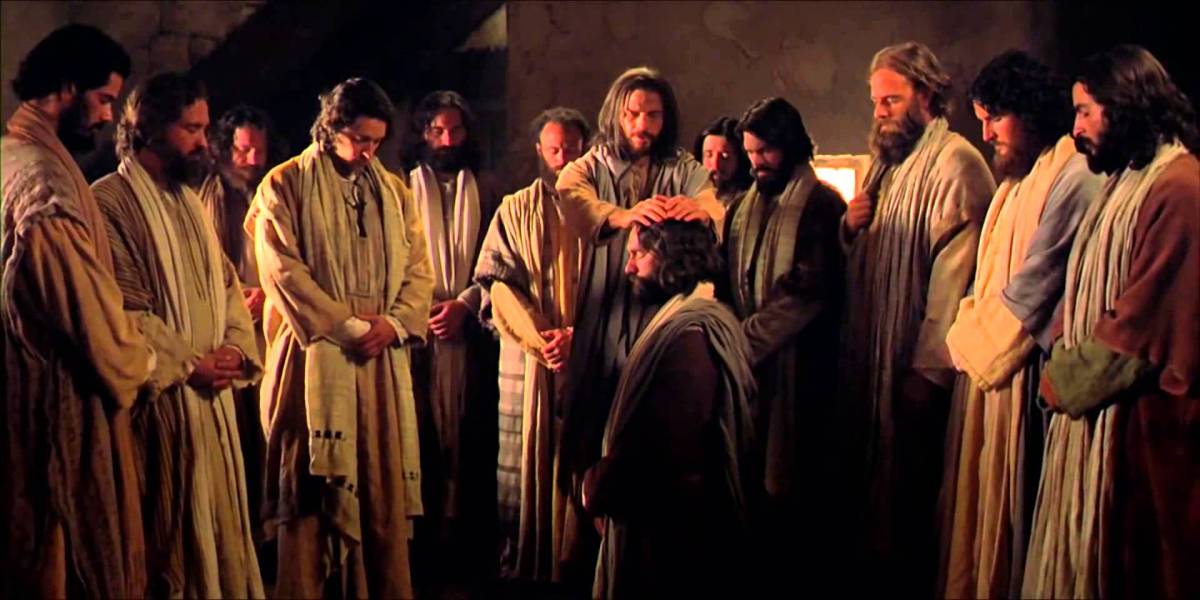
Appointing twelve leaders would have had special significance in Jesus’ culture. Israel found their identity in the twelve tribes descended from Jacob. But Israel had been scattered all over the ancient world “like sheep without a shepherd” (9:36). The king felt an urgency to gather such a great harvest. He instructed his followers to entreat the harvest owner to appoint workers (9:38). Then he commissioned them: twelve Jewish men entrusted with the authority of the king, foundation stones for re-forming Israel. Continue reading “Why did Jesus appoint 12 apostles? (Matthew 10:1)”

Jesus our shepherd (Matthew 9:35-38)

We have a shepherd, so you have a place to belong.

Open Matthew 9:35-38.

Matthew 9:36 (my translation)
Seeing the crowds, he had compassion for them, because they were harassed and thrown down like sheep with no shepherd.

What do we mean when we call Jesus our shepherd? Do you imagine yourself as a fuzzy little lamb being stroked by the shepherd? If so, you’ve missed the powerful metaphor.

For Israel, shepherd was a metaphor for a ruler, a leader of the nation. Occasionally a priest or prophet could be called a shepherd, but it was usually the king. David literally was a shepherd until God chose him to shepherd Israel: “You will shepherd my people Israel, and you will become their ruler” (2 Samuel 5:2).

Sheep without a shepherd is therefore a picture of a nation that’s lost its ruler. As Moses reached the end of his life, he asked God to appoint a successor “so the Lord’s people will not be like sheep without a shepherd” (Numbers 27:17). When the prophet Micaiah saw a vision of Ahab dying in battle, he said, “I saw all Israel scattered on the hills like sheep without a shepherd” (1 Kings 22:17).

The last king of Judah was Zedekiah. The Babylonian invaders slaughtered his sons in front of him and then gouged out his eyes. From that moment in 586 BC, Israel had been sheep without a shepherd.

Among the scattered sheep in exile, Ezekiel explained that God had to remove the bad kings; yet he also promised that God would raise up a son of David to rule over them again: Continue reading “Jesus our shepherd (Matthew 9:35-38)”

Do you recognize the king’s authority? (Matthew 9:32-34)

Don’t miss the authority of the servant king.

Open Matthew 9:32-34.

Jesus is doing something unique. He’s demonstrating his kingship before his people even acknowledge him as king. That’s not how it’s usually done.

Politicians work the other way around. “Put us in power,” they say, “and we’ll fix everything.” It’s an ancient technique. 3000 years ago, David’s son Absalom wanted to be king, and this is how he went about it:

2 Samuel 15:3–4 (ESV)
3 Absalom would say to him, “See, your claims are good and right, but there is no man designated by the king to hear you.” 4 Then Absalom would say, “Oh that I were judge in the land! Then every man with a dispute or cause might come to me, and I would give him justice.”

Jesus isn’t seeking people’s approval so he can become their king. He sees himself as the divinely appointed king, so he uses his regal authority to remove every form of oppression from his people. Just look at his track record:

Continue reading “Do you recognize the king’s authority? (Matthew 9:32-34)”

Personal Saviour or Son of David? (Matthew 9:27-31)

Do you think of Jesus primarily as your personal saviour or our global sovereign?

Open Matthew 9:27-31.

Guide dogs are amazing: a constant companion, willing to take a blind person where they want to go. The dog is trained for you personally, so it’s expensive to train one, and it really does become your own personal guide.

We make a huge mistake when we apply the same language to Jesus — calling him “my personal Saviour.” That’s a term Scripture never uses, because it could suggest that we think Jesus belongs to us, and he will take us where we want to go. That’s a completely corrupt way to understand Jesus, as if he was our personal servant and guide. And yet that attitude is widespread in the church today. We’re proclaiming that selfish arrogance each time we tell people, “Invite Jesus into your life; he’ll make it so much better for you.”

If you ever meet Queen Elizabeth, please do not invite her to be your personal queen. You’d be insulting her, as if she did not have that authority already. Please don’t invite her to sit on the throne of your heart! She already has the throne! What you must do is to acknowledge her authority, bow before her in recognition of her regal status, and follow her commands.

Continue reading “Personal Saviour or Son of David? (Matthew 9:27-31)”

The king understands his people (Matthew 9:18-26)

Jesus knew how to care for people who were socially sensitive and people who didn’t understand the social niceties. Worth following?

Open Matthew 9:18-26.

The Synoptic Gospels intertwine the stories of two very different people. One is an influential ruler who loses his daughter; the other is a woman whose only influence is making everything she touches ritually unclean due to her menorrhagia. Jesus understood the different responses of powerful and powerless people.

Continue reading “The king understands his people (Matthew 9:18-26)”

Managing criticism (Matthew 9:14-17)

How do you cope with criticism from people who don’t understand where you’re leading them? Could we learn from the Master?

Open Matthew 9:14-17.

What do you do when you’re criticized? It’s easy to get angry and sound off, or to cave in and give up. I’m interested in how Jesus, the king of the kingdom, handled criticism.

He copped it from the scribes (9:3). He copped it from the Pharisees (9:11). Now he cops it from friends: John the Baptist’s disciples:

Mathew 9:14 (my translation) Then John’s students came to him saying, “How come we and the Pharisees fast often, but your students don’t fast?” Continue reading “Managing criticism (Matthew 9:14-17)”