You say more than you realize (Matthew 12:34-37)

Our words reveal more about us than we intend.

Open Matthew 12:30-32.

Hang on. Can this be the same Jesus who “wouldn’t hurt a bruised reed” (12: 20)?

Children of vipers! How can you say anything good when you’re evil? (Matthew 12:34)

What happened to, “Judge not” (7:1)? Continue reading “You say more than you realize (Matthew 12:34-37)”

Time for some commentaries

Need help with Bible study? Get an expert on your tablet.

Update 2018-03-20: Logos March Madness winners are in. I’m buying NICOT/NICNT @ US $745 (less the volumes I already have).

Serious about Bible study? It helps if you have a friend who can tell you all about the text. Ideally, this friend would know the situation the text addressed, appreciate the nuances of its language, and tell you how other people have understood it. Sounds like a big ask?

You can have friends like that with you wherever you go. They’re called commentators. Commentaries are available for whatever level of Bible study you want. This month (May 2018) could be your best chance to get the good ones.

So what level of commentary do you need?

Continue reading “Time for some commentaries”

Why does context matter? (Matthew 12:33)

Fruitful conversations have a context. That’s how language works.

Open Matthew 12:33.

When your spouse says, “Can we eat out tonight?” what they mean depends on the context.

Perhaps you’re both dog tired, and all you want is a fresh roll from Subway before you fall asleep. But if the kids are sleeping over with friends tonight, it might mean, “I’d like some quality time with you.” Or perhaps what they mean is, “Did you remember it’s our anniversary? I’d like to celebrate our life together.”

We all know that meaning depends on context. When you’re close to someone, sharing the same context, it’s easier to pick up on what they’re saying. It is harder when the message comes from a different culture, through another language, from a bygone era, the way the Bible does. Yes, it’s harder work to hear the message as the people in that culture and time would have heard it. But it’s so worth it!

Novelists and script writers give us context to make sense of what their characters say. A good biographer takes you through the person’s words into the meaning of their life.

So we’re not making any special claim about the Bible when we ask you to hear what it’s saying in context. We’re very likely to misunderstand its message and misuse it if we ignore the context. Because that’s true of language in general, it’s true of the Bible too.

Let’s take an example. What do you think Jesus meant by this?

Continue reading “Why does context matter? (Matthew 12:33)”

Free course in Perth: Exodus

Ever heard the Book of Exodus as a kingdom-of-God story? You can now.

Update 2021-02-07: old links removed.

The Book of Exodus is the story of the first nation to be liberated from human rule and established as a kingdom under God’s direct rule.

YHWH becomes their king when he liberates his people (Ex 1 – 14), enters into covenant with them (Ex 15 – 25), and comes to live among them (Ex 25 – 40). Continue reading “Free course in Perth: Exodus”

What’s the unforgivable sin? (Matthew 12:30-32)

Ever worried you’ve committed the unpardonable sin?

You’re a baptized follower of Jesus, but you’ve blown it. Like, really blown it. Have you messed up your one chance to be saved? Have you committed the unpardonable sin? This question has troubled believers for 2000 years.

Are some sins unforgivable? How about these words from Jesus: Continue reading “What’s the unforgivable sin? (Matthew 12:30-32)”

Out of darkness (Matthew 12:22-29)

We recognize oppression, but where’s the liberation?

Open Matthew 12:22-29.

Any closed system, left to itself, runs down. Entropy is a law of nature. You don’t have to do anything for dust to build up in your house or for your garden to fall into disorder.

But earth is not a closed system. Enormous amounts of energy arrive from the sun. On a clear day, it’s about a kilowatt of energy for every square metre. Without it, we’d freeze. Plants and the whole ecosystem thrive on that incoming energy.

There’s another kind of energy as well, one that isn’t measured in kilowatts. Bette Midler was wrong. God is not “watching from a distance” while his realm deteriorates and spirals into disorder. His creative power sustains us each day. Our heavenly sovereign is restoring order to his troubled realm.

The sun powers our ecosystem, but it’s the Son who restores creation under God’s power, as the kingdom of God. Continue reading “Out of darkness (Matthew 12:22-29)”

What I learned from Djuki Mala

This Aboriginal dance group did more than entertain me. They reached out to me across Australia’s cultural divide.

Dance isn’t my thing, but Djuki Mala was hilarious, possibly the best entertainment at Perth Fringe Festival this year. These five dancers might be the most entertaining representatives of Aboriginal culture in Australia.

They started by introducing themselves as Yolngu people from Arnhem Land, a culture much older than ours. They built rapport through honesty, acknowledging the clashes between their ancestors and ours, and how Aboriginal people were treated as non-persons (not even able to vote until 1967). They also shared the struggles of their community, and the story of the grandfather who inspired them to dance.

It was breathtaking: traditional dance in moody lighting, with campfire scenes screened on the backdrop. I felt more like a guest than an observer, as if they’d invited me into their culture. Continue reading “What I learned from Djuki Mala”

Who is “the Servant of the Lord”? (Matthew 12:17-21)

What Isaiah said about Israel, Matthew says about Jesus. How can he do that?

Open Matthew 12:17-21.

Years ago, I ordered the plans to build a 2-seater kit plane. It was fun pouring over the plans, but I didn’t really have the time or resources to commit to such a project. I took on pastoring instead.

Building community is nothing like building an aircraft. You only get one chance to get the critical things right in a plane, but you can stress-test the parts and be mathematically sure it’s good to fly.

Human beings are nothing like that. They decouple mid-flight and fly off in their own direction. There can be no blueprints for building community: the “parts” are living and constantly changing. A leader is always adapting the plans, reshaping and redesigning. Mid-flight!

Continue reading “Who is “the Servant of the Lord”? (Matthew 12:17-21)”

Face or flee? What Jesus did with conflict (Matthew 12:14-21)

What can we learn from Jesus about how to handle conflict?

Open Matthew 12:14-21 and Isaiah 42:1–4.

How do you handle conflict? Fight? Or flight?

Some of us are fighters. We stand our ground. We’re warriors for justice, for ourselves and for others. We’ll never stand by and let evil take the reins.

Some of us avoid conflict. We keep the peace at all costs. We take the way of the cross: it’s more godly to suffer wrong than to demand rights.

Funny thing is that both groups conscript Jesus. Justice warriors look up to a Jesus as a leader who stood up for the poor, the outcasts, the unacceptable “sinners.” He trained his followers to handle confrontation, bringing not peace but a sword (10:14-39). He announced woes on the Galilean towns that rebuffed his kingship (11:20-24). He confronted the Pharisees so vehemently and persistently that they wanted to destroy him (12:1-14).

Then, suddenly, Jesus suddenly quits the confrontation and withdraws (12:15). And this isn’t the first time. When John the Baptist was arrested, Jesus withdrew into Galilee (4:12). This non-confrontational Jesus was not what John expected the Messiah to be (11:3). Jesus didn’t rescue John. John was beheaded, and Jesus withdrew again (14:13).

So what’s all this withdrawing? Is this another side to Jesus? Is this the “gentle Jesus, meek and mild” of children’s lullabies? Continue reading “Face or flee? What Jesus did with conflict (Matthew 12:14-21)”

The message of Jesus’ miracles (Matthew 12:9-13)

Why did Jesus do miracles? Was he trying to tell us he was God? Or was there another message he wanted us to hear?

Open Matthew 12:9-13.

Why did Jesus do miracles? Was he showing off his divinity? That’s what many people think, but it’s not what the Gospel writers say.

Sure, Jesus was God-with-us (Matthew 1:23), but the incarnation meant God laying aside his divine powers to live as a true human. The miracles are not evidence of his uniqueness; they are the practical expressions of a human being appointed by God and functioning under divine authority.

If the miracles were just God showing off during his human phase, imagine what he might have got up to during the first 30 years of his life! That mindset did fuel some pretty bizarre speculation in the centuries after Christ: Continue reading “The message of Jesus’ miracles (Matthew 12:9-13)”

Giving God’s world rest (Matthew 12:8)

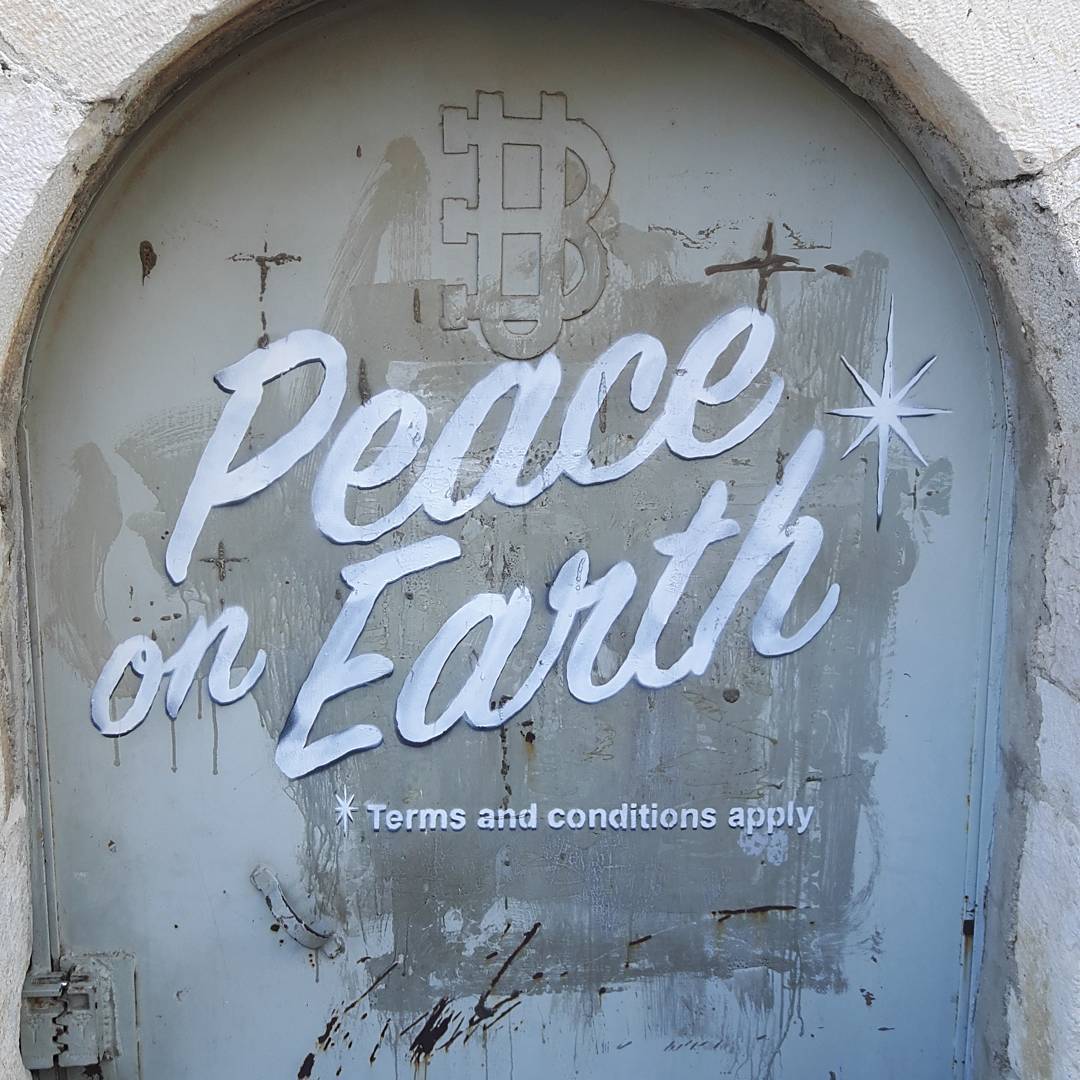
Ever wondered how peace can be restored to earth?

Open Matthew 12:8.

A couple of centuries before Jesus, Israel was under Greek rulers who demanded they give up their distinctives and blend in with the empire. They launched an attack on a Saturday, forcing zealous Jews to choose whether they would give up their Sabbath and fight. They refused, running for the hills and hiding in caves. It was a massacre.

The Jewish leaders changed their minds: “So they made this decision that day: ‘Let us fight against anyone who comes to attack us on the Sabbath day; let us not all die as our kindred died in their hiding places’” (1 Maccabees 2:41).

200 years later, Israel still didn’t have a king to make that kind of decision and lead them in their battles. Then Jesus rose to fame in Galilee, claiming to be the Lord’s anointed, talking about restoring God’s kingdom. Continue reading “Giving God’s world rest (Matthew 12:8)”

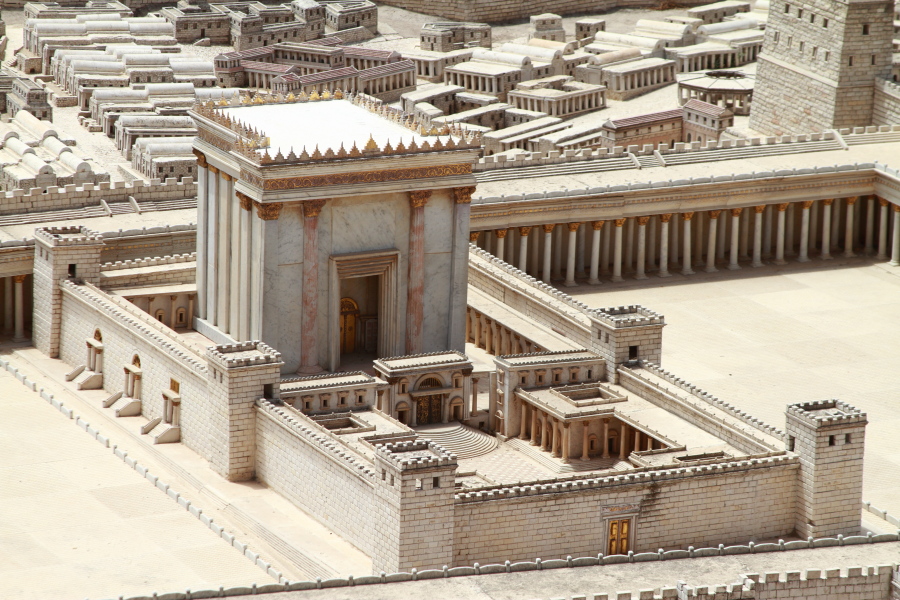
Greater than the temple? (Matthew 12:6)

“Something greater than the temple is here?” How could a Jewish person say that?

Open Matthew 12:6.

Imagine for a moment you’ve always had a fascination with Windsor Castle, its architecture and 39 generations of monarchs stretching all the way back to William the Conqueror. One day, all your dreams come true: you’re invited to a royal banquet at Windsor Castle.

You arrive, and you’re ushered in for the first time. You pause to breathe its air and smell the history. You wonder what stories these stones could tell. You’re so engrossed that you don’t realize when Queen Elizabeth enters to speak with her guests. A voice brings you back to the present, “Something greater than the Castle is here.” How would you feel if that voice was not one of her aides, but the monarch herself?

Jesus meant to embarrass his opponents with some of this audacious royal claims, but this one takes the cake:

Matthew 12 6 I tell you, something greater than the temple is here.

What did he mean? What in all Judea could be greater than the temple? Continue reading “Greater than the temple? (Matthew 12:6)”

The king who gives rest (Matthew 12:1-4)

Recognizing Jesus’ kingship is the only way to find rest.

Don’t let the chapter division stop you seeing how Matthew put his Gospel account together. The keyword at the end of Matthew 11 is rest. In contrast to this world’s rulers, Jesus gives his people rest (11:28). The only place this world will find rest is under the yoke of the gentle and humble king (11:29).

But the Galilean rulers wouldn’t let it rest. Even on the Sabbath, they were digging dirt on Jesus’ followers. They saw his hungry disciples pulling heads of grain and nibbling on the seeds as they walked through the fields (12:1-2). Continue reading “The king who gives rest (Matthew 12:1-4)”

The blessing of rest

Feeling restless? There may be a reason.

In my student days we filled up the car during the week, since only a few rostered stations were open on Sunday. You could buy a newspaper at the Deli, but none of the big shops were open. And they closed for public holidays too.

That was back when Aussies had the weekend off. Emergency workers and nurses still worked, but they received penalty rates to compensate for missing time with family and friends.

Now there’s a push to have the shops open evenings and weekends. Do Aussies really feel our life is diminished if we can’t shop? Or is the push from big business figuring they can’t make a buck if the door’s closed? Of course, they don’t want to pay overtime or penalty rates, so we’re losing those compensations too.

Do you have people in your family who now must work evenings, weekends, and public holidays? Does it affect you when you try to get the family together? Does it limit their participation in in community, church or sporting activities? Continue reading “The blessing of rest”

Should we keep the Sabbath on Saturday or Sunday?

Have you ever wondered if Christians should observe the Sabbath?

Christians who desire to be obedient to God want to know what God expects of us regarding the Sabbath. Should we observe the Sabbath on Saturday as Jewish people do? Should we treat Sunday as a Sabbath? Or is there no Sabbath requirement for Christians?

Most of us agree about what the Sabbath meant for Israel: Continue reading “Should we keep the Sabbath on Saturday or Sunday?”

Put the Christ back in Christology

Calling Jesus “the Christ” is declaring him the ruler chosen by God to restore heaven’s reign to the earth.

Christology is the study of Christ. Well, that’s what it would be if it focused on the Christ bit.

These days, Christology is a branch of theology, the study of God (theos means God). Systematic theology starts with God, so Christology usually fits in as the study of the second person of the trinity. It discusses how Jesus could have two natures without his divinity messing with his humanity and vice versa. It rehearses how early Christians struggled with wrong ways to talk about God (heresies) and eventually found the right language (the creeds and Symbol of Chalcedon).

That’s all important, and I’m truly grateful for these great summaries of what we believe. But along the way, the emphasis shifted. Christology lost its focus on the Christ.

That word has a specific meaning in the narrative of the kingdom of God. The Christos is the anointed person. Continue reading “Put the Christ back in Christology”

Jesus’ liberating kingship (Matthew 11:25-29)

Don’t let your bad experiences stop you trusting Jesus. He’s a different kind of king.

Open Matthew 11:25-29. and Lamentations 5.

Our previous post explained how Jesus was asking the towns of Galilee to accept his kingship when he invited them to put on his yoke. This world’s rulers are often domineering and demanding. They wear their people out and weigh them down, giving them no rest. By contrast, Jesus reigns to benefit his people. He is gentle and humble at heart. He gives his people rest, as the Creator intended from the beginning. Continue reading “Jesus’ liberating kingship (Matthew 11:25-29)”

Invitation to rest (Matthew 11:25-29)

After what we’ve been putting up with, Jesus’ yoke is truly light.

Open Matthew 11:25-29.

Tired? Worn out? Jesus said, Come to me, all who labour and are heavy laden, and I will give you rest (Matthew 11:28).

Stop for a moment right now. Just breathe. Refreshing? Now, before you rush back to the frenetic pace, do you have time to explore with me what Jesus meant? He went on to say, “Take my yoke upon you, and learn from me, for I am gentle and lowly in heart, and you will find rest for your souls. For my yoke is easy, and my burden light” (11:29-30).

What did he have in mind? His yoke? His burden? It’s even more liberating that you imagine.

Continue reading “Invitation to rest (Matthew 11:25-29)”

Why woe? (Matthew 11:20-24)

Why did Jesus announce woes on towns like Capernaum?

Open Matthew 11:20-24.

Many of us skip over the bits where Jesus announces woes. We prefer the blessings. But please don’t play ostrich here. It’s important. The bits we don’t understand are friends that can open our eyes to fresh ways of seeing. Continue reading “Why woe? (Matthew 11:20-24)”