When faith fades (Exodus 6:8-9)

Open Exodus 6:8-9.

Know anyone who used to go to church? What happened? Disappointed with God? Hurt by people?

What happens when life doesn’t work out as you expected, when pain erodes hope?

There’s an apparent contradiction in the Exodus story:

  • Exodus 4:31 says the people believed Moses’ message.
  • Exodus 6:9 says they were unresponsive to Moses’ message.

What happened in between to destroy their faith? Continue reading “When faith fades (Exodus 6:8-9)”

The Saviour revealed (Exodus 6:2-7)

Open Exodus 6:2-7.

Who governs the affairs of the world? That depends who you trust. Fox News would give you a different answer to China Press, Aljazeera, BBC, or Spiegel.

Truth is, none of the world’s leaders have the kind of control they’d like us to believe. There’s another hand behind history, beyond the best laid plans of mice and men.

Pharaoh was the biggest name in Moses’s world. At least, that’s what Moses thought. Until he learned the name:

Continue reading “The Saviour revealed (Exodus 6:2-7)”

Significant kingdom

A blogger who goes by the name T just posted this:

“The topic of the kingdom or reign of God was so central, so thematic to Jesus’ own teaching and preaching that it is fair to say that even when he wasn’t talking about it explicitly, he was still talking about it.”

That shook me. And puzzled me. And motivated me …

After more sermons than I could count, after thousand upon thousands of Christian bible classes, I was largely ignorant about the main subject of Jesus’ teaching and preaching. Worse, I was far from alone in this.

Continue reading “Significant kingdom”

When it feels worse (Exodus 5:14 – 6:1)

What do you do when evil won’t let go?

Open Exodus 5:14 – 6:1.

Remember the time you tried to sort things out, only to make it worse? Moses knew that feeling.

He delivered God’s message to Pharaoh: “Hands off my people! Release them to celebrate with me in the wilderness.”

Pharaoh reacts like any self-serving tyrant: he comes down like a ton of bricks on those who dare to imagine themselves outside his control.

To stop them dreaming about freedom under YHWH, Pharaoh tightens his control over them. They won’t have time to dream of holidays and festivals: Continue reading “When it feels worse (Exodus 5:14 – 6:1)”

The party God (Exodus 5:1-13)

The God of the Bible is not a hard task-master; he calls his people to celebrate.

Open Exodus 5:1-13.

Who is God? What’s he like? What authority does he have in a world where there’s so much injustice?

The God of the Bible turns out to be very different from what many imagine.

Continue reading “The party God (Exodus 5:1-13)”

What does it mean to believe? (Exodus 4:27-31)

Open Exodus 4:27-31.

Did you notice this key moment in the exodus narrative?

Exodus 4:31 (my translation)
The people believed when they heard YHWH’s response to Israel’s descendants, seeing their oppression. They knelt and honoured him.

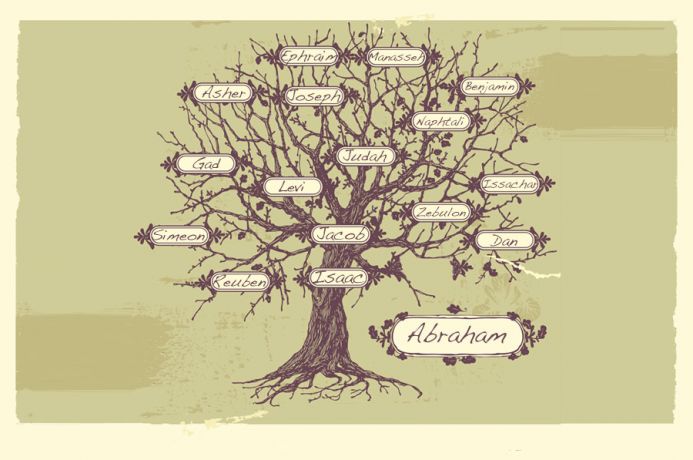
Jacob’s descendants could not be free from their slavery to Pharaoh until they begin to trust God to be their new sovereign. To believe the promise God gave to Abraham, Isaac, and Jacob — the promise that they would be his nation — they give their allegiance to YHWH instead of Pharaoh.

That’s why they knelt before YHWH and honoured him. That’s a declaration of their new loyalty, their change of allegiance.

Faith is much more than mental assent to a creedal statement. It is recognizing God for who he is: the rightful authority over humanity. Faith is fealty — allegiance to our sovereign, our Lord. Continue reading “What does it mean to believe? (Exodus 4:27-31)”

Why did God try to kill Moses? (Exodus 4:24-26)

Open Exodus 4:24-26 and 6:13-30.

What do you make of this?

Exodus 4:24 (ESV)
At a lodging place on the way the Lord met him and sought to put him to death.

By this time, Moses was no longer arguing with God. He has accepted his appointment as ambassador for the kingdom of heaven, with a message for the king of Egypt. He has said his goodbyes to Jethro and the Midianite community. His family is obeying God and heading back to Egypt (4:18-20).

On the journey, as Moses obeys, YHWH confronts him and tries to kill him? Why? Continue reading “Why did God try to kill Moses? (Exodus 4:24-26)”

God’s firstborn son (Exodus 4:21-23)

Open Exodus 4:21-23.

Moses sets out for Egypt to confront Pharaoh with YHWH’s claim of sovereignty over the Hebrew people:

Exodus 4:22–23 (ESV)
22 Then you shall say to Pharaoh, ‘Thus says the Lord, Israel is my firstborn son, 23 and I say to you, “Let my son go that he may serve me.”

The descendants of Jacob are God’s family. God has promised to restore the blessing of his governance to the nations through them. So God “fathers” the nation of Israel: they are born through the exodus.

What a joyful contrast: serving YHWH rather than Pharaoh. Liberated from oppressive human rule, they’re the first nation to be a kingdom of God.

Continue reading “God’s firstborn son (Exodus 4:21-23)”

Does God get angry? (Exodus 4:14)

Open Exodus 4:14.

What do you do with texts like this?

Exodus 4:14 (NIV)
Then the Lord’s anger burned against Moses …

The wrath of God gets people running one way or the other:

  • God’s anger is a core doctrine for some people. They believe God’s anger is the problem that the gospel solves (Romans 1:18).
  • God’s anger is something shameful for many Christians. They fear the image of an angry God drives people away from faith.

So what do we do with texts that talk about God’s anger? Continue reading “Does God get angry? (Exodus 4:14)”

God’s spokesman (Exodus 4:13-20)

Open Exodus 4:13-20.

Delivering ultimatums to a powerful kingdom is high-risk business. Moses has no desire to serve as spokesman of the heavenly sovereign.

Moses sought exemption because he had no power in his hand. Now he claims he has no power in his voice. Continue reading “God’s spokesman (Exodus 4:13-20)”

Does the church have a future?

Movies reflect culture. If that’s true, the church doesn’t have a future.

Think back over the movies you’ve watched recently. What part did the church play?

If it’s there at all, it might be complicit with evil. Or it could be a symbol of something we’ve left behind, an artefact of the past. Continue reading “Does the church have a future?”

Helping God’s people find their identity (Exodus 3:16-22)

Open Exodus 3:16-22.

It’s a terrifying assignment. Moses is commissioned as ambassador for the heavenly king. He must confront Pharaoh with YHWH’s demand to release the Hebrew people.

But first, Moses must convince Israel of their identity as YHWH’s people, not Pharaoh’s. Moses is instructed to do this in partnership with the elders of Israel (3:16).

That implies that the descendants of Jacob have some level of self-understanding and organization. Christian preachers who care only about theology (and not history) sometimes characterize the Hebrews as slaves who’ve been oppressed so long they have little sense of their identity as descendants of Abraham. That’s a caricature: Continue reading “Helping God’s people find their identity (Exodus 3:16-22)”

A royal encounter (Exodus 3:1-10)

God shows up where we don’t expect him. For good reason.

Open Exodus 3:1-10.

A fire in the wild can consume hundreds of acres in just a few hours. No experienced bushman ignores a fire. Moses was no exception.

Moses was out in the wild to escape Pharaoh. If he ever had aspirations of ruling people, he’d given them up, taking a job shepherding animals. He led his flock to the edge of the wilderness. He feels safer in land that supports life sparsely, where human rulers have little interest.

Far from the cities of human administration, in a part of creation no one cares about, Moses discovers something astounding: God’s mountain (3:1). The king of creation is in residence here. Several times throughout the Bible’s narrative, God’s servants return to this mountain that lies south of the Promised Land. Each time we learn more about the Sovereign, his law, how he rescues his people, and how he rules the earth.

The fire Moses sees on God’s mountain is unlike any he’s ever seen. Fire consumes combustible materials, releasing energy as heat. A flame that does not consume is a different kind of flame: its energy comes from another place, a realm that does not destroy this one.

So Moses turns aside to investigate. The flame in the bush is an angel:

Continue reading “A royal encounter (Exodus 3:1-10)”

Your kingdom identifies you (Exodus 2:15-25)

Open Exodus 2:15-25.

Who is Moses? A Hebrew by birth? An Egyptian by nationality? He tried to take a stand with the Hebrews against the injustice of Egypt, but it didn’t work. Now he’s a nobody. Far from the Hebrews and Egyptians. In no man’s land.

Even in the wilderness, injustice reigns. Seven Midianite sisters try to water their father’s flock, only to have male shepherds push in. It’s just like God said: women face gender conflict in a world where rebellion rules (see on Genesis 3:16).

Moses stands up for them, so they return home early with their sheep. Their father’s surprise indicates that this sexist injustice was their daily experience (2:18). Is it only Moses who cares about gender inequality? Or does every form of injustice need to be set right for the kingdom of God to operate as our heavenly ruler intends?

Continue reading “Your kingdom identifies you (Exodus 2:15-25)”

Fighting violence with violence (Exodus 2:11-14)

Open Exodus 2:11-14.

Moses grows up in Pharaoh’s house. He sees how human government operates. The Hebrew slaves weighed down with burdens (2:11, the same word as 1:11).

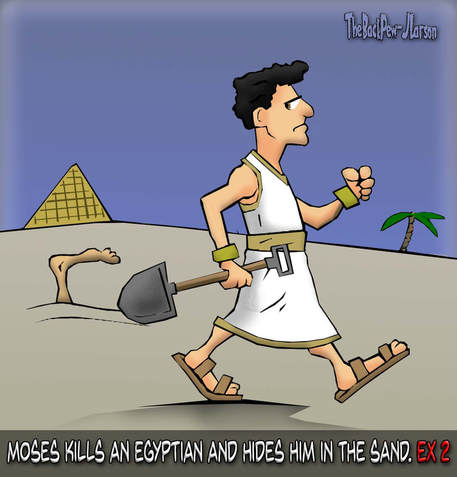
He identifies with them: the Hebrews are his brothers. Moses feels a responsibility to act against the injustice. He sees an Egyptian striking a Hebrew, so Moses strikes the Egyptian. The same Hebrew word (nā·ḵāh) is used to describe both actions. Moses has fallen into the trap of trying to resolve violence through violence. We have already seen how destructive this approach is (compare Genesis 4:23; 6:11).

This temptation will dog God’s people throughout their history. It still does. By responding to oppression with oppression, Moses has become the agent of death rather than the agent of YHWH. He is using his power the way Pharaoh uses it. Killing is not the path to saving. Moses knows his actions are wrong: furtively checking that no one is watching, and hiding the body in the sand (2:12). Continue reading “Fighting violence with violence (Exodus 2:11-14)”

Strong women of Exodus (Exodus 2:1-10)

Open Exodus 2:1-10.

In the opening chapters of Exodus, it’s the women who are the heroes:

  • Shiphrah and Puah (midwives) feared God rather than Pharaoh, disobeying the king of Egypt (1:17).
  • Jochebed (Moses’ mother) dared to disobey Pharaoh by floating her baby in a basket on the Nile (2:1-3).
  • Miriam (Moses’ sister) watched over the baby to guard his life. She approached the princess, and negotiated for their mother to raise Moses (2:7-8).
  • Pharaoh’s daughter changed the course of history by defying her father and rescuing a helpless Hebrew baby from his water-borne basket.
  • Zipporah (Moses’ wife) later recognized his life was under threat, and took action to save him (4:24-26).

Continue reading “Strong women of Exodus (Exodus 2:1-10)”

What do you fear? (Exodus 1:12-22)

What you fear, you serve.

Open Exodus 1:12-22.

Exodus 1 provides real insight into what’s wrong with the powers in the world. To keep people under their control, rulers afflict them with heavy burdens (1:11 ESV). But you can’t squash people so easily: the heavy burdens Pharaoh placed on the Hebrews only made them stronger (1:12). And that’s why rulers become progressively more brutal (pě·rěḵ in 1:13, 14). Continue reading “What do you fear? (Exodus 1:12-22)”