The good news, without the blame

Let’s play a memory association game. If I say sunny, what word comes to mind? A sunny day? A sunny beach? If I say dark, what word springs to your mind? A dark night? A dark feeling? If I say the word sin, what comes to mind? Oh, you don’t want to play anymore?

Followers of Jesus associate sin with feelings of failure and fear. It brings to mind that accusatory list of my misdemeanours and crimes. That’s a totally inadequate way to think about sin — as if it’s all about me.

The world was already in trouble long before you were born and added your bit. If you think of sin as the need for some personal forgiveness for yourself, you haven’t begun to grasp what the problem is. Continue reading “The good news, without the blame”

Guilt, or good news?

What gospel did Jesus proclaim? Individual guilt, or global good news?

Over the centuries we’ve rerouted Jesus’ message. His core message was the gospel of the kingdom, and it was good news from beginning to end.

Instead of global good news, we often hear churches today proclaiming a message of individual guilt. A well-known evangelist was asked to explain the good news. He began, “Well, first I have to tell you the bad news. You’re a sinner …” Seriously? When did Jesus do that?

Can you even imagine Jesus bowling up to someone and saying, “First the bad news. You’re a sinner. But I’m here to save you. So get down on your knees and pray the Sinner’s Prayer. If you do that I’ll forgive you.” If you’ve read the Gospels, you know that’s wrong.

How did we ever get side-tracked from Jesus’ good news of the kingdom to a message of guilt? There’s quite a history behind that.

As followers of Jesus, we’re aware of our own shortcomings. As early as the second century, people worried what it might mean if they sinned after their baptism. Some even recommended delaying baptism until you were close to death, to ensure you didn’t die with sin in your life.

By the fifth century, the church recommended the exact opposite: babies should be baptized as soon as they were born. Augustine formulated the doctrine of original sin. He said that all people are sinful — even babies — because parents pass on their sinful nature to their children. Augustine also taught that this original sin can be removed by baptism. That meant it was absolutely crucial for parents to get the church to baptize their baby: otherwise it would die in sin and be eternally damned.

Did you notice what Augustine did? He placed the salvation of the child and the forgiveness of sins in the hands of the church. Only if the parents asked the church for baptism was the child’s original sin removed. The church claimed it had power to remit sins.

For the next 1000 years, the church’s message revolved around guilt. To be forgiven, you must go to a priest and confess your sins. He assigned your penance, and offered you absolution. Then you attended mass where the priest sacrificed Jesus again and offered you Jesus’ body. The church told you it had “the keys to the kingdom,” so it could let you in or lock you out. The church’s power rested on guilt.

You can imagine how liberating it was when a priest named Martin Luther rediscovered from Scripture that it is God who forgives sins, not the pope or the priests or the church. It is God who justifies us, by faith. God forgives because of his grace, not because we merit it through works such as confession, penance, or indulgences.

Luther caused such uproar precisely because he challenged the authority of the church and placed power back in God’s hands. John Calvin systematically reframed the Christian message around this theme: the sovereignty of God was the liberating message that power lies with God, not the church or the sinful humans that run it.

Perhaps it’s unfair to critique Luther for not going far enough. Living in the era when the church’s power rested on guilt, Luther himself was deeply troubled by feelings of guilt. Justification by God’s grace through faith was the re-dawning of gospel truth, but Luther never questioned why the church had been trading in guilt in the first place. The troubled conscience remained central to his writings. For example, the word conscience doesn’t appear in the Book of Galatians, but Luther’s Commentary on Galatians uses the word more than 200 times.

Luther and Calvin did so much to declare that power belongs in the hands of our heavenly sovereign, but the reformation is not over. We still need to regain Jesus’ message — the good news of the kingdom of God.

How do we tell the gospel the way Jesus did, without using individual guilt to manipulate people? How do we present the good news of God’s kingship instead?

We live in an age where people are disillusioned with stories of power and cynical of the power of the church. Jesus called us to live under God’s kingship. In his world, it’s the powerless who inherit the earth.

Jesus’ kingship is not proclaimed through guilt. The restoration of God’s reign is the best news this world could hear.

Earth as God’s kingdom

When God is king, earth is his kingdom.

As I write, I’m looking into a green forest, with an ocean in the distance. I’m on holidays, enjoying my children and grandchildren. It feels like the kind of wild natural extravagance and intimate communal joy God always intended for his earthly realm.

Continue reading “Earth as God’s kingdom”

God is king

Your relationship with God changes when you see God as king.

Theology might be the most difficult discipline: the subject is truly infinite. There are so many things you could say about God that it’s hard to know where to start.

Jesus said many things about God, but his Father’s kingship was at the heart of his message. His sketched stories of life under God’s kingship, the kingdom of God. He healed people to bring God’s kingship close. He gave his life to break the power of evil and restore earth to God’s reign. The heavenly sovereign raised him up from death to the throne — all authority in heaven and on earth.

With laser precision, everything Jesus said and did was focused on a singular truth: God is king. Continue reading “God is king”

What difference does the kingdom make?

Ever notice how the answers you receive in life depend on the questions you ask? On this blog, the questions we’re asking are not the typical ones you find in systematic theology. We’re asking why the kingdom of God was the centre of Jesus’ thought and practice. We’re asking what difference it would make if we made the kingdom of God the centre of our thought and practice too.

This year, I want to start addressing the “So what?” question. What difference does this perspective make? The difference is huge: the kingdom reframes everything!

God, humanity, Christ, sin and evil, atonement, the world, the church, salvation and restoration, evangelism, partnering with Holy Spirit, and the ultimate goal (end times) — everything looks different when viewed through the lens of the kingdom of God.

Worth exploring? Buckle up and hang on: this is where it gets interesting!

Continue reading “What difference does the kingdom make?”

Riverview College is accepting students for 2019

Update 2021-02-07: Riverview College is not operating at present (COVID).

Could you spend 2019 developing the knowledge and skills you need for Christian ministry?

Riverview College is offering an accredited Diploma of Ministry (10574NAT), with leadership classes and internship opportunities giving you a hands-on experience of practical ministry in one of the church’s departments.

We’d love to meet you, share all the details and answer your questions at the information night: 7pm 5 December 2018.

If you can’t wait, the Riverview College website has information about the courses, college life, and things you might want to know, so you can apply.

When the church doesn’t get the kingdom

Not sure what Jesus meant by his kingdom? We end up filling the gaps with things from our own culture.

Yesterday I visited another church and heard a nationally renowned speaker presenting via video. Among other texts, he used this one where Jesus defined our priority: Seek first his kingdom and his righteousness, and all these things will be given to you as well (Matthew 6:33).

The speaker did a good job of setting this verse in context. He explained that seeking God means much more than putting God first, and then adding other things to the same queue.

I was intrigued: his explanation simply ignored the kingdom bit. It was as if he thought Jesus had said, “Seek God first.” Continue reading “When the church doesn’t get the kingdom”

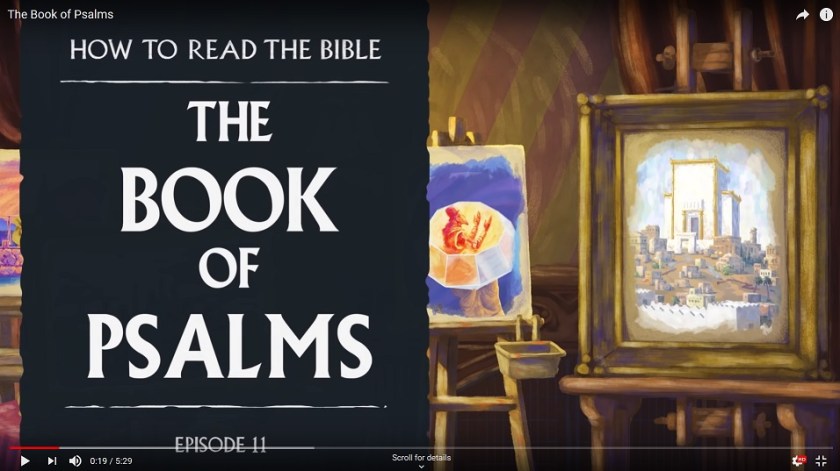
The Psalms in 5 minutes

If you ever struggle to grasp the Bible narrative as a whole, do yourself a favour and check out the free animated videos from The Bible Project.

Today they released a doozy on the Book of Psalms. How do you even explain how 150 Psalms fit together, let alone do it in 5 minutes?

Check it out. These masterful guys might even help you to see the Bible as the story of the Kingdom of God.  And don’t miss the details, such as the image of the tree in Psalm 1.

Psalms_TheBibleProject

Fresh language for Jesus’ kingdom

With other commitments, I won’t be posting much in December/January. Rest assured, I’ll still be pursuing my life-goal, seeking his kingdom.

The more I pursue this perspective, the more definitive it becomes as the framework that makes sense of everything. The whole Bible narrative fits together as the integrated, laser-focused story of God’s faithful kingship over the earth. We need fresh language to express this, language that communicates in our culture.

Continue reading “Fresh language for Jesus’ kingdom”

The king who heals creation (Exodus 15:22-27)

Open Exodus 15:22-27.

The euphoria of coming out from Pharaoh’s oppressive rule didn’t last long. The Hebrews soon discovered they were still in a broken world.

They had not returned to Eden’s Garden where the rivers of God’s presence gushed forth in all directions to water creation (Genesis 2:10-14). No, they were in parched wilderness, without water, for three days (15:22). Continue reading “The king who heals creation (Exodus 15:22-27)”

Using Logos Bible Software

Logos is the most powerful and efficient Bible study tool I’ve ever used. You can use it to like a Kindle app to read biographies on your tablet (iOS or Android), or you can use for PhD research of superbly hyperlinked and fully indexed academic resources on your computer (Mac or PC).

The new version released this week has integrated all the notes I’ve made in 10 years of using Logos — more than 7,000 annotations to my Bible, covering every book except 2 John.

It’s also telling me I’ve added 43,000 highlights to other books in my library. Top five: Continue reading “Using Logos Bible Software”

If you didn’t have to shop

Imagine if God did this miracle today:

Deuteronomy 29:5 (NIV)
During the forty years that I led you through the wilderness, your clothes did not wear out, nor did the sandals on your feet.

How do you feel?

  1. Wear these things for 40 years? Can I shop for a different religion?
  2. Ah, those were the good old days. They don’t make ’em like they used to.
  3. Amazing, God. You just freed me up to provide food for many more people.

The significant song (Exodus 15)

Open Exodus 15:1-21.

What makes a great song? Lyrics that voice what you feel? Rhythm that moves you? Layers of rich harmony? Chord progressions that take you places?

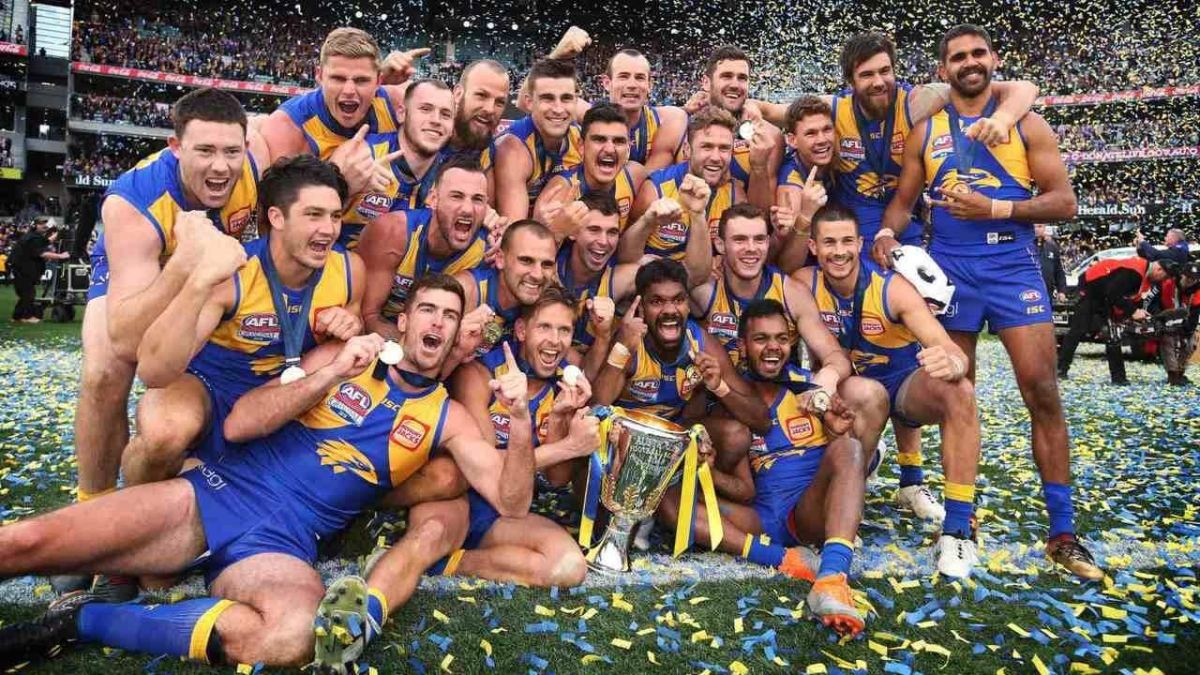
A song rang out over the  MCG at the final siren on 29 September 2018. It was the song every Eagles fan wanted to hear. The right song in the right moment sweeps you up and carries you like a raft on a white-water stream.

The first song in the Bible was that kind of song — the greatest victory song you could imagine. We waited 65 chapters to hear it. There’s only been one mention of a song, a song Jacob turned down. After 20 difficult years, Jacob slipped away quietly, rejecting the party Laban offered with mirth and song pretending everything is okay  (Genesis 31:27). Our world is still full of escapist songs that don’t quite ring true.

Finally we get the true song, the authentic celebration. The song celebrates the moment they were released from serving Pharaoh to serve a new king. With his chariots on the sea floor, Pharaoh had no power to enslave them again. You can’t stop the music: Continue reading “The significant song (Exodus 15)”

When the threat of force sinks under its own weight (Exodus 14:15-31)

Open Exodus 14:15-31.

The Red Sea event proclaimed a definitive message: God made a way where there was no way — literally through the sea (14:21-23).

Even there, Egypt’s military power pursued them: “all Pharaoh’s horses and chariots and horsemen” (14:23). In ancient warfare, chariots were the equivalent of tanks: a protective, fast moving vehicle, able to outrun an enemy.

But the pathway God provided did not support chariots. They bogged down in the sandy sea floor. That’s when the Egyptians realized they were up against a foe they could not defeat: “Let’s get away from the Israelites! The Lord is fighting for them against Egypt.” (14:25).

When God’s people had passed through, Moses stretched out his hand again and the way through the sea closed. In this moment, the powerful chariots of Egypt’s mighty army become became junk on the sea floor.

Earth’s true ruler does have a way to release his world from the reign of evil and death. All the treacherous rulers and deadly weapons on earth cannot obstruct the purpose of the true sovereign, and his people.

The Red Sea event addresses the big justice question, “Can love defeat violence?” In YHWH versus Pharaoh, the power of love triumphs over the love of power.

The true ruler doesn’t need the power of an army to enforce his will. Nature itself responds to its true king. Even the sea. Even the uncontrolled places beyond human rule.

Continue reading “When the threat of force sinks under its own weight (Exodus 14:15-31)”