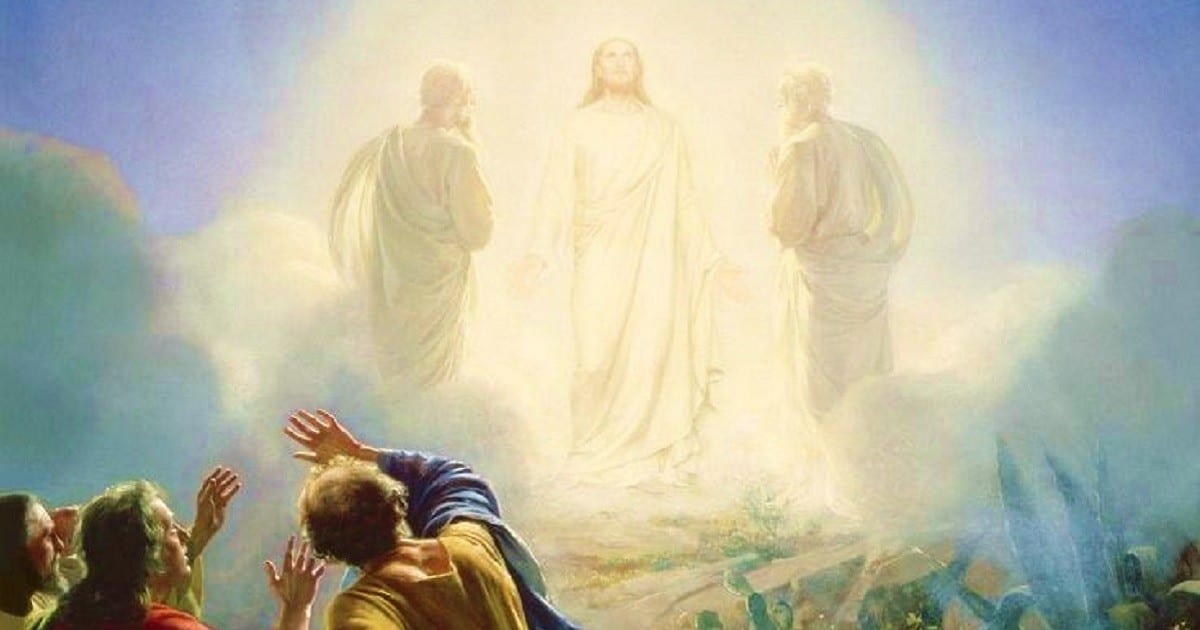
Why are the people of earth mourning? (Matthew 24:30-31)

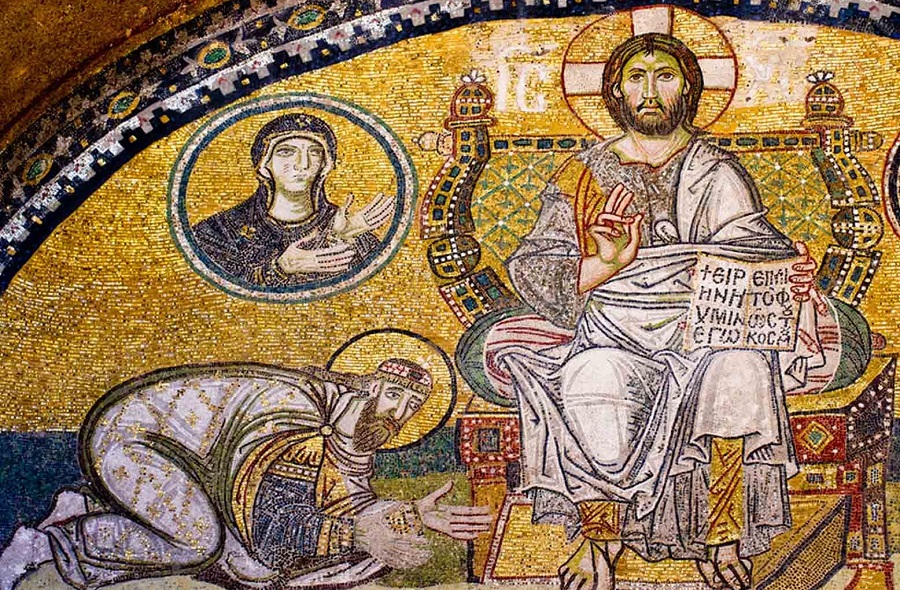
Two pictures combined in one, the reconciliation of heaven and earth.

I thought the gospel was good news. The son of man receiving kingship, backed by angels rather than military forces: isn’t that time for dancing in the streets, celebrating the end of oppression?

Why did Jesus describe the people of earth as mourning? Are they unhappy he’s in charge?

Matthew 24:30-31 (my translation, compare NIV)
30 Then will shine the sign of the son of man in heaven. Then all the tribes of the land will mourn and will see the son of man coming upon the clouds of heaven with power and much grandeur. 31 He will commission his angels with a great trumpet, and they will gather his chosen from the four winds, from one side of the heavens to the other side.

Truth is, we can’t enter a great future without dealing with the pain of the past. Reconciling means facing each other. It starts with facing him: the son of man, the heaven-appointed leader who draws us together in himself.

Jesus composed this word picture by combining two images from Israel’s story. From heaven’s side, authority is taken from the beasts and given to the son of man (Daniel 7). From earth’s side, the people weep as they realize how they’ve treated God (Zechariah 12). Combine the two pictures, and you have the perfect description of Jesus’ ministry: reconciling heaven and earth.


The mourning tribes in Zechariah

Continue reading “Why are the people of earth mourning? (Matthew 24:30-31)”

Coming with the clouds (Matthew 24:30)

Armies give power to emperors, but only one ruler has the backing of the clouds of heaven’s hosts.

“You shall not pass!” That might be your worst fear if you’re facing an exam. You’ll hear it very differently if you recognize the image of Gandalf confronting the balrog in Lord of the Rings. In Matthew 24, Jesus tapped into images familiar to those who were living the Jewish story, images we completely misunderstand if we don’t make the connection.

Here’s an example:

Continue reading “Coming with the clouds (Matthew 24:30)”

Shaking the powers (Matthew 24:29)

The coming of the son of man is the fall of the superstars from where they had no right to be.

Matthew 24:29–30a (my translation)
29 Immediately after the anguish of those days, ‘the sun will be darkened, and the moon will not give its light, and the stars will fall from heaven, and the powers of the heavens will be shaken.’ 30 Then will shine the sign of the son of man in heaven …

If you’re now picturing the space/time universe collapsing into a black hole, please know that Jesus wasn’t the picture in Jesus’ mind. The NIV misleads us to think of literal stars by calling them “heavenly bodies,” whereas Jesus was talking about the powers of the heavens (αἱ δυνάμεις τῶν οὐρανῶν) being shaken.

As the quotation marks suggest, Jesus was using imagery from the Old Testament — Isaiah 13 to be specific.

Continue reading “Shaking the powers (Matthew 24:29)”

The coming of the son of man (Matthew 24:26-27)

If God gives authority to the son of man, “the coming of the son of man” is all about the restoration of God’s reign over the earth.

This might be the crucial phrase in Matthew 24:

Matthew 24 27 For as lightning that comes from the east is visible even in the west, so will be the coming of the Son of Man. (NIV)

The western church has often taken this to mean the end of the age, when the Messiah comes to resurrect his people. Based on that interpretation, graves traditionally face east: that way the dead will rise to face the Messiah when he resurrects them.

Is that what Jesus meant? Or was he talking about his own resurrection, the day the son of man came from the dead to receive the kingship?

Continue reading “The coming of the son of man (Matthew 24:26-27)”

The tribulation and Jesus’ kingship (Matthew 24:9-30)

Good news! Jesus’ kingship resolves the oppressive pain in God’s world. See if Matthew 24 makes more sense as gospel rather than as charts for the end of the world.

I don’t know if you noticed, but our first two posts on Matthew 24 asked you to listen to the conversation Jesus had with his disciples about his kingship a few days before his crucifixion. It’s not always heard as a flowing conversation. Some readers treat it as if Jesus was using jargon to differentiate periods of future history.

Here’s what I mean by treating Jesus’ words as jargon:

Continue reading “The tribulation and Jesus’ kingship (Matthew 24:9-30)”

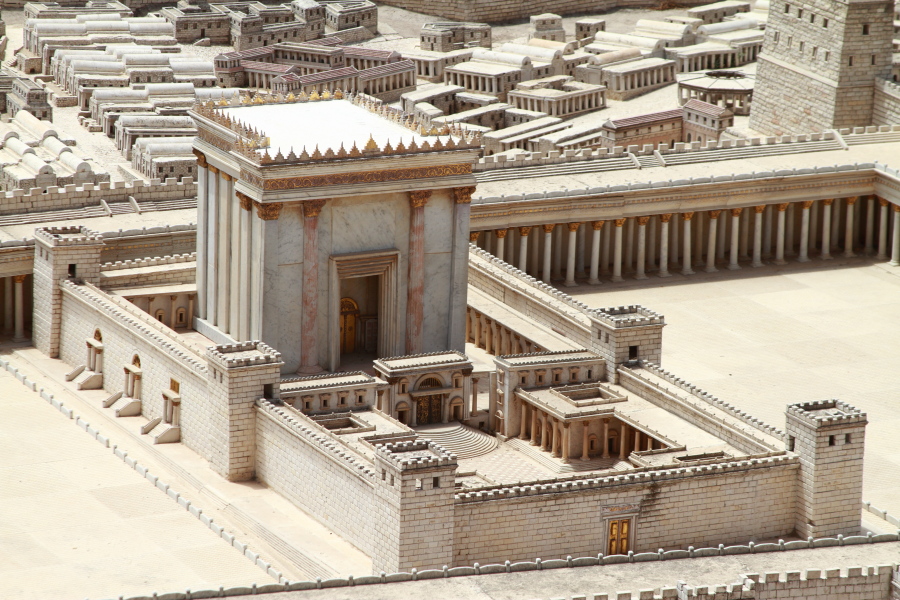
The fall of the Jerusalem temple (Matthew 24:15-28)

After providing pastoral support to his followers, Jesus spoke plainly about the horrors of Jerusalem’s demise and the fall of the temple.

Jesus expected the Jerusalem temple to be destroyed? The temple hierarchy maybe, but the literal temple buildings? The disciples wondered if they’d heard him right.

Matthew went to great lengths to set the scene for this discourse. Arriving in Jerusalem as king, Jesus’ first act was overturning the temple (21:12-13). He called the leaders in God’s house bandits in a den — the phrase Jeremiah used to explain why God abandoned his house, leaving it (and the city) vulnerable to destruction (Jeremiah 7:11). Jesus says the second temple was occupied by murderers who were about to complete what their ancestors started — killing the one God sent them (23:32-36). What hope has a city that won’t heed the warnings of its king? (23:37)

Tragically, the second temple and its city sealed its fate (23:38). The time for warnings is over. Jesus walks away (24:1).

But the disciples can’t leave it at that. They call Jesus back, drawing his attention to the temple buildings (24:2). This is not a picture of country-hick tourists gawking at something they’ve never seen. Like Jesus, they’ve all been there every year for the festivals. Like Korah’s sons, they feel the attachment to this place: How lovely is your dwelling place, Lord Almighty (Psalm 84:1). This house is where their heavenly sovereign said he would dwell among them … to meet with you and give you all my commands for the Israelites (Exodus 25:8, 22).

Surely Jesus can’t just walk away like that, leaving the city to its fate?

Continue reading “The fall of the Jerusalem temple (Matthew 24:15-28)”

The end: where are we headed? (Matthew 24:1-14)

What did Jesus say about the end? Here’s the two things we need to know.

Oh, my! There’s so much speculation and dispute over what Jesus meant in Matthew 24. “Signs of the end” is the label it often gets, inviting curiosity about how the world will end.

Jesus did not believe the world would fall apart in the end. He expected that, despite all the conflict and disasters, the world would reach its goal under his leadership — the end it was designed for.

Continue reading “The end: where are we headed? (Matthew 24:1-14)”

David’s Lord (Matthew 22:41-46)

Understanding the Bible is all about understanding the relationships. Jesus shows us how with his puzzle about the people in Psalm 110:1.

My wife loves relationships movies. She’s not looking for action scenes, spy plots, or superheros bringing everybody to heel. She loves stories that explore how people relate.

I think that’s how Jesus heard the Bible. Academics can focus on the form and structure of the text or making theology systematic, but for him it was all about relationships.

Matthew 22 gives example after example where his interpretation was relational:

  1. God’s people live because I AM. Knowing Scripture means knowing God, his life-giving power (see on 22:29-32).
  2. Loving God and loving people — those relationships are the whole Bible (the Law and the Prophets) (see on 22:34-40).
  3. To understand a Psalm, explore the relationships between the people (22:43-45).

Now, I know this isn’t how we usually read Scripture. Jesus’ approach sounded just as foreign to the Pharisees as it does to us. Can we learn the relational hermeneutic Jesus used? In this post, we’ll take the third example (based on Psalm 110) as our tutorial.

Notice the question Jesus asks:

Continue reading “David’s Lord (Matthew 22:41-46)”

That taxing question (Matthew 22:17-22)

No, Jesus wasn’t promoting two kingdoms with divided loyalties.

Matthew already told us this was a trap. Pharisees and Herodians buttered Jesus up to ask this:

Matthew 22:17-22 (my translation, compare NIV)
17 “So, tell us what you think: should we pay tribute to Caesar or not?”
18 Aware of their evil intent, Jesus said, “Why are you testing me, you play actors? 19 Show me the tribute coin.” They offered him a denarius. 20 He says to them, “Whose image is this? And whose inscription?”
21 “Caesar’s” they replied.
Then he said to them, “Return Caesar what belongs to Caesar, and to God what belongs to God.”
22 His response astounded them. They took their leave and departed.

If you don’t understand what this question meant in his culture, you might misunderstand Jesus’ answer. We often separate life into two domains: the physical world includes the country where you pay taxes to your rulers, and the spiritual world includes the church where you pay tithes to God. This separation of the physical and spiritual worlds (church and state) has been so common in recent centuries that it has a name: the “two kingdoms” view.

That’s not the Bible’s framework. Earth is not divided into two domains, with God ruling part of life and humans ruling the other. God is sovereign over everything, and the problem with the world is humans resisting his commands, controlling each other through violence, taking power into our own hands (Genesis 1 – 11). God did not tell the Hebrews, “You’re to live in two kingdoms, serving Pharaoh and me.” He told Pharaoh, “Release my people so they may serve me.”

Continue reading “That taxing question (Matthew 22:17-22)”

Tenants in God’s vineyard (Matthew 21:33-44)

Look through the window of Jesus’ stories, and you see the world framed as God’s kingdom:

Matthew 21:33-44 (my translation, compare NIV)
33 “Listen, another parable. This person was a landholder. He established a vineyard, set up a protective hedge, dug a winepress, built a lookout, leased it to tenants, and went elsewhere. 34 As harvest time approached, he sent his servants to the tenants to collect his fruit.

The earth is the Lord’s. We don’t own it. We rent a space for a few years, but ownership remains with the one who lives forever. That’s our security, our meaning. It’s where we belong, our hope.

Continue reading “Tenants in God’s vineyard (Matthew 21:33-44)”

Who’s in charge? (Matthew 21:23-27)

Jesus’ authority is at the heart of the gospel.

If Jesus intended to confront Jerusalem’s leaders by overturning the temple, he succeeded. Priests claimed to be God’s representatives. Elders claimed authority over the people. They pushed back against God’s Anointed:

Matthew 21 (my translation, compare NIV)
23 Since he’d entered the temple complex and was teaching, the chief priests and elders of the people asked, “By what kind of authority are you doing these things? Who gave you this authority?”

In Israel, God’s authority was present in three main roles:

Continue reading “Who’s in charge? (Matthew 21:23-27)”

Jesus in the Psalms? (Psalm 8)

Should we find Christ in the Psalms, or read them as Israel’s story?

Should we see Jesus in the Psalms?

The church fathers saw Jesus everywhere, but modern commentators focus on authorial intent — the meaning the author intended to convey. The Psalms were written to celebrate the reign of Israel’s God and to lament their struggles as his people. The authors didn’t intend to write about Jesus, so can the Psalms be about Jesus?

And yet, the New Testament writers do apply the Psalms to Jesus. Psalm 8 is applied to Jesus in 1 Corinthians 15:27 and Hebrews 2:6-8, and even by Jesus himself in Matthew 21:16. Authorial intent matters, but it’s too limited a view. There’s a bigger story playing out across the canon of Scripture.

Continue reading “Jesus in the Psalms? (Psalm 8)”

Forgiveness: reciprocated or rescinded (Matthew 18:23-35)

Does God ever back out on forgiving us?

Did you hear the one about the guy who received forgiveness, and then lost it?

Some of Jesus’ stories don’t sit well with how we understand the gospel. I often hear salvation offered as a free gift: admit you’re a sinner, ask for forgiveness, and receive the gift of eternal life. You pray the prayer, and they assure you that you’re saved, because God promised it and wouldn’t lie.

But Jesus told a story where the unforgiving guy had his forgiveness rescinded. Unnerving?

Continue reading “Forgiveness: reciprocated or rescinded (Matthew 18:23-35)”

Jesus did refer to himself as a king (Matthew 17:22-27)

If death and taxes are the only certainties, you don’t want to offend those who charge taxes. Taxation was not part of the created order. In the beginning, God only gave humans authority over the other creatures — fish of the sea, birds of the sky, animals and insects of the land (Genesis 1:26-28; Psalm 8 etc).

So, there’s something seriously wrong when representatives from the temple expect tribute from God’s anointed king:

Matthew 17:22-25 (original translation, compare NIV)
22 Travelling back to Galilee, Jesus said to them, “The son of man is about to be handed over to the hands of men. 23 They’ll kill him, and on the third day he will be raised up.” They were deeply grieved.

24 When they reached Capernaum, the collectors of the temple tax approached Peter: “Your teacher pays the temple tax, doesn’t he?”

25 “Yes,” Peter said.

Peter didn’t even stop to think. He’d seen Jesus pay the temple tax each year.

But something is different this year. Peter just declared Jesus to be God’s anointed king (Christ), the Son appointed to rule the earth by his Father in heaven (16:16). And Jesus explained that the temple leaders in Jerusalem will kill him (16:21; 17:23).

Peter needs to stop and think. Why should God’s anointed king pay tribute to the rebels? Continue reading “Jesus did refer to himself as a king (Matthew 17:22-27)”

The Moses connection (Matthew 17:2-8)

Why was Moses present at Jesus’ transfiguration? How would the disciples have understood the conversation between Jesus and Moses?

Moses was Israel’s founder, the servant of the Lord who brought the first kingdom of God to birth among the kingdoms of the world. Continue reading “The Moses connection (Matthew 17:2-8)”

See a glorious king? (Matthew 17:1-8)

Dress for the job you want, they say. But Jesus didn’t. Except for this one time. Far from the cities of power, three trusted friends glimpsed him dressed in regal glory.

They had just declared him as God’s anointed ruler (16:16), and he said they would see him rise to power in his Father’s glory (16:27-28). For a brief moment they saw it: Continue reading “See a glorious king? (Matthew 17:1-8)”

Declaring Jesus king (Matthew 16:13-16)

“You are the Christ, the Son of the living God.” — Apostle Peter, first century

“Do you believe that Jesus is the Christ, the Son of the living God?” It’s the question I often ask when baptizing believers. Our faith is in a person, and Peter nailed it with his declaration. So, what did Peter mean by this great confession?

There’s a temptation to invest Peter’s words with later theological meaning and miss what he said. His phrases have snowballed with significant theological freight:

  • Christology is the study of the person and work of Christ. His person embodied two natures (fully God and fully human), so his work reconciled God and humans (atonement).
  • Son of God is a term we associate with trinitarian theology: the relationship between Father and Son who, with the Spirit, exist eternally as one God (trinity).

All of that is true and important, but this developed theology was not in Peter’s mind. Rather than treat his words anachronistically, let’s hear them in their context.

Continue reading “Declaring Jesus king (Matthew 16:13-16)”

Peace and grace: the greeting that can deliver (Ephesians 6:23-24)

More than a wish; this good news heals the world.

Ephesians closes with two brief blessings that pull together the main themes of the letter. Peace and grace were common greetings in both the Jewish and Asian communities, but these words are much more than well-wishes. The good news in this letter is the divine grace that brings peace to the world. Continue reading “Peace and grace: the greeting that can deliver (Ephesians 6:23-24)”

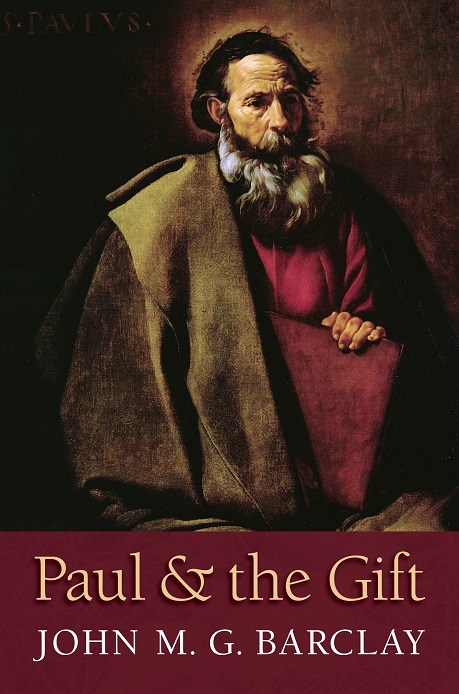
On grace: John Barclay, “Paul and the Gift” (book review)

“A gift can be unconditioned (free of prior conditions regarding the recipient) without also being unconditional (free of expectations that the recipient will offer some ‘return’).”

The word “grace” encapsulates so much of the gospel, so I was blown away by John Barclay’s masterful study of this word: Paul and the Gift, published by Eerdmans in 2015. It’s big (672 pages), pricey (US $55), and academic, though at the time of this review it was available on Kindle for US $4.50.

If you just want a concise summary, choose Barclay’s Paul and the Power of Grace (Eerdmans, 2020, 200 pages). For me, the larger book was worth the effort. It’s a superb example of how to pursue a word study: I learned as much from his method as his content. Continue reading “On grace: John Barclay, “Paul and the Gift” (book review)”