Jesus’ authority as King (podcast) (Matthew 7:21-29)

When Jesus delivered the Sermon on the Mount, the crowds were amazed at his authority. What authority? What was the king expecting of his people? What is he expecting of us?

This podcast (25-minutes) covers the final statements of his most famous sermon, introduced in last week’s podcast.


Related posts


Matthew 7:21–29 (NIV)
21 “Not everyone who says to me, ‘Lord, Lord,’ will enter the kingdom of heaven, but only the one who does the will of my Father who is in heaven. 22 Many will say to me on that day, ‘Lord, Lord, did we not prophesy in your name and in your name drive out demons and in your name perform many miracles?’ 23 Then I will tell them plainly, ‘I never knew you. Away from me, you evildoers!’

24 “Therefore everyone who hears these words of mine and puts them into practice is like a wise man who built his house on the rock. 25 The rain came down, the streams rose, and the winds blew and beat against that house; yet it did not fall, because it had its foundation on the rock. 26 But everyone who hears these words of mine and does not put them into practice is like a foolish man who built his house on sand. 27 The rain came down, the streams rose, and the winds blew and beat against that house, and it fell with a great crash.”

28 When Jesus had finished saying these things, the crowds were amazed at his teaching, 29 because he taught as one who had authority, and not as their teachers of the law.

Freed, or in fear? (Matthew 15:1-9)

There is a king who frees us from superstitious rituals and enslaving fears.

“Can we shower yet, or do we just keep washing our hands?” We need humour this year. We fear an unhealthy person infecting our community, and fear can keep us from community.

Only in the last 130 years have we seen germs, but people back in Bible times knew it was healthy to wash. Washing was already a symbol of ritual cleansing in the first books of the Bible (Torah).

Ritual washing became a point of contention between Jesus and the leaders of his culture:

Continue reading “Freed, or in fear? (Matthew 15:1-9)”

His healing presence (Matthew 14:33-36)

Can a king sort out what’s wrong by healing rather than jailing people?

Open Matthew 14:33-36

Jesus’ kingship is Matthew’s dominant theme. From the introductory sentence (“anointed ruler, son of David”) to the culminating declaration (“all authority in heaven and earth”), the kingdom of God is here because the king is here.

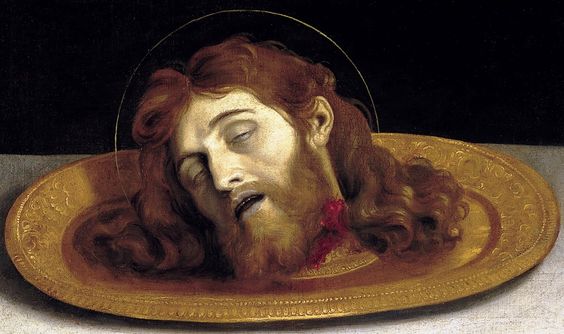
Matthew contrasts the world’s true king with our existing rulers. Herod built fortresses to defend his kingship and armies to enforce his decrees. He used prisons to silence critics like John the Baptist. Yet, Matthew shows remarkable empathy for Herod: Herod didn’t want to kill John; he was trapped by forces beyond himself (Matthew 14:9).

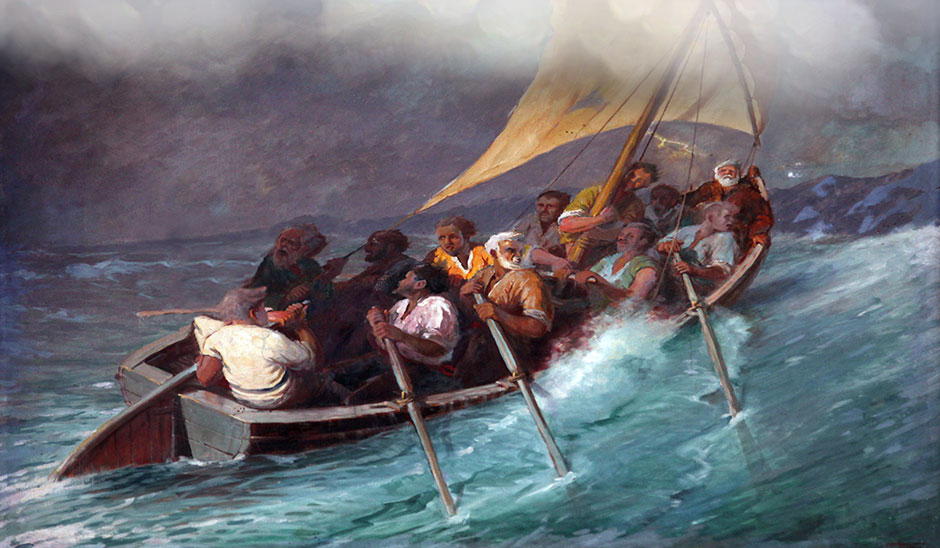
I love the way Matthew juxtaposes the earthly ruler’s party for himself in his palace (14:1-12) with the heavenly king’s provision for his people in the wilderness (14:13-21). Jesus is the Son who listens to his Father (14:23). That’s why he has authority to calm not only the earth but the unruly sea (14:24-32). His followers see him as the Son with the eternal sovereign’s authority (14:33).

The crowds also recognized Jesus as he returned to Gennesaret on the northwest shore of Galilee. The men in charge of this town sent messengers to notify everyone of his arrival. They honoured him as a person of significance, the reaction appropriate for a royal visitor or a representative of God.

Continue reading “His healing presence (Matthew 14:33-36)”

Tyrants or tempests? From what does Jesus save? (Matthew 14:22-33)

“Jesus saves” from what? Tyrants (systemic injustice)? Tempests (natural disasters)? Transgressions (personal guilt)?

Open Matthew 14:22-33

Some disasters are manmade. We hurt each other in our families, businesses, and communities. We’re harmed by war, racism, the injustices of power. We also face disasters beyond human control: cyclones, earthquakes, pandemics. Which kind does Jesus save us from?

Matthew 14 answers that question.

Continue reading “Tyrants or tempests? From what does Jesus save? (Matthew 14:22-33)”

Why I’m seeking the kingdom (podcast)

What’s your goal? What are you seeking as you get out of bed each day?

In this podcast (18 minutes), I share the reason I’m alive, what my life means now.

Life can come and go if we don’t set our priorities. For Jesus, the priority was the kingdom of God. It’s the thing he told us to seek first.

Why was the kingdom the heart of everything for Jesus? What difference does it make if we prioritize it too?


Previous podcast: Shaking the chains at Philippi (Acts 16:16-40)

Related blog posts: see Rationale.

A tale of two kings (Matthew 14:1-21)

How do we present Jesus as king, when he’s so different to the rulers appointed by this world?

Open Matthew 14:1-21.

Jesus’ regal authority can frighten people. We’ve all experienced power being abused. So how do we announce a king who cares for his people?

We’ll need to explain the contrast. Matthew shows us how by juxtaposing the stories of two kings. Continue reading “A tale of two kings (Matthew 14:1-21)”

Feeding the multitude (Matthew 14:13-21)

What are we to learn from unusual miracles like the feeding of the 5000?

Open Matthew 14:13-21.

Feeding the 5000, or walking on water. They’re favourites that capture our imagination, but why did Jesus do these things? If they were signs, what were they pointing to? Was he showing off? Was he telling the crowds he was God? What was Jesus doing? Continue reading “Feeding the multitude (Matthew 14:13-21)”

What power do the rulers of this world have over God’s people? (Matthew 14:1-12)

Are we safe from harm? Or can God’s people be hurt by the evil in the world?

Open Matthew 14:1-12.

As you read the Bible, do you notice how the stories fit together? Why would Matthew stop talking about Jesus and tell a story about Herod instead? What’s his point?

Continue reading “What power do the rulers of this world have over God’s people? (Matthew 14:1-12)”

How does Jesus become king? (Matthew 13:53-58)

How does Jesus receive the kingship if people don’t give it to him?

Open Matthew 13:53-58.

Jesus taught like an artist. His word pictures lift us above the human conflicts to a plateau where we can see what the earth was meant to be — a place of peace, responsive to heaven’s government.

This is future, yet it’s already here in the present. Jesus has re-sowed God’s world, and some seeds are heading toward harvest. Sure, there are weeds in God’s field, but there’s wheat as well. The mustard seed is growing. The leaven is permeating the dough. People trade other dreams for God’s reign. The net is in the water, and God will sort the good from the bad.

God’s reign is here. Only the good that God intended will last.

Jesus’ kingdom vision was inspiring, but was it credible? Compared to Herod or Caesar, what kind of king was Jesus of Nazareth?

Continue reading “How does Jesus become king? (Matthew 13:53-58)”

Trained for kingdom business (Matthew 13:51-52)

Can Jesus teach us to present his kingdom in our setting?

Open Matthew 13:51-52.

The final parable of Matthew 13 would be the most relevant and practical of all, if we understood it. It’s the final application, the “so what” of the kingdom parables. Jesus commissions us to do something with the kingdom.

But what is he asking us to do by telling a story about a householder laying out his new and old treasures? Continue reading “Trained for kingdom business (Matthew 13:51-52)”

Why doesn’t God sort it out? (Matthew 13:47-50)

If God is all-powerful and all-loving, why doesn’t he sort out injustice now?

Open Matthew 13:47-50.

Why is the world such a mess if it’s God’s kingdom? How can so much evil and injustice exist in the kingdom of God?

Why doesn’t our heavenly king sort out his earthly realm? Is this really the best God can do?

That’s no theoretical question. Ask the people in pain. Ask the parents of the 17 killed at Marjory Stoneman Douglas High School in Parkland, Florida in February. Why doesn’t God act? Philip Yancey calls it, “the question that never goes away.”

Megaphones blare, “What do we want? Justice! When do we want it? Now!Continue reading “Why doesn’t God sort it out? (Matthew 13:47-50)”

What’s the value of God’s reign? (Matthew 13:45-46)

What would it be worth to have God reigning over us?

Open Matthew 13:45-46.

Did you hear the one about the art lover who found an original by someone she and her husband admired? She texted the details to get his opinion. Between meetings, he rushed back a reply, “No. Price too high.” But his fumbling fingers missed the full stop. The text she received read, “No price too high.”

Did you hear the one Jesus told about the pearl merchant? He found the one he’d been waiting for, the elusive pearl with flawless shape, glistening tone, and perfect lustre. He traded everything away to have the thing he’d been waiting his whole life to find.

For Jesus, God’s reign over the world is that one thing worth trading everything for. Like the pearl merchant you might recognize it as the thing you’ve been searching for. Or you may not have been searching; perhaps you just stumbled on it, like treasure buried in a field. Either way, when you see it for what it is — the possibility of everything on earth functioning as beautifully as it was designed to do — what value do you place on it? Continue reading “What’s the value of God’s reign? (Matthew 13:45-46)”

Discovering what counts (Matthew 13:44)

What’s your dream? And what will you do to get there?

Open Matthew 13:44.

What’s your dream? And what would you do to get it? Your honest answers to those questions reveal more about you than you realize.

Someone caught up in the first euphoria of love dreams of a beautiful life with that special someone, whatever it costs. The entrepreneur dreams of owning the Monopoly board, driven by a plan that just might give it to him.

But our best dreams are bigger than ourselves. Dreams like clean drinking water for Africa, empowering locals to transform Cambodia, or A21’s audacious vision to end modern slavery. Syrians dream of living in a country where they need not fear being shot, and some young Americans do too. Martin Luther King Jr still speaks, “I have a dream …”

The trouble with dreams is that the how is more difficult than the what. Continue reading “Discovering what counts (Matthew 13:44)”

Parables help us get our bearings (Matthew 13:34-35)

Wisdom: learning from where we’ve been, to end up in a better place.

So why did Jesus speak in parables? He was revealing divine plans that had been confidential since the world was founded.

That’s how Matthew’s community understood him, based on Psalm 78:2:
I will open my mouth in parables; I will utter what has been hidden since the foundation of the world (quoted in Matthew 13:35).

But why did they think that Psalm was about Jesus? Was it just because the Psalm used the word parable? Continue reading “Parables help us get our bearings (Matthew 13:34-35)”

Infecting the world with good (Matthew 13:33)

How is the kingdom of heaven like a woman baking bread?

There’s nothing like the smell of fresh bread in the morning. Flour, water, and yeast go in the bread maker in the evening, and in the morning the aroma of fresh bread helps you rise to a new day.

We have it so easy. Back in Jesus’ day they kneaded the dough by hand, kept aside some sourdough as leaven for tomorrow, waited for it to rise, punched it down again, waited some more, and then built a fire to bake it.

Jesus told a story about a woman who must have been baking for a party. She took her leaven and hid it in three big 8 kilogram batches of flour. How on earth is the heaven’s kingdom like that? Continue reading “Infecting the world with good (Matthew 13:33)”

The little seed that filled the world (Matthew 13:31-32)

A few years back, our film crew sent this email from Israel:

Dear Allen. We’re trying to film a mustard tree, but our guide says mustard seeds only grow to be shrubs. We got some great shots of the mustard seeds, but now we’re stuck. Any ideas?

They were talking about these words from Jesus: Continue reading “The little seed that filled the world (Matthew 13:31-32)”

What about the weeds in God’s world? (Matthew 13:24-43)

How can God allow good and evil to coexist and not sort it out?

Open Matthew 13:24-43.

Jesus told some funny stories. The farmhands find weeds in the wheat field, so they ask if they should pull out the weeds. The farmer says, “I sowed good seed, so our enemy must have come and planted the weeds while we were all asleep.” Never in my life have I met a farmer who would jump to that conclusion!

Even funnier is the farmer’s response, “Nah! Leave all the plants growing in the field. We’ll sort them out at harvest time. If I let you lot pull out the weeds, you’ll pull out some of my wheat as well.”

There is no way Jesus could get a position at agricultural college if he gives that advice to his students. Why would he dream up such a story?

Continue reading “What about the weeds in God’s world? (Matthew 13:24-43)”

Calling all creatives (Matthew 13:10-17)

Why did Jesus teach in parables? Can his method inspire artists today?

Creatives know the struggle. How overt do you make your art? Do you feed people facts to change their minds, knowing the facts will drown in the data swamp? Do you inspire people with the seeds of what’s possible, knowing that most people won’t grasp your meaning?

There was a time I wished the Bible told it plainly. Just spell out what I must do instead of all that story and poetry. I was wrong, and Jesus knew it.

Jesus constantly went out on a limb, choosing the creative extreme. Not even his close friends understood his stories at times.

One day, they confronted him, “Why do you speak in parables?” Did you expect a straight answer? Here’s what he said:

Continue reading “Calling all creatives (Matthew 13:10-17)”

Who was the sower? (Matthew 13:1-23)

What’s the point of the sower parable? Is it about the soils, the seed, or the sower?

So what do you make of the sower parable? Is it a challenge to respond the way the good soil did? Don’t be like the hard path, or the shallow ground, or where things crowd out the word?

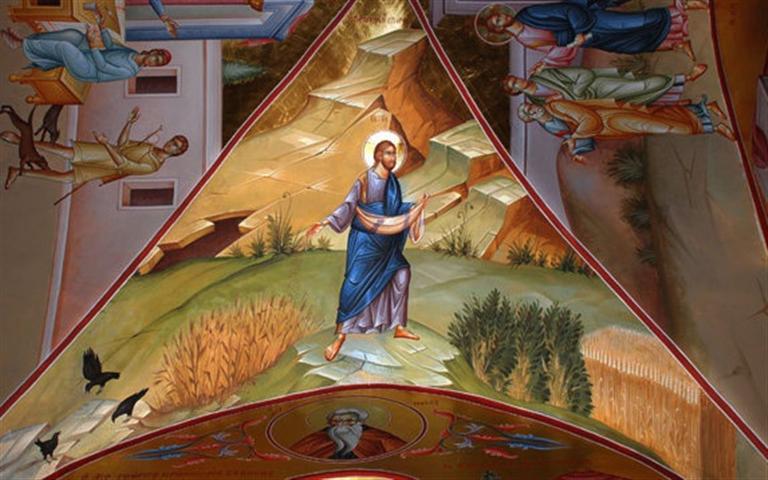
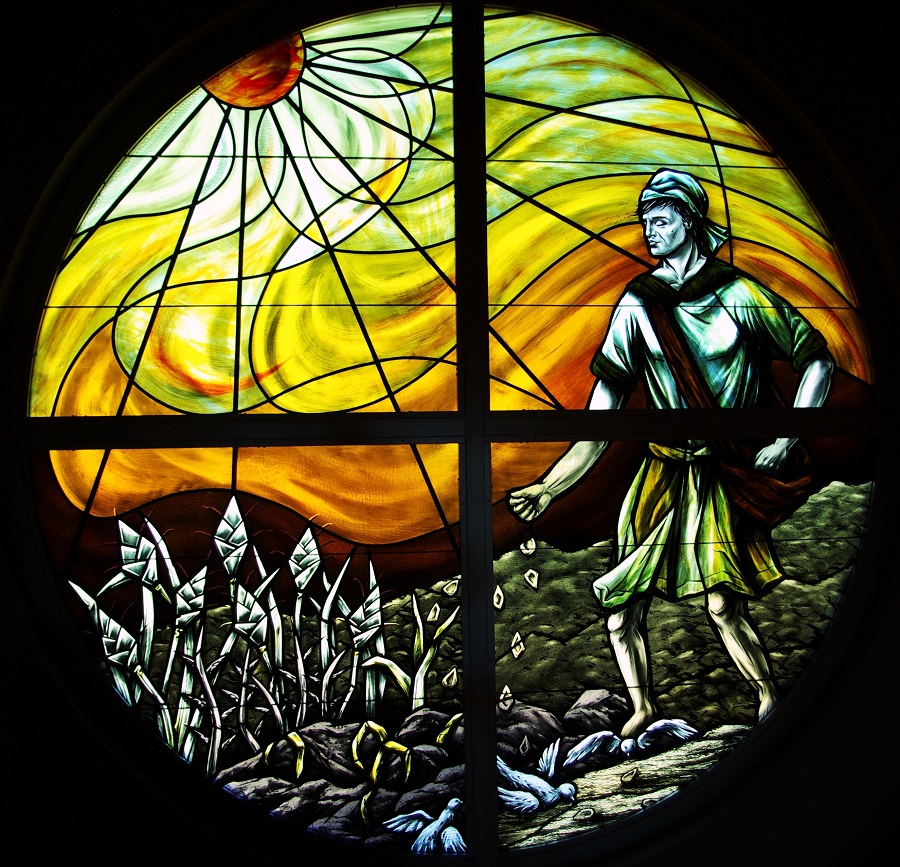
That’s okay as far as it goes, but it wasn’t what Jesus was saying. When he explained the parable, he didn’t say, “You are the soils, so make sure you’re the good one.” It wasn’t about you. It wasn’t even about the soils, although that was the setting of the story. The parable was about the sower and his sowing.

Continue reading “Who was the sower? (Matthew 13:1-23)”

Parables of the king (Matthew 13)

What’s a parable, and why did Jesus use them?

Open Matthew 13.

Like an otter, but with a bill like a duck. If you don’t know what a platypus is, comparisons can help.

Even if you do know what something is, comparisons change how you think of it. “Listening to gossip is like eating cheap candy; do you really want junk like that in your belly?” (Proverbs 18:8 Msg).

Jesus was famous for his parables, similitudes that describe one thing as like another. Sometimes the comparison was a single sentence; other times he spun a yarn with intrigue.

Matthew pulls seven or eight of his parables together in chapter 13. They’re drawn from everyday life: farming, baking, gardening, buying, selling, fishing, entertaining. But they’re all about the same thing. Can you guess? Continue reading “Parables of the king (Matthew 13)”