

Open Matthew 8:5-10.
Few people in the Gospels surprised Jesus with their faith. Can we learn from this guy? Continue reading “Faith that amazed Jesus (Matthew 8:5-10)”
Gospel of Matthew
Few people amazed Jesus with their faith. How did an outsider do that?
Open Matthew 8:5-10.
Few people in the Gospels surprised Jesus with their faith. Can we learn from this guy? Continue reading “Faith that amazed Jesus (Matthew 8:5-10)”
How do we announce Jesus’ kingship in a world where power is always oppressive?
Open Matthew 8:4.
Matthew 8:4 (my translation)
Jesus says to him, “See you tell no one, but head off to show yourself to the priest and offer the gift that Moses commanded, as a testimony to them.”
Why was the leper to tell no one about his healing? And if he was already cleansed, why send him off to offer a sacrifice for purification? Continue reading “A secret Messiah? (Matthew 8:4)”
When God gets his hands dirty.
Open Matthew 8:2-3.
A leper was unusual company for a king. The skin disease was bad enough, but a leper was a defiled person, excluded from the community. Even kings feared the disease that could drive them from their family home and from God’s house (2 Chronicles 26:19-21).
But this leper heard that Jesus announced good news for the people who’d missed out. He knew what it was to be driven out of the community, and he wanted in. He didn’t just want to be healed of his medical problem; he wanted to be purified from the defilement that excluded him from the community.
The trouble was that anything the leper touched became unclean. He was expected to tell everyone that he was a defiler, that if they touched him they would also be unclean. Continue reading “The leper and the king (Matthew 8:2-3)”
Christians in evangelical traditions kneel much less than we used to. Have we lost something?
Open Matthew 8:2.
As Jesus stepped down from this inaugural address on the kingdom, an outcast with a disease that prevented him being part of the community came and knelt before Jesus with a request. Why did he kneel? Should we kneel? What does it mean? Why do we rarely kneel anymore? Continue reading “Why kneel?”
The questions you ask shape what you become.
Want good answers? Ask good questions.
We all bring own questions and interests and beliefs to Scripture when we read. To understand its message well, set your agenda aside for a while, bathe in the text, and let it raise questions for you.
Try it with this short story: Continue reading “Asking good questions (Matthew 8:1-4)”
What kind of authority do you find in Jesus’ teaching?
Open Matthew 7:28-29.
Matthew 7:28-29 (my translation)
28 When Jesus finished his message, the crowds were astounded at how he taught. 29 He was instructing them authoritatively, not as their scribes.
“We need to teach with authority. Be like Jesus, not like the Jewish scribes,” the preacher said. I was only a college student at the time, but it sounded good to my young ears. What could be wrong with encouraging us to follow Jesus’ example?
That preacher missed the whole point. The crowd’s reaction raised the question who Jesus thought he was. What authority did he think he had? He wasn’t exegeting Scripture as Bible scholars do. He was redefining God’s decrees: “You’ve heard it said …, but I say to you …” Jesus acted as king. He set the laws of the kingdom. That’s a whole different level of authority to any preacher or teacher. Continue reading “Hearing the king (Matthew 7:28-29)”
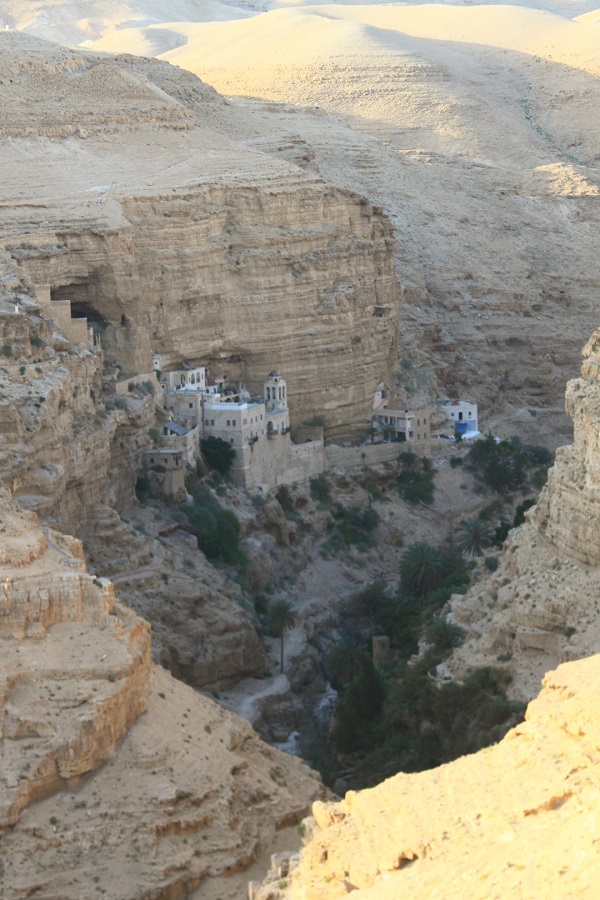
Life is precious. How do you decide how to spend it?
Open Matthew 7:24-27.
A friend has some health challenges. “Got me thinking,” he told me over the weekend. “If I only had 5 years left, would I be satisfied with how I’ve spent my life?” He’s a clever bloke who has lots of things on the go. He’s decided to simplify, to get rid of most of his activities and concentrate on what matters. Continue reading “A rock worth building on (Matthew 7:24-27)”
What does it mean to call Jesus, “Lord”?
Open Matthew 7:21-23.
Matthew 7:21-23 (my translation):
21 Not all who call me “Lord! Lord!” will be part of heaven’s kingdom — only those who do what my Father wants. 22 There’ll be many who say to me at that time, “Lord! Lord! Didn’t we use your authority to speak for God? Didn’t we use your authority to cast out demons? Didn’t we use your authority to do many powerful things?” 23 Then I will confess to them, “But I never recognized you. Take your leave from me, you agents of lawlessness.”
The Good News of the kingdom is that Jesus is Lord. Sin and death no longer enslave humanity; our heavenly Father has brought us back under his reign through his appointed ruler, Jesus our Lord. Peter’s gospel was, “God has made him both Lord and Messiah” (Acts 2:36). Paul called people to “confess with your mouth that Jesus is Lord” (Romans 10:9). The hope of the world is that “every tongue confesses Jesus the Messiah is Lord” (Philippians 2:11). He is “King of kings and Lord of lords” (Revelation 19:16).
We’re a quarter of the way through Matthew’s account of the Good News, and this is the first time he has applied the word Lord (κύριος) to Jesus. Jesus is not exercising power the way kingdoms normally do: he has not been running around Galilee demanding that everyone call him Lord. Continue reading “Acknowledging Jesus as Lord (Matthew 7:21-23)”
Jesus’ words are so relevant in a world where media gives rise to hero worship.
Open Matthew 7:15-20.
Matthew 7:15-20 (my translation)
15 Watch out for those who claim to speak for God but don’t. They present themselves as sheep following God, but they’re viscous wolves inside. 16 You’ll recognize them by what they produce. People can’t get grapes from thornbushes, or figs from thistles. 17 Every good tree makes good fruit; but a worthless tree makes degenerate fruit. 18 A good tree cannot make degenerate fruit, and a worthless tree cannot make good fruit.
19 Every tree that doesn’t make good fruit is cut down for firewood. 20 You can certainly recognize them by their fruit.
What does this have to do with Jesus’ kingdom message? Because we treat religion and politics as unrelated categories, we miss what Jesus meant about false prophets. Jesus’ kingdom message is a threat to those who want power. Conversely, those who want power want to conscript God to affirm their leadership. False prophets are those who affirm false powers — rulers other than Jesus.
Continue reading “The produce defines the tree (Matthew 7:15-20)”
The narrow way is counter-intuitive for those who want power.
Open Matthew 7:13-14.
Matthew 7:13-14 (my translation)
13 Enter through the narrow gate, for wide is the gate and broad is the way that leads to destruction; many go that way. 14 How narrow is the constricted gate, the way leading into life; few are those who find it.
Many today assume these verses are about the doors to heaven and hell. According to this interpretation, only a few people find the way to heaven and the majority are doomed to hell. But that isn’t Jesus’ message. He’s talking about the kingdom of God — heaven reigning over earth, in contrast with the usual way that kingdoms operate here on earth. The wide way that everyone travels is the way kingdoms normally operate, and Jesus is calling us to recognize another less obvious way: the way of the kingdom of God.
Did you know the Golden Rule has a silver setting?
Open Matthew 7:12.
Do to others what you would like them to do to you. Jesus’ statement is clear and inclusive, an ethical diamond reflecting on all facets of our lives. Continue reading “The Golden rule (Matthew 7:12)”
Jesus said ordinary people like us can invite God’s kingship to earth. Shall we?
Open Matthew 7:7-11.
The first lie ever told about God was that he was holding out on us (Genesis 3:5). The sovereign had honoured his creatures by inviting them into his palace garden, giving them access to everything he provided. He reserved for himself the right to decide good and evil for his creatures. Instead of respecting our sovereign, humans grasped at the power in his hands, acting as if we were gods. All the murder, all the social devastation, all the violence in the world flows from people grasping power that should be in God’s hands.
What difference would it make if people asked God to rule over us again? What would happen if together we sought his kingship? What if we knocked on heaven’s door and invited our sovereign to reign over earth again? Ask. Seek. Knock. According to Jesus, our true ruler would respond to such an invitation (7:7). Continue reading “Knocking on heaven’s door (Matthew 7:7-11)”
How you judge Jesus determines how you judge others.
Open Matthew 7:1-6.
Before being judgemental of others, judge yourself. Jesus’ teaching is as relevant as the day he first gave it.
But there’s more going on here. Why did Jesus need to say this? Who did he have in mind? Why did his followers need to be aware of this? And who are the “dogs” and “swine” Jesus warned about?
As always, we need to ask what it meant for them before we ask what it means for us. Otherwise we’re likely to apply this text in inappropriate ways (e.g. to undermine investigative journalists). Continue reading “Careful how you judge (Matthew 7:1-6)”
We’ve finally reached the verse that launched this blog. So what did Jesus mean by “Seek the kingdom”? What is God’s kingdom? How do we seek it?
Open Matthew 6:33.
Because we don’t understand the ancient world of kingdoms, Matthew 6:33 is one of the most misapplied verses in the Bible. It’s very popular in journals, study guides, and spiritual formation books. These writers want to make the application as personal as they can for their individual reader. As they understand it, I enter the kingdom through personal faith, and I seek the kingdom through my devotional life and spiritual disciplines. The goal is to encourage me to personally seek God, so his kingdom comes into my heart and his righteousness comes into my life. Great personal goals, but it’s not the kingdom.
Here’s just one example of “kingdom” applied personally. This is what the Word Bible Commentary series says about the command to seek the kingdom (Matthew 6:33): Continue reading “What is seeking the kingdom?”
Feel like your worth comes from how people see you? This will help you break free.
Open Matthew 6:25-34.
Our heavenly Father values us more than the birds and flowers, and he will provide for us. These are some of our favourite verses, especially when we face hard times. Without taking anything away from those sentiments, what Jesus said meant so much more. Continue reading “Stressed about your social standing? (Matthew 6:25-34)”
Open Matthew 6:19-24.
Imagine a king who owns an enormous realm. He appoints servants to manage the realm on his behalf, to make sure all his creatures are cared for. But the servants are seduced by the power placed in their hands. Instead of caring for the realm, they squirrel resources away into their own private hordes, stashing the king’s resources for their own benefit.
Open Matthew 6:16-18.
There’s a fascinating background to Jesus’ teaching on fasting. After all, Judaism was primarily a religion of feasting. Continue reading “Fasting (Matthew 6:16-18)”
Why did Jesus say God wouldn’t forgive us if we didn’t forgive each other?
Open Matthew 6:14-15.
If you forgive, you will be forgiven? Jesus words do not sit well with the way we’ve understood the gospel in the last five centuries. We understand God’s forgiveness as unconditional. It is all of grace. It has nothing to do with our works. There’s nothing we can do to earn our salvation. So how can Jesus add an “If …” to the message? How can he make God’s forgiveness dependent on what we do? Continue reading “Unconditional forgiveness? (Matthew 6:14-15)”
Jesus’ entire kingdom vision is encapsulated in this prayer.
Open Matthew 6:9-15.
“Our Father…” We’ve recited it, heard it taught, and used it as a pattern for prayer. But for Jesus it was more. In 57 words, he pulled together everything he was working for. It’s a kingdom manifesto. We pray to God as king, for the community he governs (his kingdom). Continue reading “The Lord’s Prayer (Matthew 6:9-15)”
Jesus authorized you to approach the throne of the great king
Open Matthew 6:5-8.
Why was Daniel thrown into the lion’s den? Did that strike you as an excessive penalty for … praying?
Sure, it was a political ploy to bring Daniel down, but how could Darius’ advisors have convinced him to enact such a law? We need to understand how they thought about prayer in the ancient world. Continue reading “What is prayer? (Matthew 6:5-8)”














 Seeking the kingdom