Jesus our shepherd (Matthew 9:35-38)

We have a shepherd, so you have a place to belong.

Open Matthew 9:35-38.

Matthew 9:36 (my translation)
Seeing the crowds, he had compassion for them, because they were harassed and thrown down like sheep with no shepherd.

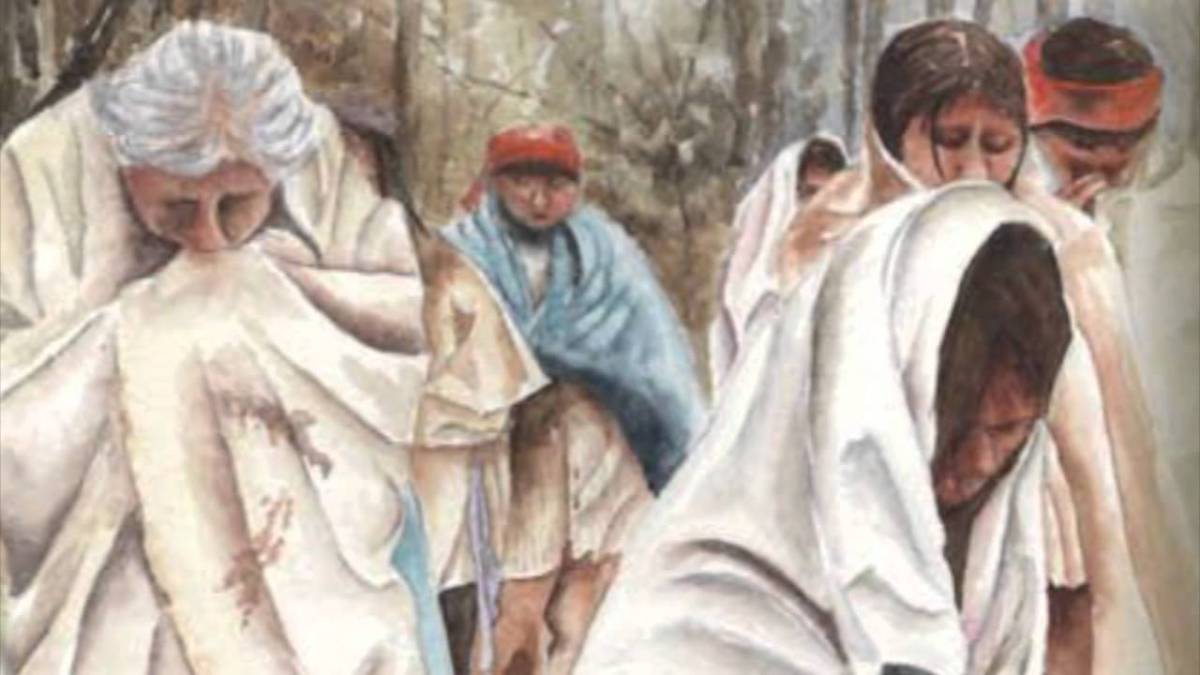
What do we mean when we call Jesus our shepherd? Do you imagine yourself as a fuzzy little lamb being stroked by the shepherd? If so, you’ve missed the powerful metaphor.

For Israel, shepherd was a metaphor for a ruler, a leader of the nation. Occasionally a priest or prophet could be called a shepherd, but it was usually the king. David literally was a shepherd until God chose him to shepherd Israel: “You will shepherd my people Israel, and you will become their ruler” (2 Samuel 5:2).

Sheep without a shepherd is therefore a picture of a nation that’s lost its ruler. As Moses reached the end of his life, he asked God to appoint a successor “so the Lord’s people will not be like sheep without a shepherd” (Numbers 27:17). When the prophet Micaiah saw a vision of Ahab dying in battle, he said, “I saw all Israel scattered on the hills like sheep without a shepherd” (1 Kings 22:17).

The last king of Judah was Zedekiah. The Babylonian invaders slaughtered his sons in front of him and then gouged out his eyes. From that moment in 586 BC, Israel had been sheep without a shepherd.

Among the scattered sheep in exile, Ezekiel explained that God had to remove the bad kings; yet he also promised that God would raise up a son of David to rule over them again: Continue reading “Jesus our shepherd (Matthew 9:35-38)”

Do you recognize the king’s authority? (Matthew 9:32-34)

Don’t miss the authority of the servant king.

Open Matthew 9:32-34.

Jesus is doing something unique. He’s demonstrating his kingship before his people even acknowledge him as king. That’s not how it’s usually done.

Politicians work the other way around. “Put us in power,” they say, “and we’ll fix everything.” It’s an ancient technique. 3000 years ago, David’s son Absalom wanted to be king, and this is how he went about it:

2 Samuel 15:3–4 (ESV)
3 Absalom would say to him, “See, your claims are good and right, but there is no man designated by the king to hear you.” 4 Then Absalom would say, “Oh that I were judge in the land! Then every man with a dispute or cause might come to me, and I would give him justice.”

Jesus isn’t seeking people’s approval so he can become their king. He sees himself as the divinely appointed king, so he uses his regal authority to remove every form of oppression from his people. Just look at his track record:

Continue reading “Do you recognize the king’s authority? (Matthew 9:32-34)”

Personal Saviour or Son of David? (Matthew 9:27-31)

Do you think of Jesus primarily as your personal saviour or our global sovereign?

Open Matthew 9:27-31.

Guide dogs are amazing: a constant companion, willing to take a blind person where they want to go. The dog is trained for you personally, so it’s expensive to train one, and it really does become your own personal guide.

We make a huge mistake when we apply the same language to Jesus — calling him “my personal Saviour.” That’s a term Scripture never uses, because it could suggest that we think Jesus belongs to us, and he will take us where we want to go. That’s a completely corrupt way to understand Jesus, as if he was our personal servant and guide. And yet that attitude is widespread in the church today. We’re proclaiming that selfish arrogance each time we tell people, “Invite Jesus into your life; he’ll make it so much better for you.”

If you ever meet Queen Elizabeth, please do not invite her to be your personal queen. You’d be insulting her, as if she did not have that authority already. Please don’t invite her to sit on the throne of your heart! She already has the throne! What you must do is to acknowledge her authority, bow before her in recognition of her regal status, and follow her commands.

Continue reading “Personal Saviour or Son of David? (Matthew 9:27-31)”

The king understands his people (Matthew 9:18-26)

Jesus knew how to care for people who were socially sensitive and people who didn’t understand the social niceties. Worth following?

Open Matthew 9:18-26.

The Synoptic Gospels intertwine the stories of two very different people. One is an influential ruler who loses his daughter; the other is a woman whose only influence is making everything she touches ritually unclean due to her menorrhagia. Jesus understood the different responses of powerful and powerless people.

Continue reading “The king understands his people (Matthew 9:18-26)”

Managing criticism (Matthew 9:14-17)

How do you cope with criticism from people who don’t understand where you’re leading them? Could we learn from the Master?

Open Matthew 9:14-17.

What do you do when you’re criticized? It’s easy to get angry and sound off, or to cave in and give up. I’m interested in how Jesus, the king of the kingdom, handled criticism.

He copped it from the scribes (9:3). He copped it from the Pharisees (9:11). Now he cops it from friends: John the Baptist’s disciples:

Mathew 9:14 (my translation) Then John’s students came to him saying, “How come we and the Pharisees fast often, but your students don’t fast?” Continue reading “Managing criticism (Matthew 9:14-17)”

Where did Jesus learn mercy? (Matthew 9:13)

Why did Jesus accept people when other leaders of his day wanted to cut them off?

Open Matthew 9:13.

One evening after work, a bunch of disreputable people were laughing and drinking shamelessly over their evening meal. It was exactly the kind of influence Israel didn’t need, so some Pharisees approached to name and shame them. Normally that would have broken up their unholy dinner party and send them slinking off into the darkness, but tonight one of these “disreputables” rises to his feet to defend his friends. It’s Jesus!

Continue reading “Where did Jesus learn mercy? (Matthew 9:13)”

Meditating on mercy (Matthew 9:13)

“I want mercy…” What does that mean?

Open Matthew 9:13 and Hosea 6:1-6.

“Go and learn,” Jesus said.
Perhaps we should:

Matthew 9:13 (my translation)
Go and learn what this is:
“I want mercy, not sacrifice.”
I didn’t come to call those in the right,
but sinners.
Continue reading “Meditating on mercy (Matthew 9:13)”

What’s with tax collectors? (Matthew 9:9-12)

Why did the poor old tax collectors get such a bad rap in the New Testament?

Open Matthew 9:9-12.

Remember when you faced that tax bill? How did you feel? It wasn’t like, “Wonderful. Now I can contribute to educating children, providing health services, enabling law enforcement, building roads and infrastructure and a bunch of other things to help our community.” Not likely.

Now imagine taxes are being levied by an occupying force. Your taxes are paying the army that killed some of your family and is crushing your people. How would the Dutch have felt under Nazi occupation during World War II? How do Iraqis feel under American occupation today? How would Jewish people have felt under Roman occupation in Jesus’ time? Continue reading “What’s with tax collectors? (Matthew 9:9-12)”

Jesus’ authority on earth (Matthew 9:2-8)

When Jesus healed and forgave sins, was he showing his deity or his human authority?

Open Matthew 9:2-8.

Matthew 9:2-8 (my translation)
2 Look, they presented him with a paralysed person restricted to a stretcher. Having seen their trust, Jesus said to the paraplegic, “Be encouraged, child, your sins are revoked.” 3 Look, some of the Bible scholars said among themselves, “He’s blaspheming!”
4 Seeing how they were thinking, he said, “Why are you thinking evil in your hearts? 5 What’s easier? To say, ‘Your sins are revoked’ or to say ‘Get up and walk’? 6 So you can know that the son of man has authority on the earth to revoke sins,” he says to the paralysed person, “Get up, pick up your stretcher, and head off home.” 7 Having been raised up, he went off home. 8 When the crowds saw it, they were overawed and honoured the God who gave such authority to people.

When Jesus finally mentions someone’s sin in the New Testament, it’s to revoke it. The Bible scholars (scribes) weren’t happy. Jesus revoking sins? They can’t let him do that! They need to drag him down into the morass of human sin too. He’s a sinner, they say, a blasphemer.

Blasphemy isn’t just saying a naughty word against God; it’s demeaning our sovereign’s authority, often by making a claim to that authority. When Assyria attacked Jerusalem in King Hezekiah’s day, the Assyrian general claimed to be more powerful than Israel’s God. He claimed God had given him authority to take Jerusalem (2 Kings 18:25, 35). Isaiah denounced his claim as blasphemy (2 Kings 19:6, 22 NIV). When the scribes label Jesus as a blasphemer, they reject his claim to speak and act on earth on behalf of Israel’s sovereign God. Continue reading “Jesus’ authority on earth (Matthew 9:2-8)”

What is forgiveness? (Matthew 9:5-6)

If you think of forgiveness as dealing with your personal guilt, you’ve only got part of the story.

Open Matthew 9:5-6.

Jubilee. What a joyful word! It’s the Hebrew word yôbēl carried over into English.

The way God designed it, Israel’s economy was to be reset every 50 years. Slaves would be freed. Debts would be forgiven. Property sold in tragedy would be returned. Obligations would be released.

A couple of centuries before Jesus, the Hebrew Bible was translated into Greek, and they chose an interesting word for yôbēl. It’s Greek word ἄφεσις (AH-fe-sis), meaning forgiveness. That’s right: in the Septuagint, the Jubilee year was known as the Forgiveness year. Continue reading “What is forgiveness? (Matthew 9:5-6)”

What about sin? (Matthew 9:2)

Why did Jesus talk about sin much less than we do? Is there something we should learn from him?

Open Matthew 9:2.

As you read the Gospels, are you learning from Jesus? To be a disciple is to become like the Master. Watch what he did that’s different from what we do. Close the gap where our understanding and practice doesn’t match his.

That’s especially important when it comes to the gospel. When people today present the gospel, we tend to start with the problem, identified as sin. We present Jesus as the antidote for sin, and then we ask people to sign up so they can have the benefit — the forgiveness of their sins. Sound familiar? Trouble is: that’s not how Jesus did it. Continue reading “What about sin? (Matthew 9:2)”

What if people don’t want Jesus as king? (Matthew 8:28-34)

Can the Jewish Messiah save the world? What if people won’t submit to him?

GalileeFromGolanHeights_20170513_171959
Looking across the Sea of Galilee from the Golan Heights

Open Matthew 8:28-34.

Matthew is proclaiming Jesus’ kingship. His people are surprised at his authority (7:21-29). His authority extends to outcasts (8:1-4), officers of their oppressor’s army (8:5-13), even beyond the borders of the land to the turbulent sea (8:23-27).

What about the land across the sea ruled by non-Jews? Does Jesus authority extend there? What if they don’t want him as their king?

Continue reading “What if people don’t want Jesus as king? (Matthew 8:28-34)”

When your life is threatened (Matthew 8:23-27)

When so much is out of control, can Jesus restore this unruly world?

Open Matthew 8:23-27.

Matthew 8:23-27 (my translation)
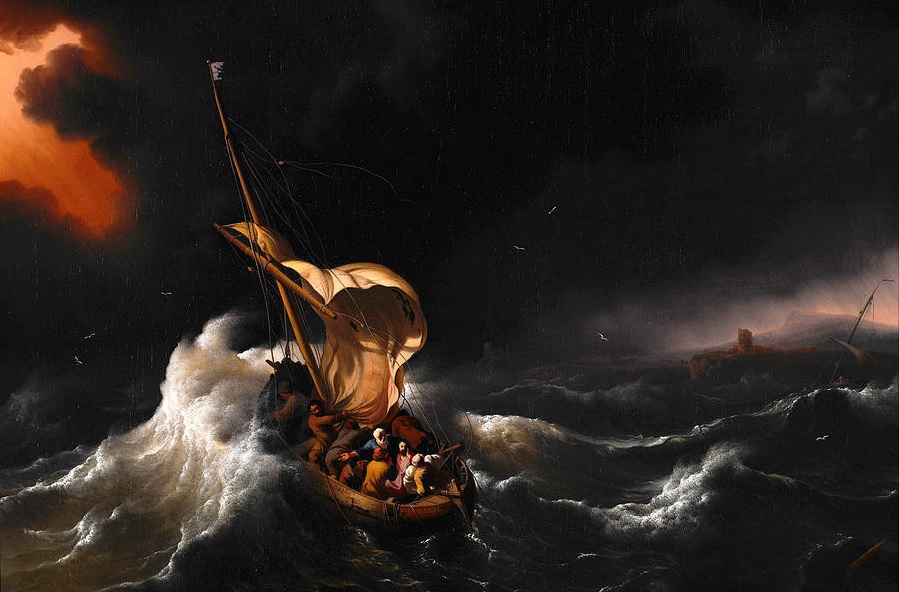
23 As he boarded the boat, his students followed him. 24 And look! The sea became severely agitated so the boat dipped into the waves, but he was sleeping. 25 They came and roused him saying, “Lord, save us! We’re perishing.” 26 He says to them, “Why are you fearful, trusting so little?” Then, rising up, he told off the winds and the sea. It settled to a great calm. 27 The people were astonished saying, “What kind of person is this, that even the winds and the sea obey him?”

What kind of person indeed! In the ancient world, the sea was outside the boundaries of the nations, beyond human control. Matthew’s point is that Jesus has authority over the natural world, even the parts that are unruly and unruled. Continue reading “When your life is threatened (Matthew 8:23-27)”

The homeless king (Matthew 8:20)

When his people are homeless, the Saviour is homeless too.

Open Matthew 8:19-20.

Matthew tells us that people had begun to recognize Jesus’ authority (7:29; 8:9). The king walked among his people, freeing them from their oppression (8:16). He bore their weakness, their dis-ease (8:17).

He was a homeless king (8:20). Ever heard of such a thing? He chose to be homeless as he moved among his people, identifying with them. In a sense, his people were homeless too. They had lost their homeland to foreign powers long ago. When Babylon invaded, so many died trying to defend Jerusalem they couldn’t bury them all, so their dead bodies became food for the birds of the air and the beasts of the earth (Jeremiah 7:33; 19:7). The birds and the beasts had homes, while God’s people did not. Continue reading “The homeless king (Matthew 8:20)”

Jesus, the son of man (Matthew 8:20)

In calling himself “the son of man” Jesus contrasts his vocation with what’s inhumane.

Open Matthew 8:19-20.

So why did Jesus call himself the son of man more than eighty times in the New Testament? Here’s the first one:

Matthew 8:19 – 20 (my translation)
19
One of the scribes approached and said to him, “Teacher, I will follow you wherever go. 20 Jesus says to him, “The foxes have dens, and the birds of the heavens have roosts, but the son of man has nowhere he could rest his head.”

In Ezekiel, son of man meant the human servant of Lord YHWH, after Israel had fallen. In Daniel, the Ancient Ruler promised to take the kingdom from the beasts and give it to someone like a son of man. The beasts were still ruling when Jesus was born, so he received the commission given to Adam: to subdue the earth and rule over it as the representative of the divine sovereign. Jesus was to be a son of man in the face of the beasts. Continue reading “Jesus, the son of man (Matthew 8:20)”

Son of Man in Ezekiel

Why did God refer to Ezekiel as “son of man” 93 times? Is there any similarity between Jesus’ ministry and Ezekiel’s?

Open Ezekiel 2.

The Book of Ezekiel opens in devastation. Ezekiel the priest (a son of Aaron), Jehoiachin the king (a son of David) and the other exiles (sons of Israel) sit by the waters of Babylon. Everything has fallen apart. All the progress towards restoring the earth under YHWH’s rule has been lost.

Ezekiel isn’t called son of Aaron, for the holy temple is defiled and destroyed. He isn’t called son of Israel, for the nation established at Sinai no longer exists. He isn’t called son of Abraham: Abraham left Chaldea for God’s land, but the Chaldeans have taken God’s land. God addresses Ezekiel merely as son of Adam, or son of man (since the Hebrew word adam means man.) Continue reading “Son of Man in Ezekiel”

Son of Man in Daniel

What does ‘son of man’ mean in Daniel 7? Does this help us understand why Jesus used ‘son of man’ to describe himself?

Open Daniel 7.

Daniel 7:13–14 (ESV)
13 “I saw in the night visions,
and behold, with the clouds of heaven there came one like a son of man,
and he came to the Ancient of Days and was presented before him.
14 And to him was given dominion and glory and a kingdom,
that all peoples, nations, and languages should serve him;
his dominion is an everlasting dominion, which shall not pass away,
and his kingdom one that shall not be destroyed.

Was Jesus alluding to this text when he called himself Son of Man more than 80 times? Was Jesus claiming to be the promised Messiah who would restore God’s reign?

There is a connection, but it isn’t quite that simple. If you make a messianic leap without first understanding the richness of the Old Testament texts, the story falls apart. Ask: Continue reading “Son of Man in Daniel”

The decision moment with Jesus (Matthew 8:18-22)

There’s a disconnect between the way Jesus called people to discipleship and the way we do it.

Open Matthew 8:18-22.

Jesus had great sensitivity to people. Especially hurting people. But some of the language he used for gospel invitations would make you cringe.

Like, “teach people to obey my commands” (Matthew 28:19). People don’t like being commanded; they like to make their own decisions. Surely we’d be more successful if we just asked them to invite Jesus into their hearts, for a personal makeover.

There was this scribe who came up to Jesus and said, “Teacher, I’ll follow you wherever you go” (8:19). How good is that? Scribes didn’t do that. They knew the Old Testament intimately, but they often weren’t keen on Jesus. So here’s a guy making a well-informed commitment to follow Jesus, wherever it takes him. Most pastors would be over the moon to have this guy’s response.

But Jesus pushes back. Effectively, he says, “You don’t realize what you’re committing yourself to. I don’t think you’ve got what it takes. Go away and reconsider” (compare 8:20). Ouch. Not great technique?

It gets worse. Continue reading “The decision moment with Jesus (Matthew 8:18-22)”

Jesus the healer (Matthew 8:14-17)

What kind of ruler rectifies evil by curing his people?

Open Matthew 8:14-17.

We’ve seen how factions of the church respond differently to the healing stories in the Gospels, and we raised the question of whether the gospel of the kingdom can bring us together. Let’s read this through the kingdom lens: Continue reading “Jesus the healer (Matthew 8:14-17)”