The world is God’s kingdom (podcast) (Genesis 1–11)

If you grew up thinking of the Bible’s opening chapters as a collection of disconnected stories (a creation, a fall, a murder, a flood, a Babel tower), you need to hear this podcast (38 minutes).

The first eleven chapters of Genesis set up the plotline for the Bible’s whole narrative. The intrigue of this story puts a Gresham novel in the shade.


Previous podcasts:

For related posts on Genesis 1-11, see the Scripture Index.

Sword of the Spirit (Ephesians 6:17)

The Spirit’s sword isn’t for cutting people down; it’s for cutting them free.

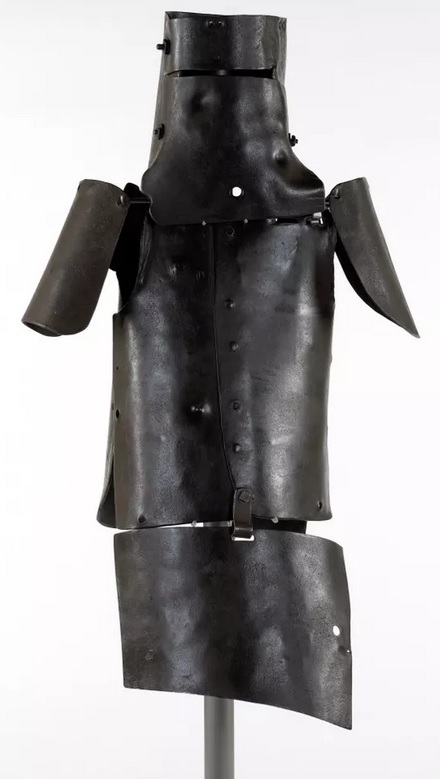
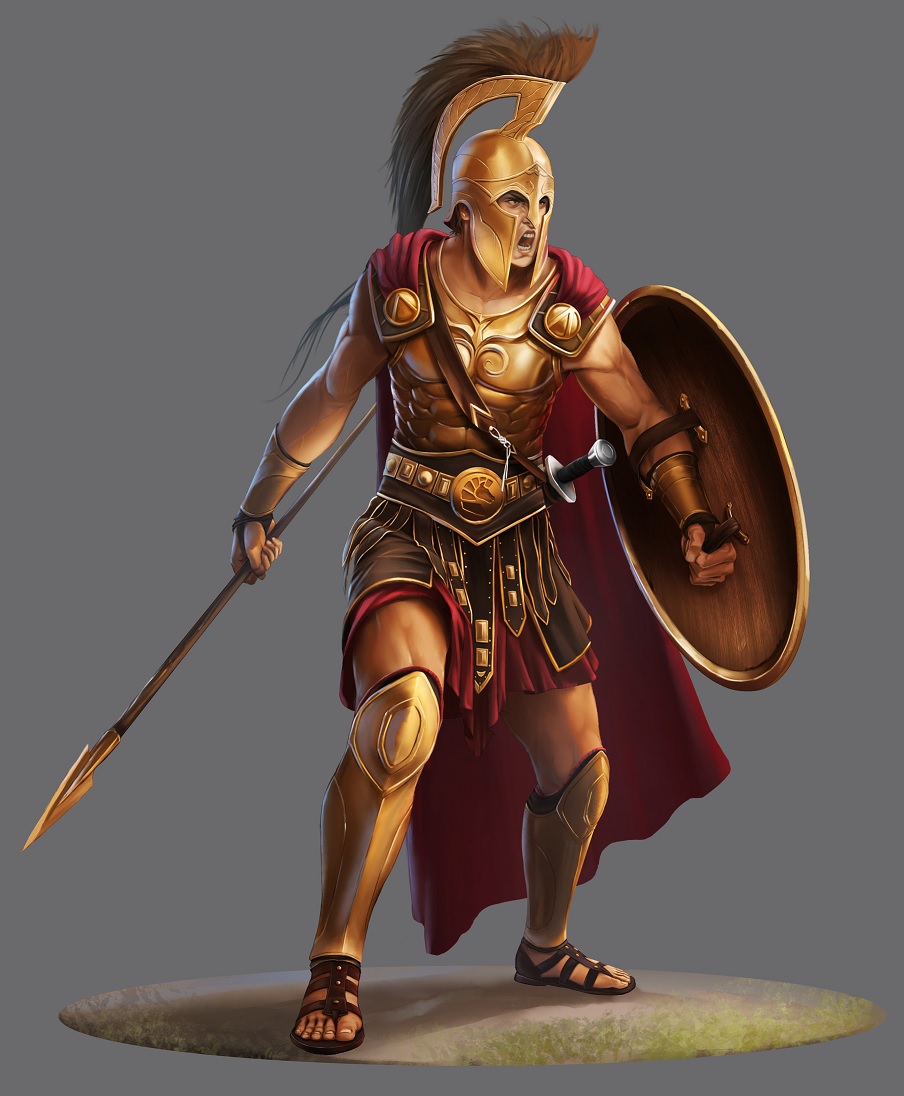
The final piece of armour is the sword of the Spirit. It’s described as the word of God, so some of us have thought of it as the Bible. That’s not how the Ephesians would have understood it when they received this letter: they didn’t have Bibles.

The word of God is everything our heavenly sovereign decrees for his earthly realm. What God declares is a sword because cuts it through any opposing force. Continue reading “Sword of the Spirit (Ephesians 6:17)”

Using God’s armour (Ephesians 6:13-17)

How does God’s armour help us survive?

The final section of the Ephesian letter explains how we’re to live as the kingdom of God in a world where not everyone recognizes Jesus’ kingship yet. Those who claim to have power don’t relinquish it easily, so it’s a volatile conflict. That’s why we need armour. Continue reading “Using God’s armour (Ephesians 6:13-17)”

When did God wear armour? (Ephesians 6:11)

Armour of God? When did he wear it?

The armour of God: something God provides for us, or something God himself wears?

Isaiah 59:17 describes the Lord putting it on:
He put on righteousness as his breastplate,
and the helmet of salvation on his head.

When did God put armour on? Understanding how God used it might help us to use it too.

Continue reading “When did God wear armour? (Ephesians 6:11)”

The armour of God (Ephesians 6:10-17)

How useful is this old armour? Depends who you’re fighting.

Defence is a big deal. Globally, we think it’s worth $1.8 trillion dollars each year.

When Christians talk about putting on a breastplate and helmet, taking up a sword and shield, it sounds pretty lame against piloted drones and guided missiles. Do you think technology is wiping out Christianity?

Truth is, the Christians’ armour would have sounded lame in the first century too. Rome was the superpower of their world, and the Romans soldiers were legendary at supporting Caesar’s reign. For any community to support another king was suicidal.

Yet, Christians were openly proclaiming that God had set someone else on the throne, “far above all rule and authority, power and dominion, and every name that is invoked” including Caesar’s (Ephesians 1:21). The gospel — the good news that Jesus is Lord and reigns over all nations — placed Christians at loggerheads with the existing authorities. Caesar also described himself as good news for the world, its lord, and saviour of its people.

Continue reading “The armour of God (Ephesians 6:10-17)”

Shaking the chains at Philippi (podcast) (Acts 16:16-40)

While you’re keeping healthy at home, here’s some good news. You can now find a podcast here each weekend.

These podcasts reframe familiar Bible passages as stories of the kingdom. Here’s the first one.

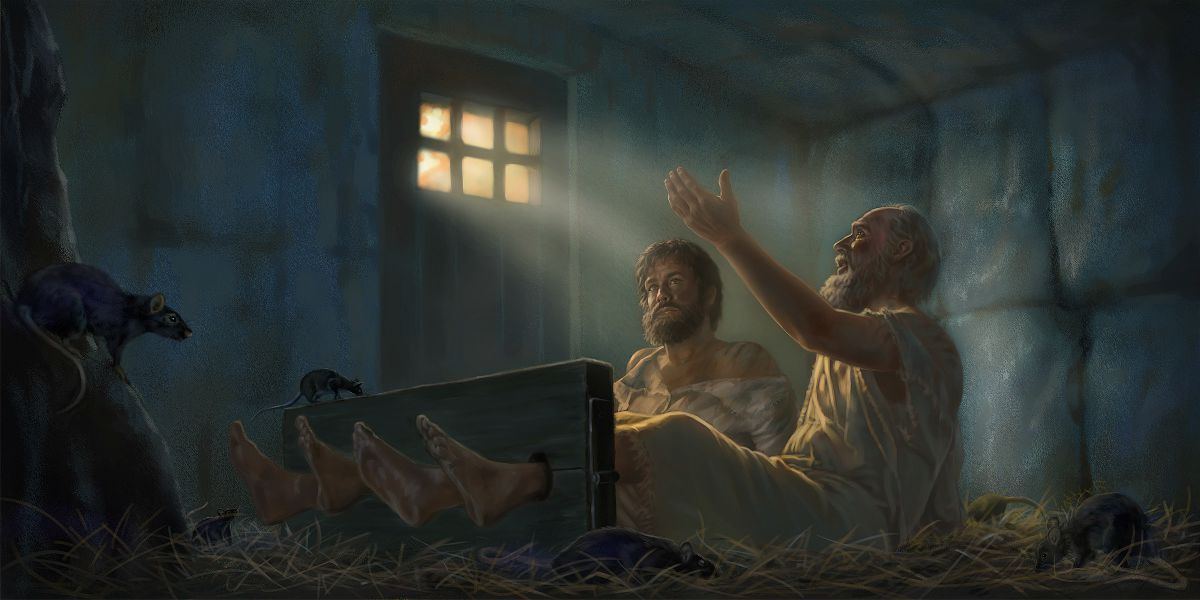
Remember that time Paul and Silas were singing at midnight and their chains fell off? What does that mean to you?

This podcast (18 minutes) describes the event as a clash of kingdoms.


Next podcast: Why I’m seeking the kingdom

Kingdom lifestyle: submitting to each other (Ephesians 5:21)

The gospel calls us into an alternative world.

Some of my friends struggle with “Submit to each other” (Ephesians 5:21). So many people have been subjected to abuse, humiliation, and injustice that subjecting them to anything further feels like more grief.

Other friends find submission natural. God is the authority, with all authorities under him, so of course Christians must be submissive.

How do you feel about this command? Continue reading “Kingdom lifestyle: submitting to each other (Ephesians 5:21)”

Fear of Christ? (Ephesians 5:21)

Is he scary?

Fear of Christ is a phrase found just once (Ephesians 5:21). It’s the generic word for fear (phobos). Many translations render it as “reverence” or “respect”, but that isn’t strong enough. In a kingdom perspective, fear of Christ displaces every fear.

Continue reading “Fear of Christ? (Ephesians 5:21)”

Happiness without harm (Ephesians 5:15-20)

When do you feel alive? I can understand people wanting to use substances to drown their sorrows, but sorrows turn out to be good swimmers.

If you’re looking for an alternative way to come alive, how about this:
Do not get drunk on wine … Instead, be filled with the Spirit.

This isn’t random advice. It’s part of a bigger story of how people who feel like the walking dead can come alive in our resurrected king (Ephesians 2:1-5).

The one thing that overpowers our pain is the life-generating work of the Holy Spirit bringing us to life in Christ. He’s establishing a whole new society where our feelings of alienation are replaced with the music of life — Spirit-inspired songs of gratitude for the rescue that’s underway, the restoration of humanity in the leader God has given us.

So, c’mon: God is calling us to let go of the brokenness and participate in being truly human together:

Ephesians 5:15–20 (NIV)
15 Be very careful, then, how you live—not as unwise but as wise, 16 making the most of every opportunity, because the days are evil. 17 Therefore do not be foolish, but understand what the Lord’s will is. 18 Do not get drunk on wine, which leads to debauchery. Instead, be filled with the Spirit, 19 speaking to one another with psalms, hymns, and songs from the Spirit. Sing and make music from your heart to the Lord, 20 always giving thanks to God the Father for everything, in the name of our Lord Jesus Christ.

Why raise this contrast at this point of the book? Why wine specifically? Is there anything in the Bible’s larger narrative that would suggest this contrast.

Continue reading “Happiness without harm (Ephesians 5:15-20)”

The gospel call (Ephesians 5:14-20)

How do we issue the gospel invitation? We agree the gospel is important, but we have different ways to get people to respond. Should we follow Billy Graham’s approach, inviting people to respond to an altar call to be saved?

What’s niggling me is that the New Testament letters tell us nothing of how to issue this important call. They seem to think the call comes from God. Continue reading “The gospel call (Ephesians 5:14-20)”

Who is the sleeper? (Ephesians 5:14)

Hint: it’s more than an individual.

What does this mean?

Ephesians 5 14 This is why it is said: “Wake up, sleeper, rise from the dead, and Christ will shine on you.” (NIV)

It’s not an Old Testament quotation. Was it a baptismal formula, something early churches said as they laid someone back in the water and raised them up in the Lord? That’s an attractive idea but it doesn’t really work: you is plural, even though sleeper is singular. It seems the sleeper is a corporate entity, not a baptismal candidate.

While not a direct quote, it could be a distillation of Isaiah’s extensive imagery of light and dark (Isaiah 54–62).

Continue reading “Who is the sleeper? (Ephesians 5:14)”

The kingdom of Christ and God (Ephesians 5:5-7)

Making sense of this unique phrase.

Do you read this as a warning that you might not go to heaven?

Ephesians 5 5 For of this you can be sure: No immoral, impure or greedy person — such a person is an idolater — has any inheritance in the kingdom of Christ and of God. (NIV)

It didn’t mention heaven. Readers substitute heaven because that’s how kingdom of God has been understood. But the Bible’s narrative isn’t about us going to heaven; it’s about God’s kingship being restored to earth.

We’ll take it phrase by phrase, but first the backstory: the Bible’s narrative of the kingdom of God. Continue reading “The kingdom of Christ and God (Ephesians 5:5-7)”

Sex and power (Ephesians 5:1–5)

How you love tells us how you use power.

Language expresses culture. Abusive language rises in a culture of abuse. “F. you” is so common that we no longer hear it as a curse, wishing sexual abuse on someone.

Four-letter words are the language of power and humiliation — a graphic verbal image of the powerful forcing themselves on the humiliated. It’s a snapshot of what’s wrong with the world, the culture of injustice.

There’s a world of difference between genuine love and screwing people over. Continue reading “Sex and power (Ephesians 5:1–5)”

The scent of your words (Ephesians 4:29 – 5:2)

What we say reveals who we’re speaking for.

Want peace on earth? There’s a message that can deliver it. No, it’s not “Everybody try harder!” It’s the announcement that the hostilities are over because God has rescued humanity from the warring factions of evil, into the reign of his anointed. That’s the good news of salvation.

Words matter. Continue reading “The scent of your words (Ephesians 4:29 – 5:2)”

Thieves vs philanthropists (Ephesians 4:28)

Game’s on. Who’ll win?

Ever been robbed? You come home to a broken window and the realization that someone has been in your space. They’ve taken your stuff — some of it irreplaceable, like that ring that belonged to your Mum.

The thief doesn’t care about you, or your Mum, or how your children will sleep after the intrusion. For the thief, you’re not human; you’re just your stuff. Continue reading “Thieves vs philanthropists (Ephesians 4:28)”

No place for the devil (Ephesians 4:27)

Let the right one in.

Do not give the devil a place (Ephesians 4:27).

Three questions, but first a clarification. One translation says not to give the devil a “foothold.” That’s a very odd image, as if the devil is climbing up a rock face. The word is topos, a generic word for place.

So:

  1. Who is the devil?
  2. What kind of place does the devil want?
  3. How do we avoid giving the devil a place?

Continue reading “No place for the devil (Ephesians 4:27)”