A rock worth building on (Matthew 7:24-27)

Life is precious. How do you decide how to spend it?

StGeorgeMonastery
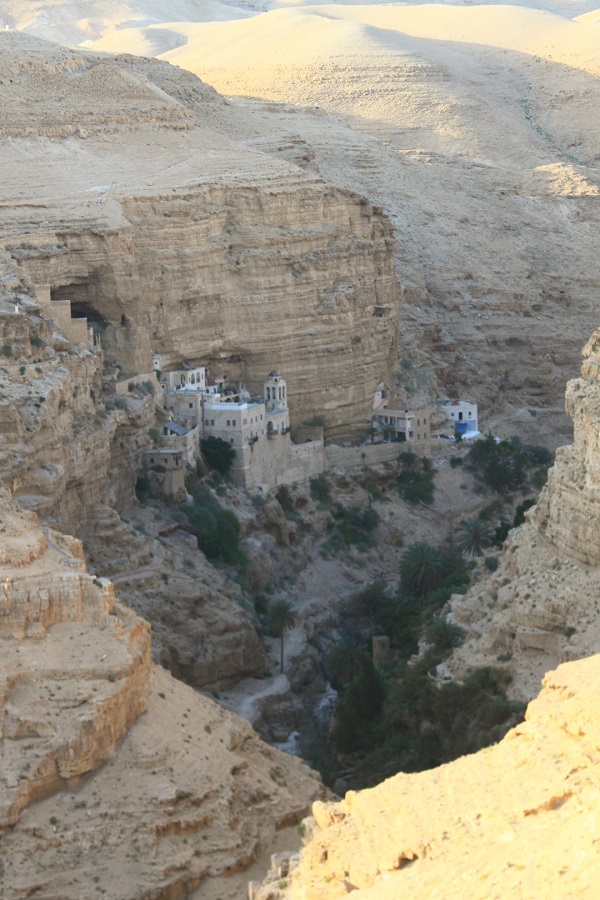
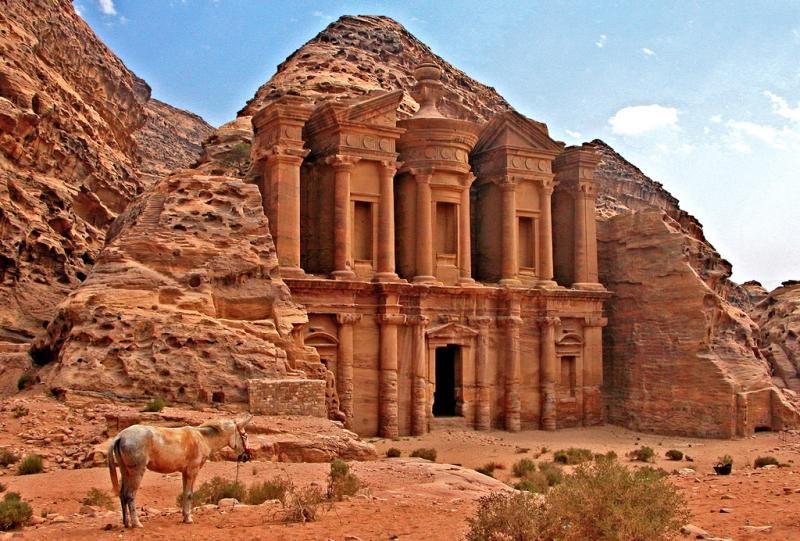
St George’s Monastery in the wilderness of Judea. Built into the rock in the fourth century.

Open Matthew 7:24-27.

A friend has some health challenges. “Got me thinking,” he told me over the weekend. “If I only had 5 years left, would I be satisfied with how I’ve spent my life?” He’s a clever bloke who has lots of things on the go. He’s decided to simplify, to get rid of most of his activities and concentrate on what matters. Continue reading “A rock worth building on (Matthew 7:24-27)”

Acknowledging Jesus as Lord (Matthew 7:21-23)

What does it mean to call Jesus, “Lord”?

Open Matthew 7:21-23.

Matthew 7:21-23 (my translation):
21 Not all who call me “Lord! Lord!” will be part of heaven’s kingdom — only those who do what my Father wants. 22 There’ll be many who say to me at that time, “Lord! Lord! Didn’t we use your authority to speak for God? Didn’t we use your authority to cast out demons? Didn’t we use your authority to do many powerful things?” 23 Then I will confess to them, “But I never recognized you. Take your leave from me, you agents of lawlessness.”

The Good News of the kingdom is that Jesus is Lord. Sin and death no longer enslave humanity; our heavenly Father has brought us back under his reign through his appointed ruler, Jesus our Lord. Peter’s gospel was, “God has made him both Lord and Messiah” (Acts 2:36). Paul called people to “confess with your mouth that Jesus is Lord” (Romans 10:9). The hope of the world is that “every tongue confesses Jesus the Messiah is Lord” (Philippians 2:11). He is “King of kings and Lord of lords” (Revelation 19:16).

We’re a quarter of the way through Matthew’s account of the Good News, and this is the first time he has applied the word Lord (κύριος) to Jesus. Jesus is not exercising power the way kingdoms normally do: he has not been running around Galilee demanding that everyone call him Lord. Continue reading “Acknowledging Jesus as Lord (Matthew 7:21-23)”

The produce defines the tree (Matthew 7:15-20)

Jesus’ words are so relevant in a world where media gives rise to hero worship.

Open Matthew 7:15-20.

Matthew 7:15-20 (my translation)
15 Watch out for those who claim to speak for God but don’t. They present themselves as sheep following God, but they’re viscous wolves inside. 16 You’ll recognize them by what they produce. People can’t get grapes from thornbushes, or figs from thistles. 17 Every good tree makes good fruit; but a worthless tree makes degenerate fruit. 18 A good tree cannot make degenerate fruit, and a worthless tree cannot make good fruit.
19 Every tree that doesn’t make good fruit is cut down for firewood. 20 You can certainly recognize them by their fruit.

What does this have to do with Jesus’ kingdom message? Because we treat religion and politics as unrelated categories, we miss what Jesus meant about false prophets. Jesus’ kingdom message is a threat to those who want power. Conversely, those who want power want to conscript God to affirm their leadership. False prophets are those who affirm false powers — rulers other than Jesus.

Continue reading “The produce defines the tree (Matthew 7:15-20)”

The less obvious way (Matthew 7:13-14)

The narrow way is counter-intuitive for those who want power.

Open Matthew 7:13-14.

Matthew 7:13-14 (my translation)
13 Enter through the narrow gate, for wide is the gate and broad is the way that leads to destruction; many go that way. 14 How narrow is the constricted gate, the way leading into life; few are those who find it.

Many today assume these verses are about the doors to heaven and hell. According to this interpretation, only a few people find the way to heaven and the majority are doomed to hell. But that isn’t Jesus’ message. He’s talking about the kingdom of God — heaven reigning over earth, in contrast with the usual way that kingdoms operate here on earth. The wide way that everyone travels is the way kingdoms normally operate, and Jesus is calling us to recognize another less obvious way: the way of the kingdom of God.

Continue reading “The less obvious way (Matthew 7:13-14)”

Knocking on heaven’s door (Matthew 7:7-11)

Jesus said ordinary people like us can invite God’s kingship to earth. Shall we?

Open Matthew 7:7-11.

The first lie ever told about God was that he was holding out on us (Genesis 3:5). The sovereign had honoured his creatures by inviting them into his palace garden, giving them access to everything he provided. He reserved for himself the right to decide good and evil for his creatures. Instead of respecting our sovereign, humans grasped at the power in his hands, acting as if we were gods. All the murder, all the social devastation, all the violence in the world flows from people grasping power that should be in God’s hands.

What difference would it make if people asked God to rule over us again? What would happen if together we sought his kingship? What if we knocked on heaven’s door and invited our sovereign to reign over earth again? Ask. Seek. Knock. According to Jesus, our true ruler would respond to such an invitation (7:7). Continue reading “Knocking on heaven’s door (Matthew 7:7-11)”

Careful how you judge (Matthew 7:1-6)

How you judge Jesus determines how you judge others.

Open Matthew 7:1-6.

Before being judgemental of others, judge yourself. Jesus’ teaching is as relevant as the day he first gave it.

But there’s more going on here. Why did Jesus need to say this? Who did he have in mind? Why did his followers need to be aware of this? And who are the “dogs” and “swine” Jesus warned about?

As always, we need to ask what it meant for them before we ask what it means for us. Otherwise we’re likely to apply this text in inappropriate ways (e.g. to undermine investigative journalists). Continue reading “Careful how you judge (Matthew 7:1-6)”

Final reflections: Israel tour

Ponder what we’ve seen in the last two and a half weeks.

As you read this, the tour group from Riverview are probably on a plane flying back to Australia. We’re reflecting on what it’s meant to visit key places in Israel and Jordan where so many significant events in Biblical narrative played out.

Next week this blog returns to normal — seeking to understand the Gospel of Matthew from the perspective of the kingdom of God, Jesus central lens.

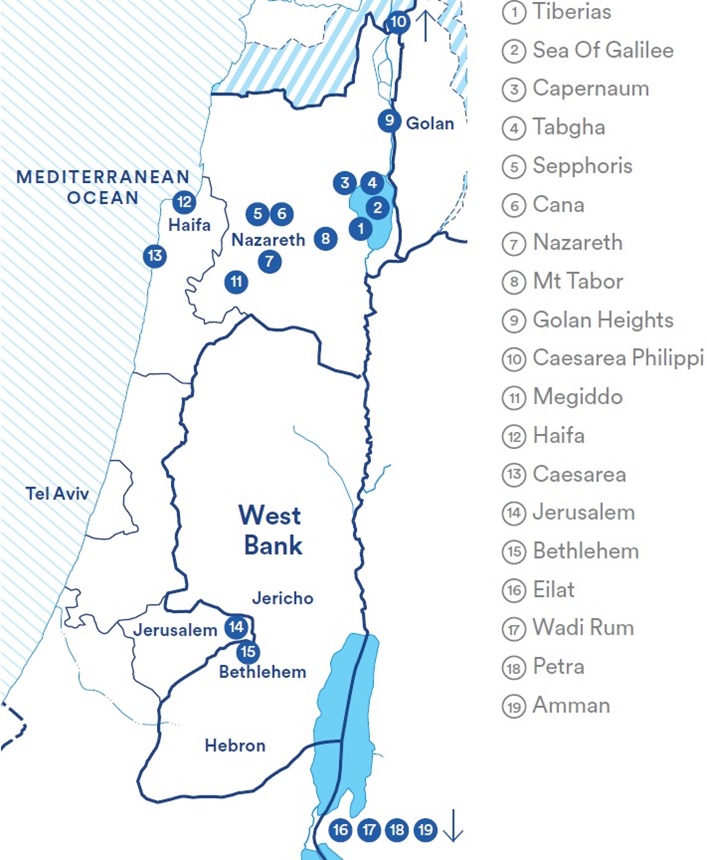
IsraelTour2017_Map

Transjordan and Mount Nebo

Moses was unable to lead Israel into Canaan, but he glimpsed the land from Mount Nebo east of the Jordan River.

Tomorrow we travel through ancient Moab, originally descended from Lot (Genesis 19:37). The Moabites tried to prevent Israel entering the Promised Land. They hired Balaam to curse Israel. When that failed, they beguiled the Israelites to turn from God (Numbers 22 – 25). Nevertheless, Ruth from Moab became David’s great-grandmother (Ruth). Continue reading “Transjordan and Mount Nebo”

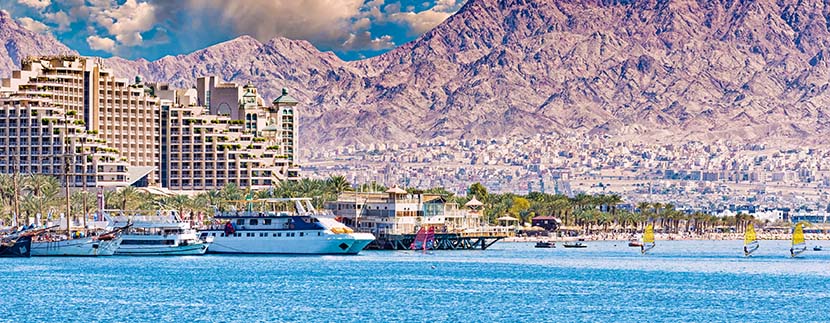
Eilat, Wadi Rum

We cross into Jordan to journey northwards on the eastern side of the Salt Sea — the route Moses took when leading Israel to Canaan shortly before his death.

A wadi is a streambed that flows only in the rainy season. At the end of the Sermon on the Mount, Jesus warned about the foolish person who built his house on the sand rather than on rocky terrain. Then when the rains came, the house on the sandy floor of the wadi didn’t survive. Jesus’ way isn’t the easiest, but it is the most enduring for those willing to follow (Matthew 5:24-27). Continue reading “Eilat, Wadi Rum”

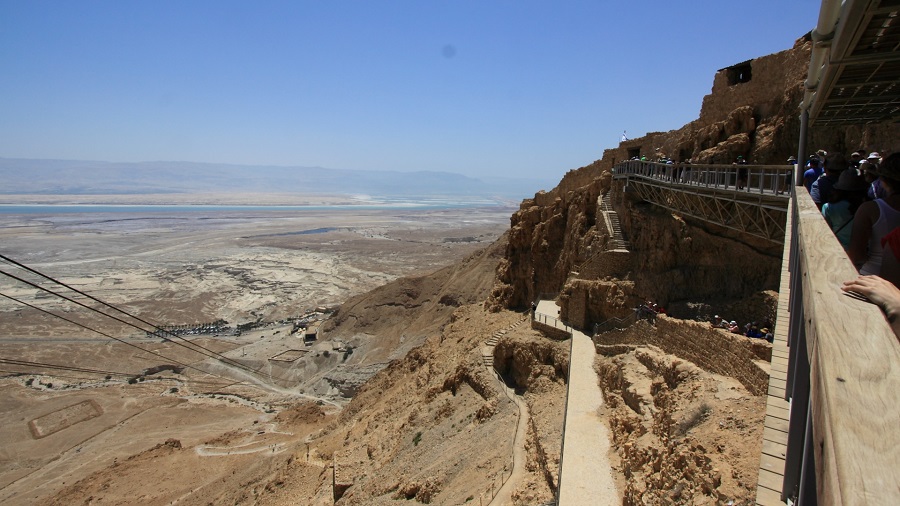
Qumran, Masada, Dead Sea

The Judean Wilderness beside the Salt Sea reveals how Jews tried to keep their history alive when Rome invaded in AD 70.

In the dry and rugged terrain of the Judean wilderness, it’s not hard to see why David would have taken advantage of the spring at Ein-Gedi while hiding out from Saul (1 Samuel 23:29).

Jesus was baptized by John in “the wilderness of Judea” (Matthew 3:1) at “Bethany beyond Jordan” (John 1:28). While we’re not sure where that was, it sounds like the Jordanian side of the Jordan, opposite the Judean wilderness, perhaps across from Qurman. (Others have wondered if it may have been further north, just a few kilometres south of the Sea of Galilee.)

The Dead Sea Scrolls were discovered in the caves at Qumran. The Qumran community thought the Jerusalem temple leaders were irredeemably corrupt, so God had called them to be his holy place. Here in the wilderness they saw themselves as a voice calling Israel back to holiness (Isaiah 40:3). They used a miqveh (ritual bath) for cleansing. There are some interesting parallels with John the Baptizer (though there’s no evidence he was an Essene). John used the same text from Isaiah to describe his ministry, and baptized to cleanse people for the Lord’s arrival (Matthew 3 || Mark 1:1-11 || Luke 3:1-22). Offering cleansing in the wilderness apart from the temple was potentially explosive for the son of a priest (Luke 1:5). Continue reading “Qumran, Masada, Dead Sea”

The temple area (Jerusalem)

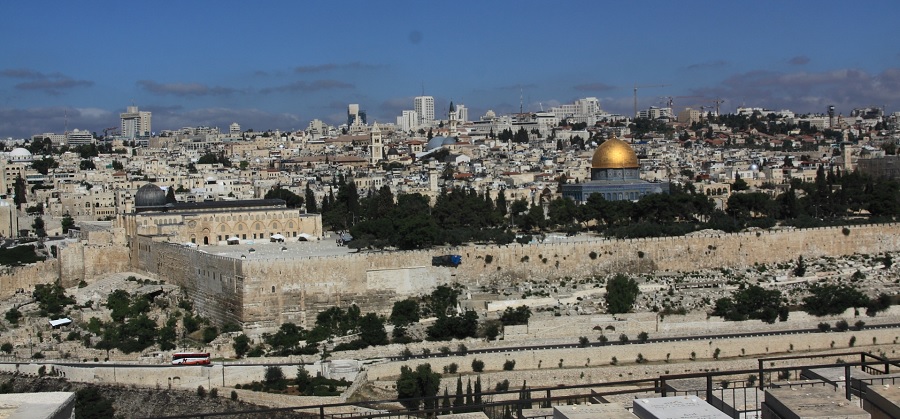
Half the world’s population consider the temple area in Jerusalem to be one of the holiest places on earth.

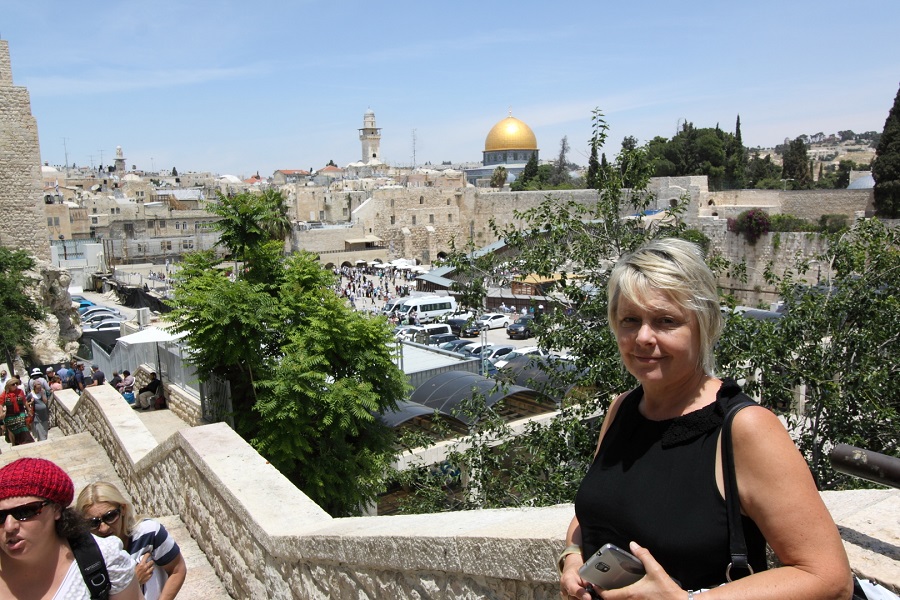
The old city walls we see in Jerusalem today were built by Sultan Suleiman in the 1500s. The only remains of the temple complex are the foundation stones of the Western Wall (previously the Wailing Wall). Please respect this area as a place of prayer. It’s as close as you can get to what was the Most Holy Place—the place of God’s abode on earth in Old Testament times. Here you will see Jewish people with a wide range of beliefs. Some may wear phylacteries—literally tying Scripture to their foreheads (Deuteronomy 6:8). You will see written prayers pressed into the spaces between the stones. Continue reading “The temple area (Jerusalem)”

Sabbath in Jerusalem

In Hebrew, Friday is called “Preparation.” Jewish families do the necessary preparation to avoid working once Sabbat begins at sunset.

Tomorrow is Sabbath in Jerusalem. Consider taking time to rest, to read, to ponder, discuss, and to assimilate what you have seen and heard in the last ten days. You may like to read some of the Psalms that celebrated Jerusalem as God’s dwelling place in Old Testament times (Psalms 26, 41, 42, 48, 75, 84, 87, 95, 125, 127, 133, 134, 137, 137, 146, 147. 150). Continue reading “Sabbath in Jerusalem”

Bethlehem, birthplace of the king

King David was born in Bethlehem, as was his most famous descendant — Jesus.

Jericho was Israel’s first victory in capturing the Promised Land. Its protective walls fell (Joshua 6). It was also where Jesus healed a blind beggar and invited himself to Zacchaeus’ house (Luke 18:35 – 19:10). Jericho was his last stop on his final journey to Jerusalem.

At the start of his ministry, Jesus had faced the tempter in the Judean wilderness. From a high mountain he had been offered all the kingdoms of the world (Matthew 4:1, 8). We can’t be sure where this mountain was, or if it should be understood as a visionary experience. The crucial thing was that Jesus was tempted to collude with evil, but chose a much more difficult path by which he was given “all the kingdoms of the world and their glory” — the path of the cross.

Bethlehem today is in Palestine. Rachel was buried here (Genesis 35:19). But it’s real importance was as the birthplace of King David (1 Samuel 16:1-13). God promised David that his son would always reign (2 Samuel 7:12-16), so all the kings of Judah were descendants of David of Bethlehem. Continue reading “Bethlehem, birthplace of the king”

Old Jerusalem

For 3,000 years, what happened in Jerusalem has impacted the rest of the world.

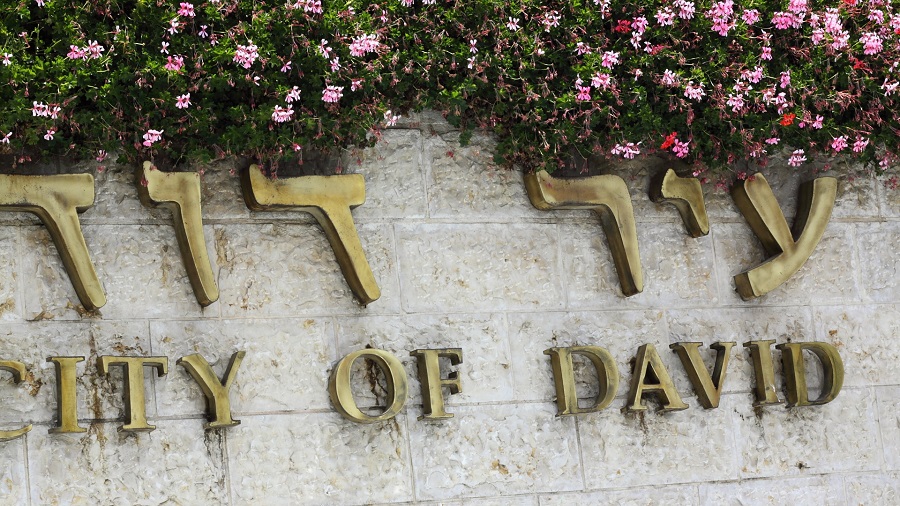
1000 years before Christ, King David’s army captured the hilltop fortress of the Jebusites and converted it into “the city of David.” He repaired the supporting terraces (“millo”), fortifying the city to make Jerusalem Israel’s capital (2 Samuel 5:1-12 || 1 Chronicles 11:4-9). There Solomon built the temple on Mount Zion (1 Kings 5–7 || 2 Chronicles 3–7). Continue reading “Old Jerusalem”

The passion (Jerusalem)

We’re about to enter Jerusalem, focusing on the last hours of Jesus’ life.

For months, Jesus planned his final return to Jerusalem (Luke 9:51). He arrived like a king to accolades of the crowd (Matthew 21:1-9 || Mark 11:1-10 || Luke 19:29-38 || John 12:12-15). He entered from the east (across the Kidron Valley coming down from the Mount of Olives). For the crowds, it recalled the time when David himself had returned to Jerusalem to resume his kingship after Absalom’s rebellion (2 Samuel 19:15; 20:2). Continue reading “The passion (Jerusalem)”

Megiddo, Haifa, Caesarea

The beautiful Jezreel Valley in central Israel has some important history.

That bump on the map of Israel’s coast is where Mount Carmel meets the sea. It’s a ridge around 10 kilometres long, with the modern city of Haifa to the north, and the verdant Jezreel Valley to the east. This is where Elijah called down fire from heaven to show King Ahab and Queen Jezebel that there was only one true God who ruled Israel (1 Kings 18). From the top of Mount Carmel you can see the hills of Nazareth in the distance. Continue reading “Megiddo, Haifa, Caesarea”

Sepphoris, Cana, Nazareth, Mt Tabor

Visit the hills of Galilee with us.

Pilgrims like us have been visiting Galilee for so long, that all sorts of traditions have developed. Based on the New Testament, we have no idea who Mary’s mother was, or where she came from. We don’t know where the angel spoke to Mary: the tradition that it was by the well probably reflects an expectation that that’s what women did. There’s a long-standing tradition that Mount Tabor was the “high mountain” where Jesus was transfigured (Mark 9:2) but that’s unlikely: there was a Roman garrison stationed on top of that mountain in the first century. The Gospels just weren’t that specific about these details. Southwest of Tabor is Nain where Jesus raised a widow’s son back to life (Luke 7:11-17).

Jesus’ first miracle was providing wine for an embarrassed couple at Cana (John 2:1-12). Six stone jars, each holding 75–115 litres equates to 600–900 bottles of wine! That’s quite a party! The groom was responsible for the wine, but why did Jesus tell his Mother that his time hadn’t come yet (2:4)? Jesus also healed the son of a royal official here (John 4:46-54). It was Nathanael’s home (John 21:2). Continue reading “Sepphoris, Cana, Nazareth, Mt Tabor”

Caesarea Philippi and the Golan Heights

This was where Jesus asked his disciples about his identity.

Caesarea Philippi is called Banias (Panias) today, after the Greek god Pan. It’s more than 40 kilometres north of the Sea of Galilee. Jesus took his disciples all that way to get them to ponder his identity. “Who do people say the Son of Man is?” he asked them. And then, “Who do you say I am?” (Matthew 16:13-20 || Mark 8:27-29 || Luke 9:18-20)

Why would Jesus take them to this spot? How would this location cause them to evaluate Jesus in relation to other powers—political, religious, and spiritual? Hopefully it all becomes clear when you see the place. Continue reading “Caesarea Philippi and the Golan Heights”