The drama of God’s gospel

At the heart of history is God’s gospel — the divine decree that restores heaven’s reign over the earth in Jesus Christ our Lord.

Nothing in history is more radical and globally life-changing than the gospel. The good proclamation from heaven — God’s gospel — changes everything on earth.

Before I was born, this proclamation made Elizabeth II queen of the British Empire:

Whereas it hath pleased Almighty God to call to His Mercy our late Sovereign Lord King George the Sixth of Blessed and Glorious memory, by whose Decease the Crown is solely and rightfully come to the High and Mighty Princess Elizabeth Alexandra Mary:
We … do now hereby with one voice and Consent of Tongue and Heart publish and proclaim that the High and Mighty Princess Elizabeth Alexandra Mary is now, by the death of our late Sovereign of happy memory, become Queen Elizabeth the Second …
God save the Queen!

The gospel is this kind of proclamation from God. But it wasn’t a noisy command, just a gentle breath.

Continue reading “The drama of God’s gospel”

Was Judah fit to rule? (Genesis 38)

Why interrupt Joseph’s story with the scandal of Judah and Tamar?

Judah is quite the cad in Genesis 38. But why interrupt the story of Joseph with a scandalous story about Judah?

That’s the puzzle for modern readers. As one of them said, All commentators agree that ch. 38 clearly interrupts the flow of the Joseph story (Hamilton, The Book of Genesis, NICOT, 2:431).

It makes more sense if we listen to the narrator who labelled Genesis 37–50 as the generations of Jacob, not Joseph’s story. Jacob was setting up his family, and he intended Joseph to rule.

But wasn’t Judah supposed to rule? King David descended from Judah. Didn’t Jacob intend the lion from the tribe of Judah to receive the ruler’s sceptre? (49:9-10)

Yes, but let’s not jump there too quickly. There are issues with Judah’s character, issues that call into question whether Judah is fit to rule. Would you trust a leader who would sell his brother into slavery? (37:26). Genesis 38 gives us more reason to question Judah’s character.

Continue reading “Was Judah fit to rule? (Genesis 38)”

Was Joseph meant to rule his brothers? (Genesis 37)

Why did his brothers sell Joseph into slavery?

Genesis is the foundational story of the kingdom of God. It starts with all God’s creatures in the care of his human servants who live in his garden. When they rebel, God sets in motion his plan to bring everything and everyone back under his sovereign care, starting with a prototype kingdom through the family of Abraham, Isaac, and Jacob.

We saw how the different stages of this story are clearly marked by the tô·lē·ḏôṯ formula, the final one being, These are the generations of Jacob. (37:2). Observing these cues helps us avoid twisting the story into our own image.

But why is this Jacob’s story? People usually treat Genesis 37–50 as the story of Joseph. His name is mentioned 151 times, twice as often as Jacob/Israel (73 times). We’ve heard Jacob’s name more frequently in previous chapters (150 times in Genesis 25–36), so why does the narrator say we’ve now reached Jacob’s story?

Continue reading “Was Joseph meant to rule his brothers? (Genesis 37)”

Why is the first book in the Bible called Genesis?

You’ll know how the story fits together if you know why it’s called Genesis.

Genesis is a Greek word (γένεσις) meaning birth, how something came to be, the account of a family.

The Septuagint translators (c. 200 BC) used genesis to translate tô·lē·ḏôṯ — a Hebrew word meaning a record of descendants or successors. The narrator used this word at key points. Watch for it, and you’ll see how the book fits together.

Continue reading “Why is the first book in the Bible called Genesis?”

Interpretating well

The best interpretation of what God says is to be the community he leads.

I don’t have a set of rules to give you for the science of interpreting Scripture. As every writer knows, language is not a science; it’s an artform. Well, lawyers may try to disambiguate every loophole and kill every misinterpretation, but Scripture is more like poetry communicating life. God’s life is the source and sustenance of our life together.

When we communicate, we’re not just sharing information. We’re sharing ourselves. That’s why speaking to a large group is so scary: we feel vulnerable sharing ourselves with so many.

That’s the promise and power of Scripture: God communicates himself with us. The words of life are not in the text; the text leads us to the one who speaks (John 5:39-40).

That’s how Jesus used words: The words I have spoken to you are [my] spirit, [my] life (John 6:63). And, oh my, how vulnerable Jesus felt giving us his life in this chapter!

So, two questions. How did we end up with so many interpretations? How can we do better?

Continue reading “Interpretating well”

Discipleship in Philippians

“All I ask is that you live as his kingdom, honouring the good news that he is king” (Philippians 1:27)

Disciple is a kingdom word. A disciple is literally a trainee, an apprentice. Jesus trained disciples to proclaim the restoration of heaven’s reign arriving in him, sending them out to enact the kingdom.

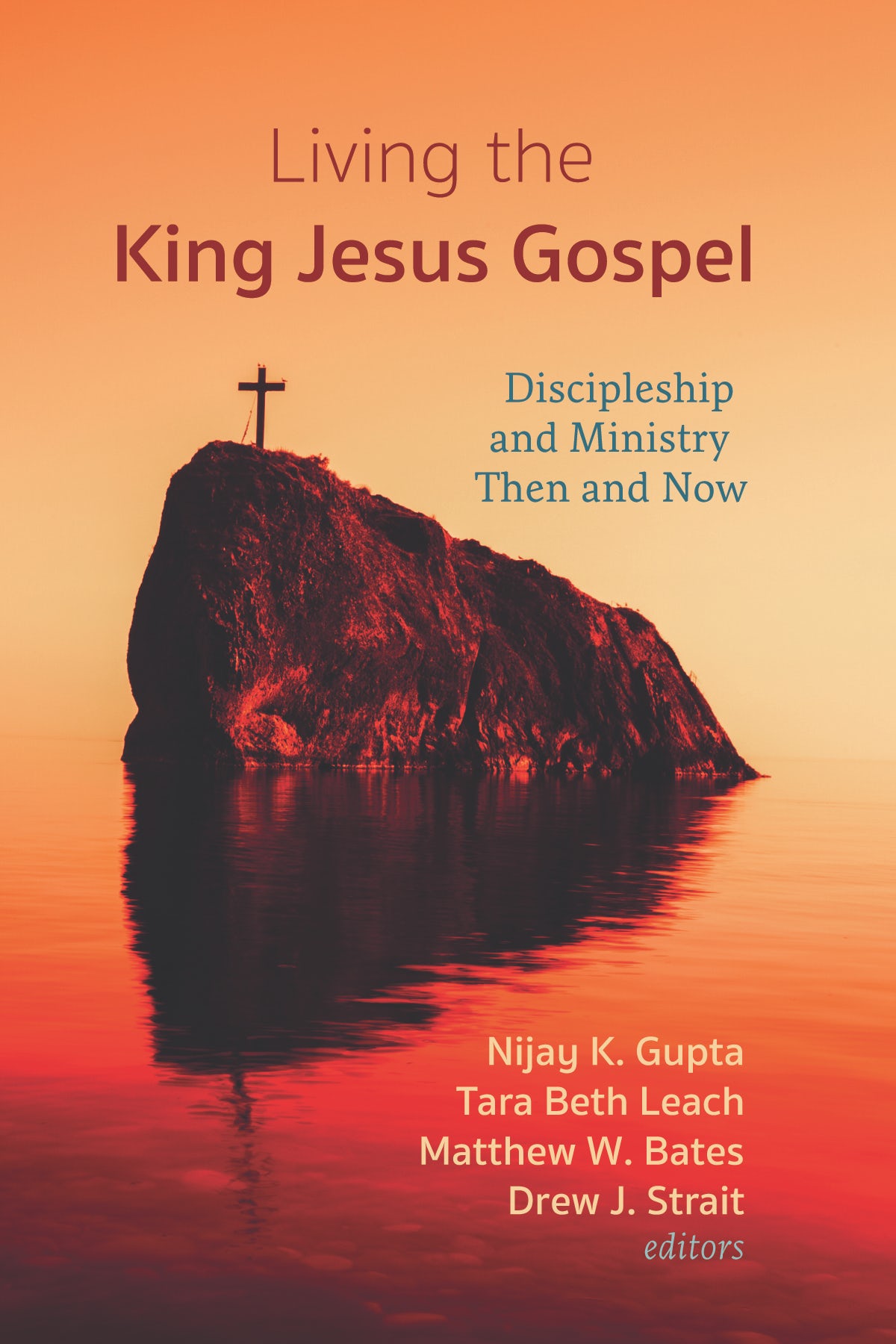
Many books on discipleship don’t start from there, but here’s one that does: Living the King Jesus Gospel: Discipleship and Ministry Then and Now (Cascade Books, 2021). Seventeen pastors and scholars built on Scot McKnight’s work on the kingdom, covering discipleship in the New Testament, in Christian history, and in our shared life today. In this post we’ll just look at Nijay Gupta’s chapter on Philippians.

What would you see as the main theme of Philippians? Joy? Partnership? Jesus’ servant heart and ascension? These themes are present, and Michael Gorman is right to treat 2:5-11 as “Paul’s master story.” (Journal of Theological Interpretation, 1:1-2, 2007, 147– 170).

Nijay Gupta titled his chapter, “Living as Good Citizens of the Gospel Kingdom of Christ according to Philippians.” Why?

Continue reading “Discipleship in Philippians”

Pastoral care case: Genesis 16

Here’s a practical exercise in pastoral care, hearing people in their pain.

Wherever you care for people — family, small groups, churches, counselling — you’ll feel the whole gamut of emotions. Empathy for their pain. Disappointment with how they treat each other. Hope that they’ll sort things out. Powerlessness to sort it out for them.

We’d love to have our churches full of mature people who have the faith of Abraham and Sarah, but sometimes our people feel more like the problem than the solution. So, here’s some honest pastoral encouragement for you. Your clients are Abraham and Sarah, as we meet them in Genesis 16.

They have this amazing call on their lives to establish a kingdom that will bless all nations. Ten years they’ve walked with God in the land of promise, but they still have their old names and they’re struggling to trust God.

We’re shocked to learn that Abram is sleeping with someone who isn’t his wife. Actually, that’s not what happened, and if that’s our judgement we won’t be able to listen to them.

So, here’s your pastoral care exercise. Read Genesis 16 carefully. Observe the three main characters. Identify what they’re feeling, and what they do in response. Jot down your observations.

Sarai: . . . . . . . . . . . .

Abram: . . . . . . . . . . . .

Hagar: . . . . . . . . . . . .

Continue reading “Pastoral care case: Genesis 16”

The incredible worship

Why do churches try to manufacture the presence of God?

This is a passionate plea for churches to review our practices. Aussies can’t see God in what we’re doing at present. While culture doesn’t set our agenda, we’re off mission when we don’t represent God well.

God isn’t visible. That’s why some faiths carve little images to worship. We don’t believe dead timber or stone can represent the living God, so from ancient times people have asked, Where is your God? (Psalm 42:3, 10).

Continue reading “The incredible worship”

The incredible message

The gospel is the one message the church must embody. Why don’t Aussies find it credible?

There was a time when the church held powerful influence in Western society. Bishops were on the chessboard, and in the House of Lords.

Today, Australians have told us they don’t belong under that influence anymore. It’s time to review our belief and practice, to ask if we have misrepresented our God or misused our influence.

Continue reading “The incredible message”

Incredible! What Aussies are saying to the church

Only a minority of Australians now identify as Christians. How does the church respond?


Australian Bureau of Statistics figures for the 2021 census arrived this week. For the first time Christians are less than half the population: just 44%. No, people haven’t switched to other faiths: 39% identify as “no religion.”

What are Aussies saying to the church? I’m hearing values such as these:

Continue reading “Incredible! What Aussies are saying to the church”

The royal law (podcast) (James 2:1-8)


Keep the royal law? Aren’t we under grace? Why would any New Testament book call us to keep the royal law?

The phrase in James 2:8 is literally the law of the king. What king? (Hint: did the writer belong to the royal family?)

What law? Is this something new? Or was it part of the Old Testament law?

James envisages nothing less than the complete restructuring of society. The governance of King Jesus fundamentally changes how humans treat each other, the value we place on each other and how we use the resources God has given us.

In the preceding verses, James spells out exactly what kind of values form the foundation for the kind of community he believed the king had decreed for his kingdom.

This podcast was recorded at the final gathering of Riverview Joondalup, 2022-06-26.

Continue reading “The royal law (podcast) (James 2:1-8)”

The church’s role in the world

What does it look like to be human?

What is our role in the world? In a word, to be human.

That doesn’t work if the church holds a negative view of what it means to be human.

God doesn’t. He addressed Ezekiel as son of man — literally human descendant. Jesus called himself the son of man more than any other term. God is restoring humanity in Christ. That’s why our role in the world is to be human.

What could be more fulfilling? Being human is what we were designed to be.

So, what’s the problem? Humans have chosen another path, wanting to be superhuman. It makes us subhuman, for seeking power over each other destroys our humanity.

That’s the reason Ezekiel was in Babylon. That’s why Jesus was crucified. That’s the problem all the way back to Cain and Abel. It is challenging to live as a humans when others are being beasts.

This podcast (23 minutes) was recorded at Riverview Joondalup 2022-06-19.

Continue reading “The church’s role in the world”

How do you determine religious truth?

How do you decide what you believe? Is it a gut feeling, what sits right with you or a witness of the Spirit? Do you trust your friends, believing as they do? Do you follow a tradition developed over 2000 years? Or do you need to prove it from the Bible as the only inspired revelation?

The way you determine truth reveals a great deal about you and the kind of church you’re likely to belong to. Christians divide over the basis of truth when we consider our way the only way.

Truth is more than I perceive, stretching beyond the horizon I see.

So here’s how I answered this question in another forum this week.

Continue reading “How do you determine religious truth?”

Building for a new Jerusalem (Nehemiah 5) (podcast)

Nehemiah revealed the core kingdom values. His insight is still challenging.

Nehemiah did more than rebuild Jerusalem’s walls. In Chapter 5 he’s discipling the community that will be the new Jerusalem.

Though appointed by the king of Persia, Nehemiah insists they treat each other as their heavenly king expects. More than any of the leaders who preceded him, Nehemiah has the revelation that lays the groundwork for Jesus’ approach to the kingdom of God.

This podcast (27 minutes) was recorded at Riverview Joondalup 2022-06-12.

Continue reading “Building for a new Jerusalem (Nehemiah 5) (podcast)”

How church works (podcast)

What did early churches do when they gathered? The New Testament provides almost no direct description of the elements of their meetings. Why?

The Old Testament gives all the details of the tabernacle and its furnishings, the priests and their garments, the liturgies to be performed and the offerings acceptable to God. Why is the NT missing all these details? What’s different?

This podcast covers the only explicit list of things the early church did when it met:

1 Corinthians 14:26 (my translation, compare NIV)
What are we saying, family? When you gather, each one has a psalm, has a teaching, has a revelation, has a tongue, has an interpretation. Let everything be focused on construction.

Continue reading “How church works (podcast)”

Hiding leaven in buckets of flour (Matthew 13:33)

Here’s a fun reading of Jesus’ parable about someone trying to hide their leaven in three bucket-sized flour containers.

Apparently, the kingdom of heaven is like leaven a woman took and hid in three buckets of flour — until the whole lot fermented! (Matthew 13:33) What’s that about?

Jesus believed the kingdom of God was rising. You can try to punch it down, but once the leaven is in the dough it only rises more. Jesus expected God’s reign to permeate everything, the whole lot.

The parable’s core meaning is clear, but the details are puzzling:

Continue reading “Hiding leaven in buckets of flour (Matthew 13:33)”

Planting seeds is better than cracking hard hearts (Matthew 13:11-17)

How do you get through to a resistant culture? Wisdom from a master teacher’s experience.

Jesus faced a daunting task: sowing the kingdom of God in a world gone feral. Refusing our one true sovereign, earth was overrun by self-proclaimed rulers. Even back in Jesus’ time that was a long story: the powers of Rome, Greece, Babylon, Assyria, all the way back to the oppressive Pharaoh of Moses’ day.

Those powers conflict with the gospel, the good news that Jesus Christ is Lord, that God’s anointed has been raised up as our global leader. Those who hold the political, social, and economic capital have little interest in yielding to him. You could say it would be easier to get a camel through a needle’s eye.

But Jesus wasn’t planning a war to rid us of these leaders. He used stories. His stories were not bombs to destroy existing power structures; they were seeds of what could be, opening people’s eyes and ears and hearts to the hope of life under God’s reign. Seeds can grow into trees. Living roots can crack hard rock. Life is more powerful than death. That’s why the sower went out to sow his seed (Matthew 13:3).

“Why don’t you deliver a clear, direct message that everyone can understand?” his disciples wondered (13:10). “Because they don’t understand,” was Jesus’ reply (13:13).

Continue reading “Planting seeds is better than cracking hard hearts (Matthew 13:11-17)”

Academic or devotional? How do you read?

Is formal study of Scripture different to personal devotional reading? How do we keep them separate? Should we?

How do I balance my academic reading of Scripture with my devotional reading? It’s a question I get from friends, students and pastors. I understand why: if we read the Bible only to write papers or deliver sermons, we may be missing the main point: the revelation of God.

But I’ll be honest with you: I don’t have separate times for academic and devotional reading. I don’t read sometimes for theological, structural, and critical analysis of the text, and other times for personal sustenance and development.

Continue reading “Academic or devotional? How do you read?”