God’s call and the human response (Isaiah 6:1-13)

How do kingdom servants handle the dissonance between God’s authority and people’s unresponsiveness? They’re both real, as God showed Isaiah.

“Why speak in parables instead of explaining the kingdom clearly?” Jesus realized people want autonomy rather than authority. It’s why, “they close their eyes, block their ears, and obstruct their hearts so they won’t see, hear, and respond” (Matthew 13:10-17).

In mediating the heavenly king’s message to his earthly kingdom, prophets struggled with the same frustration. Calling Isaiah as his spokesman, God revealed to him both sides of the kingdom relationship:

  • the heavenly king, devoted to his people (Isaiah 6:1-8);
  • the earthly kingdom, with closed eyes, blocked ears, and obstructed hearts (Isaiah 6:9-13).

The second part only makes sense in the context of the first. Only if God is sovereign does it make sense to keep calling people to live as his kingdom. When Jesus quotes Isaiah 6:9-10 in response to a question about the kingdom, the context of seeing God on his throne is assumed.

Jesus and Isaiah were kingdom proclaimers in different contexts. To handle this quotation well, I’d like to devote this post to Isaiah’s proclamation of the kingdom of God established by the Sinai covenant. Then we’ll do a follow up post on Jesus’ proclamation of the kingdom of God as a new covenant that includes Israel and the nations under God’s throne, and how we as kingdom proclaimers handle the same frustration that Jesus and Isaiah faced.

Continue reading “God’s call and the human response (Isaiah 6:1-13)”

Farming frustration and harvesting hope (Matthew 13:18-23)

The Sower Parable is inspiring insight into the frustration we feel and the fruitfulness we anticipate for God’s farm.

Jesus’ kingdom stories are at the heart of Matthew’s Gospel. The lead story is one Jesus titled the parable of the sower (13:18). So, who was the sower? What was he planting? And why bother when many seeds don’t grow?

Continue reading “Farming frustration and harvesting hope (Matthew 13:18-23)”

Making God known (podcast)

In Australia today we’re seeing Christianity shrink back towards being a minority religion. How should we respond? What does God want us to do? How can we help people discover the invisible God?

The Book of Acts traces the development of the church from 120 Jewish believers to Rome. Within 400 years, it had reached Britain, the edge of the Empire. What did Christians do that was so credible while they were still a minority religion? What can we learn from how they followed Jesus?

What is the one thing we should focus on?

Continue reading “Making God known (podcast)”

A church “in God”? What’s that?

One of the earliest references to the church describes it as a people “in God.” What does that mean? And how does it help us understand our identity and mission?


What was the first New Testament Scripture? It was one of Paul’s letters, probably Galatians or Thessalonians. This was written within 20 years of Jesus’ resurrection, around AD 48:

1 & 2 Thessalonians 1:1 (my translation, compare NIV)
Paul and Silas and Timothy, to the assembly of Thessalonians in God our Father and our Lord Jesus his anointed. Grace to you, and peace.

Did you notice the unusual address? In later letters Paul wrote to the church in Corinth or in Philippi. What did he mean by writing to the Thessalonians in God?

Continue reading “A church “in God”? What’s that?”

What is Church? (podcast)

How would you describe the church? What does God expect us to be? Where do we focus our limited resources and efforts? These are crucial questions for our time.

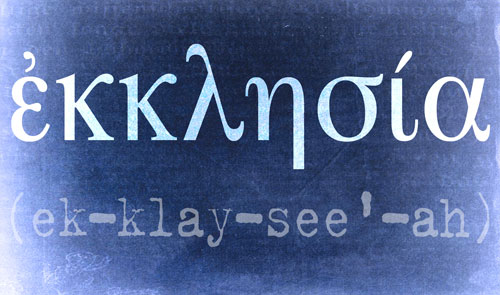
This podcast looks at what the word ekklēsia meant before Christians used it to describe their meetings. Our identity is the people who gather around King Jesus. Our mission is implementing God’s government in his world. So, what should we do?

Continue reading “What is Church? (podcast)”

Celebrating 6 years

This is the short version: what I’ve learnt from 6 years of blogging on the kingdom.

Six years ago (23 April 2016) this blog was launched as an investigation into why Jesus made the kingdom of God the centre of his thinking, and how things would turn out if we did the same.

Talk about mind-expanding results! God restoring the earth as a kingdom under heaven’s management through the leader he anointed for us — this is the good news. God is calling us all to recognize Jesus Christ as Lord — our response to the gospel.

Continue reading “Celebrating 6 years”

A lesson in leadership and confrontation (Matthew 15:1-20)

When to confront? When to step away? What can we learn Jesus’ responses to other leaders in his community?

What is it that isolates us from each other? I don’t mean Covid, though that has certainly contributed to feeling cut off from each other in recent years. What are the things that drive wedges between us, leaving us feeling withdrawn and distant?

I’m trying to learn from how Jesus related to people. He often taught the priority of sorting things out when we fall out with our sisters and brothers. Other times the disciples were bewildered to see Jesus giving up on community leaders in the rough and tumble of Galilean life without reconciling. His responses contain insights I need for leadership and relationship.

Continue reading “A lesson in leadership and confrontation (Matthew 15:1-20)”

Signs of the times (Matthew 16:1–4)

It’s easier to predict the weather and to see the climate change.

Just once we find the phrase, signs of the times. As fascinating as it sounds, it’s not a priority in Scripture. In fact, it occurs in a critique:

Matthew 16:1-4 (my translation, compare NIV)
1 Pharisees and Sadducees approached to put him under pressure, asking him to show them a sign from heaven.
2 In reply he said, “At dusk you say, ‘It will be calm, for the heavens are red.’ 3 And in the morning, ‘Today will be stormy, for the heavens are red and threatening.’ You do know how to discern the face of the heavens, but you are unable to discern the signs of the times. 4 An evil and adulterous generation seeks a sign, and no sign will be given to it except the sign of Jonah.” Leaving them behind, he moved away.

Continue reading “Signs of the times (Matthew 16:1–4)”

Mountains and mustard seeds (Matthew 17:14-21)

“Nothing will be impossible for you” (Mt 17:20)


As a young pastor, I preached this text calling for an expectant faith that moves mountains. God does amazing things. But with the benefit of a few more years, I can also identify with the disciples who, on this occasion, failed to give the boy his healing.

I still have much to learn, so I’ll comment from just one angle — the kingdom perspective.

Continue reading “Mountains and mustard seeds (Matthew 17:14-21)”

Significance of Passover (repost)

What did Passover mean in its original context (Exodus 12-13)?

What’s the message of the Passover story? What comes to mind for you? Do you picture a lamb being sacrificed for the people of God to be forgiven their sins?

Would it surprise you to know the Book of Exodus never says anything like that? We can’t understand what Scripture says if we smuggle in assumptions about sacrificial theology that aren’t there.

This matters because Passover is so significant. Even today, it’s still one of the most significant weeks in the Jewish calendar, celebrating the birth of their nation. More than 3,200 years ago, God released them from serving Pharaoh, to be something new and privileged: a nation directly serving the divine sovereign, a kingdom of God.

So what does Exodus say?

Continue reading “Significance of Passover (repost)”

Who makes God happy? (podcast) (Luke 15)

Who makes God happy? The sinners? The righteous? What do you think?

Jesus answered that question with three stories. We love the parables: the lost sheep, the lost coin, the lost (prodigal) son. But did we hear the answer he gave?

Continue reading “Who makes God happy? (podcast) (Luke 15)”

The rich texture of atonement (Matthew 18:23–35)

There’s more than one model of atonement in the pages of the New Testament.

I’ve never liked the oboe. Clarinets are agile and joyful. Saxophones are versatile and soulful. An oboe sounds mournful, a bruised reed, a blanket of grief. Yet even an oboe can contribute its mellow hues to an orchestral arrangement. Who can forget the haunting tones of Gabriel’s Oboe?

Atonement is as rich and polyphonic as a symphony. At its heart, to atone is to make at-one. God reconciles the world to himself, and that ultimately makes us at-one with each other.

But when we press in to how atonement works, we cannot reduce it to a single instrument. Like light reflected from a multifaceted diamond, atonement has many angles in the New Testament.

For example:

Continue reading “The rich texture of atonement (Matthew 18:23–35)”

And if I don’t forgive? (Matthew 18:35)

How will God treat us if we don’t forgive?

Jesus gives a single-sentence explanation of his parable about the unforgiving servant:

Matthew 18:35 (my translation, compare NIV)
“And that’s how my heavenly Father will treat you [plural], unless you each release your brother or sister from your hearts.”

Now we know who’s who in this story, and how they relate:

  • The king is God — my heavenly Father.
  • The servants are you (plural) — the kingdom of the king.
  • The Son of the sovereign (implied by my heavenly Father) teaches kingdom ethics.
  • The Son counts the servants as family — brothers and sisters.
  • Counting offences (verse 21) doesn’t count as forgiving from the heart.

Most unsettling is the way Jesus presents his Father. God is like a king who in anger handed him over to the torturers (verse 34), and that’s how my Heavenly Father will treat you. Disturbing?

Continue reading “And if I don’t forgive? (Matthew 18:35)”

When forgiveness outweighs repayment (Matthew 18:23–35)

Should people pay for their mistakes, or is it better to let them off the hook? Which works best in the long-term? Jesus had an opinion about that.

What thoughts spring to mind when you read forgiveness in the Bible? If your first thought is personal guilt and asking for salvation, you may struggle with the stories of Jesus, where it sounds like salvation is contingent on your works. It might make more sense to read them as stories about corporate restoration.

This one is about the kind of kingdom our king expects to run, how he expects his servants to represent him in his realm.

Jesus’ story

Continue reading “When forgiveness outweighs repayment (Matthew 18:23–35)”

Three decrees that gave Christ authority (Psalm 110)

How much of Psalm 110 did Jesus have in mind when he quoted the first verse?

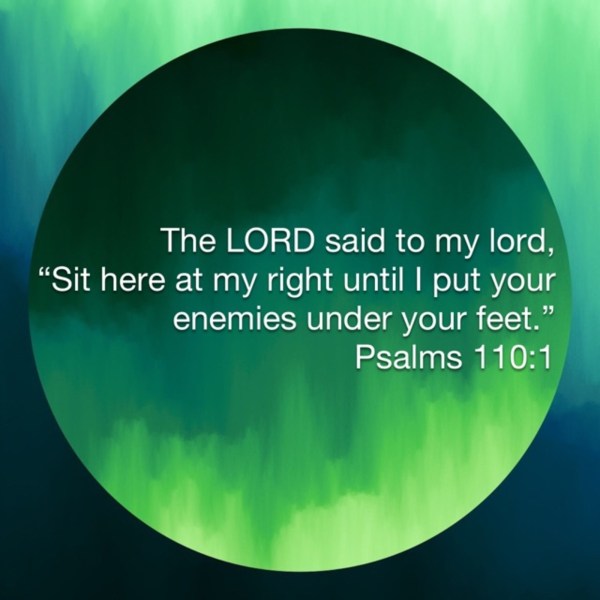
Psalm 110 proclaims three edicts from heaven that reconfigure authority on earth. Jesus quoted the first, and that was enough to silence his opponents (Matthew 22:41-46). The second would have put them in an unenviable position. And the third would have been too frightening to face.

Continue reading “Three decrees that gave Christ authority (Psalm 110)”

Matthew’s Gospel: outline and summary

A survey of the Gospel of Matthew, of how Christ received his reign.

How do the pieces fit together? With my grandson, we started with a stack of Lego pieces, followed 48 pages of instruction, and finally saw what we set out to see: the assembled car.

Larger books of the Bible can feel like that. You start reading the verses, to understand the paragraphs, and the chapters, and the sections, and eventually you get the big picture, how the whole story fits together.

So here’s a brief guide to Matthew’s Gospel, a simple outline distilled from 5 years of processing and pondering the details, meditations that could fill two books (275 posts). From opening statement (anointed son of David) to closing declaration (all authority in heaven and earth, with the nations being instructed as he commands), Matthew’s message is how heaven’s anointed became earth’s king.

This is how Matthew traces the good news of Jesus as the one who restores heaven’s reign to earth:

Continue reading “Matthew’s Gospel: outline and summary”

Olivet Discourse: temple and king (Matthew 24)

Whatever your views about end times, here’s a way to hear Jesus’ teaching in Matthew 24 within the temple-versus-kingship conflict that is its context.

Open Matthew 24.

“Signs of the end” is the heading in many versions of Matthew 24, and there are almost as many interpretations as there are interpreters. That’s the irony of eschatology: we tend to divide over something God intends to bring us together in Christ.

So, I’m writing cautiously, not wanting to contribute to the division. I’m not about to fit the Olivet Discourse onto world events of our day. Can we agree together that the starting point for understanding Matthew 24 must be its context in Matthew’s Gospel?

Matthew’s message is that Jesus is the Messiah. The temple leaders didn’t see it that way. The conflict of kingship and temple escalates with Jesus’ final trip to Jerusalem, culminating in his crucifixion and resurrection. As our previous post showed, the temple/kingship conflict forms the framework of Matthew 21–28, including Chapter 24.

Listening from this position, we hear the Olivet Discourse with a clarity any audiophile would love, the counterpoint of temple and kingship.

Continue reading “Olivet Discourse: temple and king (Matthew 24)”

Brian Houston’s scandal

The founder of Hillsong in moral trouble.

Australian media are reporting that Brian Houston (Hillsong founder) committed ‘indiscretions’ towards two women, quoting a statement from Phil Dooley (current leader) to Hillsong staff this morning. While Brian isn’t the first church leader to face allegations like these, he is well known in the Australian church and in other parts of the world.

Continue reading “Brian Houston’s scandal”