The apostles’ gospel explained

In our previous post (the apostles’ gospel), we surveyed 16 samples of the gospel in Acts. What phrases did you find recurring?

The heart of the apostolic gospel is a person: Jesus. They used these phrases to say Jesus is good news:

  • Jesus is the Christ (Messiah)
  • Jesus is Lord
  • Jesus is resurrected
  • Kingdom of God

Are those the phrases you would use to explain the gospel to someone? How are these four things the gospel?

Let’s enrich our understanding of the gospel by unpacking what the apostles said. It turns out to be the same gospel Jesus announced.

Continue reading “The apostles’ gospel explained”

The apocalyptic framework of Ephesians 3

Same apocalyptic problem (mystery); unexpectedly awesome answer (reveal)

After Babylon invaded Jerusalem and terminated the Davidic kingship, Israel was ruled by other nations. Floating adrift among the nations, they clung to their ancient stories of how God had delivered them from Pharaoh’s tyranny, committing himself to be the sovereign of their nation (covenant), giving them his wise law (Torah), and living among them to lead them (tabernacle).

But generations of Jacob’s descendants remained under foreign domination, rising and dying like the grass of the field. As nations fought and conquered each other, as empires rose and fell, Israel remained the meat in their sandwich.

They wondered how God would resolve this injustice. When would the day of the Lord arrive? How would the sovereign Lord overpower the evil that oppressed them and destroy the power of the nations? Continue reading “The apocalyptic framework of Ephesians 3”

Good mysteries have a reveal (Ephesians 3:2-6)

A surprise birthday party? A campaign shrouded in mystery until the launch? The joy of good secrets is in the reveal.

But we struggle when we don’t know. We fill the vacuum with stories or fears of what might happen. Even theologians fear the worst when we don’t know. Like what will happen to people who never heard about Jesus? Maybe we need to trust God instead of letting our imagination run amok. Continue reading “Good mysteries have a reveal (Ephesians 3:2-6)”

The destiny God has planned for us (Ephesians 1:4-10)

Does God choose which of us makes it in the end?

You know that feeling when you meet someone for the first time, and they remind you of someone else? Previous experiences shape our current perceptions.

Previous experiences also shape what we see in Scripture. We bring with us what we’ve heard and believed over the years. That’s why it’s such a surprise when someone reads it differently.

A practical example: there’s a tradition where words like predestination and election mean God choosing some individuals to save, and others to damn. If you’ve accepted this all your life, you may not see another possibility — that it’s about God pre-planning the rescue of humanity through the Messiah, not pre-assigning individual destinies for heaven or hell. Continue reading “The destiny God has planned for us (Ephesians 1:4-10)”

It doesn’t end with Armageddon

What message do you have for the future of the earth? “Armageddon,” or “I’m a garden”?

The battle of Armageddon frightens people who don’t understand John’s vision. It’s not a picture of a terrifying future. It’s a promise: the kingdom of God overcomes everything the world can throw at it. John sees that the combined force of all the armies in the world cannot bring down the King of Kings or block his reign. Continue reading “It doesn’t end with Armageddon”

What will the post-apocalyptic world be like?

A dark future? The “four horsemen of the Apocalypse” tell a different story.

Does the church have a message of hope for the world?

Netflix has loads of post-apocalyptic movies, portraying a dark future. To be honest, these dystopian disasters seem a bit overblown while I’m sitting back in a comfy chair, connected to the internet, streaming to a big TV. But movies allow us to explore alternative realities, and that experience can help us shape our choices today.

So where will technology take us? When the industrial revolution took off, the mood was unbridled optimism, the expectation that technology could solve all our problems. Today the mood is darker. Post-apocalyptic movies explore the destructive power of war. We build underground bunkers to survive after we’ve nuked earth’s surface. We search for another planet to call home after messing up this one. We imagine a violent world where people kill for what little is left. Perhaps we’ll face extinction if the machines evolve faster than we do. Only the most brutal survive in this post-apocalyptic world.

You know what bothers me most about this dark picture? This is how the church’s message has been heard. The word apocalyptic comes from the Bible. The Apocalypse is the Book of Revelation. People imagined that Revelation was about the end of the world, so post-apocalyptic has come to mean after the end of the world as we know it.

Continue reading “What will the post-apocalyptic world be like?”

God’s gift to the world (John 3:16)

The gift that’s exactly what we need.

We’re reading John 3:16 as the story of the kingdom of God, the lens Jesus used. God is sovereign. The world resists him. The sovereign persists in loving his resistant realm. He does so by sending the most amazing gift.

Queue the questions:

  1. What does it mean to say God gave his Son?

Continue reading “God’s gift to the world (John 3:16)”

Introducing Jesus (John 1:1-5)

I woke up this morning meditating on how John introduces the person who is good news.

John 1:1-5 — a meditation

1 In the beginning was the Word —
the decree of the heavenly sovereign bringing shape and significance to a formless void,
the decree bringing light into darkness,
the decree bringing life into barrenness,
the decree that makes life productive,
the decree that makes humans his regal agents.

This Word is not other than God; he has his being in relation to God.
The Word was God:  God revealed, God expressed.
2 We’ve heard him only recently, but the Word has always had his being in relation to God, from the beginning.

3 Everything exists because of this divine Word;
not a single thing exists apart from him, the ground of our being.

4 Life sprang forth from him.
His life lights up humanity.

5 Resisting the Word leaves humanity with a dark side, but his light shines in the darkness.
The darkness has not grasped God’s decree that there be light.
The darkness has not held God’s Word in the grave.

Continue reading “Introducing Jesus (John 1:1-5)”

Guilt, or good news?

What gospel did Jesus proclaim? Individual guilt, or global good news?

Over the centuries we’ve rerouted Jesus’ message. His core message was the gospel of the kingdom, and it was good news from beginning to end.

Instead of global good news, we often hear churches today proclaiming a message of individual guilt. A well-known evangelist was asked to explain the good news. He began, “Well, first I have to tell you the bad news. You’re a sinner …” Seriously? When did Jesus do that?

Can you even imagine Jesus bowling up to someone and saying, “First the bad news. You’re a sinner. But I’m here to save you. So get down on your knees and pray the Sinner’s Prayer. If you do that I’ll forgive you.” If you’ve read the Gospels, you know that’s wrong.

How did we ever get side-tracked from Jesus’ good news of the kingdom to a message of guilt? There’s quite a history behind that.

As followers of Jesus, we’re aware of our own shortcomings. As early as the second century, people worried what it might mean if they sinned after their baptism. Some even recommended delaying baptism until you were close to death, to ensure you didn’t die with sin in your life.

By the fifth century, the church recommended the exact opposite: babies should be baptized as soon as they were born. Augustine formulated the doctrine of original sin. He said that all people are sinful — even babies — because parents pass on their sinful nature to their children. Augustine also taught that this original sin can be removed by baptism. That meant it was absolutely crucial for parents to get the church to baptize their baby: otherwise it would die in sin and be eternally damned.

Did you notice what Augustine did? He placed the salvation of the child and the forgiveness of sins in the hands of the church. Only if the parents asked the church for baptism was the child’s original sin removed. The church claimed it had power to remit sins.

For the next 1000 years, the church’s message revolved around guilt. To be forgiven, you must go to a priest and confess your sins. He assigned your penance, and offered you absolution. Then you attended mass where the priest sacrificed Jesus again and offered you Jesus’ body. The church told you it had “the keys to the kingdom,” so it could let you in or lock you out. The church’s power rested on guilt.

You can imagine how liberating it was when a priest named Martin Luther rediscovered from Scripture that it is God who forgives sins, not the pope or the priests or the church. It is God who justifies us, by faith. God forgives because of his grace, not because we merit it through works such as confession, penance, or indulgences.

Luther caused such uproar precisely because he challenged the authority of the church and placed power back in God’s hands. John Calvin systematically reframed the Christian message around this theme: the sovereignty of God was the liberating message that power lies with God, not the church or the sinful humans that run it.

Perhaps it’s unfair to critique Luther for not going far enough. Living in the era when the church’s power rested on guilt, Luther himself was deeply troubled by feelings of guilt. Justification by God’s grace through faith was the re-dawning of gospel truth, but Luther never questioned why the church had been trading in guilt in the first place. The troubled conscience remained central to his writings. For example, the word conscience doesn’t appear in the Book of Galatians, but Luther’s Commentary on Galatians uses the word more than 200 times.

Luther and Calvin did so much to declare that power belongs in the hands of our heavenly sovereign, but the reformation is not over. We still need to regain Jesus’ message — the good news of the kingdom of God.

How do we tell the gospel the way Jesus did, without using individual guilt to manipulate people? How do we present the good news of God’s kingship instead?

We live in an age where people are disillusioned with stories of power and cynical of the power of the church. Jesus called us to live under God’s kingship. In his world, it’s the powerless who inherit the earth.

Jesus’ kingship is not proclaimed through guilt. The restoration of God’s reign is the best news this world could hear.

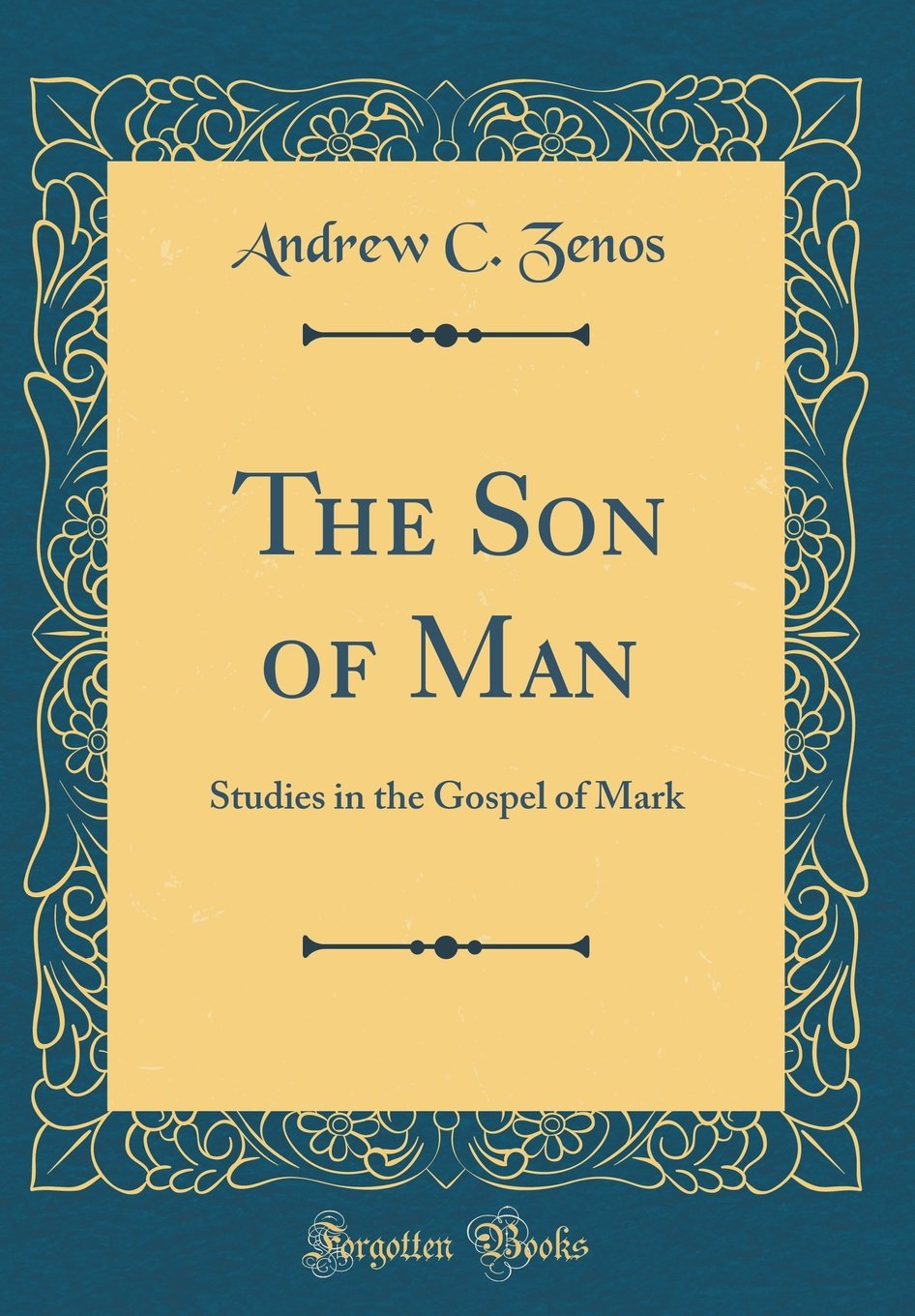
Zenos on Son of Man

If you want to know how Jesus understood himself, you have to ask why he kept referring to himself as son of man. More than any other term. On more than 50 occasions.

Scholars offer opinions ranging from “it just means a human” (as it did in his language) to “it means Jesus is the divine figure of Daniel 7.”

You can imagine how exhilarating it was to find an author summarizing my own conclusions of what Jesus meant, especially one who wrote 100 years ago!

Continue reading “Zenos on Son of Man”

God’s firstborn son (Exodus 4:21-23)

Open Exodus 4:21-23.

Moses sets out for Egypt to confront Pharaoh with YHWH’s claim of sovereignty over the Hebrew people:

Exodus 4:22–23 (ESV)
22 Then you shall say to Pharaoh, ‘Thus says the Lord, Israel is my firstborn son, 23 and I say to you, “Let my son go that he may serve me.”

The descendants of Jacob are God’s family. God has promised to restore the blessing of his governance to the nations through them. So God “fathers” the nation of Israel: they are born through the exodus.

What a joyful contrast: serving YHWH rather than Pharaoh. Liberated from oppressive human rule, they’re the first nation to be a kingdom of God.

Continue reading “God’s firstborn son (Exodus 4:21-23)”

Who is “the Servant of the Lord”? (Matthew 12:17-21)

What Isaiah said about Israel, Matthew says about Jesus. How can he do that?

Open Matthew 12:17-21.

Years ago, I ordered the plans to build a 2-seater kit plane. It was fun pouring over the plans, but I didn’t really have the time or resources to commit to such a project. I took on pastoring instead.

Building community is nothing like building an aircraft. You only get one chance to get the critical things right in a plane, but you can stress-test the parts and be mathematically sure it’s good to fly.

Human beings are nothing like that. They decouple mid-flight and fly off in their own direction. There can be no blueprints for building community: the “parts” are living and constantly changing. A leader is always adapting the plans, reshaping and redesigning. Mid-flight!

Continue reading “Who is “the Servant of the Lord”? (Matthew 12:17-21)”

Put the Christ back in Christology

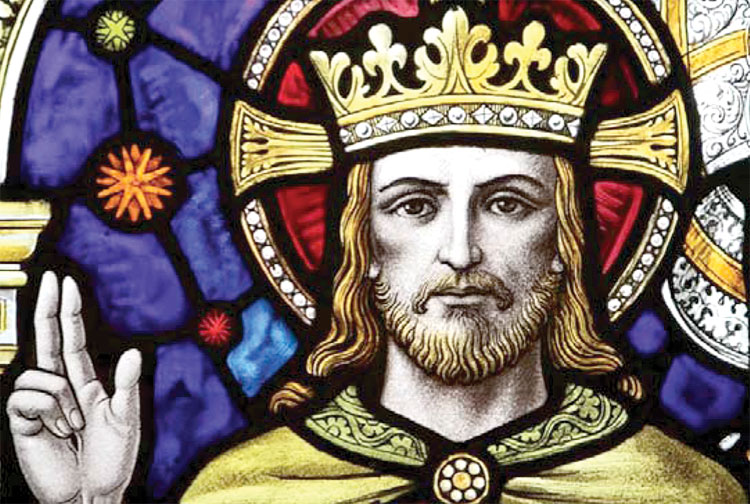
Calling Jesus “the Christ” is declaring him the ruler chosen by God to restore heaven’s reign to the earth.

Christology is the study of Christ. Well, that’s what it would be if it focused on the Christ bit.

These days, Christology is a branch of theology, the study of God (theos means God). Systematic theology starts with God, so Christology usually fits in as the study of the second person of the trinity. It discusses how Jesus could have two natures without his divinity messing with his humanity and vice versa. It rehearses how early Christians struggled with wrong ways to talk about God (heresies) and eventually found the right language (the creeds and Symbol of Chalcedon).

That’s all important, and I’m truly grateful for these great summaries of what we believe. But along the way, the emphasis shifted. Christology lost its focus on the Christ.

That word has a specific meaning in the narrative of the kingdom of God. The Christos is the anointed person. Continue reading “Put the Christ back in Christology”

When the king is dishonoured (Matthew 11:7-11)

How does King Jesus respond when publicly dishonoured?

Open Matthew 11:7-11.

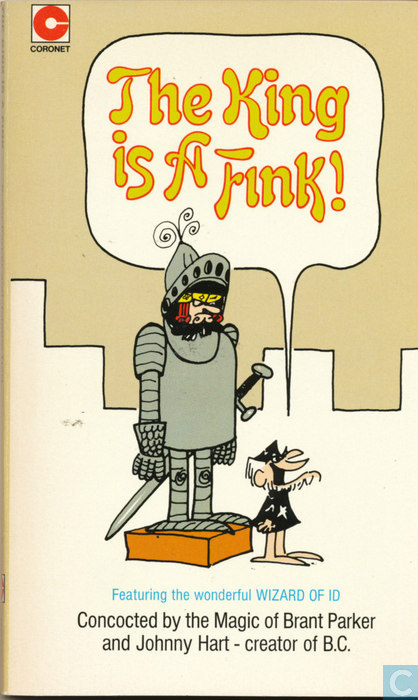
I never knew what a fink was, but the Wizard of Id cartoons were clear enough: call the king a fink and you’re strung up in shackles.

Last year, I visited a kingdom, the Hashemite Kingdom of Jordan. I asked the guide what would happen if someone spoke against one of the Hashemite family. Apparently it would not be a good move if you valued your freedom.

You can understand why Jesus avoided direct criticism of Herod. John the Baptist had proclaimed the arrival of an alternative kingdom. John publicly critiqued Herod’s morals, implying he was unfit to rule God’s people. Predictably, Herod arrested John.

Jesus also preached the restoration of God’s kingdom, but he carefully avoided Herod. When Jesus said anything about Herod, his message was coded. In Matthew 11, he expressed the same cryptic message in three ways, adding the hint that they’d need to listen well to get it: “If you have ears, hear” (11:15):

Continue reading “When the king is dishonoured (Matthew 11:7-11)”

God’s kingdom and the millennium

How is the kingdom of God connected to the 1000-year reign in Revelation 20? Does it help to ask who this vision is about, rather than when?

What comes to mind first when you hear the phrase kingdom of God? For some, it’s a future era of global peace with Christ reigning for 1000 years. Continue reading “God’s kingdom and the millennium”

Jesus’ kingdom hope (Matthew 8:10-13)

Why do the Gospels depict Jesus as the saviour for non-Jewish people?

Open Matthew 8:10-13.

Some of Jesus’ kingdom pictures sound odd to us. He spoke of people from the east and the west coming to take their places with Israel’s long-dead patriarchs (8:11). Some readers imagine they’re all dead and gone to heaven, but that doesn’t do justice the way Israel’s kingdom story worked or to the role of the patriarchs in that story. Continue reading “Jesus’ kingdom hope (Matthew 8:10-13)”

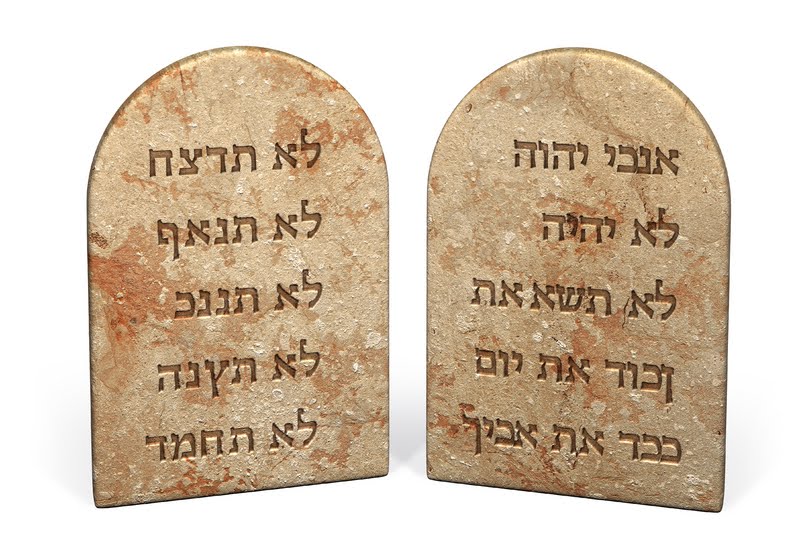
Do the Ten Commandments apply to Christians?

How do the 10 Commandments relate to Christians? Are they foundation of our ethics? Or not applicable?

Open Matthew 5:17-20.

Jesus did not abolish or even adjust the divine commands God gave to Israel in the Law and the Prophets. Like other Jews of his time, he lived under Torah. He was circumcised. He ate only kosher foods. He observed the Sabbath and the annual festivals. He disputed with his contemporaries regarding how to keep the Sabbath, but not about whether to keep it. So if the founder of our faith lived by the Law and taught its significance, should we, his followers, follow in his steps?

Jesus was Jew. That point was significant enough for Matthew to spend his first chapter establishing it. The Torah and the Prophets were the revelation God gave to Israel. We call it the Old Testament; Jews call it the Tanakh. The Torah begins with the claim that Israel’s God is the sovereign ruler of the whole earth, even though the nations that rebelled against his rulership (Genesis 1–11). The divine ruler therefore revealed a plan to establish a nation of his own, through Abraham’s descendants. Through them, he planned to restore the blessing of his reign to all nations (Genesis 12–50).

So, that’s how Israel came into existence. They were slaves of another nation when the divine sovereign freed them to become his representative nation to the nations (Exodus 1–19). At Sinai, God established his legal covenant with Israel: they committed themselves to be his nation, and he committed himself to be their ruler. As their king, he gave them the laws for their nation — the Ten Commandments and the Book of the Covenant (Exodus 20–24). The Torah spells out what their sovereign required of them. When they disobeyed, their ruler sent prophets to warn them and call them back to obedience.

In other words, the Torah was given to Israel, not to the nations. God gave it all — the Ten Commandments, the Book of the Covenant, the Levitical sacrifice laws, the wilderness instructions (Numbers) and the honed restatement of it all in Deuteronomy — to the Jewish nation. God never issued these commands to the nations. That’s important: any attempt to enforce Torah requirements on non-Jews is a serious misunderstanding of the Biblical narrative.

So, no: the Ten Commandments do not apply to Christians.

That’s the approach the New Testament takes. Paul strongly denounced those who tried to make his Galatian converts comply with Jewish laws about circumcision and food. The Judaizers had failed to understand how Israel’s God was now bringing all nations back under his sovereignty in the Messiah, not in the Sinai covenant. Jesus fulfilled the covenant that God made with Israel through Moses, but Jesus was not leading the nations to Sinai. He was leading the nations into the promise God gave Abraham — the restoration of God’s blest reign over all nations. The requirements God set for Israel before the Messiah are not the requirements God has set for all nations under the Messiah.

So, the Ten Commandments are irrelevant? Certainly not. They have no legal force in the covenant God established with all nations through his Son, Jesus. But that doesn’t make them irrelevant.

God is not random. God did not give laws to Israel in order to make their lives difficult. The commands he gave Israel we meaningful, for Israel’s calling was to reflect their sovereign’s character to the nations. So, although Christians do not live in a covenant defined by these commands, there is still a revelation of God’s character in the commands he gave to Israel. When God said, “Don’t murder,” the command reflects God’s value of human life. When God said, “Don’t commit adultery,” he was calling Israel to a way of life that reflected his own faithfulness. The character of the sovereign is revealed in his commands since the commands were designed so his people would reflect his character.

Christians are not bound by the commands God gave to his representative nation before the Messiah came and restored God’s government over all nations. But as we read the Old Testament story of God’s covenant with Israel and his faithfulness to them, we can and should read them as the revelation of his character.

We are not under Torah. Circumcision, Sabbath, kosher food laws, and ethnicity no longer define the people of God. Nevertheless, the Torah stands as a wonderful revelation of God’s character and his persistence when people resist his reign. He never gave up on his people, even when they disobeyed.

Now he has gone so much further, revealing his faithfulness not only to Israel but to the nations. He is bringing the whole creation back under his governance in the Messiah. If there’s anything the Bible’s story reveals about our sovereign, it’s his faithfulness to his people. We do not live under the requirements of the Sinai covenant, but we are called to faithfulness to our astounding king.


What others are saying

Craig L. Blomberg, “Chapter 7 — The Sabbath as Fulfilled in Christ” in Perspectives on the Sabbath edited by Christopher John Donato et al, (Nashville: B&H, 2011) (emphasis original):

Because Jesus fulfilled the Law, and thus fulfilled the Sabbath commands, He, not some day of the week, is what offers the believers rest. We obey the Sabbath commandment of the Decalogue as we spiritually rest in Christ, letting Him bear our heavy burdens, trusting Him for salvation, and committing our lives to Him in service, then remaining faithful in lifelong loyalty to Him rather than committing apostasy. No special day each week for rest or worship could ever come close to fulfilling this grander and far more enriching and exciting vision of life to the full!

A. Layman, “Article IV: Review of Perpetuity of the Sabbath” in The Presbyterian Quarterly and Princeton Review, New Series V, no. 17–20 (1876): 119–120:

It is sometimes said the ten commandments were given to Israel as the type of the church, and so are binding on the church now, the local circumstances being allegorized. We disclaim any such argument, as unscriptural, unsound, unwarranted, and dangerous. …

We can see no more warrant for allegorizing the preface to the ten commandments, than for allegorizing the commandments themselves, or the account of the birth of Christ, or of his resurrection. We cannot, by any such means, get rid of the national direction of these statutes. …

Commands given to Israel, and, therefore, prima facie, to it only, may,  nevertheless, have been in many cases intended for, and so binding on, not only the species Israel, but the whole genus God’s people, or the whole genus all nations. But this cannot be assumed; it must, in each class of cases, be affirmatively proved.

Paula Gooder, The Pentateuch: A Story of Beginnings, (London: T&T Clark International, 2005), 91:

J. Barton (1998) represents a common Christian approach to the use of the Hebrew Bible in ethics when he says that the purpose of the Hebrew Bible

is not primarily to give information about morality … but to provide materials that, when pondered and absorbed into the mind, will suggest the pattern or shape of a way of life lived in the presence of God. (p. 128)

An exception to this view of the Hebrew Bible in general and the law codes in particular is the Decalogue. The Ten Commandments have, traditionally, been given a place within Christian ethics denied to the other law codes of the Pentateuch.

[previous: Why wasn’t Jesus demanding obedience?]

[next: If you’re angry, are you a killer?]