Formed in God’s Story: Old Testament Prophets

Here are the notes and podcasts you need to understand the setting of the Old Testament prophets: Isaiah – Malachi.

[Update 2024-03-21: Full notes and final podcasts added]

The Old Testament concludes with the major and minor prophets. Do you know how each of these books fits into the Bible’s story? I mean, if we don’t know the situation they were addressing, it’s hard to make sense of what God was saying through them.

Here’s your opportunity to put the Prophets in perspective. Over the next six weeks, we’ll provide you with notes and a podcast covering the background of each one so you can read them for yourself.

You can download the full set of notes (60-page PDF), or the weekly notes for the six-week course (held Feb/Mar 2024), with two podcasts each week:

Notes will be available ahead of time, and the podcasts afterwards. The sessions are at Riverview Church in Perth Western Australia on Wednesday evenings.

Continue reading “Formed in God’s Story: Old Testament Prophets”

What did Ezekiel mean by “The end is nigh”?

It’s ninety seconds to midnight according to the atomic scientists’ doomsday clock. Their weapons fuel our insecurity. How long before the world ends?

My parents and grandparents lived through world wars I and II. I grew up with images of doomsday prophets and their sandwich boards proclaiming, “The end of the world is nigh.” I think they were copying Ezekiel:

Ezekiel 7:2-3 (NIV)
2 Son of man, this is what the Sovereign Lord says to the land of Israel: “The end! The end has come upon the four corners of the land! 3 The end is now upon you.

But Ezekiel was no weirdo. He wasn’t talking about the end of the world.

Continue reading “What did Ezekiel mean by “The end is nigh”?”

The enigma of God’s throne (Ezekiel 1)

Ezekiel didn’t know where he fitted on earth until he saw the wheels within wheels in the heavens.

By the rivers of Babylon, Ezekiel sat like a fish out of water. Despite all the glitz and glamour of Babylon, he didn’t fit here. He was living in a world that didn’t match his identity. It’s a feeling many of us can relate to.

But what could Ezekiel do? He didn’t really want to be there. Everything he valued was falling apart. A huge storm was brewing, about to blow everything away. It had already swept westward, and now it was turning south towards Egypt, with Ezekiel’s city (Jerusalem) in the firing line. It felt like a hurricane no one could survive.

That’s when Ezekiel looked up and saw another storm in the heavens, north of Babylon:

Continue reading “The enigma of God’s throne (Ezekiel 1)”

Where is God’s reign when the kingdom falls? (Jeremiah 41–52)

Jeremiah’s message helps us recover when everything falls apart.

Just as Jeremiah had said, Babylon swept through the whole region, ingesting all nations into its kingdom. God’s nation was no more. They lost the land where God’s anointed reigned. They lost the land Joshua fought for. They lost the land God promised to Abraham, Isaac, and Jacob.

How could they make sense of the world now? They’d regressed 700 years, to the time before God formed them as his nation at Sinai. The leaders and influencers were captives in Babylon. What should those who were left behind do now?

Feeling exposed and insecure, they considered going back to Egypt where Pharaoh might protect them. They asked Jeremiah.

Continue reading “Where is God’s reign when the kingdom falls? (Jeremiah 41–52)”

New covenant, new king (Jeremiah 31)

A new covenant means a new king. That’s the gospel in Jeremiah.

“I know the plans I have for you,” may be our favourite text from Jeremiah. But here’s the favourite of the New Testament writers (quoted in Luke 22:20; Romans 11:27; 2 Corinthians 6:16; Hebrews 8:12; 10:16-17):

Jeremiah 31 (NIV)
31 “The days are coming,” declares the Lord, “when I will make a new covenant with the people of Israel and with the people of Judah. … 33 “This is the covenant I will make with the people of Israel after that time,” declares the Lord. “I will put my law in their minds and write it on their hearts. I will be their God, and they will be my people.”

Why did God promise a new covenant? What was wrong with the old one?

Continue reading “New covenant, new king (Jeremiah 31)”

The plans I have for you (Jeremiah 29)

You may have heard this one:

Jeremiah 29:11 (NIV)
“For I know the plans I have for you,” declares the Lord, “plans to prosper you and not to harm you, plans to give you hope and a future.”

We’re looking at favourite verses in Jeremiah, and this might top the list. We’re asking you to handle Scripture well, understanding how it applied to them before applying it to us. Who was you? What plans did God have for them?

Continue reading “The plans I have for you (Jeremiah 29)”

The hands that shape history (Jeremiah 18)

What did Jeremiah see when he visited the potter’s house? Is his picture consistent with the metaphor of God as ‘potter’ in the New Testament (Romans 9:21)?

You know that time Jeremiah visited the potter to see what God was doing?

Continue reading “The hands that shape history (Jeremiah 18)”

Temple as God’s presence (Jeremiah 7)

How could the temple fall if God was there?

Do you have a favourite text from Jeremiah? By setting the verses you already know in context, you’ll have a better appreciation of this prophet.

“Has this house, which bears my Name, become a den of robbers to you?” God asked through Jeremiah (7:11). And Jesus asked the same question about his Father’s house (Matthew 21:13 || Mark 11:17 || Luke 19:46). Understanding Jeremiah’s context makes powerful sense of both settings.

Continue reading “Temple as God’s presence (Jeremiah 7)”

An overview of Isaiah

In the tragedy of Israel’s fall, Isaiah declared how God would redeem his world.

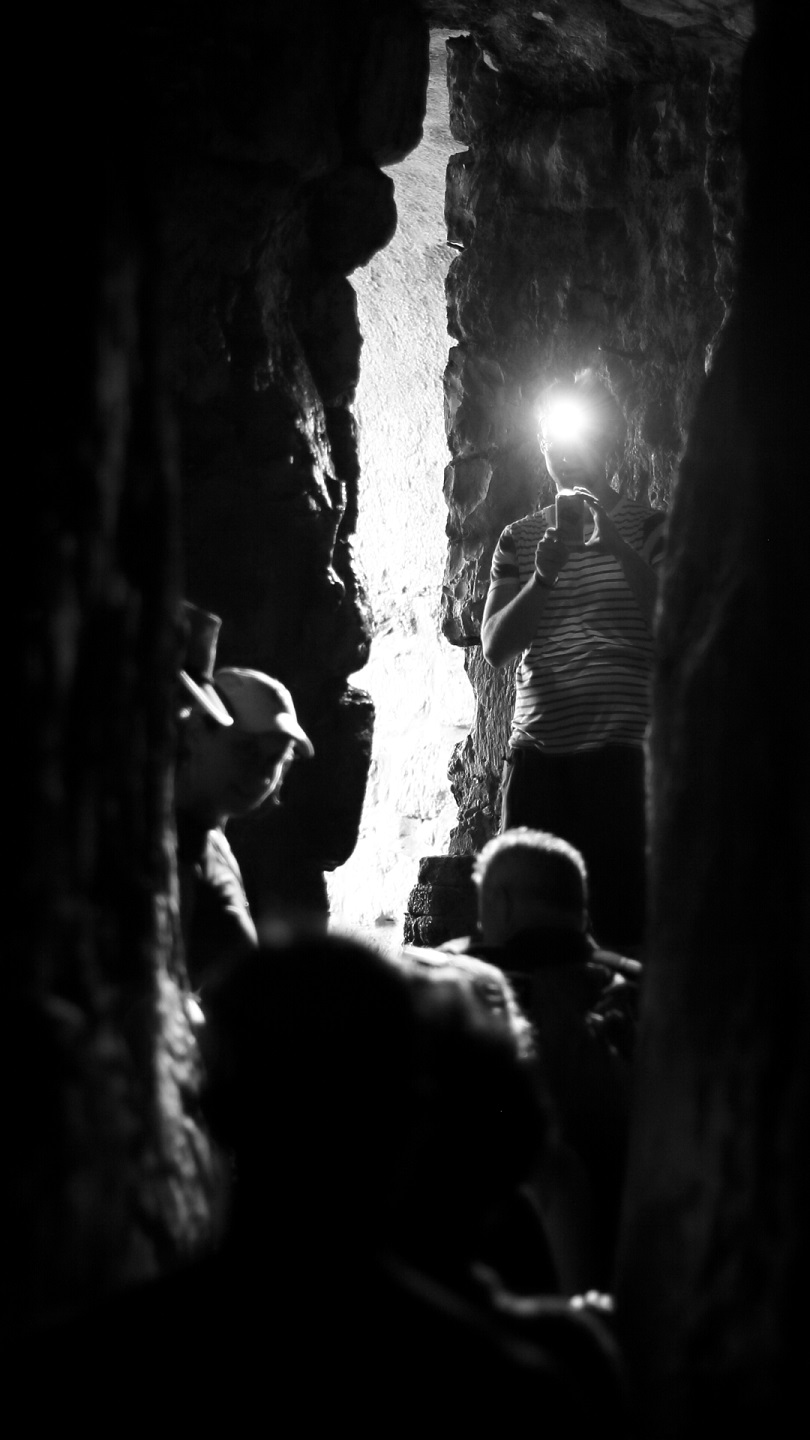
[Image: the light at the end of Hezekiah’s Tunnel. Allen Browne, 2014]

Hear the Prophets in their setting, and we see how the promises of God restoring his reign find their Yes in Christ. That’s how they apply to us.

The sheer size of the Major Prophets can feel daunting. This post is a high-level drone shot of the Book of Isaiah. He was called to proclaim God’s throne as the kingdom fell apart.

Continue reading “An overview of Isaiah”

When God called Isaiah (Isaiah 6)

Isaiah 6 is a great intro on how to read the Prophets. God explains what a prophet is and what a prophet does.

To discover what a prophet is, chat to one. How were they called? What was God calling them to do?

Isaiah gives us that conversation. It all started with the death of the Davidic king who had reigned well for 50 years (2 Chronicles 26). What would happen now?

Isaiah 6:1 (NIV)
In the year that King Uzziah died, I saw the Lord, high and exalted, seated on a throne; and the train of his robe filled the temple.

Continue reading “When God called Isaiah (Isaiah 6)”

Dreams in prison (Genesis 40:1–8)

“Then we’ll see what comes of his dreams,” his brothers said as they threw Joseph in a pit (37:20). He had big dreams of ruling the sun, moon and stars (37:9). Instead, we find him in a dungeon with no control over his own life, ordered to serve prisoners (40:4).

So, serving prisoners is what Joseph does. One morning a couple of them looked more dejected than ever. “Why the long face?” he enquires (40:7). Turns out they had dreams too.

Continue reading “Dreams in prison (Genesis 40:1–8)”

A cleansed, non-prophet kingdom? (Zechariah 13:1-6)

Interested in seeing the gospel in the Old Testament? This example from Zechariah 13 shows how to (and how not to).

Open Zechariah 13:1-6.

The ideal kingdom is a wise king with a responsive community. Zechariah’s hope is for Israel’s failed kingdom to be restored after being exiled and dominated by foreign powers. He anticipates what life could be like on that day (13:1, 2, 4).

King and kingdom are reconciled as God gives them a spirit of grace and supplication, and they respond by seeing how they hurt him — looking on the one they have pierced (12:10). They stabbed God’s heart by rejecting his kingship, giving themselves to other rulers and their gods. This has been Zechariah’s core message: Return to me, and I will return to you (1:3).

So, on that day when they turn back to God’s kingship, God cleanses the house of David — the kingship God sacked because they were self-serving. On that day, God cleanses the inhabitants of Jerusalem — the people who gave themselves to other rulers and their gods.

Based on the Torah, Israel was to be a nation under God’s leadership. Their sovereign gave them his laws and defined how to remain ritually pure in his presence. Sin or impurity could make them unclean, so he provided cleansing rituals (e.g. wash occurs 35 times in Leviticus). So when they turn back to God, Zechariah declares that God will open a fountain to cleanse his people, so they’re devoted to him alone:

Continue reading “A cleansed, non-prophet kingdom? (Zechariah 13:1-6)”

What God decrees for his people (Zechariah 12:1-9)

What God promised for his people is often frustrated by our unfaithfulness. The good news is that all the promises are fulfilled in Christ.

Open Zechariah 12.

We’re looking at how Jesus fulfils the hope of the Old Testament prophets. The Gospel writers say this is how Jesus understood himself and his role, but it’s often not a straight line from prophecy to fulfilment. Israel’s history wasn’t a straight line. They took many detours to reach what God intended them to be: his kingdom.

So, to make sense of how Jesus fulfils the prophets, we need to follow their journey. Without taking those steps, it may feel like the Gospel writers were cherry-picking texts to suit themselves.

Take the classic text from Zechariah 9 about the humble king riding into Jerusalem on a donkey. Matthew says, This took place to fulfill what was spoken through the prophet. Zechariah was talking about a son of David being recognized as king as he entered the capital to end the conflict and restore God’s reign over them (9:9-10). In all the generations between Zechariah and Jesus, this had never happened. Some exiles had returned to rebuild Jerusalem, but they were still ruled by the nations. How would God restore his reign over them?

Continue reading “What God decrees for his people (Zechariah 12:1-9)”

How Jesus fulfils the prophets (Zechariah 8)

With a chapter never quoted in the NT, we see how Jesus fulfilled what God promised through the Prophets.


The hope Jesus proclaimed was deeply rooted in the promises of the prophets. Matthew keeps telling us that Jesus fulfilled the prophets, using phrases from Zechariah far more than we do today.

Many of us struggle to make sense of how the NT writers used the prophets. Read Zechariah in context, and it may not sound like predictions. For example, the blood of the covenant in Zechariah 9:11 seems to refer back to the Sinai covenant (Exodus 24:8), yet Jesus used the phrase for his Last Supper (Matthew 26:28).

Maybe our understanding of “context” is too narrow. You probably know to check a few verses either side of a quotation, so as not to take it out of context. In a limited sense, that’s true. But for Jesus and the New Testament writers, context was much broader — their place in the story of God.

When Jesus announced the good news of the kingdom, his context was the Jewish world that had not been a kingdom since the exile. Most of them lived in other countries, scattered like sheep without a shepherd. That’s how Zechariah had described them 500 years earlier (Zechariah 10:2; 13:7 etc), and it still described their context in Jesus’ day (Matthew 9:36; 10:6; 15:24).

Jesus fulfilled the prophets not merely by doing some particular thing they predicted. That happened, but it was far more: everything God promised to restore was finally fulfilled in his Anointed. That’s the scope of what Jesus fulfilled: All the promises of God find their Yes in him (2 Corinthians 1:20).

So, let’s take a chapter the NT writers never quoted. How is Zechariah 8 fulfilled in Christ?

Continue reading “How Jesus fulfils the prophets (Zechariah 8)”

Who wears the crown? (Zechariah 6)

The two visions of Zechariah 6 answer these questions: Who’s running the world, and who represents him on earth?

Read Zechariah 6.

We love to think we’re shaping our own destinies, living the dream of being whatever we want. Truth is, none of us controls the world. Much bigger hands shape our history, our nation, our economy, our opportunities. Corporate takeovers can make me redundant. Disasters can destroy my environment.

So, who is in control? Conspiracy theorists promote all sorts of hidden groups, but none of them run the world. There is only one God, one sovereign.

That’s how Israel thought until Babylon swept down from the north and captured God’s nation. Nebuchadnezzar told them he was in charge of their destiny — him and his gods. But that didn’t last. Persia swept in from the east, capturing the Babylonian Empire (including Israel), so who was controlling the world now? Their experience seemed as unstable as the wind.

The two visions of Zechariah 6 address the question of who is in charge.

Continue reading “Who wears the crown? (Zechariah 6)”

Messiahs and their prophets (Matthew 24:23-25)

Be on your guard against those who proclaim anyone else as God’s anointed.

Matthew 24:23-25 (my translation, compare NIV)
23 Then, if someone tells you, ‘Look! Here’s the Anointed’ or ‘Here!’ — don’t believe it! 24 For pseudo-messiahs and pseudo-prophets will be raised up providing great signs and wonders in order to mislead the chosen if possible. 25 Look, I’ve pre-warned you.

What’s a false prophet? People often say, “Someone whose prophecy didn’t come true.” There’s some truth there, but that isn’t definitive. Prophecy isn’t primarily about prediction. Even where it contains a prediction, you may find yourself misled long before the prediction fails to materialize. That’s more an effect that a definition. A true prophet is someone who speaks for God, while a false prophet claims to speak for God when they’re not. It’s an issue of authority: whether they’re speaking the word of the Lord.

That’s why Jesus connects fake christs with false prophets. A false prophet promotes a false messiah. They speak for a power other than God, a leader other than God’s anointed ruler for the earth. That’s precisely what Jesus said: false prophets are pointing to someone other than Jesus when they say, “Look! Here’s the Anointed!”

Continue reading “Messiahs and their prophets (Matthew 24:23-25)”

Jesus in the Psalms?

Should I be seeing Christ when I read the Psalms?

The Psalms are powerful, enduring songs from ancient Israel that still inspire us today. They praise the character of our heavenly sovereign, giving thanks for what he has done. They lament when things aren’t working out as they should under God’s reign. That’s the power of the Psalms: in joy and injustice, they refocus us on the one who rules. The heart of the Psalms is the refrain, The Lord reigns!

When Christians read the Psalms, we’re faced with a puzzle: Should I see Jesus in Israel’s ancient songs? Or should I read them as Israel understood them before Jesus’ time? Are the Psalms intended to be prophetic, about the one who was to come? Continue reading “Jesus in the Psalms?”

God’s spokesman (Exodus 4:13-20)

Open Exodus 4:13-20.

Delivering ultimatums to a powerful kingdom is high-risk business. Moses has no desire to serve as spokesman of the heavenly sovereign.

Moses sought exemption because he had no power in his hand. Now he claims he has no power in his voice. Continue reading “God’s spokesman (Exodus 4:13-20)”