Writing to Rome, Paul spent eleven chapters explaining who Christ is in relation to us, and then five explaining who we are in relation to each other under Christ’s leadership. Short answer: Christians are the community in Christ. Our identity derives from the leader God appointed for us.
This podcast draws on the transitional chapter of Romans, in fresh translation. Recorded at Riverview Church’s Joondalup campus, 15 August 2021 (34 minutes).
What do we mean when we say Jesus is the Christ? Is it merely part of his name? Or did Peter have something more in mind when he declared Jesus to be the Christ?
This is no minor matter. It goes to the heart of the Christian faith. It needs to be discussed in our churches, since Jesus’ identity and mission defines our identity and mission. So, how do we teach on this for a Sunday congregation?
This podcast (24-minutes) is from the message delivered to Riverview Church’s Joondalup campus on 8 August 2021.
Matthew 8:5–13 (NIV) 5 When Jesus had entered Capernaum, a centurion came to him, asking for help. 6 “Lord,” he said, “my servant lies at home paralyzed, suffering terribly.”
7 Jesus said to him, “Shall I come and heal him?”
8 The centurion replied, “Lord, I do not deserve to have you come under my roof. But just say the word, and my servant will be healed. 9 For I myself am a man under authority, with soldiers under me. I tell this one, ‘Go,’ and he goes; and that one, ‘Come,’ and he comes. I say to my servant, ‘Do this,’ and he does it.”
10 When Jesus heard this, he was amazed and said to those following him, “Truly I tell you, I have not found anyone in Israel with such great faith. 11 I say to you that many will come from the east and the west, and will take their places at the feast with Abraham, Isaac and Jacob in the kingdom of heaven. 12 But the subjects of the kingdom will be thrown outside, into the darkness, where there will be weeping and gnashing of teeth.”
13 Then Jesus said to the centurion, “Go! Let it be done just as you believed it would.” And his servant was healed at that moment.
Who benefits from Jesus’ kingship? (No, it’s not “everyone.”)
Jesus launched his most famous sermon with promises of blessing. Who were they for? What was he promising?
Was he telling those of us who are privileged and blessed how to be our best selves, how to be more blessing? Or was he promising that the world under his kingship would be different, that those who had missed out would finally be blessed?
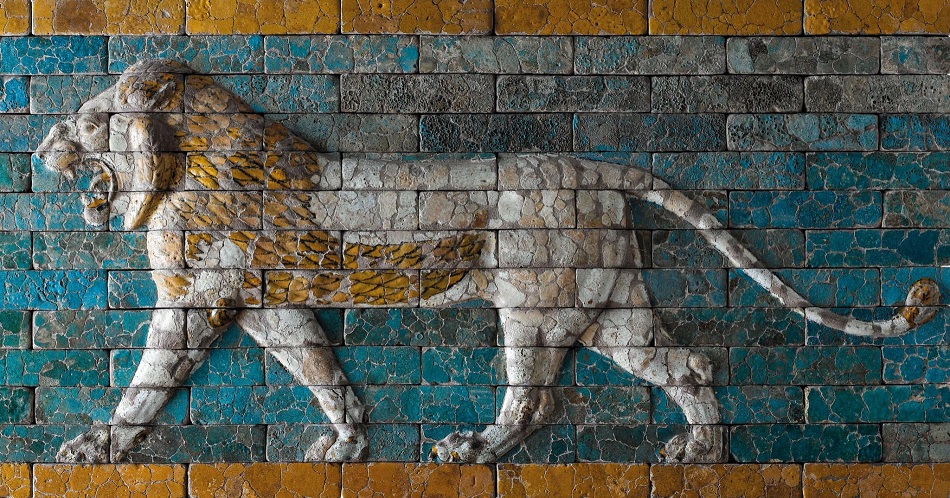
It could have been today’s news: Daniel describes superpowers mistreating people of Jewish ethnicity. But he saw a higher power running the world.
What is the message of the Book of Daniel? It’s not disconnected stories of lion’s dens and fiery furnaces. It’s not a mysterious code for dating the end of the world.
Daniel wrestles with, “Who runs the world?” This was no theoretical question, given that Babylon had taken over Jerusalem. Could the kingdoms of this world implement God’s rule? Or would the restoration of God’s reign require divine intervention? And how do God’s people cope in dark times?
This podcast (32 minutes) surveys the message of Daniel — the restoration of God’s kingship in a world gone wrong.
Where do you even start with a book like this? Look for Jesus: it’s all about him.
Revelation is the most puzzling and tantalizing book of the Bible. What’s it about?
This 30-minute podcast explains how John’s visions are about Jesus. The whole sweep of the Bible’s narrative comes together in this final episode, in the person who is good news for the world.
How did the patriarch Joseph contribute to the story of the kingdom of God? This podcast (20 minutes) shows us how to hear the story of Joseph as the story of God.
We’ve now surveyed Genesis in four podcasts. The previous three:
This podcast (27 minutes) discusses the significance of Jacob for the kingdom of God.
Jacob was Israel in the first generation. His life story is told in Genesis 25–36 in a way that his descendants could relate to, for the promises he received were being fulfilled through them.
Abraham lived his entire life for the kingdom of God.
This podcast (28 minutes) surveys Genesis 12–25 as the foundational story of the kingdom of God.
God founded his human rescue project in Abraham and Sarah. They left the region of the Babel-builders to establish a nation under God — a representative kingdom of God among the nations. The obstacles they faced are the obstacles that threaten God’s kingdom project. They trusted God, even though restoring God’s kingdom would take many lifetimes.
When I first blogged these thoughts four years ago, it became my most popular post (downloaded more than 10,000 times). Enjoy this podcast version.
If you grew up thinking of the Bible’s opening chapters as a collection of disconnected stories (a creation, a fall, a murder, a flood, a Babel tower), you need to hear this podcast (38 minutes).
The first eleven chapters of Genesis set up the plotline for the Bible’s whole narrative. The intrigue of this story puts a Gresham novel in the shade.





 Seeking the kingdom