Formed in God’s Story: Romans 9–16

Join is in person or by podcast for twelve sessions in the second half of Romans.

Update 2025-09-11: Added final pocasts, and full notes.

Where does the gospel take us? What kind of world is created as the Spirit of God sets us right through trust in his Anointed? What kind of community develops as people do right by each other as the expression of faithfulness to God, mirroring the way God in Christ did right by his earthly realm out of his faithfulness to us?

Romans 9–16 explores these questions. We are no longer a divided, warring people, for those who were not God’s people are now called God’s people. We offer ourselves in God’s service, to love each other sincerely, sharing meals together as the Father’s family, embodying the transformation that comes to the world as we recognize God’s Christ is our Lord.

In August/September 2025, we’re exploring these chapters together, with two sessions each Wednesday evening. The notes are available as a single PDF  covering Romans 9-16, or as separate PDFs for each week along with the podcasts below .

Continue reading “Formed in God’s Story: Romans 9–16”

Invitation to Romans

Update 2020-06-14: Notes and podcasts are now available for all sessions, along with a PDF of the notes for all six weeks.

Fourteen years ago, I set out to seek the kingdom of God, the centre of Jesus’ teaching and mission. Nine years ago, I launched this blog to share the results. Now I’m ready to apply this research to the book of Romans.

The kingdom perspective brings freshness and depth to familiar words like gospel, faith, righteousness, and salvation. These life-giving words restore relationship between heaven and earth, revealing how our heavenly sovereign, out of faithfulness to us has done right by us in providing his Christ as our Lord. This gospel calls for us to respond with faithfulness to him, so his life in us results in us being right with him and doing right by him in response, so earth is restored as a mirror of heaven’s faithfulness and righteousness to us. That’s the impact of the gospel we see in Romans.

Continue reading “Invitation to Romans”

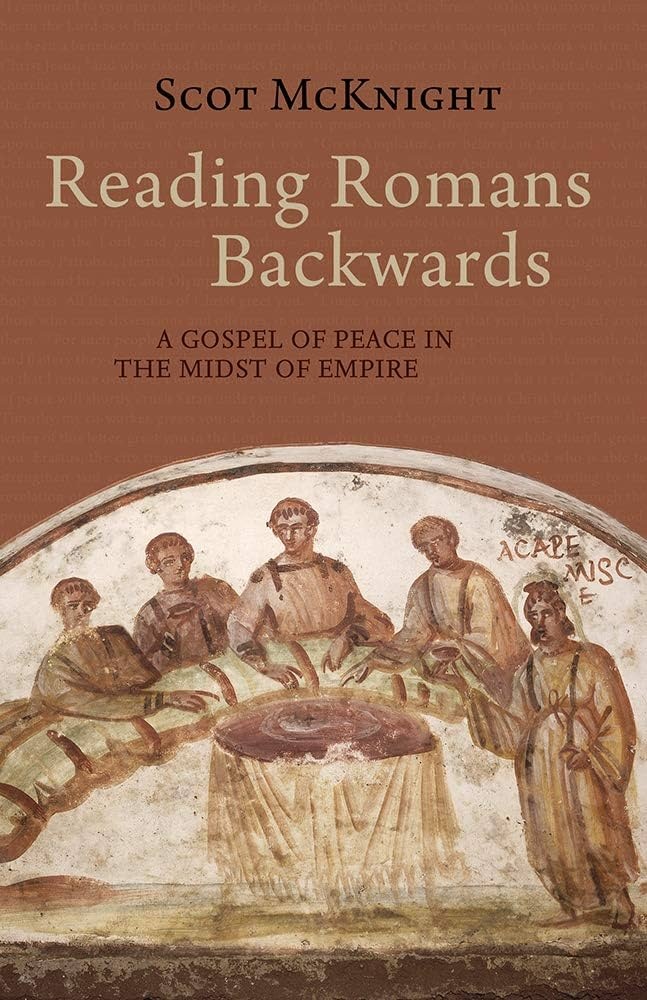
Reading Romans Backwards (Scot McKnight)

This book review looks at why Scot McKnight calls us to read the early chapters of Romans in light of the concluding ones.

After two weeks’ vacation driving the South Island of New Zealand, I’m feeling overwhelmed by the natural wonder: majestic mountains, large lakes, fantastic fjords, and glistening glaciers. Each day we began by setting the GPS coordinates to where we needed to end up, and then took our time to enjoy the stunning scenery on the way.

Scot McKnight suggests we read Romans like that. Begin with where Paul wants the church to end up, the destination spelled out in Romans 12–16. That’ll help us make sense of the route he takes to get them there.

Romans is a magnificent presentation of the gospel, setting out all God is doing in Christ to set the world right. But it was never intended as armchair theology. It’s lived theology. That’s the term Scot uses 100+ times in Reading Romans Backwards: A Gospel of Peace in the Midst of Empire (Waco, TX: Baylor University Press, 2019).

It’s only January, but this is the best book I’ve read so far in 2025. Here’s why.

Continue reading “Reading Romans Backwards (Scot McKnight)”

Power without shame (Romans 1:16)

A crucified king introduces a different kind of power to the world.

“I am not ashamed of the gospel,” Paul told the Romans. Was he struggling as a Christian? Did he fear they’d find his faith embarrassing? Let me take you back to their world.

Continue reading “Power without shame (Romans 1:16)”

Why the gospel calls for faith (Romans 1:17)

We live because God does right out of his faithfulness to us. So, faithfulness to God leads us to do right as we live.

The opening verses of Paul’s letter to Rome contain the message the whole letter unpacks. By verse 17, the key theme comes into view:

Romans 1:17 (ESV)
For in it the righteousness of God is revealed from faith for faith, as it is written, “The righteous shall live by faith.”

Questions? What is the righteousness of God? How is it revealed in the gospel? What does from faith for faith mean? And why include a quotation when he’s packing the message so densely?

Continue reading “Why the gospel calls for faith (Romans 1:17)”

The gospel in Romans

How does Paul understand the gospel in Romans? Is this how you understand it?

Open Romans.

What was Paul’s gospel? A survey of how he uses gospel in Romans could give an indication.

Previously, we summarized the gospel, tracing its roots in Isaiah, through Mark’s Gospel and Peter’s preaching, to the eternal gospel of Revelation. But was this Paul’s gospel?

The word gospel (noun or verb) occurs twelve times in Romans, clustering around the opening and closing chapters like a framework. Let’s check it out.

Continue reading “The gospel in Romans”

What is a Christian? (podcast) (Romans 12:9-21)

What does it mean to be a Christian?

Writing to Rome, Paul spent eleven chapters explaining who Christ is in relation to us, and then five explaining who we are in relation to each other under Christ’s leadership. Short answer: Christians are the community in Christ. Our identity derives from the leader God appointed for us.

This podcast draws on the transitional chapter of Romans, in fresh translation. Recorded at Riverview Church’s Joondalup campus, 15 August 2021 (34 minutes).

Related posts

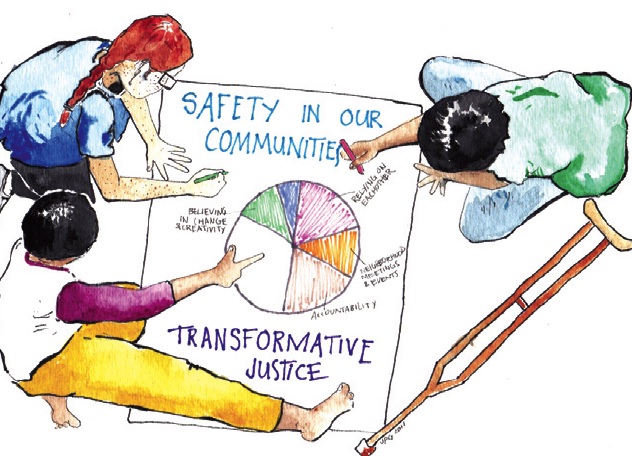
Transformative justice (Romans 12:9-21)

What does it look like to live the gospel? Romans 12:9-21 translated into life.

I’ve been meditating on Romans 12 as the-gospel-in-practice.

Romans 1–11 explains what the good news is. Romans 12–16 explains what it means to inhabit the world transformed by the gospel under the Messiah as Lord.

Here’s a fresh translation of Romans 12:9-21 from that perspective. The verbs are plural (love, detest, collaborate, etc), so the message is not so much about individual piety as it is about participating in the restoration of the world as the kingdom of God in Christ (the goal of the gospel).

Our sufferings at the hands of evil are transformative for the world, as we participate in the redemption that’s taking place in Christ.

That defines our approach to justice and our response to injustice.

So, see what you think. Any suggestions for a better translation? Any important nuances I’m missing? Any further inspiration you find in this passage? (Comment below.)

Continue reading “Transformative justice (Romans 12:9-21)”

Should Christians go to war? (Romans 13:1-7)

Open Romans 13:1-7.

We discussed what this passage says about the authority of the state. Now we turn to the question of whether God authorizes governments to conduct wars, and whether it authorizes Christians to kill enemies in war.

Romans 13:4 is the crucial verse, and I’m going to argue these points:

  • carrying the sword refers to punishing wrongdoers, not prosecuting war;
  • the New Testament does not instruct the state about war;
  • followers of Jesus must not go to war, because our King forbids it.

Here’s the context:

Continue reading “Should Christians go to war? (Romans 13:1-7)”

Romans: opening and closing theme

The same phrase is the climax of the opening and closing sentences of the Book of Romans. Do you know what it is?

Paul’s letter to the Romans opens with one of the best gospel summaries anywhere. It’s a precis of the whole kingdom story, rising to a key phrase that is the goal of the gospel in Paul’s view. It’s so crucial that the same phrase is the culmination of both the opening sentence and the closing sentence of this remarkable letter. Do you know what it is? Continue reading “Romans: opening and closing theme”