
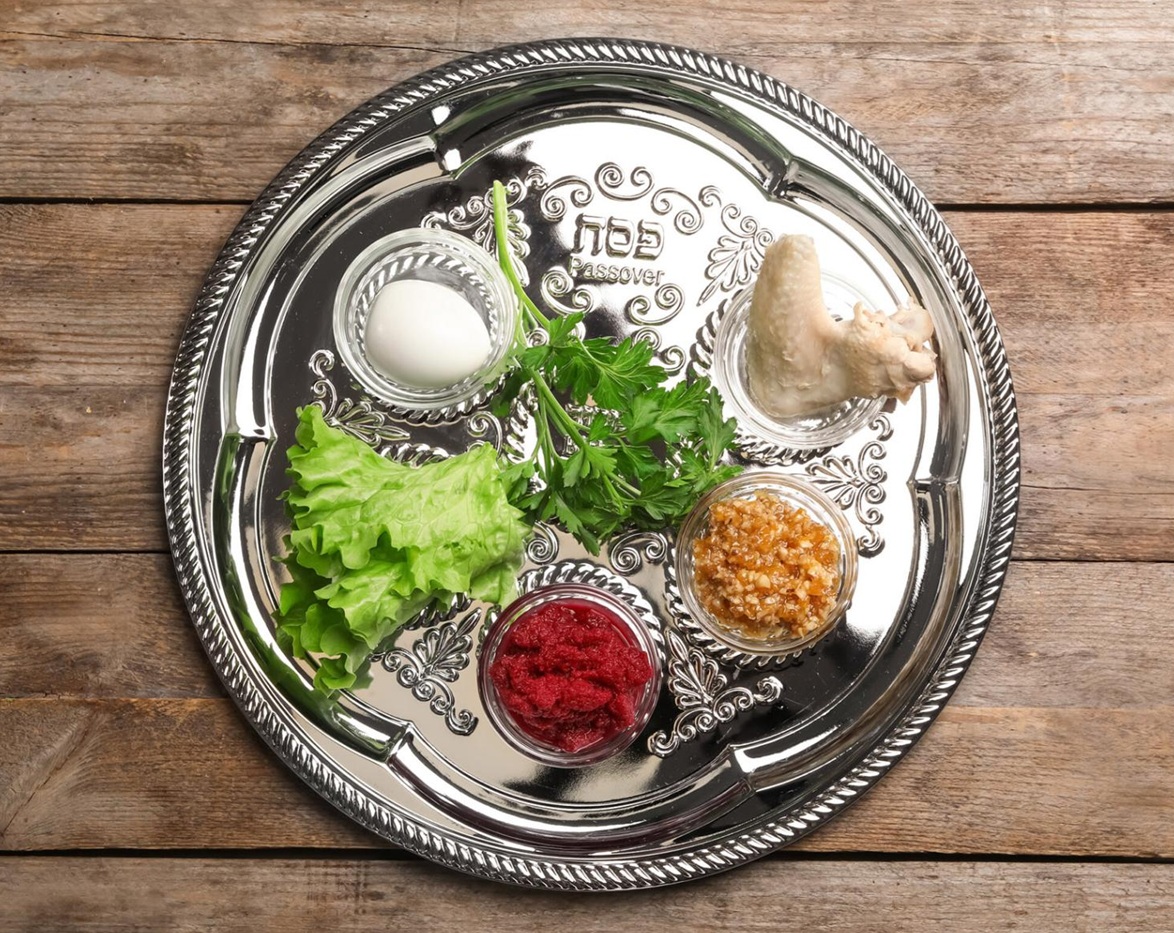
On the eve of Good Friday this year (2026), a few of us are getting together to reenact Jesus’ final meal. It was Passover, but we are not having a full Seder. Gentiles imitating them could be offensive to some Jews, and Passover prior to AD 70 was not the same as practiced today.
Passover was a celebration God liberating his people in Moses’ time, opening the way for the Sinai covenant that established Jacob’s family as a kingdom of God. It also anticipated the day when God would free his people again to be a kingdom of God. That hope takes an unexpected turn in the meal Jesus led.
The Gospel of Luke introduces Jesus’ final meal like this:
Luke 22:7-8 (NIV)
7 Then came the day of Unleavened Bread on which the Passover lamb had to be sacrificed. 8 Jesus sent Peter and John, saying, “Go and make preparations for us to eat the Passover.”
For 3,300 years, the descendants of Jacob have celebrated Passover. It’s a night different to every other night. They recall the bitter tears of slavery, and how God led them out. Death swept through Egypt, but “passed over” the households who identified as the people of the Lord. Unleavened bread recalls their sudden departure. Breaking the Matzah recalls God dividing the Red Sea. The emancipated slaves entered into covenant relationship with the Lord as the nation under his leadership.
But 2,600 years ago, the kingdom established at Sinai fell. God’s anointed kings so misrepresented his kingship that he handed them over to the kingdoms of the world (2 Kings 21). The exile was a retrograde step, like being under Pharaoh all over again as they served the rulers of this world: Babylon, Persia, Greece, the Ptolemies and Seleucids, then Caesar.
They needed a new exodus. God promised it through Isaiah (40 – 66).
They needed a new covenant to reestablish them as a kingdom of God. God promised it through Jeremiah (31:31-40).
They needed God’s anointed, a “David” to gather and shepherd his people. God promised it through Ezekiel (34:23-24; 37:24-25).
They waited. For more than 500 years, they celebrated the Passover under foreign rule. Each Passover they sang the Hallel Psalms (113 – 118). They yearned for God’s anointed (the stone the builders had rejected) to be raised up as the cornerstone of their nation again. “Lord, save us!” they prayed (Hosanna in Hebrew). Each year they held the festal procession in anticipation of the one who comes in the name of the Lord (Psalm 118:22-27).
In the first century, Passover looked back to the exodus from Egypt, and forward to the exodus that would free them from tyranny and reestablish them as God’s kingdom.
Luke 22:13b-14 (NIV)
13 So they prepared the Passover. 14 When the hour came, Jesus and his apostles reclined at the table. 15 And he said to them, “I have eagerly desired to eat this Passover with you before I suffer. 16 For I tell you, I will not eat it again until it finds fulfillment in the kingdom of God.”
This night was different from every other. Next day, Jesus would suffer as his people handed over “the king of the Jews,” recognizing no king but Caesar (John 19:15). Yet, Jesus did not believe his rejection at the hands of humanity would be the end of him. He anticipated eating with them again when the hope of Passover had found fulfilment in the kingdom of God.
Within days, Jesus was sitting and eating with them again (Luke 24:30, 42; John 21:13), eating with them and explaining the arrival of the kingdom: After his suffering, he presented himself to them and gave many convincing proofs that he was alive. He … spoke about the kingdom of God. While he was eating with them … (Acts 1:3-5).
Everything that Passover celebrated, the past and the future, was coming into focus in Jesus’ last supper:
Luke 22:19-20 (NIV)
19 And he took bread, gave thanks and broke it, and gave it to them, saying, “This is my body given for you; do this in remembrance of me.” 20 In the same way, after the supper he took the cup, saying, “This cup is the new covenant in my blood, which is poured out for you.
Jesus’ dead body was not the end of his kingship. It ended the tyranny of sin and death.
Jesus shed blood (his crucifixion) did not end heaven’s reign over the earth. It formed a new covenant, establishing heaven’s reign for the whole earth.
This meal began as a Passover, celebrating the exodus and the covenant that formed Israel as a kingdom of God. It became a meal that celebrates Jesus giving his body to be crucified, giving his life to the world that shed his blood.
- This is a new Passover: On the third day, death lost its grip, as Jesus was raised up to lead the people of earth who come to life in him.
- This is a new exodus: The Lamb leads the people of earth out of captivity to evil, providing a way where there seemed to be no way, as the weapons of death sink to oblivion.
- This is a new covenant: As we recognize his leadership (faith in Christ), God accepts us as into covenant relationship with him — the kingdom established in his bloodshed.
Jesus’ last supper blends the old and the new: the old covenant between God and Israel established at Sinai, and the new covenant between God and all the people of the earth established in Christ.
It’s a remembrance of Sinai, and of the crucified Christ — the one who was raised to reign, the good news that God’s Christ is our Lord, the call to life under his leadership, so earth is a kingdom of heaven.
Next time you take the bread and cup, remember the Christ who gave his life and blood to give us life in his resurrected reign. All of this is in the meal he gave us.
What others are saying
Origen, Homily on Jeremiah, 19.13:
If you go up with him [the Lord] to celebrate the Passover, he gives you the cup of the new covenant, he also gives you the bread of blessing. In short, he gives you the gift of his own body and his own blood.
Susan I. Bubbers, A Scriptural Theology of Eucharistic Blessings (London; New York: Bloomsbury, 2013), 75:
The Last Supper, as a Passover meal, also marks the time of a new beginning. It marks the pivotal transformation from old to new covenant (1 Cor 11:25), including a new significance to the ordinance itself. This motif of new beginnings develops from application to the Israelites who left Egypt, to the Israelites who entered into the promised land, to the Israelites during the era of the monarchy, to post-exilic Israelites, to the disciples at the Last Supper. This trajectory points forward to those who participate in the ongoing Feast. The Feast is an opportunity for a new beginning, a fresh start. God orchestrates the Passover in history as a chronological new beginning, the Last Supper as a covenantal new beginning.
Joel B. Green, The Gospel of Luke, NICNT (Grand Rapids, MI: Eerdmans, 1997), 758-759:
Luke’s scene draws on the meaning of Passover just as it contributes to a reinterpretation of Passover. …
Introducing the meal, Jesus speaks passionately of the fundamental transition he is about to experience in his career. His deep desire to share this Passover is motivated by his recognition of this impending change, denoted by his suffering. Following this meal, he announces, he will not again partake in a Passover until the Passover is fulfilled in the kingdom of God. On the one hand, this underscores Jesus’ conviction that death is not the last word, for he thus anticipates a renewal of fellowship around the table. On the other, as we have already noted, the celebration of Passover had a field of vision that encompasses past, present, and future, so that the feast anticipated eschatological deliverance, a second exodus, so to speak.
Related posts
- The covenant meal (1 Cor. 11:23–26)
- My blood of the covenant (Mt. 26:28)
- With you in my Father’s kingdom (Mt. 26:29)
- Why do Christians have Communion? (video)

 Seeking the kingdom