All the kingdoms of the world (Matthew 4:8-11)

What would you give for this kind of power?

Open Matthew 4:8-11.

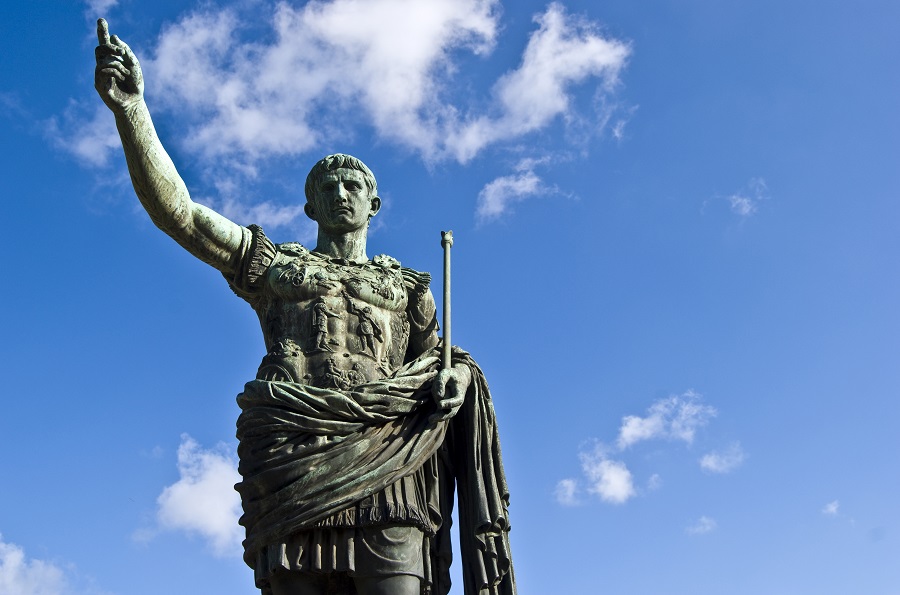
“All the kingdoms of the world!” Satan claims to have them. He offers them to Jesus. History is full of people who would kill for that! Empires will do anything for that kind of power!

But how can Satan claim to have the kingdoms of the world anyway? The Jewish hymns declare that YHWH rules the whole earth and advise the nations to acknowledge him (e.g. Psalms 2, 8, 45, 72, 79, 97, 99, 110, 149). Does Satan really have all the kingdoms in his grasp? Well, … sort of. Continue reading “All the kingdoms of the world (Matthew 4:8-11)”
How did the magi find Jesus? (Matthew 2:1-12)

Persian astrologers came looking for Jesus? What do you make of that?

Open Matthew 2:1-12.

You’ve seen the Christmas cards. Three wise men. On camels. Following a star. Balthasar, Caspar, and Melchior — three kings of orient according to western tradition. So we build nativity scenes with a manger and kings and camels and shepherds and sheep and the donkey that carried the very pregnant Mary. There probably weren’t three wise men: their caravan would have been larger for safety’s sake. The Bible doesn’t say they rode camels either. We made up the bit about the donkey too.

And they weren’t “wise men.” Magi were originally a class of Persian priests who practiced astrology and other magic arts. In Daniel 2 (LXX) they’re bundled with enchanters and sorcerers as advisors to the king of Babylon. In Acts 13:6-8, a Cypriot ruler had a magos advising him, and Paul despised him. The word usually has negative connotations in Jewish literature—a trickster/deceiver. Matthew hints at that when he says that Herod was “tricked” by the magi (2:16). Continue reading “How did the magi find Jesus? (Matthew 2:1-12)”

Living among people who don’t recognize God (Genesis 33)

As God’s representative, Jacob must make peace with Esau and the people of Canaan.

He’s no longer Jacob, the usurper who tries to take his brother’s birthright and blessing. Now he’s Israel—the one who embraces God, even when it’s a struggle. The God of Bethel has been here all along, and now Israel has returned to live in the land that is the house of God. The sovereign living among his people — that’s the kingdom ideal.

But it’s not quite that straightforward. There are already people in the land: Esau to start with, and then the Canaanites. How can the kingdom of God ideal work for Israel in a world where others may not be keen to have them there? This was the major problem for the nation of Israel in the Old Testament, just as powers that refuse Jesus’ kingship have been the major threat to Christians in the last two millennia. Continue reading “Living among people who don’t recognize God (Genesis 33)”

Isaac: the next kingdom representative (Genesis 26)

The Isaac narrative is all about the way Abraham’s descendants must follow in his footsteps.

Since Abraham laid the foundation of the nation that would restore the blessing of divine reign to the earth, what Abraham’s descendants must do is to follow in his footsteps. The Genesis narrator makes this point in the way he recounts Isaac’s life. Continue reading “Isaac: the next kingdom representative (Genesis 26)”

Your God is too small

How do you understand the gospel? Having a personal Saviour, or being the kingdom of God?

If the kingdom is so central to the Biblical narrative, why do we miss it?

In the last few hundred years, we’ve developed a culture where the spiritual is separate from the natural, where faith is separate from science, where the church is separate from state. I grew up in this world. When I was a child, an elder of our church taught me not to worry about people’s physical needs. “Leave it to the Salvos and the do-gooders to feed their bodies now,” he said. “What really matters is to save their souls so they go to heaven when they die.”

Continue reading “Your God is too small”

Living at peace in a troubled world (Genesis 21:22-34)

Since Abraham represents a very different kind of ruler, how can he live at peace among those who use force?

MakingPeace600

The Genesis narrator goes to extreme lengths to make sure we understand that YHWH rules all nations. He’s told us the blessing of YHWH’s reign will be restored through Abraham. Since then, he’s told us about Pharaoh, the kings of Shinar, Canaanite kings like Melchizedek, God’s care for Hagar the Egyptian, God bringing justice to Sodom, and God confronting Abimelech the Philistine king. How could anyone miss the emphasis on God’s continuing rule over the nations?

Continue reading “Living at peace in a troubled world (Genesis 21:22-34)”

Romans: opening and closing theme

The same phrase is the climax of the opening and closing sentences of the Book of Romans. Do you know what it is?

Paul’s letter to the Romans opens with one of the best gospel summaries anywhere. It’s a precis of the whole kingdom story, rising to a key phrase that is the goal of the gospel in Paul’s view. It’s so crucial that the same phrase is the culmination of both the opening sentence and the closing sentence of this remarkable letter. Do you know what it is? Continue reading “Romans: opening and closing theme”

Rescued, but restless (Genesis 19:30-37)

Lot was rescued from Sodom, but for what purpose? What did he do with his second chance?

Lot and his daughters survived Sodom, but their life was so invested in Sodom that they lost everything. He was driven by wealth (13:10-11), and now it’s all gone. All that remains is regret for the wasted years. The little town they fled to holds nothing for them. They seek refuge underground, in the darkness and isolation of a cave (19:30).

Continue reading “Rescued, but restless (Genesis 19:30-37)”

Friend of the king (Genesis 18:16-21)

Why did God choose Abraham and his family? Were they the only ones to be saved, or what was his election about?

After enjoying Abraham’s hospitality, the king sends his servants on an errand while he himself stays to discuss matters with his governor. Listen to the delight in his voice as the sovereign talks with his friend: Continue reading “Friend of the king (Genesis 18:16-21)”

The king’s visit (Genesis 18:1-15)

Who were the three characters who visited Abraham in Genesis 18?

Genesis 18:1 says “the Lord” turned up at Abraham’s tent door. The next verse says “three men” turned up. When two of these “men” left (18:22), they’re described as “angels” (19:1). Who are these three figures? Men or angels? Perhaps all three are angels, with one of them speaking on God’s behalf? Or is one of these three men/angels actually YHWH in disguise? Read the commentaries on the Bible, and you’ll find a confusing array of opinions over how to understand this narrative.

Continue reading “The king’s visit (Genesis 18:1-15)”

God’s commitment to rule (Genesis 17:4-8)

The covenant with Abraham is all about God’s reign.

The ruler is establishing his covenant with his nation, as yet unborn. He reveals his name: God Shaddai. He gives his servant a new name, a new identity: he is now Abraham: Continue reading “God’s commitment to rule (Genesis 17:4-8)”

Revealing the ruler: God Shaddai (Genesis 17:1-3)

God revealed himself to Abraham as El Shaddai (Genesis 17:1-3). What does this mean?

Abram has already passed through a covenant ceremony that installed him as the earthly servant of the heavenly sovereign (Genesis 15). Abram and Sarai then tried to establish the family through human means, but ended up oppressing Hagar—as human power tends to do (Genesis 16). Following that diversion, the sovereign resumes the business of establishing his covenant with Abram. Continue reading “Revealing the ruler: God Shaddai (Genesis 17:1-3)”

What about those who’ve never heard the name? (Genesis 16:13-16)

What happens to those who’ve never heard of the Saviour?

YHWH planned to restore the blessing of his reign to the nations by creating his own nation through Abram and Sarai. But Hagar did not see God in their household: what she saw was the abuse of power that is so typical of humanity in rebellion. How will the nations ever see God when his people are so unloving? Continue reading “What about those who’ve never heard the name? (Genesis 16:13-16)”

Covenant with Abram (Genesis 15:7-21)

Abram has persistent questions. How can he know that YHWH will establish Abram’s descendants as his nation in this land when Abram will be long dead before this ever happens? YHWH responds by offering to commit himself to Abram with a covenant: Continue reading “Covenant with Abram (Genesis 15:7-21)”

Who was Melchizedek? (Genesis 14:17-20)

Melchizedek has always fascinated readers and fuelled the imagination of heretics and secret societies. As long ago as the second century, Theodotus of Byzantium venerated him above Christ. Even before Jesus’ time, some of the Qumran texts treated him as an angelic figure. So who was Melchizedek? Continue reading “Who was Melchizedek? (Genesis 14:17-20)”

Who is God? (Genesis 1:1-19)

The Bible is, first and foremost, the revelation of God. With this post, we’re starting at the beginning to hear its message about the kingdom of God. It begins with the God of the kingdom.

God is ruler of two realms that derive their existence from him: the heavens (his world) and the earth (our world). Our world lacked shape and significance until

Continue reading “Who is God? (Genesis 1:1-19)”