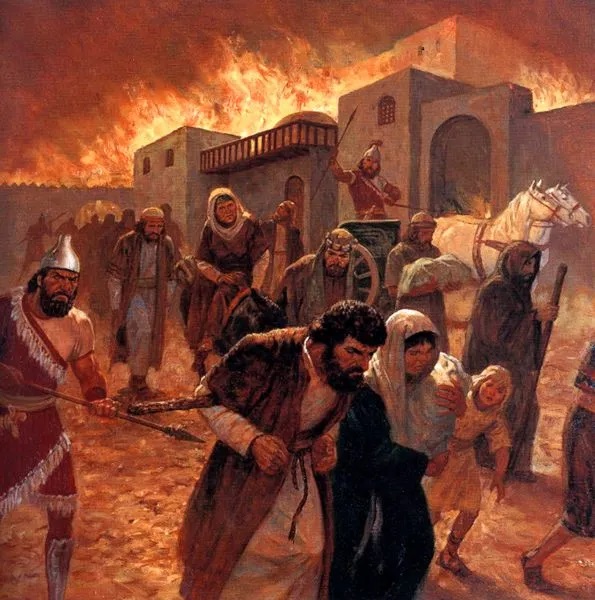
Psalm 89: The Lord’s reign through David has died

The final psalm in Book 3 is the low point of the Psalter. Jerusalem has fallen. Judah is captive to Babylon. There is no longer any nation to show the nations the wonder of belonging to God. The kingdom of God and the reign of David no longer exist.

Psalm 89 is attributed to Ethan the Ezrahite, but we don’t know who he was. He speaks for a people grappling with contradictory realities: God is faithful, but we’re not experiencing it.

Psalm 89 takes us up to the heights, and down to the depths. In summary:

Continue reading “Psalm 89: The Lord’s reign through David has died”
Psalm 80: Israel has fallen

How do you pray when everything falls apart?

Books 1 and 2 of the Psalms focused on the reign of David and his sons (Psalms 1–72). Seeing the kingdom fall in Book 3 is heart-rending:

Psalm 79:1 O God, the nations have invaded your inheritance; they have defiled your holy temple, they have reduced Jerusalem to rubble.

The disintegration began when Solomon died and the kingdom split (1 Kings 12). Only Judah (the southern kingdom) retained the Davidic kingship and worshipped in Jerusalem. The northern tribes made Samaria their capital, crowning their own kings, setting up their own worship centres. Eventually, both kingdoms fell.

Psalm 80 responds to the fall of Israel to Assyria in 722 BC. Psalm 89 responds to the fall of Judah to Babylon in 586 BC. We’ll keep Psalm 89 for next time.

Continue reading “Psalm 80: Israel has fallen”

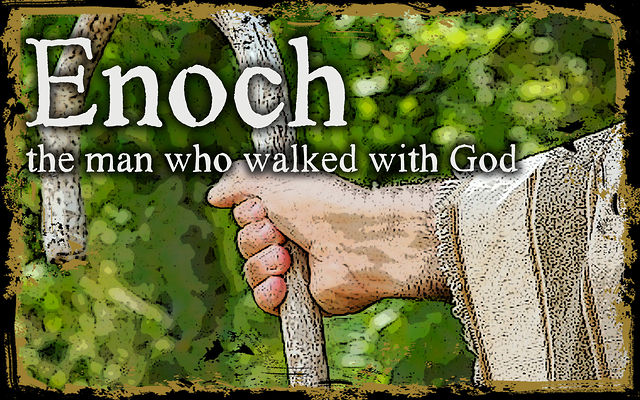
The faith of Enoch (Hebrews 11:5-6)

Enoch walked into God’s presence without dying. That’s inspiring. He’s the second example of faith in Hebrews 11.

Enoch’s relocation into the heavenly realm is intriguing. What did he see when he got there? How is that world different to this one? Where are the dead? Why is there so much evil in this world? How will God sort out the sufferings of his people and bring justice to the world? What can we learn from Enoch?

Continue reading “The faith of Enoch (Hebrews 11:5-6)”

What makes Christian prayer distinctive?

Across cultures and religions, people pray. How is Christian prayer different? The question helps us clarify our faith.

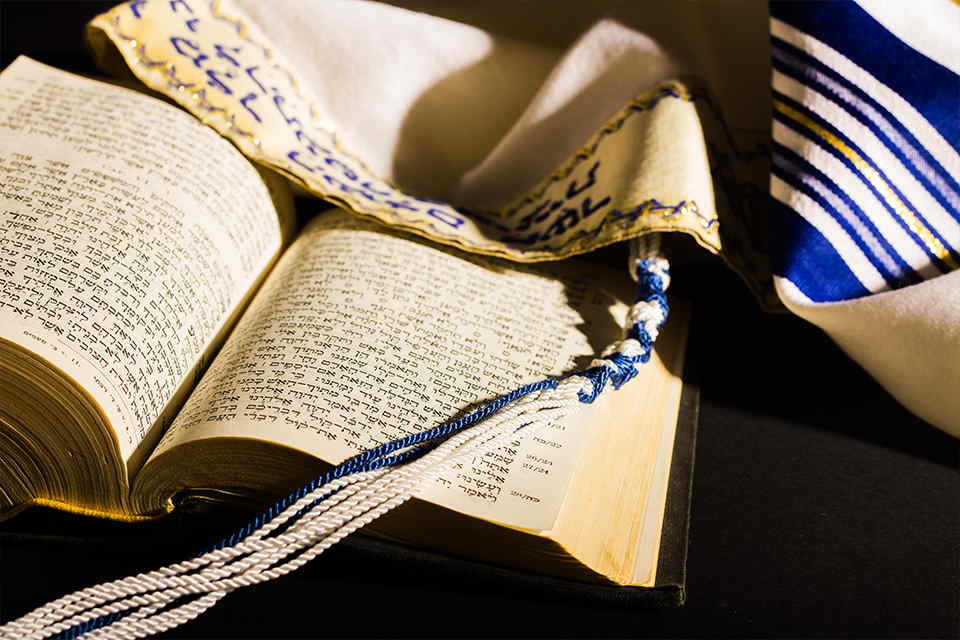
Christian prayer has its roots in Judaism: one God, no idols, covenant relationship between the heavenly sovereign and his people on earth. We saw how the distinctive basis for prayer in Judaism is this reliance on God’s revelation of himself and his faithfulness towards the people who are called by his Name.

That’s the background for our Lord’s Prayer. In synagogues across Galilee, Jesus would have joined in this Aramaic prayer:

Continue reading “What makes Christian prayer distinctive?”

What made Israel’s prayers distinctive?

People of many religions pray. What makes Judeo-Christian prayer different?

Most people pray, whatever their religion. Prayer is a request to a deity. It may be a request to bring blessing and prosperity, or to remove anguish and struggle. It may be accompanied by a sacrifice or vow to demonstrate sincerity or convince the gods to act.

The practice of prayer predates Abraham. So, what is distinctive about prayer in the Judeo-Christian faith?

Let’s start with Judaism.

Continue reading “What made Israel’s prayers distinctive?”

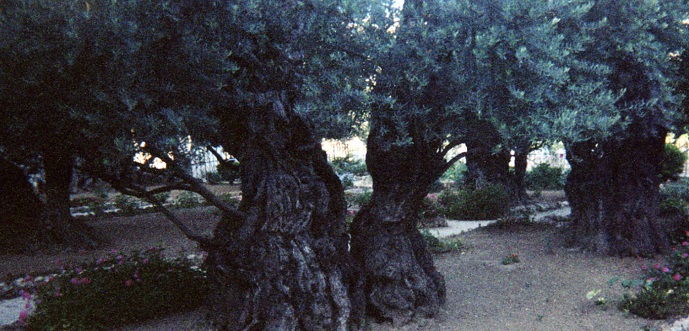
Dark night without answers (Matthew 26:36-46)

Gethsemane isn’t the end, but it sure can feel like it.

Every fibre of his being wanted to run. He wouldn’t last twenty-four hours if he stayed. Grief, anxiety, debilitating distress was killing him.

One of his friends had turned traitor, agreeing to hand him to his enemies (26:20). His other friends didn’t understand, asleep while he faced the dark night of the soul. Though he felt like running for his life, Jesus spent his last moments of freedom facing his Father.

When I’m depressed or distressed, the Psalms advise me to hope in God … my Saviour and my God (Psalms 42:5, 11; 43:5). We’ve heard that nothing is impossible with God. Facedown in the dirt in abject submission, Jesus prayed, My Father, if it’s possible, let the cup pass me by (Matthew 26:39).

Why was God handing him a deadly chalice? It was tearing him apart as he prayed, If it’s what you want, I’ll take it.

Silence.

Continue reading “Dark night without answers (Matthew 26:36-46)”

Binding and loosing (Matthew 16:19)

What did Jesus mean by giving us keys to bind and loose?

Attend a Pentecostal prayer meeting, and you may hear someone using the language of binding and loosing. They’re talking about believers taking authority over the devil. Some churches have a prayer team on this task when they meet, to bind evil spirits from interfering.

The language comes from Jesus’ statement:
Matthew 16 19 I will give you the keys of the kingdom of heaven; whatever you bind on earth will be bound in heaven, and whatever you loose on earth will be loosed in heaven. (NIV)

Catholics think Jesus meant forgiving sins or excommunicating people. Charismatics think Jesus was talking about binding and loosing demons. The Reformers thought it was the gospel message that looses people or leaves them bound. What do you think?

Continue reading “Binding and loosing (Matthew 16:19)”

Staying in touch with our king (Ephesians 6:18-20)

Got each other’s back?

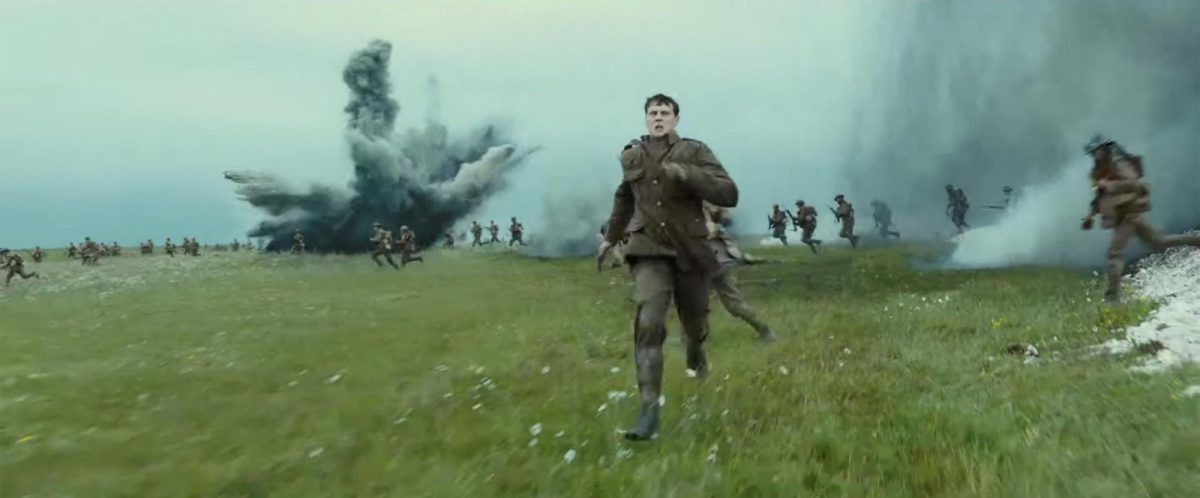
Communication matters. Did you see Sam Mendes’ movie, 1917? Two soldiers were tasked with carrying a message across enemy lines, a message that could save the lives of many compatriots. Technology has come a long way in the last 100 years, but the movie reminds us how crucial communication is for saving lives. Continue reading “Staying in touch with our king (Ephesians 6:18-20)”

Lament and hope: when life feels patchy

Honest prayer lifts us to the one who can help.

There was a time when people turned to God in disasters. “How can God allow this?” they asked, sometimes in anger. Now technology lets us recognize the wave before it hits, so people place their trust in medicine and governments to save us. Technology is useful, but it isn’t our security.

Let’s encourage each other to look higher: Continue reading “Lament and hope: when life feels patchy”

Disillusioned with Jesus? (Matthew 11:1-6)

When God doesn’t do what you expect.

Open Matthew 11:1-6.

Matthew 11:2-3 (my translation)
2 In prison, John heard what the Messiah was doing and sent his followers 3 to ask him, “Are you the one to come, or do we wait for another?”

Last year I was in a Masters-level class on the kingdom of God. Dr Tidball asked us, “So why did John the Baptist doubt if Jesus was the Messiah?” How could the greatest of all prophets — the one privileged to announce the arrival of the Messiah — doubt if Jesus was the Messiah? Continue reading “Disillusioned with Jesus? (Matthew 11:1-6)”

Why kneel?

Christians in evangelical traditions kneel much less than we used to. Have we lost something?

Open Matthew 8:2.

As Jesus stepped down from this inaugural address on the kingdom, an outcast with a disease that prevented him being part of the community came and knelt before Jesus with a request. Why did he kneel? Should we kneel? What does it mean? Why do we rarely kneel anymore? Continue reading “Why kneel?”

Knocking on heaven’s door (Matthew 7:7-11)

Jesus said ordinary people like us can invite God’s kingship to earth. Shall we?

Open Matthew 7:7-11.

The first lie ever told about God was that he was holding out on us (Genesis 3:5). The sovereign had honoured his creatures by inviting them into his palace garden, giving them access to everything he provided. He reserved for himself the right to decide good and evil for his creatures. Instead of respecting our sovereign, humans grasped at the power in his hands, acting as if we were gods. All the murder, all the social devastation, all the violence in the world flows from people grasping power that should be in God’s hands.

What difference would it make if people asked God to rule over us again? What would happen if together we sought his kingship? What if we knocked on heaven’s door and invited our sovereign to reign over earth again? Ask. Seek. Knock. According to Jesus, our true ruler would respond to such an invitation (7:7). Continue reading “Knocking on heaven’s door (Matthew 7:7-11)”

The Lord’s Prayer (Matthew 6:9-15)

Jesus’ entire kingdom vision is encapsulated in this prayer.

Open Matthew 6:9-15.

“Our Father…” We’ve recited it, heard it taught, and used it as a pattern for prayer. But for Jesus it was more. In 57 words, he pulled together everything he was working for. It’s a kingdom manifesto. We pray to God as king, for the community he governs (his kingdom). Continue reading “The Lord’s Prayer (Matthew 6:9-15)”

What is prayer? (Matthew 6:5-8)

Jesus authorized you to approach the throne of the great king

Open Matthew 6:5-8.

Why was Daniel thrown into the lion’s den? Did that strike you as an excessive penalty for … praying?

Sure, it was a political ploy to bring Daniel down, but how could Darius’ advisors have convinced him to enact such a law? We need to understand how they thought about prayer in the ancient world. Continue reading “What is prayer? (Matthew 6:5-8)”

Discovering God’s army (Genesis 32:1-12)

Jacob was petrified of facing Esau, until he found he had a bigger fight on his hands.

I hope that reading the Bible as the story of the God’s kingdom is helping unfold its core message to you. It really does make a huge difference. Even those who write commentaries on the Bible have difficulty making sense of the text if they miss this perspective. Continue reading “Discovering God’s army (Genesis 32:1-12)”