God’s spokesman (Exodus 4:13-20)

Open Exodus 4:13-20.

Delivering ultimatums to a powerful kingdom is high-risk business. Moses has no desire to serve as spokesman of the heavenly sovereign.

Moses sought exemption because he had no power in his hand. Now he claims he has no power in his voice. Continue reading “God’s spokesman (Exodus 4:13-20)”

Helping God’s people find their identity (Exodus 3:16-22)

Open Exodus 3:16-22.

It’s a terrifying assignment. Moses is commissioned as ambassador for the heavenly king. He must confront Pharaoh with YHWH’s demand to release the Hebrew people.

But first, Moses must convince Israel of their identity as YHWH’s people, not Pharaoh’s. Moses is instructed to do this in partnership with the elders of Israel (3:16).

That implies that the descendants of Jacob have some level of self-understanding and organization. Christian preachers who care only about theology (and not history) sometimes characterize the Hebrews as slaves who’ve been oppressed so long they have little sense of their identity as descendants of Abraham. That’s a caricature: Continue reading “Helping God’s people find their identity (Exodus 3:16-22)”

A royal encounter (Exodus 3:1-10)

God shows up where we don’t expect him. For good reason.

Open Exodus 3:1-10.

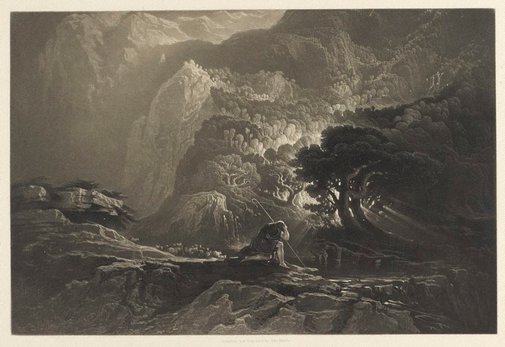
A fire in the wild can consume hundreds of acres in just a few hours. No experienced bushman ignores a fire. Moses was no exception.

Moses was out in the wild to escape Pharaoh. If he ever had aspirations of ruling people, he’d given them up, taking a job shepherding animals. He led his flock to the edge of the wilderness. He feels safer in land that supports life sparsely, where human rulers have little interest.

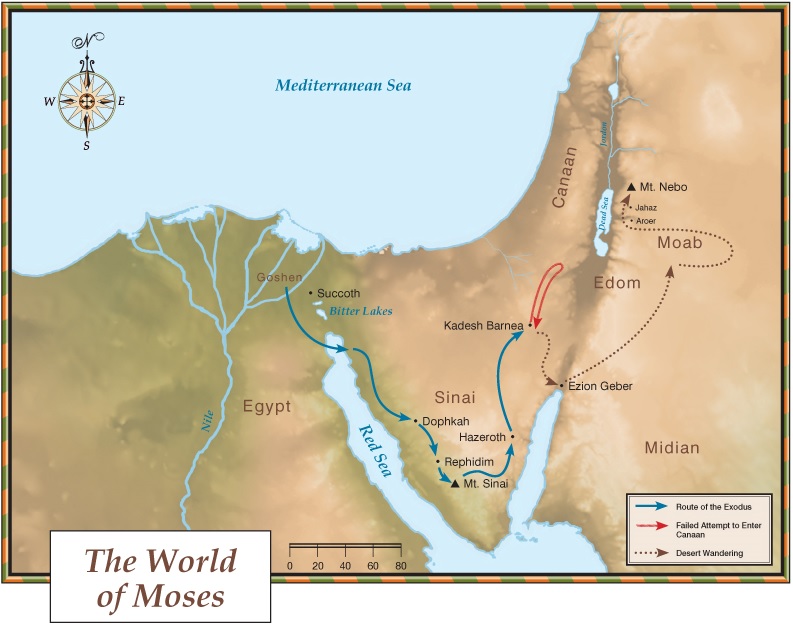
Far from the cities of human administration, in a part of creation no one cares about, Moses discovers something astounding: God’s mountain (3:1). The king of creation is in residence here. Several times throughout the Bible’s narrative, God’s servants return to this mountain that lies south of the Promised Land. Each time we learn more about the Sovereign, his law, how he rescues his people, and how he rules the earth.

The fire Moses sees on God’s mountain is unlike any he’s ever seen. Fire consumes combustible materials, releasing energy as heat. A flame that does not consume is a different kind of flame: its energy comes from another place, a realm that does not destroy this one.

So Moses turns aside to investigate. The flame in the bush is an angel:

Continue reading “A royal encounter (Exodus 3:1-10)”

Your kingdom identifies you (Exodus 2:15-25)

Open Exodus 2:15-25.

Who is Moses? A Hebrew by birth? An Egyptian by nationality? He tried to take a stand with the Hebrews against the injustice of Egypt, but it didn’t work. Now he’s a nobody. Far from the Hebrews and Egyptians. In no man’s land.

Even in the wilderness, injustice reigns. Seven Midianite sisters try to water their father’s flock, only to have male shepherds push in. It’s just like God said: women face gender conflict in a world where rebellion rules (see on Genesis 3:16).

Moses stands up for them, so they return home early with their sheep. Their father’s surprise indicates that this sexist injustice was their daily experience (2:18). Is it only Moses who cares about gender inequality? Or does every form of injustice need to be set right for the kingdom of God to operate as our heavenly ruler intends?

Continue reading “Your kingdom identifies you (Exodus 2:15-25)”

Fighting violence with violence (Exodus 2:11-14)

Open Exodus 2:11-14.

Moses grows up in Pharaoh’s house. He sees how human government operates. The Hebrew slaves weighed down with burdens (2:11, the same word as 1:11).

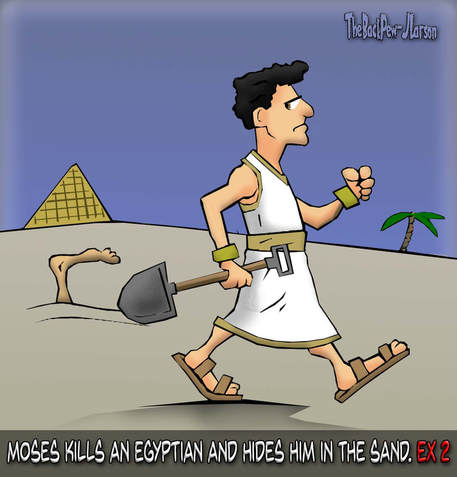
He identifies with them: the Hebrews are his brothers. Moses feels a responsibility to act against the injustice. He sees an Egyptian striking a Hebrew, so Moses strikes the Egyptian. The same Hebrew word (nā·ḵāh) is used to describe both actions. Moses has fallen into the trap of trying to resolve violence through violence. We have already seen how destructive this approach is (compare Genesis 4:23; 6:11).

This temptation will dog God’s people throughout their history. It still does. By responding to oppression with oppression, Moses has become the agent of death rather than the agent of YHWH. He is using his power the way Pharaoh uses it. Killing is not the path to saving. Moses knows his actions are wrong: furtively checking that no one is watching, and hiding the body in the sand (2:12). Continue reading “Fighting violence with violence (Exodus 2:11-14)”

Strong women of Exodus (Exodus 2:1-10)

Open Exodus 2:1-10.

In the opening chapters of Exodus, it’s the women who are the heroes:

  • Shiphrah and Puah (midwives) feared God rather than Pharaoh, disobeying the king of Egypt (1:17).
  • Jochebed (Moses’ mother) dared to disobey Pharaoh by floating her baby in a basket on the Nile (2:1-3).
  • Miriam (Moses’ sister) watched over the baby to guard his life. She approached the princess, and negotiated for their mother to raise Moses (2:7-8).
  • Pharaoh’s daughter changed the course of history by defying her father and rescuing a helpless Hebrew baby from his water-borne basket.
  • Zipporah (Moses’ wife) later recognized his life was under threat, and took action to save him (4:24-26).

Continue reading “Strong women of Exodus (Exodus 2:1-10)”

What do you fear? (Exodus 1:12-22)

What you fear, you serve.

Open Exodus 1:12-22.

Exodus 1 provides real insight into what’s wrong with the powers in the world. To keep people under their control, rulers afflict them with heavy burdens (1:11 ESV). But you can’t squash people so easily: the heavy burdens Pharaoh placed on the Hebrews only made them stronger (1:12). And that’s why rulers become progressively more brutal (pě·rěḵ in 1:13, 14). Continue reading “What do you fear? (Exodus 1:12-22)”

How human rule goes bad (Exodus 1:1-11)

Open Exodus 1:1-11.

By the end of Genesis, one of Abraham’s descendants was bringing divine wisdom to the greatest ruler of his day. In Joseph, Pharaoh saw the spirit of the heavenly sovereign (Genesis 41:38). He followed Joseph’s advice, and many lives were saved.

So is there hope in human rule? After all, human rulers are God’s servants, to limit violence on the earth.

Unfortunately, our human rulers always end up as self-serving. Four centuries later, Egypt has a new king, one who does not know Joseph (Ex 1:8). That means this Pharaoh does not know YHWH either.

The Exodus is not just about the heavenly ruler releasing his people from Pharaoh: it is about the heavenly ruler revealing himself to Pharaoh. The goal is that Pharaoh will know YHWH as earth’s true ruler (5:2; 6:7; 7:5, 17; 8:10 and so on). Exodus 1–15 is a confrontation between rulers, a kind of war—a challenge over who rules. It is a kingdom conflict—the paradigmatic kingdom confrontation of the Old Testament. Continue reading “How human rule goes bad (Exodus 1:1-11)”

Exodus: the setting

What do we know from history about the exodus?

Please don’t believe everything you find in the Internet about the exodus. There are some outlandish claims. Some claim to have found the ark of the covenant, Noah’s ark, and everything in between. Some claim to have evidence of the exodus in the wrong time period. The truth is that there is no indisputable archaeological evidence to corroborate the narrative of the exodus.

Continue reading “Exodus: the setting”

Exodus: God’s kingdom established

Exodus is a kingdom of God story. What does it say?

Exodus provides a powerful revelation of who God is. He is the true ruler. Pharaoh cannot rule God’s people. That’s good news.

While Riverview College is launching, I’ll be posting on what Exodus says about our heavenly sovereign, from an Advance in Faith series (unit 220).

Exodus is about God’s kingship — establishing a nation under his rule and law, living among his people. Continue reading “Exodus: God’s kingdom established”

Free course in Perth: Exodus

Ever heard the Book of Exodus as a kingdom-of-God story? You can now.

Update 2021-02-07: old links removed.

The Book of Exodus is the story of the first nation to be liberated from human rule and established as a kingdom under God’s direct rule.

YHWH becomes their king when he liberates his people (Ex 1 – 14), enters into covenant with them (Ex 15 – 25), and comes to live among them (Ex 25 – 40). Continue reading “Free course in Perth: Exodus”

Why wasn’t Jesus demanding obedience? (Matthew 5:17-20)

As king, Jesus could lay down the law for his people. What he does is to lay down his life for his people.

Open Matthew 5:17-20.

“Don’t think I’ve come to abolish the Law or the Prophets,” Jesus said (5:17). Why did he need to say that? Who would have heard his message as doing away with God’s commands? Why would the crowd on the hillside have had such a thought?

They’d never heard anything like Jesus’ kingdom announcement. Good news: heaven’s reign is being restored to earth (4:17-25). Joy to all the people who would benefit under his reign (5:3-12)! With God’s presence among them, they were as flavour-intense as salt, so brilliantly endowed with the glory of their sovereign that they couldn’t hide (5:13-16).

That’s not how Jesus’ contemporaries taught. The Pharisees expounded Torah commands, calling people to be more obedient. Over the centuries, Jewish rabbis have identified a total of 613 mitzvot (commandments). For each command, they have defined who should obey (males? females? children? foreigners?), how often (constantly? weekly? yearly? once-off), and where (e.g. the festivals are in Jerusalem). They analysed how commands about sacrifices could be obeyed after the temple had been destroyed. Their intense focus on commands is perfectly logical if you believe that God would only restore his kingdom once his people were more obedient.

But that was not Jesus’ message. His approach was so free and joyful that he needed to explain himself to those who thought he should have been calling for obedience. By announcing the blessing of YHWH’s restored reign after six centuries under foreign rule, was Jesus saying that Torah obedience didn’t matter after all? Was he saying that God had changed his mind about disciplining Israel for their disobedience, that Torah obedience didn’t matter and God would give them the kingdom anyway?

Jesus’ answer to that question is categorical:

Matthew 5:18 (ESV)
Truly, I say to you, until heaven and earth pass away, not an iota, not a dot, will pass from the Law until all is accomplished.

God was Israel’s political sovereign as much as he was their religious deity. They were called to be a kingdom under God’s kingship. The Torah was their national law. If Jesus was Israel’s king, the son of David who represented the heavenly king on earth, he would undermine his own authority if he taught people to ignore their heavenly sovereign’s laws. He would not their great king, but the person of least significance in the whole kingdom:

Matthew 5:19 (ESV)
Therefore whoever relaxes one of the least of these commandments and teaches others to do the same will be called least in the kingdom of heaven, but whoever does them and teaches them will be called great in the kingdom of heaven.

His opponents relax. Jesus is, after all, calling people to obey Torah. Then, just as they let down their guard, Jesus throws the final punch: “These Pharisees and Torah interpreters who constantly point out how you don’t measure up? You’ll all have to do better than that mob or Israel will never have God’s reign!” (5:20 paraphrased. Note: you in this verse is plural).

Jesus was using irony to make a serious point. Why was he so antagonistic to the Pharisees and Torah teachers? Matthew provides further detail as his Gospel account unfolds, but one reason was that they only added to the people’s burdens, making life under God even harder to bear. They weighed people down without lifting a finger to help the people carry these loads (Matthew 23:4). The Exodus story was about God releasing his people from slavery to live as his royal kingdom, but these Torah teachers turned his kingdom law into a form of slavery. They misrepresented their heavenly sovereign — not as the saviour of his people but as their enslaver.

Jesus planned to do more than lift a finger. Instead of weighing the people down with failure, Jesus planned to take their failures on his own shoulders and bear it for them, as only their king could. Torah mattered, and Jesus planned to fulfil for his people what the heavenly sovereign required:

Matthew 5:17 (ESV)
Do not think that I have come to abolish the Law or the Prophets; I have not come to abolish them but to fulfil them.

Jesus never taught that obedience to the heavenly sovereign was unimportant. Their suffering under Roman rule was indeed because of their disobedience. But what Jesus planned to do was astounding: instead of pointing to their failures and commanding them to do better, Jesus planned to take their disobedience on himself, to face the oppressive powers for them, to be the obedient one who fulfilled Torah for them, to free his people from their oppression.

The crowd on the mountainside could not have known how Jesus would do this, nor how much it would cost him. All they knew was that he had a plan to reinstate God’s reign for them. The king would act on his people’s behalf. Instead of demanding they serve him, he would serve them. That’s good news.


What others are saying

Tom Wright, Matthew for Everyone, Part 1: Chapters 1-15 (London: SPCK, 2004), 41:

Jesus wasn’t intending to abandon the law and the prophets. Israel’s whole story, commands, promises and all, was going to come true in him. But, now that he was here, a way was opening up for Israel—and, through that, all the world—to make God’s covenant a reality in their own selves, changing behaviour not just by teaching but by a change of heart and mind itself.

This was truly revolutionary, and at the same time deeply in tune with the ancient stories and promises of the Bible. And the remarkable thing is that Jesus brought it all into reality in his own person. He was the salt of the earth. He was the light of the world: set up on a hill-top, crucified for all the world to see, becoming a beacon of hope and new life for everybody, drawing people to worship his father, embodying the way of self-giving love which is the deepest fulfilment of the law and the prophets.

R. T. France, The Gospel of Matthew, The New International Commentary on the New Testament (Grand Rapids, MI: Eerdmans, 2007), 183:

We might then paraphrase Jesus’ words here as follows: “Far from wanting to set aside the law and the prophets, it is my role to bring into being that to which they have pointed forward, to carry them on into a new era of fulfillment.”

[previous: Who is the light of the world?]

[next: Do the Ten Commandments apply to Christians?]

Instruction from the king (aka Sermon on the Mount)

The Sermon on the Mount is actually the Law given by the king for life in his kingdom.

Open Matthew 5–7.

John the Baptist was “the voice” announcing the arrival of God’s kingdom (3:1-3), introducing heaven’s anointed king (3:11-12). A voice from heaven confirmed his message: Jesus was indeed the chosen Son, the ruler heaven was pleased to appoint (3:17).

The anointed king had faced Israel’s enemy and driven him back: “Be gone, Satan: you have no authority here! Our Law honours YHWH our ruler. We serve no other” (4:10 paraphrased).

The king then withdrew to the northern reaches of his realm to live with the most oppressed, to bring light to the darkest place (4:12-16). There he announced the re-establishment of God’s kingdom, enacting the kingdom by releasing people from oppression by sickness and evil (4:22-25).

The king leads his followers to “a mountain” to give instruction on life in God’s kingdom. It was somewhere on the northern slopes of the Sea of Galilee, traditionally near Tabgha (Google maps). As you can see (photo above), it’s more of a hillock than a mountain. So why does Matthew call it a mountain? He’s thinking of something more than geography.

Continue reading “Instruction from the king (aka Sermon on the Mount)”

Matthew 1–5 reveals Jesus fulfilling Torah

Matthew’s opening chapters show Jesus as the fulfilment of Israel’s Torah.

deadseascroll_4q41_deut
Deuteronomy (Dead Sea Scroll 4Q41)

Open Matthew 1–5.

Here’s an intriguing possibility.

Matthew keeps focusing on Jesus fulfilling Scripture. He’s told us that six times already (1:22; 2:15, 17, 23, 3:15; 4:14). Does this motif define the way Matthew tells Jesus’ story? Continue reading “Matthew 1–5 reveals Jesus fulfilling Torah”

Esau’s ordinary kingdom (Genesis 36)

Esau’s kingdom story is such a contrast to the kingdom God is establishing through Jacob.

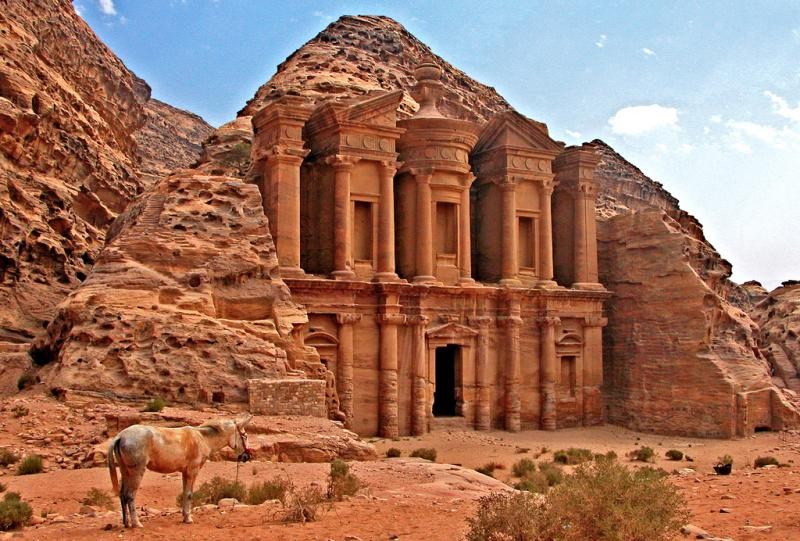
petra
Petra (in ancient Edom)

If you miss the kingdom perspective, you may wonder why Genesis 36 is in the Bible. It’s a repetitive jumble of names associated with Esau. Sure, Esau was Abraham and Sarah’s grandson; God promised them nations; and Esau has a nation. But there’s too much detail to just say that. Something else is going on. Continue reading “Esau’s ordinary kingdom (Genesis 36)”

Jacob’s life in God’s house (Genesis 35)

Jacob is invited to live in God’s house (Bethel). How well do they do?

Bethel—literally God’s House—is where Jacob is invited to live. But if they are to live in the house of their heavenly sovereign, they must purify themselves. After the skirmish with the Shechemites, the smell of death is on them and their clothes. Among the spoils are idols and talismans. When these impediments are gone, they enter Bethel. The surrounding cities are too terrified to seek vengeance on these servants of the heavenly king (35:1-5). Continue reading “Jacob’s life in God’s house (Genesis 35)”

Were Simeon and Levi justified? (Genesis 34:30-31)

Dinah’s brothers defended her honour by killing the Shechemites. Were they justified in making a stand for righteousness?

justicescales

Were Simeon and Levi justified in standing up for righteousness by killing the Canaanite prince who raped their sister, along with all his people? We’re examining how later Jews judged their actions. Continue reading “Were Simeon and Levi justified? (Genesis 34:30-31)”

How do we fight injustice? (Genesis 34:3-31)

Should God’s kingdom people enforce justice on the nations? Or should we just suck up the injustice? How do you respond to evil?

The unanswered question of Genesis 34 is how to respond to evil. Jacob’s family will be the agents of the kingdom of God in years to come, but how should they respond right now when a Canaanite prince rapes Dinah? Injustice remains a relevant question. Continue reading “How do we fight injustice? (Genesis 34:3-31)”