
Genesis 5 is a new family story, in contrast to the community of Chapter 4 who went out from God’s presence and built a city dedicated to human honour and ingenuity, relying on violent superheroes to bring justice. We’re now turning to the family that relies on God to give life and calls on his name for their survival (4:26).
Category: Old Testament
Genesis – Malachi (or Genesis – 2 Chronicles in the Tanakh)
Podcast: Genesis 4

This podcast (33 min) covers the topics blogged from Genesis 4:
Cain’s sin divides the world (Genesis 4:17-24)

Tragically, Cain’s sin divides the world. The Lord still reigns over the whole earth, but Cain’s mob are separated from those who live in the Lord’s presence.
They construct another culture, based on human achievement:
Continue reading “Cain’s sin divides the world (Genesis 4:17-24)”
How God deals with evil (Genesis 4:8-16)

Genesis 4:8 (NIV)
Now Cain said to his brother Abel, “Let’s go out to the field.” While they were in the field, Cain attacked his brother Abel and killed him.
Death is the ultimate destruction of our life. Death entered the world by disconnecting us from our Life-source. Cain sees it as a way to be rid of his rival. When we reject God’s perspective of good and evil to do what’s right in our own eyes, we don’t care what’s good for the other.
So who will make Cain pay for the murder? In these early chapters of Genesis, there’s no human government deciding whether people have done evil. God delegates that authority only after the flood (Genesis 9:4-6). God reigns directly, so God investigates Cain’s crime, just as God investigated the three rebels in the garden (3:9-19).
Cain, Abel, and the fight against sin (Genesis 4:1-7)
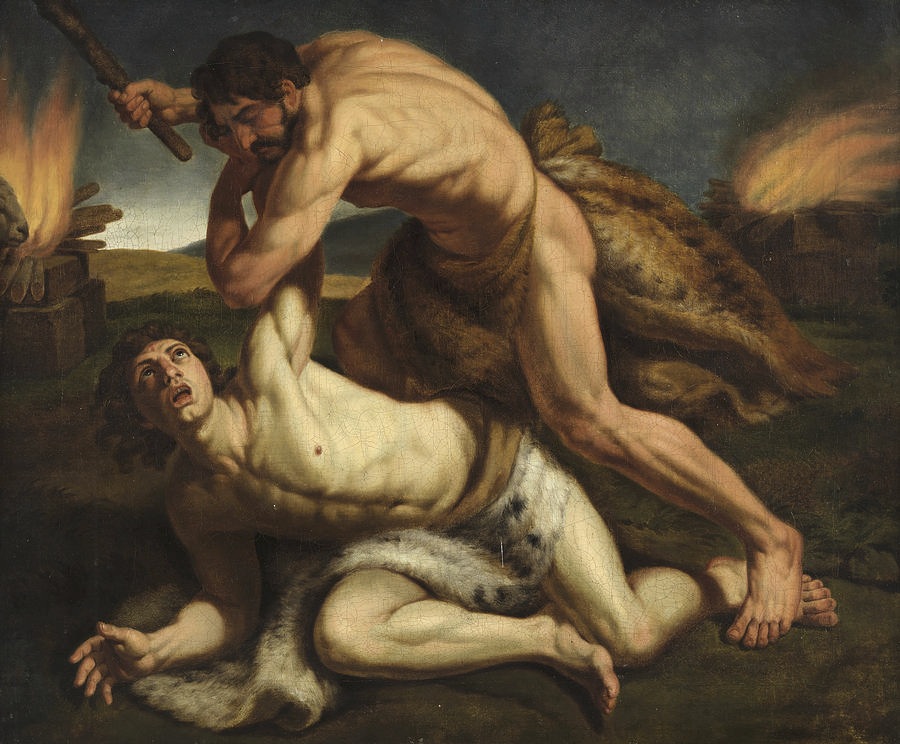
We’re no longer in God’s royal garden, but we’re still under God’s governance. Despite the unsuccessful coup, God’s providence remains:
Continue reading “Cain, Abel, and the fight against sin (Genesis 4:1-7)”
Podcast: Genesis 3

This podcast covers the topics blogged from Genesis 3:
The Tree of Life (Genesis 3:22-24)
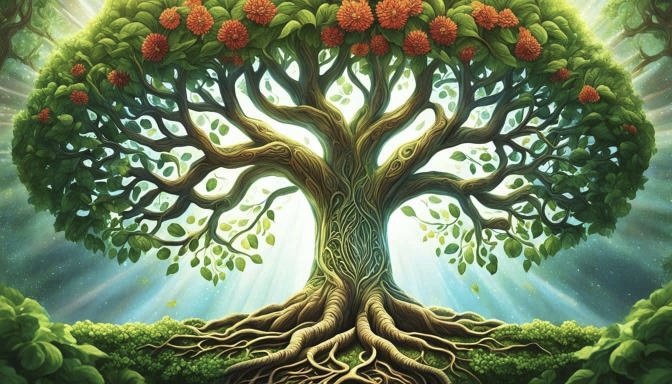
The Tree of Life was God’s sustaining life that kept them alive. They no longer have access to that privilege, having declared themselves gods in their own right, deciding good and evil for themselves:
The question of justice (Genesis 3:8-21)

The agents God trusted with caring for creation attempted a coup, to become gods, to define good and evil for themselves. How does God respond? God takes responsibility, but how God handles justice is not like what human rulers do when someone threatens their authority.
God doesn’t react swiftly or violently. God doesn’t drop everything and rush to apprehend the rebels who betrayed the trust he placed in them. God waits. God invites them to discuss their relationship with them. God explains the implications of what they have done.
The question of trust (Genesis 3:1-7)

If your Bible adds headings over the text, it probably labels Genesis 3 as “The Fall.” Theologians use that term to describe humans “falling” from their perfect state, becoming sinners subject to death. Christian theology of the fall is based on Paul’s letters (Romans 5:12-19; 1 Corinthians 15:21-46).
In reading Genesis 3, Christians often substitute “Satan” for serpent. We reason that it must have been the devil, because snakes can’t talk. We think humans fell because the devil tempted them. And in the Bible’s final book, that ancient serpent is identified with the devil or Satan (Revelation 12:9; 20:2).
But that approach misses the way the story is told in Genesis where it’s about the chain of command. Say you’re reading a spy novel and there’s a kidnapping in the first chapter. Later in the book you learn the kidnapper was working for a foreign power, aiming to destabilize the government, but you didn’t know that in the opening chapter. Let’s try reading Genesis 3 in its immediate context.
Podcast: Genesis 2

This podcast (26 min) covers the topics we’ve blogged from Genesis 2.
The human in relation to others (Genesis 2:18-25)

The knowledge of good and evil stays with God. God’s first instruction tell us what is not good:
Continue reading “The human in relation to others (Genesis 2:18-25)”
Life in God’s garden (Genesis 2:5-17)

The all-powerful God created the heavens and the earth (Genesis 1). God breathes his existence into us:
Genesis 2:7 (NIV)
Then the Lord God formed a man from the dust of the ground and breathed into his nostrils the breath of life, and the man became a living being.
Because he lives, we live. That’s the message of the Bible. The life God shared with us is what we share with one another.
We’re also part of the earth. The human (ā·ḏām) is formed from the ground (ǎḏāmāh). Humans are the marriage of heaven and earth.
And God provides us with a home, with everything we need to live well:
The relationships in Genesis (Genesis 2:4)
This verse shows us how to recognize the family stories in Genesis, framing our identity in relation to God and to each other.

It’s all about our relationships with God and each other. Genesis 2:4 introduces us to the structure of the book, how the stories of the key people fit together, and our relationship to the Lord God.
Discerning where each new section begins is crucial to understanding any text. You won’t believe how easy this is in Genesis. Each new story begins with the word tô·lē·ḏôṯ in Hebrew. It means a family story, the account of a family’s origin and the descendants who carry on the family line.
Here are all the family stories (tôlēḏôṯ) identified in Genesis:
Continue reading “The relationships in Genesis (Genesis 2:4)”
Podcast: Genesis 1

Prefer podcasts? This one covers our three previous posts on Genesis 1, the first chapter of the series Formed in God’s Story: Genesis 1–12.
God’s authority in heaven and on earth (Genesis 1:14-31)
We discover our identity in relation to God.

Genesis 1 is a revelation of God. God’s decrees give form and function to a world that would otherwise be vacuous and void. God decreed life.
Now God sets up signs in the heavens that earth is under heaven’s authority:
Continue reading “God’s authority in heaven and on earth (Genesis 1:14-31)”
“And God said …” (Genesis 1:1-13)
God is the subject of almost every sentence in Genesis 1. His decrees give earth its shape and significance.
We talked about how hearing Genesis 1 well means listening to what the ancient Hebrew words meant in their culture. Let’s apply that approach.
How to approach Genesis 1
Why do people disagree over how to read Genesis 1?

If you missed Ariana Grande’s most popular song last year, tell me what she means:
I didn’t think you’d understand me
How could you ever even try? …
We can’t be friends …
— Ariana Grande
Was she breaking up with a guy because he didn’t understand her? If you keep listening, it’s the other way around. The refrain is, “I’ll wait for your love.”
Even best friends misunderstand each other. We make assumptions about what the person is saying. We hear part of the message and miss the main thing. We don’t connect the words with yesterday’s conversation.
The chance of misunderstanding is greater when we don’t know someone well. If the person is from another culture, or another language, or another time, we’ve got work to do to understand who they are, what they’re saying, and what they mean.
All those issues are present when we come to the Bible. All sixty-six books come to us from another culture, another language, and another time. We misunderstand them when we read them through Western eyes, though the dynamics of our culture and the assumptions of our time.
That’s why people divide over how to read Genesis. We misunderstand it when we expect it to answer our questions about science and history, instead of hearing what it is talking about. Gordon Wenham expressed it well:
Formed in God’s Story: Genesis 1–12
Free course with notes and podcasts on Genesis 1–12.
Update 2024-03-28: Final podcasts and full notes added.
The first eleven chapters of Genesis make an astounding claim. The Lord God is not only the covenant God of Israel (the message from Exodus onwards). He is the God of all people, Lord of heaven and earth. It’s all his creation, established by his sovereign decree.
The rest of Scripture builds on this foundation, as what God established in the beginning comes together in the end. As the prophets promised, the word of the Lord is not a fruitless echo in a void; it’s the life-giving command that transforms creation (Isaiah 55:11-13).
The word that was there in the beginning became a living, breathing, embodied reality in his creation as the Word became flesh and dwelt among us (John 1:14). It’s in him that the whole creation is restored, so the story ends with the one who is seated on the throne declaring, “See! I am making everything new” (Revelation 21:5).
That’s the foundational importance of these early chapters of Genesis. Over six evenings in February/March 2025, we’ll slow down and savour just two chapters a night:
Psalm 145: God’s reign restored in David
The final Psalm of David points us to where we’re headed.
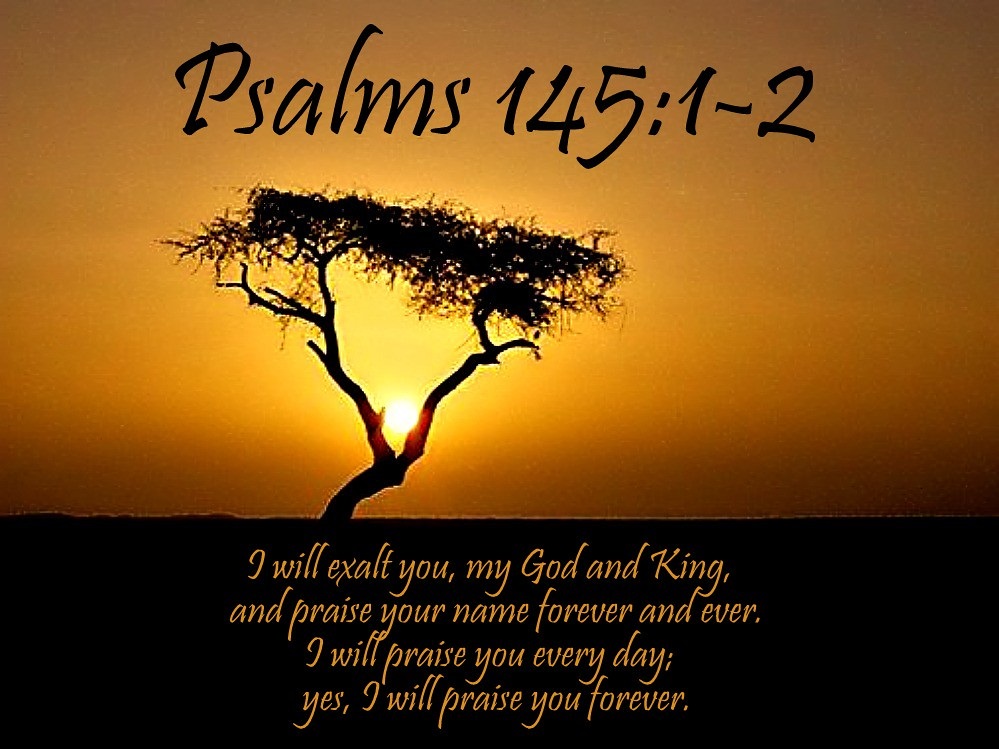
To conclude this survey of the Psalms, we’ve chosen something very significant: the last psalm “of David.”
It’s a praise psalm, as God’s anointed points his people to their true sovereign, the one who always reigns:
Psalm 118: Trusting God’s gracious love
Gratitude is gladness springing from relational faith.
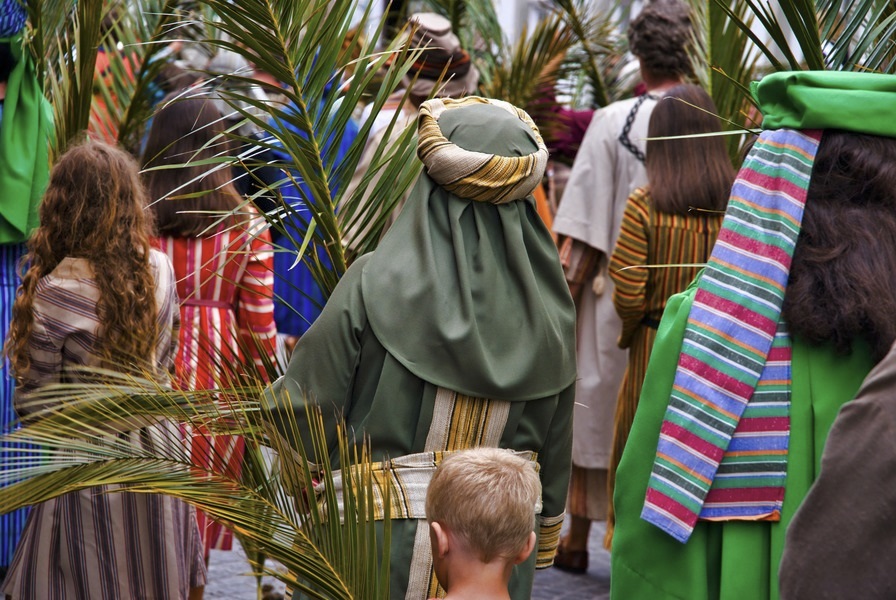
Psalm 118:1-4 (NIV)
1 Give thanks to the Lord, for he is good; his love endures forever.
2 Let Israel say: “His love endures forever.”
3 Let the house of Aaron say: “His love endures forever.”
4 Let those who fear the Lord say: “His love endures forever.” …
This thanksgiving psalm calls us to join in, with gratitude for God’s unfailing love, his covenant loyalty (ḥě·sěḏ). We’ll see what the Psalm meant for Israel first, since what it means for us rises out of what it meant to them.
 Seeking the kingdom